






















































Canadian budget cuts international student cap by more than half – Times Higher Education
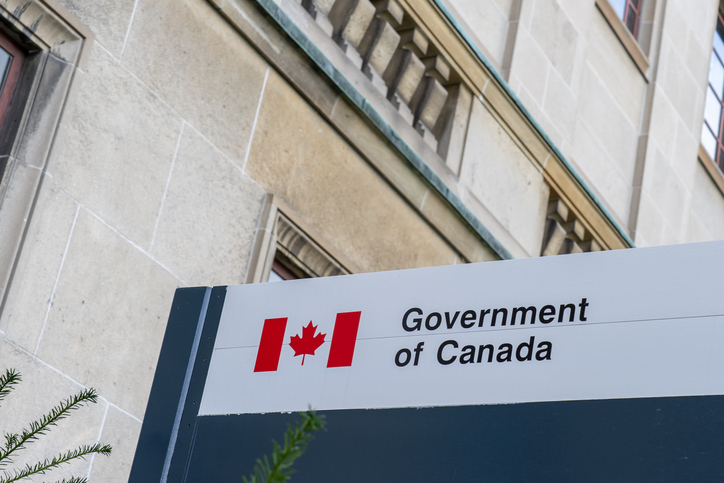
Report on Canada’s Federal Budget: Implications for Sustainable Development Goals
1.0 Executive Summary
The inaugural federal budget under the new premiership has allocated significant funding towards research and innovation, aligning with key Sustainable Development Goals (SDGs), particularly SDG 9 (Industry, Innovation, and Infrastructure). However, concurrent reductions in international student visas present a direct challenge to SDG 4 (Quality Education) and SDG 17 (Partnerships for the Goals). This report analyzes the budget’s provisions and stakeholder reactions through the lens of the SDGs.
2.0 Strategic Investments in Innovation and Economic Growth
The budget outlines several key investments aimed at reinforcing Canada’s research and development capacity, which directly supports targets within SDG 8 (Decent Work and Economic Growth) and SDG 9.
- SDG 9: Industry, Innovation, and Infrastructure: The government has committed substantial funds to build resilient infrastructure and foster innovation. Key allocations include:
- A C$51 billion infrastructure fund, which will include university projects.
- A C$925.6 million fund to establish a sovereign public AI infrastructure.
- A C$1.69 billion Defence Industrial Strategy, incorporating research bodies such as the National Research Council Canada (NRC) and the Natural Sciences and Engineering Research Council of Canada (NSERC).
- SDG 8: Decent Work and Economic Growth: A new International Talent Attraction Strategy and Action Plan is designed to support universities in recruiting top researchers. This initiative aims to create a skilled workforce essential for sustainable economic growth and R&D-based development.
3.0 Contradictory Policies on International Education and Global Partnerships
While investing in domestic talent, the budget’s immigration policy significantly curtails international student intake, creating tension with global education and partnership goals.
- Impact on SDG 4 (Quality Education): The “Levels Plan” introduced by the immigration minister drastically reduces the number of new study permits.
- The government projects issuing approximately 150,000 new study permits annually for the next three years.
- This represents a substantial decrease from previous projections of 385,000 in 2026 and 370,000 in 2027 and 2028.
- These caps limit access to quality Canadian higher education for international students and create financial instability for the institutions that are central to delivering on SDG 4.
- Challenges to SDG 10 (Reduced Inequalities) and SDG 17 (Partnerships for the Goals): The reduction in student visas creates barriers for global talent, potentially increasing inequality in access to education. It also undermines the international collaborations and partnerships that are vital for achieving all SDGs.
4.0 Stakeholder Perspectives on SDG Alignment
Responses from key higher education and research organizations highlight the budget’s dual impact on Canada’s progress toward the SDGs.
- Universities Canada: Welcomed the investment in human capital for SDG 8 but cautioned that a sustainable immigration system is necessary to support the government’s talent and economic agenda, linking the success of SDG 8 to policies that support SDG 4 and SDG 10.
- U15 Group of Canadian Research Universities: Praised the budget as a “decisive step” toward reinforcing Canada’s position in research excellence, a core component of SDG 9.
- Evidence for Democracy (E4D): Acknowledged the encouraging investment in next-generation researchers (SDG 9) but expressed concern that upcoming expenditure reviews and reductions at federal scientific agencies could negatively impact the long-term sustainability of Canada’s research community.
Analysis of Sustainable Development Goals in the Article
1. Which SDGs are addressed or connected to the issues highlighted in the article?
- SDG 4: Quality Education – The article focuses on higher education institutions (universities), funding for research, and policies affecting student enrolment, which are central to quality tertiary education.
- SDG 8: Decent Work and Economic Growth – The budget’s emphasis on creating a “skilled workforce,” driving “R&D-based growth,” and implementing a talent attraction strategy directly relates to promoting sustained, inclusive, and sustainable economic growth.
- SDG 9: Industry, Innovation and Infrastructure – The article details significant government investment in research, AI, defence, and general infrastructure, all of which are key components of building resilient infrastructure and fostering innovation.
- SDG 10: Reduced Inequalities – The discussion of Canada’s immigration policy, specifically the significant cuts to international student visas under the new “Levels Plan,” pertains to policies that manage the migration and mobility of people.
- SDG 17: Partnerships for the Goals – The article highlights the need for a “strong, sustained partnership” between the Canadian government and its universities to achieve the nation’s talent and economic goals.
2. What specific targets under those SDGs can be identified based on the article’s content?
- Target 4.3: By 2030, ensure equal access for all women and men to affordable and quality technical, vocational and tertiary education, including university. The article discusses a policy that significantly restricts access for a specific group—international students—to Canadian universities by cutting the number of study permits from a potential 437,000 to 150,000 annually.
- Target 8.2: Achieve higher levels of economic productivity through diversification, technological upgrading and innovation. The budget’s allocation of C$925.6 million for a public AI infrastructure and the creation of an “International Talent Attraction Strategy” are direct efforts to boost Canada’s economic future through technological upgrading and innovation.
- Target 9.5: Enhance scientific research, upgrade the technological capabilities of industrial sectors… encouraging innovation and substantially increasing the number of research and development workers. The article details the government’s commitment to a new strategy to support universities in “recruiting top researchers,” investing C$1.69 billion in a Defence Industrial Strategy involving research councils, and bolstering Canada’s “research talent pipeline.”
- Target 10.7: Facilitate orderly, safe, regular and responsible migration and mobility of people, including through the implementation of planned and well-managed migration policies. The article explicitly describes the Canadian government’s new “Levels Plan” for immigration, which sets specific, reduced quotas for new study permits over the next three years. This is a direct example of a planned migration policy, although it is restrictive in nature.
- Target 17.17: Encourage and promote effective public, public-private and civil society partnerships. The article quotes Universities Canada, a representative of civil society/public institutions, emphasizing that a “strong, sustained partnership” with the government is essential to transform budget commitments into the “skilled workforce our country needs.”
3. Are there any indicators mentioned or implied in the article that can be used to measure progress towards the identified targets?
- Indicator for Target 4.3: The number of international student study permits issued. The article provides specific figures that can be used as a direct measure of access to tertiary education for non-residents. It states the government is on track to approve just 80,000 permits this year, down from 360,000 in 2024, and will issue around 150,000 annually for the next three years, a sharp reduction from previous projections.
- Indicator for Target 9.5: Financial investment in research and development (R&D). The article mentions concrete financial commitments that serve as indicators of investment in innovation, including a “C$51 billion (£28 million) infrastructure fund,” a “C$925.6 million fund” for AI infrastructure, and a “C$1.69 billion Defence Industrial Strategy.”
- Indicator for Target 10.7: The implementation of a national migration policy. The article’s detailed description of the Liberals’ new “Levels Plan” and its specific quotas for study permits serves as an indicator of a planned and managed migration policy being put into action.
4. Summary Table of SDGs, Targets, and Indicators
| SDGs | Targets | Indicators |
|---|---|---|
| SDG 4: Quality Education | 4.3: Ensure equal access for all… to… tertiary education, including university. | Number of international student study permits issued annually (e.g., reduction from 360,000 to a planned 150,000). |
| SDG 8: Decent Work and Economic Growth | 8.2: Achieve higher levels of economic productivity through… technological upgrading and innovation. | Implementation of an “International Talent Attraction Strategy” and investment in AI infrastructure to drive R&D-based growth. |
| SDG 9: Industry, Innovation and Infrastructure | 9.5: Enhance scientific research, upgrade the technological capabilities… and increase the number of research and development workers. | Public financial investment in R&D (e.g., C$925.6 million for AI, C$1.69 billion for Defence Industrial Strategy). |
| SDG 10: Reduced Inequalities | 10.7: Facilitate orderly, safe, regular and responsible migration and mobility of people… through… planned and well-managed migration policies. | Implementation of a new national immigration policy (“Levels Plan”) with specific quotas for student visas. |
| SDG 17: Partnerships for the Goals | 17.17: Encourage and promote effective public… and civil society partnerships. | Call for a “strong, sustained partnership” between the government and universities to achieve national economic and talent goals. |
Source: timeshighereducation.com
What is Your Reaction?
 Like
0
Like
0
 Dislike
0
Dislike
0
 Love
0
Love
0
 Funny
0
Funny
0
 Angry
0
Angry
0
 Sad
0
Sad
0
 Wow
0
Wow
0