


























































PAHO Belize wins Resilience & Disaster Risk Reduction Award at the UK-Belize Climate and Nature Legacy Awards 2026 – Pan American Health Organization (PAHO)

Report on PAHO Belize’s Recognition for Climate Resilience in Health Sector
Introduction
City of Belmopan, Belize, February 18, 2026 – The Pan American Health Organization (PAHO) Belize was honored with the Resilience and Disaster Risk Reduction Award at the UK-Belize Climate and Nature Legacy Awards 2026. This event, funded by the UK’s Climate & Nature Diplomacy Fund (CNDF), took place on February 3 at the residence of the British High Commissioner in Belmopan, Belize.
Award Overview and Selection Process
The awards ceremony featured ten categories recognizing companies, entities, and associations operating in Belize. Nominees were selected by the Caribbean Development Group of the British High Commission. PAHO Belize was selected as the winner from five nominees in the Resilience and Disaster Risk Reduction category, highlighting its leadership in climate resilience within the health sector.
PAHO Belize’s Contribution to Sustainable Development Goals (SDGs)
PAHO Belize’s efforts align closely with several Sustainable Development Goals, particularly:
- SDG 3: Good Health and Well-being – by ensuring health facilities remain operational during disasters.
- SDG 7: Affordable and Clean Energy – through the integration of renewable energy solutions.
- SDG 11: Sustainable Cities and Communities – by making health infrastructure safer and more resilient.
- SDG 13: Climate Action – by enhancing disaster risk reduction and climate resilience.
The SMART Hospital Initiative
PAHO Belize’s leadership was particularly recognized for the SMART Hospital Initiative, first implemented in Belize and other Caribbean countries with funding from the UK Department for International Development (DFID). This initiative has demonstrated effectiveness in maintaining health facility operations during and after hurricanes and natural disasters.
Key Features of the Initiative
- Upgrading five health facilities across Belize with safety, green, and functional improvements.
- Enhancements included hurricane and earthquake structural resilience, improved fire safety, water and electrical systems, infection control, and structural repairs.
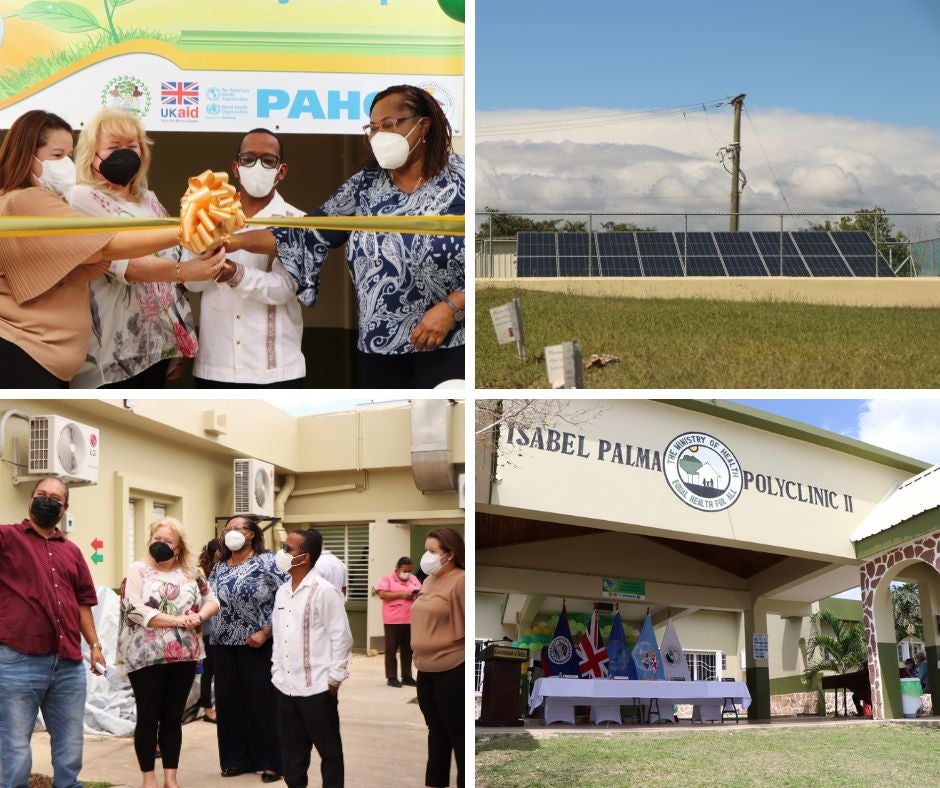
- Climate-smart upgrades such as rainwater harvesting, energy-efficient lighting, solar water heating, photovoltaic power systems, improved ventilation, and waste management.
- Functional improvements including accessibility ramps and handrails, expanded storage, and renovated laboratories and pharmacies.
Expansion and Capacity Building
Building on initial successes, PAHO Belize has expanded the SMART Hospital Initiative to upgrade additional health facilities with sustainable energy solutions, further ensuring climate resilience. Capacity building remains a priority, with training provided to stakeholders including the civil works department.
Currently, Belize uses the Green Checklist and Hospital Safety Index as national standards for constructing new health facilities and retrofitting existing ones, reflecting the institutionalization of sustainable practices aligned with SDG 9 (Industry, Innovation, and Infrastructure).
Leadership and Regional Impact
Dr. Karen Lewis-Bell, PAHO/WHO Representative in Belize, emphasized the importance of PAHO’s technical leadership in health emergencies, especially in the Caribbean, a region highly vulnerable to climate-related disasters. PAHO’s role in strengthening health systems ensures continuity of essential services during disasters and health emergencies.
Key Achievements
- 26 health facilities audited for vulnerability and resilience needs in Belize.
- Five facilities upgraded to GOLD SMART standards: Cleopatra White, San Ignacio Community Hospital, Palm Centre Nursing Home, Independence Primary Care, and Isabel Palma Primary Care.
- 184 personnel trained (including 64 women) in assessment, renewable energy, contingency planning, and maintenance.
- Installation of 45 kW solar power systems generating approximately USD 125,000 in annual savings.
- Regional program strengthened access to reliable healthcare for over 858,000 people during disasters.
Visual Documentation

Credit – PAHO Belize
1. Sustainable Development Goals (SDGs) Addressed or Connected
- SDG 3: Good Health and Well-being – The article focuses on strengthening health facilities to ensure continuity of essential health services during disasters and emergencies.
- SDG 7: Affordable and Clean Energy – Implementation of renewable energy solutions such as solar power and energy-efficient lighting in health facilities.
- SDG 11: Sustainable Cities and Communities – Enhancing resilience of health infrastructure to natural disasters like hurricanes and earthquakes.
- SDG 13: Climate Action – Building climate resilience in health facilities and promoting disaster risk reduction.
2. Specific Targets Under Those SDGs Identified
- SDG 3 Targets:
- 3.d: Strengthen the capacity of all countries for early warning, risk reduction, and management of national and global health risks.
- SDG 7 Targets:
- 7.2: Increase substantially the share of renewable energy in the global energy mix.
- 7.3: Double the global rate of improvement in energy efficiency.
- SDG 11 Targets:
- 11.5: Reduce the number of deaths and the number of people affected by disasters, including water-related disasters.
- 11.b: Increase the number of cities and human settlements adopting and implementing integrated policies and plans towards inclusion, resource efficiency, mitigation and adaptation to climate change.
- SDG 13 Targets:
- 13.1: Strengthen resilience and adaptive capacity to climate-related hazards and natural disasters in all countries.
- 13.3: Improve education, awareness-raising and human and institutional capacity on climate change mitigation, adaptation, impact reduction, and early warning.
3. Indicators Mentioned or Implied to Measure Progress
- Health Facility Audits and Upgrades: Number of health facilities audited for vulnerability and resilience (26 audited, 5 upgraded to GOLD SMART standards).
- Training and Capacity Building: Number of personnel trained in assessment, renewable energy, contingency planning, and maintenance (184 personnel trained, including 64 women).
- Renewable Energy Installation: Installed solar capacity (45 kW solar installed) and estimated annual savings (~USD 125,000).
- Access to Healthcare During Disasters: Number of people with strengthened access to reliable healthcare during disasters (over 858,000 people).
- Use of Standards: Adoption of Green Checklist and Hospital Safety Index as national standards for building and retrofitting health facilities.
4. Table of SDGs, Targets, and Indicators
| SDGs | Targets | Indicators |
|---|---|---|
| SDG 3: Good Health and Well-being | 3.d: Strengthen capacity for early warning, risk reduction, and management of health risks |
|
| SDG 7: Affordable and Clean Energy |
|
|
| SDG 11: Sustainable Cities and Communities |
|
|
| SDG 13: Climate Action |
|
|
Source: paho.org
What is Your Reaction?
 Like
0
Like
0
 Dislike
0
Dislike
0
 Love
0
Love
0
 Funny
0
Funny
0
 Angry
0
Angry
0
 Sad
0
Sad
0
 Wow
0
Wow
0