




































Now, domestic violence legal in Taliban-led Afghanistan — as long as no ‘broken bones, open wounds’ – The Times of India
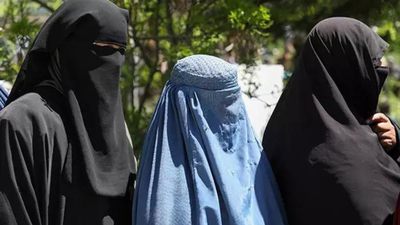
Report on the Impact of Taliban’s New Penal Code on Women and Children in Afghanistan
Introduction
The Taliban government in Afghanistan has introduced a new 90-page penal code that formalizes restrictive practices, particularly affecting women and children. This development raises significant concerns regarding human rights and the achievement of the Sustainable Development Goals (SDGs), especially those related to gender equality, health, education, and justice.
Key Provisions of the New Penal Code
Legalization of Domestic Violence
- The penal code permits husbands to physically abuse their wives and children as long as it does not result in “broken bones or open wounds.”
- Psychological and sexual violence against women are not explicitly prohibited, creating substantial gaps in legal protection.
- Violators face a maximum of 15 days in prison only in cases involving “obscene force” such as visible fractures or serious injuries.
- Conviction requires the wife to prove abuse in court by presenting injuries, a process hindered by Taliban-imposed restrictions.
Judicial Inequality and Restrictions
- The code differentiates penalties based on whether an offender is “free” or “a slave,” institutionalizing inequality within the justice system.
- Women must remain fully covered in public and appear in court with a husband or male guardian, even when the husband is the alleged abuser.
- Married women can be jailed for up to three months for visiting relatives without their husband’s permission, including when seeking refuge from violence.
Challenges in Accessing Justice
- Women face an “extremely lengthy and difficult” process to obtain justice for assault under Taliban law.
- Cases such as a woman assaulted by a Taliban guard illustrate the barriers, where complaints are dismissed unless accompanied by a male chaperone.
- The law effectively treats wives as the “property” of their husbands and removes previous legal protections, including the Elimination of Violence Against Women (EVAW) law.
Impact on Sustainable Development Goals (SDGs)
SDG 5: Gender Equality
- The penal code legitimizes abuse and maltreatment of women and children, undermining efforts to achieve gender equality.
- Restrictions on women’s rights to education, employment, and freedom of movement exacerbate gender disparities.
- The removal of protections against forced marriage, rape, and gender-based violence reverses progress made under previous legislation.
SDG 3: Good Health and Well-being
- Access to healthcare for women is severely limited due to mobility restrictions and bans on treatment by male doctors in some areas.
- A shortage of female health workers and systemic discrimination prevent many women and girls from receiving essential medical care.
SDG 4: Quality Education
- Girls are banned from attending secondary schools and universities, effectively ending formal education beyond grade six.
- Nearly 30% of girls never begin primary school due to poverty, safety concerns, and restrictive social norms.
- Rising child marriage rates further hinder educational attainment among girls.
SDG 8: Decent Work and Economic Growth
- Women are barred from most jobs and public spaces, including parks, gyms, and sports clubs.
- Closure of sectors employing women, such as civil service, NGOs, and beauty salons, contributes to one of the world’s largest gender gaps in workforce participation.
Calls for Action
- Human rights groups, including the exiled organization Rawadari, have condemned the new penal code for legitimizing domestic violence and called for an immediate halt to its implementation in Taliban courts.
- International stakeholders are urged to prioritize support for Afghan women and children to uphold their rights and promote the SDGs.
- Efforts must focus on restoring legal protections, ensuring access to education and healthcare, and enabling women’s participation in public and economic life.
Conclusion
The Taliban’s new penal code represents a significant setback for human rights and sustainable development in Afghanistan. The codification of domestic violence, judicial inequalities, and restrictions on women’s freedoms directly conflict with the Sustainable Development Goals, particularly SDG 5 on gender equality. Immediate international attention and action are essential to protect the rights and well-being of Afghan women and children and to support the country’s progress towards sustainable development.
1. Sustainable Development Goals (SDGs) Addressed or Connected
- SDG 3: Good Health and Well-being
- Issues related to healthcare access for women and girls, including mobility restrictions and shortage of female health workers.
- SDG 4: Quality Education
- Bans on girls’ secondary and university education, and high dropout rates from primary education.
- SDG 5: Gender Equality
- Legalization of domestic violence, restrictions on women’s rights, employment bans, and denial of justice for abuse victims.
- SDG 16: Peace, Justice and Strong Institutions
- Issues with legal protections, justice system inequalities, and enforcement of laws that legitimize abuse and discrimination.
2. Specific Targets Under Those SDGs Identified
- SDG 3: Good Health and Well-being
- Target 3.7: Ensure universal access to sexual and reproductive healthcare services.
- Target 3.8: Achieve universal health coverage, including access to quality essential healthcare services.
- SDG 4: Quality Education
- Target 4.1: Ensure that all girls and boys complete free, equitable and quality primary and secondary education.
- Target 4.5: Eliminate gender disparities in education and ensure equal access to all levels of education.
- SDG 5: Gender Equality
- Target 5.2: Eliminate all forms of violence against women and girls in public and private spheres.
- Target 5.3: Eliminate harmful practices such as child marriage and other forms of gender-based violence.
- Target 5.4: Recognize and value unpaid care and domestic work.
- Target 5.5: Ensure women’s full and effective participation and equal opportunities for leadership.
- SDG 16: Peace, Justice and Strong Institutions
- Target 16.3: Promote the rule of law and ensure equal access to justice for all.
- Target 16.7: Ensure responsive, inclusive, participatory and representative decision-making.
3. Indicators Mentioned or Implied to Measure Progress
- For SDG 3 (Health)
- Indicator 3.8.1: Coverage of essential health services, including access to healthcare for women and girls.
- Indicator related to availability of female health workers and access restrictions.
- For SDG 4 (Education)
- Indicator 4.1.2: Completion rate of primary and secondary education by gender.
- Indicator 4.5.1: Parity indices for education enrollment and completion rates between girls and boys.
- For SDG 5 (Gender Equality)
- Indicator 5.2.1: Proportion of women and girls subjected to physical, sexual or psychological violence by intimate partners or others.
- Indicator 5.3.1: Proportion of women aged 20-24 years who were married or in a union before age 15 and before age 18.
- Indicators related to women’s participation in workforce and public life.
- For SDG 16 (Justice)
- Indicator 16.3.1: Proportion of victims of violence who reported their victimization to competent authorities or other officially recognized conflict resolution mechanisms.
- Indicators on legal protections and equality before the law.
4. Table of SDGs, Targets and Indicators
| SDGs | Targets | Indicators |
|---|---|---|
| SDG 3: Good Health and Well-being |
|
|
| SDG 4: Quality Education |
|
|
| SDG 5: Gender Equality |
|
|
| SDG 16: Peace, Justice and Strong Institutions |
|
|
Source: timesofindia.indiatimes.com
What is Your Reaction?
 Like
0
Like
0
 Dislike
0
Dislike
0
 Love
0
Love
0
 Funny
0
Funny
0
 Angry
0
Angry
0
 Sad
0
Sad
0
 Wow
0
Wow
0