




































Azerbaijan Pushes Forward Renewable Energy Initiatives at Presidential Commission Meeting – Caspian Post
Azerbaijan Advances Renewable Energy Initiatives Aligned with Sustainable Development Goals
Overview of the Presidential Commission Meeting
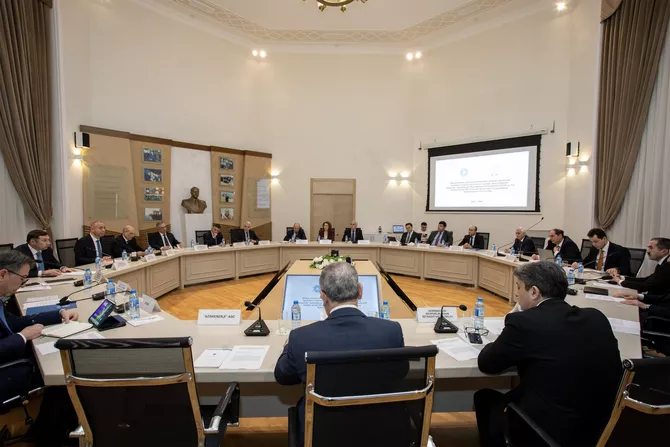
The Commission on the Implementation of Projects in Renewable Energy Sources, established by Presidential Decree, convened its latest meeting at the Ministry of Energy in Baku. This session emphasized Azerbaijan’s commitment to advancing renewable energy projects in line with the United Nations Sustainable Development Goals (SDGs), particularly SDG 7 (Affordable and Clean Energy), SDG 8 (Decent Work and Economic Growth), and SDG 13 (Climate Action).
Key Highlights and Strategic Initiatives
Deputy Minister of Energy Elnur Soltanov reported on the successful execution of renewable energy projects, underscoring the critical role of green energy in enhancing national energy security and expanding export potential. The meeting focused on:
- Attracting private investment to renewable energy sectors.
- Expanding international cooperation to foster sustainable development.
- Implementing large-scale strategic renewable energy projects.
Completed Projects and Future Plans
The Secretariat of the Commission presented an overview of completed renewable energy projects and outlined plans through 2025. Notable projects include:
- Khizi-Absheron Wind Power Plant: A 240 MW facility now operational, contributing significantly to clean energy production.
- Garadagh Solar Power Plant: A 230 MW solar power station enhancing the renewable energy share in the national energy mix.
These projects support SDG 9 (Industry, Innovation, and Infrastructure) and SDG 11 (Sustainable Cities and Communities) by promoting sustainable infrastructure and regional development.
Green Energy Corridors and Zones
Updates were provided on the development of green energy corridors and zones, which are pivotal for:
- Attracting additional investments.
- Creating new employment opportunities.
- Supporting sustainable regional economic growth.
These efforts align with SDG 8 and SDG 12 (Responsible Consumption and Production), fostering sustainable economic and environmental outcomes.
Grid Integration and Infrastructure Enhancement
Rustam Gasimov, Deputy Chairman of the Board of “Azerenergy” OJSC, briefed attendees on the integration of renewable energy plants into the national electricity grid. Emphasis was placed on strengthening network infrastructure to accommodate increased renewable energy capacity, supporting SDG 7 and SDG 9.
Participation and Collaborative Efforts
The meeting was attended by representatives from various governmental bodies and organizations, including:
- Ministries of Energy, Emergency Situations, Ecology and Natural Resources, Defense, Economy, Finance, Justice, Agriculture, Digital Development, and Transport.
- State Oil Company of Azerbaijan Republic (SOCAR).
- “Azerenergy” OJSC and “Azerishig” OJSC.
- Central Bank, State Committee for Urban Planning and Architecture, State Customs Committee, and Mine Action Agency.
This multi-sectoral collaboration underscores the integrated approach necessary to achieve the SDGs.
Conclusions and Next Steps
The session concluded with the establishment of specific tasks to be completed before the next meeting, reinforcing Azerbaijan’s ongoing commitment to sustainable energy development and the achievement of relevant Sustainable Development Goals.

Photo: Ministry of Energy of the Republic of Azerbaijan
1. Sustainable Development Goals (SDGs) Addressed or Connected
- SDG 7: Affordable and Clean Energy
- The article focuses on renewable energy projects, such as wind and solar power plants, which directly relate to ensuring access to affordable, reliable, sustainable, and modern energy.
- SDG 8: Decent Work and Economic Growth
- Creation of new jobs and attracting private investment as mentioned in the article supports sustained economic growth and productive employment.
- SDG 9: Industry, Innovation, and Infrastructure
- Efforts to strengthen network infrastructure and integrate renewable energy plants into the electricity grid relate to building resilient infrastructure and fostering innovation.
- SDG 13: Climate Action
- Promotion of green energy and renewable projects contributes to combating climate change and its impacts.
- SDG 17: Partnerships for the Goals
- Expansion of cooperation with international partners and attracting investments aligns with strengthening global partnerships for sustainable development.
2. Specific Targets Under Those SDGs Identified
- SDG 7 Targets
- Target 7.2: Increase substantially the share of renewable energy in the global energy mix by 2030.
- Target 7.a: Enhance international cooperation to facilitate access to clean energy research and technology.
- SDG 8 Targets
- Target 8.2: Achieve higher levels of economic productivity through diversification, technological upgrading, and innovation.
- Target 8.5: Achieve full and productive employment and decent work for all.
- SDG 9 Targets
- Target 9.1: Develop quality, reliable, sustainable, and resilient infrastructure.
- Target 9.5: Enhance scientific research and upgrade technological capabilities.
- SDG 13 Targets
- Target 13.2: Integrate climate change measures into national policies, strategies, and planning.
- SDG 17 Targets
- Target 17.3: Mobilize additional financial resources for developing countries from multiple sources.
- Target 17.6: Enhance North-South, South-South, and triangular regional and international cooperation on and access to science, technology, and innovation.
3. Indicators Mentioned or Implied in the Article
- Indicators for SDG 7
- Proportion of energy from renewable sources in the total energy mix (implied by the operational wind and solar power plants and plans to increase renewable energy share).
- Installed renewable energy generation capacity (e.g., 240 MW wind power plant, 230 MW solar power plant).
- Indicators for SDG 8
- Number of jobs created in renewable energy projects (implied by mention of job creation).
- Private investment attracted in renewable energy sector.
- Indicators for SDG 9
- Extent of integration of renewable energy plants into the electricity grid (implied by updates on grid infrastructure strengthening).
- Investment in infrastructure development.
- Indicators for SDG 13
- Reduction in greenhouse gas emissions due to increased renewable energy use (implied by focus on green energy projects).
- Indicators for SDG 17
- Amount of international cooperation and investment attracted (implied by cooperation with international partners and investment attraction).
4. Table of SDGs, Targets, and Indicators
| SDGs | Targets | Indicators |
|---|---|---|
| SDG 7: Affordable and Clean Energy |
|
|
| SDG 8: Decent Work and Economic Growth |
|
|
| SDG 9: Industry, Innovation, and Infrastructure |
|
|
| SDG 13: Climate Action |
|
|
| SDG 17: Partnerships for the Goals |
|
|
Source: caspianpost.com
What is Your Reaction?
 Like
0
Like
0
 Dislike
0
Dislike
0
 Love
0
Love
0
 Funny
0
Funny
0
 Angry
0
Angry
0
 Sad
0
Sad
0
 Wow
0
Wow
0