
























































NEKCV Awarded Federal BEAD Funding to Expand Internet Access – The North Star Monthly
NEK Community Broadband Awarded Federal BEAD Funding to Expand Rural Internet Access
Introduction
NEK Community Broadband (operating as NEKCV, NEK Broadband, and CVFiber) announced a significant achievement with the receipt of federal Broadband Equity, Access and Deployment (BEAD) funding. This milestone was attained through persistent community engagement and robust support from state and federal legislators.
Project Overview and Impact on Sustainable Development Goals
The BEAD funding will expedite NEKCV’s mission to provide reliable, affordable, publicly owned high-speed internet to Vermont’s most rural and underserved communities. The project aligns closely with the United Nations Sustainable Development Goals (SDGs), particularly:
- SDG 9: Industry, Innovation, and Infrastructure – by developing resilient infrastructure and promoting inclusive and sustainable industrialization.
- SDG 10: Reduced Inequalities – by ensuring equitable access to digital services in rural areas.
- SDG 11: Sustainable Cities and Communities – by enhancing connectivity and supporting sustainable community development.
- SDG 17: Partnerships for the Goals – through collaboration among government entities, community volunteers, and strategic partners.
Scope and Objectives
- Extend broadband coverage along more than 1,400 miles of roadway.
- Reach 7,441 unserved and underserved addresses with high-speed internet.
- Achieve universal broadband service for all 24,000 addresses lacking connectivity within the 72-town district over four years.
- Leverage multiple grant funding sources to maximize project impact.
Leadership and Community Engagement
Christa Shute, Executive Director of NEKCV, emphasized the generational opportunity this funding represents for universal broadband access. The strategic groundwork began in 2021 following the passage of the Infrastructure Investment and Jobs Act. The success of this initiative is attributed to:
- Support from the Vermont Legislature and Governor.
- Advocacy by the Vermont delegation and strategic partners.
- The merger of NEK Broadband and CVFiber to consolidate efforts.
- Contributions from the Vermont Communications Union District Association (VCUDA).
- Over 130 dedicated volunteers serving on the board.
Role of State and Federal Support
Strong leadership from the Vermont Community Broadband Board (VCBB) and state and federal legislators was crucial in championing broadband expansion. Their efforts ensured rural communities and communications union districts were well positioned to compete successfully for BEAD funding, reinforcing the goal of reducing digital inequality.
Workforce Development and Infrastructure Deployment
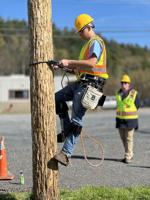
- NEKCV is conducting workforce development training programs, including safety and technical skills such as utility pole climbing, to prepare workers for broadband infrastructure deployment.
- Construction crews are actively installing fiber optic infrastructure across rural intersections, deploying over 3,000 miles of fiber-optic cable to bring high-speed internet to unserved communities.
Conclusion
The BEAD funding award to NEK Community Broadband represents a critical step toward achieving universal broadband access in Vermont’s Northeast Kingdom. This initiative supports multiple Sustainable Development Goals by fostering inclusive infrastructure development, reducing inequalities, and strengthening community resilience through enhanced connectivity.
1. Sustainable Development Goals (SDGs) Addressed or Connected
- SDG 9: Industry, Innovation and Infrastructure
- The article discusses the deployment of high-speed internet infrastructure in rural Vermont, which aligns with building resilient infrastructure and fostering innovation.
- SDG 10: Reduced Inequalities
- The focus on providing broadband to underserved and unserved rural communities addresses inequality in access to essential services.
- SDG 11: Sustainable Cities and Communities
- Improving connectivity in rural areas contributes to making communities inclusive, safe, resilient, and sustainable.
- SDG 4: Quality Education
- Although not explicitly stated, improved internet access supports quality education by enabling digital learning opportunities.
- SDG 8: Decent Work and Economic Growth
- The workforce development training program for utility pole climbing and fiber optic installation supports decent work and economic growth.
2. Specific Targets Under Those SDGs
- SDG 9 Targets
- Target 9.c: Significantly increase access to information and communications technology and strive to provide universal and affordable access to the Internet in least developed countries by 2020. The article’s focus on universal broadband access in rural Vermont aligns with this target.
- SDG 10 Targets
- Target 10.b: Encourage official development assistance and financial flows, including through enhanced cooperation, to states where the need is greatest, in order to help reduce inequalities. The federal BEAD funding supports this target by providing financial resources to underserved communities.
- SDG 11 Targets
- Target 11.b: By 2020, substantially increase the number of cities and human settlements adopting and implementing integrated policies and plans towards inclusion, resource efficiency, mitigation and adaptation to climate change, resilience to disasters. The broadband expansion supports resilient and inclusive communities.
- SDG 4 Targets
- Target 4.4: By 2030, substantially increase the number of youth and adults who have relevant skills, including technical and vocational skills, for employment, decent jobs and entrepreneurship. The workforce development training program mentioned supports this target.
- SDG 8 Targets
- Target 8.5: By 2030, achieve full and productive employment and decent work for all women and men, including for young people and persons with disabilities, and equal pay for work of equal value. The training and employment opportunities in broadband infrastructure contribute to this target.
3. Indicators Mentioned or Implied to Measure Progress
- Number of Addresses Served
- The article mentions reaching 7,441 unserved and underserved addresses and achieving universal service for 24,000 addresses without high-speed connectivity. This implies the use of indicators measuring the number or percentage of population/households with access to broadband.
- Length of Roadway Covered
- Coverage along more than 1,400 miles of roadway is cited, which can be an indicator of infrastructure expansion.
- Workforce Development Metrics
- The training program for utility pole climbing and fiber optic installation implies indicators related to the number of people trained or employed in the broadband infrastructure sector.
- Funding and Investment
- The federal BEAD funding and leveraging of dozens of grant sources suggest indicators related to financial flows and investment in infrastructure.
4. Table: SDGs, Targets and Indicators
| SDGs | Targets | Indicators |
|---|---|---|
| SDG 9: Industry, Innovation and Infrastructure | Target 9.c: Increase access to ICT and provide universal, affordable internet access |
|
| SDG 10: Reduced Inequalities | Target 10.b: Encourage financial flows to reduce inequalities |
|
| SDG 11: Sustainable Cities and Communities | Target 11.b: Increase adoption of inclusive and resilient policies |
|
| SDG 4: Quality Education | Target 4.4: Increase number of youth and adults with technical and vocational skills |
|
| SDG 8: Decent Work and Economic Growth | Target 8.5: Achieve full and productive employment and decent work |
|
Source: northstarmonthly.com
What is Your Reaction?
 Like
0
Like
0
 Dislike
0
Dislike
0
 Love
0
Love
0
 Funny
0
Funny
0
 Angry
0
Angry
0
 Sad
0
Sad
0
 Wow
0
Wow
0