
























































Father-son duo shines in dryland contest – High Plains Journal
Kansas Soybean Yield Contest Highlights Sustainable Agricultural Achievements

Introduction
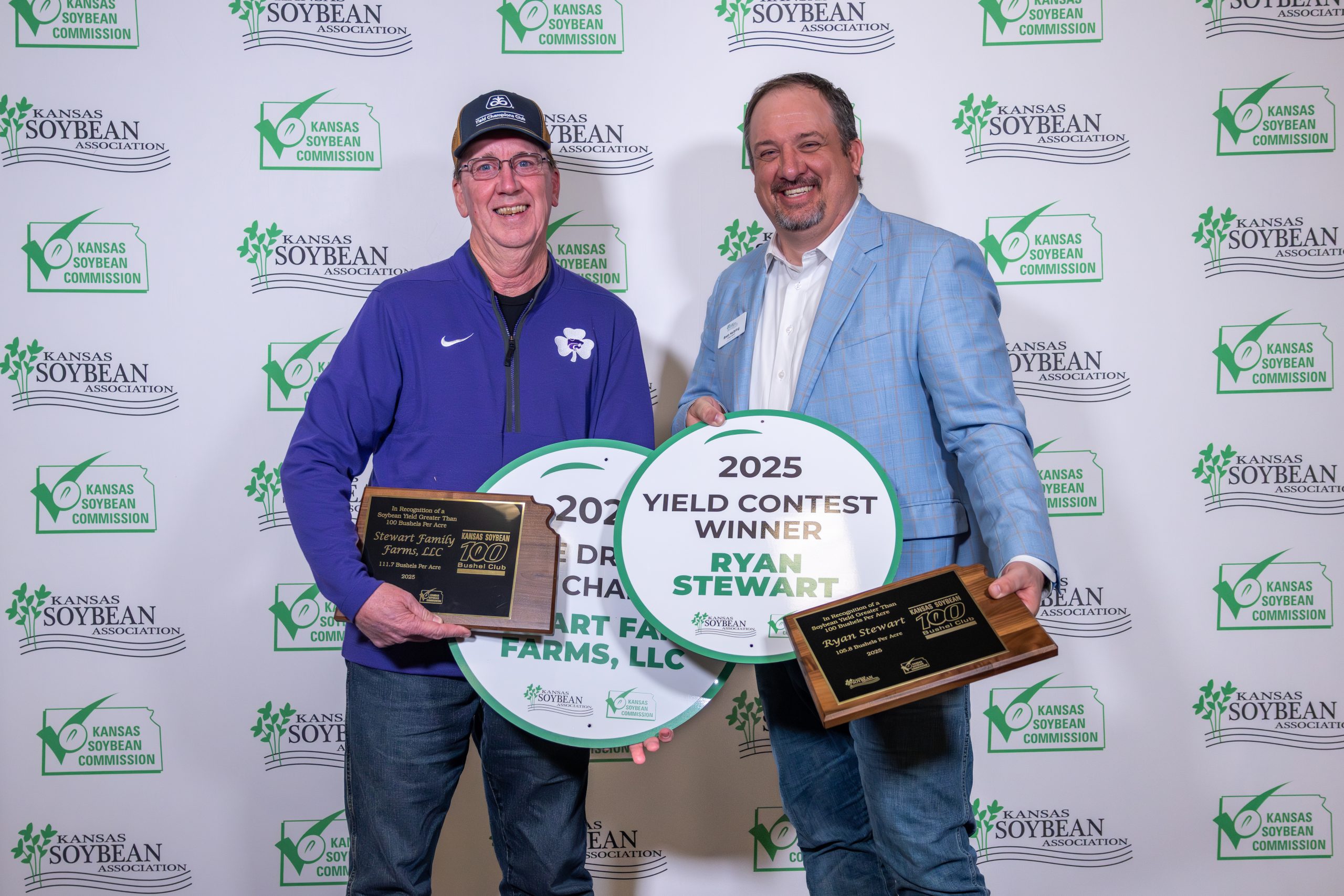
The 2025 Kansas Soybean Yield Contest showcased remarkable achievements by Washington County farmers, particularly Rod Stewart and his son Ryan, who joined the prestigious 100 Bushel Club without the use of irrigation. Their success aligns with several Sustainable Development Goals (SDGs), including SDG 2 (Zero Hunger), SDG 12 (Responsible Consumption and Production), and SDG 15 (Life on Land).
Outstanding Dryland Yields
- Rod Stewart and Ryan Stewart achieved yields of 111.7 and 105.8 bushels per acre respectively on dryland fields.
- Their success was attributed to timely rainfall and optimized fertilizer programs, demonstrating sustainable water use and soil management practices.
- They also recorded the highest dryland corn production in Kansas and the highest dryland sorghum yield nationally in 2025.
Innovative Farming Practices Supporting SDGs
- Fertilizer Optimization: Adjustments in fertilizer application improved nutrient efficiency, supporting SDG 12 by promoting sustainable agricultural inputs.
- Advanced Planting Technology: Upgrading planter technology enhanced seed placement accuracy, contributing to higher yields and resource efficiency.
- Crop Selection: Selection of drought-tolerant and high-yield varieties aligns with SDG 13 (Climate Action) by enhancing resilience to climate variability.
- Weed Management: Investment in pre-plant herbicide programs and no-till practices reduced soil disturbance and chemical use, supporting SDG 15.
Strategic Crop Management
- Planting Schedule: Beans were planted first, followed by corn, with planting completed between late April and May, optimizing growing conditions.
- Variety Selection: The Stewarts chose varieties based on regional suitability, drought tolerance, and yield potential, including Pioneer’s sorghum variety 84G62, which has a proven track record.
- Seed Treatments and Biologicals: Use of seed treatments and biological fungicides enhanced plant protection and health, reducing reliance on chemical pesticides.
Commitment to Sustainable Development Goals
- SDG 2 – Zero Hunger: Achieving high crop yields without irrigation contributes to food security and sustainable agriculture.
- SDG 6 – Clean Water and Sanitation: Dryland farming reduces water consumption, promoting sustainable water management.
- SDG 12 – Responsible Consumption and Production: Efficient fertilizer and herbicide use minimizes environmental impact.
- SDG 13 – Climate Action: Adoption of drought-tolerant varieties and no-till practices enhances climate resilience.
- SDG 15 – Life on Land: Conservation tillage and integrated weed management protect soil health and biodiversity.
Future Plans and Continuous Improvement
Following their record-breaking 2025 season, the Stewarts plan to continue improving their fertility program by conducting grid soil sampling to identify nutrient deficiencies and address them precisely. This approach exemplifies sustainable land management and continuous innovation in agriculture.
Conclusion
The achievements of Rod and Ryan Stewart in the Kansas Soybean Yield Contest demonstrate how integrating sustainable practices can lead to high productivity while supporting global Sustainable Development Goals. Their commitment to innovation, resource efficiency, and environmental stewardship serves as a model for sustainable agriculture.
1. Sustainable Development Goals (SDGs) Addressed or Connected
- SDG 2: Zero Hunger
- The article focuses on increasing crop yields (soybeans, corn, sorghum) through improved agricultural practices, which directly relates to ending hunger and achieving food security.
- SDG 12: Responsible Consumption and Production
- Use of advanced fertilizer programs, seed treatments, and no-till farming reflects sustainable agricultural production and efficient use of resources.
- SDG 13: Climate Action
- Emphasis on drought tolerance, dryland farming without irrigation, and adapting to rainfall variability relates to climate resilience and sustainable land management.
- SDG 15: Life on Land
- Practices such as no-till farming and weed management contribute to sustainable land use and soil conservation.
2. Specific Targets Under Those SDGs
- SDG 2: Zero Hunger
- Target 2.3: By 2030, double the agricultural productivity and incomes of small-scale food producers through sustainable food production systems.
- Target 2.4: Ensure sustainable food production systems and implement resilient agricultural practices.
- SDG 12: Responsible Consumption and Production
- Target 12.2: Achieve sustainable management and efficient use of natural resources.
- Target 12.4: Environmentally sound management of chemicals and wastes to minimize adverse impacts.
- SDG 13: Climate Action
- Target 13.1: Strengthen resilience and adaptive capacity to climate-related hazards and natural disasters.
- SDG 15: Life on Land
- Target 15.3: Combat desertification, restore degraded land and soil.
- Target 15.5: Take urgent action to reduce degradation of natural habitats.
3. Indicators Mentioned or Implied to Measure Progress
- Crop Yield Indicators
- Bushels per acre for soybeans, corn, and sorghum (e.g., 111.7 and 105.8 bushels per acre for soybeans without irrigation).
- Number of entries achieving 100-bushel per acre mark.
- Adoption of Sustainable Practices
- Use of no-till farming methods.
- Implementation of advanced fertilizer programs and seed treatments.
- Use of drought-tolerant crop varieties.
- Resource Efficiency Indicators
- Reduction or elimination of irrigation (dryland farming).
- Precision planting technology improvements (seed placement, depth, singulation).
- Environmental Management
- Pre-plant herbicide programs to manage weed pressure efficiently.
- Use of biologicals and fungicides applied by drone technology.
4. Table: SDGs, Targets and Indicators
| SDGs | Targets | Indicators |
|---|---|---|
| SDG 2: Zero Hunger |
|
|
| SDG 12: Responsible Consumption and Production |
|
|
| SDG 13: Climate Action |
|
|
| SDG 15: Life on Land |
|
|
Source: hpj.com
What is Your Reaction?
 Like
0
Like
0
 Dislike
0
Dislike
0
 Love
0
Love
0
 Funny
0
Funny
0
 Angry
0
Angry
0
 Sad
0
Sad
0
 Wow
0
Wow
0