






































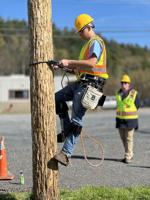


Six Top Professional Development Fellowships In Energy & Climate – Forbes

Analysis of Professional Fellowships and Their Contribution to Sustainable Development Goals
A review of professional development programs in the sustainability and energy sectors indicates a growing landscape of opportunities for career advancement and transition. These fellowships, typically completed in under one year, provide specialized training and networking platforms. This report analyzes several prominent programs, with a significant emphasis on their alignment with and contribution to the United Nations Sustainable Development Goals (SDGs).
OnePointFive Academy (OPF Academy)
The OPF Academy fellowship provides foundational training in climate and sustainability, focusing on technical skills for corporate environmental management.
- Curriculum Focus: The program centers on Carbon Accounting, Life-Cycle Assessment (LCA), Net Zero target setting, GHG accounting (Scopes 1, 2, and 3), and materiality assessment.
- Format: It combines asynchronous learning with live, expert-led training sessions and provides access to on-demand content from industry leaders.
- Network: Graduates join an alumni network of over one thousand professionals across 70 countries.
Contribution to Sustainable Development Goals
- SDG 13 (Climate Action): The fellowship directly supports SDG 13 by equipping professionals with the practical skills needed to implement corporate decarbonization strategies, conduct GHG accounting, and develop climate transition plans.
- SDG 12 (Responsible Consumption and Production): By training participants in Life-Cycle Assessment and materiality assessment, the program promotes sustainable corporate practices and transparent reporting, which are central to achieving sustainable production patterns.
- SDG 8 (Decent Work and Economic Growth): The program develops the “green skills” necessary for the fastest-growing jobs, fostering a workforce capable of driving a sustainable and inclusive economy.
ClimateBase Fellowship
The ClimateBase Fellowship is a 12-week online program designed for professionals seeking to enter or advance within the climate technology sector.
- Curriculum Focus: The curriculum offers broad exposure to the climate-tech landscape, including clean energy, carbon markets, sustainable agriculture, and corporate decarbonization.
- Target Audience: The program serves as a bridge for early- and mid-career professionals transitioning from adjacent industries into climate-focused roles.
- Network: The fellowship has a global alumni network of over 800 professionals.
Contribution to Sustainable Development Goals
- SDG 13 (Climate Action): The program provides a comprehensive foundation in key climate solution areas, preparing a diverse range of professionals to contribute effectively to climate mitigation and adaptation efforts.
- SDG 7 (Affordable and Clean Energy): Coursework on clean energy and carbon markets directly addresses the goals of increasing the share of renewable energy and improving energy efficiency.
- SDG 2 (Zero Hunger): By including sustainable agriculture in its curriculum, the fellowship contributes to building expertise in food systems that are resilient and environmentally sound.
Clean Energy Leadership Institute (CELI) Fellowship
The CELI Fellowship is dedicated to cultivating inclusive leadership for an equitable clean energy transition.
- Curriculum Focus: The program emphasizes a holistic understanding of the energy landscape across technology, finance, and policy, with a core focus on energy justice.
- Format: CELI offers both in-person cohorts in major U.S. cities and a fully remote option, combining seminars with leadership development workshops.
- Accessibility: A sliding-scale tuition model is utilized to ensure accessibility for professionals from diverse socioeconomic backgrounds.
Contribution to Sustainable Development Goals
- SDG 7 (Affordable and Clean Energy): The fellowship’s primary mission is to build a skilled and diverse leadership pipeline to accelerate the transition to clean energy systems.
- SDG 10 (Reduced Inequalities): Through its emphasis on energy justice and an inclusive tuition model, CELI actively works to ensure that the benefits of the clean energy transition are distributed equitably.
- SDG 17 (Partnerships for the Goals): The program fosters a strong, cross-sectoral network of over a thousand alumni working in government, industry, and advocacy to advance shared clean energy objectives.
BatteryMBA
BatteryMBA is a specialized 12-week online program focused on the business and technological aspects of the battery industry.
- Curriculum Focus: The course provides participants with market insights, industry trends, and real-world applications across the battery value chain.
- Format: The program is delivered online through live sessions, recorded lectures, and office hours, with graduates receiving ongoing access to materials.
- Network: It connects a global community of over 800 alumni from more than 60 countries, spanning manufacturing, research, and policy.
Contribution to Sustainable Development Goals
- SDG 7 (Affordable and Clean Energy): The program directly supports the advancement of energy storage technologies, which are critical for enabling the widespread integration of variable renewable energy sources like solar and wind.
- SDG 9 (Industry, Innovation, and Infrastructure): By building expertise in the battery sector, the fellowship fosters innovation and helps develop the industrial capacity for a key component of sustainable infrastructure, including electric vehicles and grid modernization.
- SDG 11 (Sustainable Cities and Communities): Expertise in battery technology is essential for developing sustainable transport systems and resilient energy grids, contributing to the creation of sustainable cities.
The Energy Generation Leadership Program (EnGen)
The EnGen program is a year-long fellowship designed to bridge the conventional and renewable energy sectors through a hybrid learning model.
- Curriculum Focus: The program provides a comprehensive overview of the U.S. energy landscape, including policy, technology, and security, through immersive site visits and expert panels.
- Format: It combines monthly virtual sessions with quarterly in-person gatherings in major U.S. energy hubs.
- Audience: The cohort consists of accomplished professionals from diverse energy sectors, creating a peer-learning environment.
Contribution to Sustainable Development Goals
- SDG 7 (Affordable and Clean Energy): By fostering dialogue and understanding between leaders in the conventional and renewable energy industries, the program facilitates a more integrated and orderly transition to a sustainable energy system.
- SDG 17 (Partnerships for the Goals): The program’s structure is explicitly designed to build strong, cross-sectoral networks among energy leaders, promoting the collaboration required to address complex energy challenges.
- SDG 9 (Industry, Innovation, and Infrastructure): Participants gain direct exposure to cutting-edge research and innovation at leading institutions, fostering the development of resilient and sustainable energy infrastructure.
NREL’s Executive Energy Leadership Academy (Energy Execs)
This program, hosted by the National Renewable Energy Laboratory (NREL), offers senior-level leaders a deep dive into renewable energy technologies and research.
- Curriculum Focus: Participants engage directly with NREL scientists and researchers to explore cutting-edge energy technologies, analytical tools, and market solutions.
- Format: The program consists of four multi-day, in-person sessions held at NREL’s campus in Colorado.
- Audience: It is designed for senior-level decision-makers from government, corporate, nonprofit, and community organizations.
Contribution to Sustainable Development Goals
- SDG 7 (Affordable and Clean Energy): The program accelerates the adoption of clean energy by providing influential leaders with the technical knowledge and strategic insights needed to champion and deploy renewable technologies.
- SDG 9 (Industry, Innovation, and Infrastructure): By connecting public and private sector leaders with premier national laboratory research, Energy Execs directly fosters the innovation and collaboration needed to build next-generation sustainable infrastructure.
- SDG 17 (Partnerships for the Goals): The program is a prime example of a multi-stakeholder partnership, bringing together leaders from diverse sectors to collaborate on solutions for a sustainable energy future.
Analysis of Sustainable Development Goals in the Article
1. Which SDGs are addressed or connected to the issues highlighted in the article?
-
SDG 4: Quality Education
The article is centered on educational fellowships and professional development programs (OPF Academy, Climatebase, CELI, etc.) designed to provide specialized knowledge and skills. These programs offer lifelong learning opportunities for working professionals, which is a core component of SDG 4.
-
SDG 7: Affordable and Clean Energy
Several fellowships, such as the Clean Energy Leadership Institute (CELI), BatteryMBA, and NREL’s Executive Energy Leadership Academy, are explicitly focused on the clean energy sector. They aim to cultivate leadership and expertise in areas like clean energy transition, battery technology, and renewable energy research, directly supporting the goals of SDG 7.
-
SDG 8: Decent Work and Economic Growth
The article highlights that these fellowships equip professionals with “green skills powering the fastest-growing jobs of 2025.” By upskilling the workforce for the sustainability and climate sectors, these programs promote productive employment and contribute to sustainable economic growth, aligning with SDG 8.
-
SDG 13: Climate Action
The primary theme of the fellowships is building capacity to address climate change. Programs like the OnePointFive Academy focus on “Net Zero target setting, transition planning, GHG accounting,” and corporate decarbonization. This directly contributes to strengthening human and institutional capacity for climate change mitigation, a key aspect of SDG 13.
-
SDG 17: Partnerships for the Goals
A recurring benefit mentioned for all fellowships is the creation of strong alumni networks that span across sectors and countries. The article notes that fellows “join an alumni network valuable for landing new roles and making connections across the sector.” These networks foster collaboration and knowledge-sharing among professionals in government, industry, and finance, embodying the spirit of partnership central to SDG 17.
2. What specific targets under those SDGs can be identified based on the article’s content?
-
Target 4.4: Increase the number of youth and adults with relevant skills for employment.
The article directly addresses this target by describing fellowships designed to “equip professionals with the green skills powering the fastest-growing jobs.” The OnePointFive Academy, for example, provides practical expertise in Carbon Accounting and Life-Cycle Assessment, which are technical and vocational skills for employment in the sustainability sector.
-
Target 4.7: Ensure all learners acquire knowledge and skills for sustainable development.
The curriculum of the described programs is focused on sustainable development. The Climatebase Fellowship covers “clean energy, carbon markets, sustainable agriculture, and corporate decarbonization,” providing learners with the specific knowledge needed to promote sustainability.
-
Target 7.a: Enhance international cooperation to facilitate access to clean energy research and technology.
The NREL’s Executive Energy Leadership Academy offers professionals a “deep dive into energy technologies, analytical tools and NREL research portfolios,” facilitating access to cutting-edge research. Furthermore, the global reach of these fellowships, with alumni in “70 countries” (OPF Academy) and “over 60 countries” (BatteryMBA), enhances international cooperation and networking in the clean energy field.
-
Target 8.2: Achieve higher levels of economic productivity through technological upgrading and innovation.
The fellowships focus on upskilling professionals in high-value, innovative sectors like climate-tech and clean energy. The BatteryMBA program, for instance, helps people “keep pace with the rapid changes in the battery industry,” while the NREL program discusses “cutting-edge technology directly with the scientists developing it,” both of which contribute to technological upgrading and innovation.
-
Target 13.3: Improve education, awareness-raising and human and institutional capacity on climate change mitigation.
This is the core purpose of many of the fellowships. The OnePointFive Academy builds “practical expertise in Net Zero target setting, transition planning, [and] GHG accounting.” The Climatebase Fellowship is a “recognized training ground for professionals seeking to move into or advance within the climate sector.” These programs are explicitly designed to build the human capacity needed for effective climate action.
3. Are there any indicators mentioned or implied in the article that can be used to measure progress towards the identified targets?
- Number of trained professionals: The article provides specific numbers that can serve as an indicator for Targets 4.4 and 13.3. For example, it mentions “over a thousand alumni in 70 countries” for OPF Academy, “more than 800 alumni” for Climatebase, and “more than a thousand alumni” for CELI. This data quantifies the number of adults who have acquired relevant skills for climate and sustainability work.
- Global reach of networks: The mention of alumni networks spanning “70 countries” (OPF Academy) and “60 countries” (Climatebase, BatteryMBA) serves as a qualitative indicator for Target 7.a, demonstrating the enhancement of international cooperation and knowledge sharing in the clean energy and climate sectors.
- Qualitative outcomes of training: The testimonials from graduates act as implied indicators of success. A graduate stating, “I’m already applying the knowledge I gained during the program,” and another feeling “confident in leading teams through the intricacies of sustainability projects” suggest that the education is effective and contributes to higher productivity and capacity (relevant to Targets 8.2 and 13.3).
- Development of specialized educational programs: The existence and evolution of these specialized fellowships (e.g., BatteryMBA focusing on the business of batteries, CELI emphasizing energy justice) is an indicator of growing institutional capacity to provide education for sustainable development (relevant to Target 13.3).
4. Table of SDGs, Targets, and Indicators
| SDGs | Targets | Indicators Identified in the Article |
|---|---|---|
| SDG 4: Quality Education | 4.4: Increase the number of adults with relevant skills for employment. 4.7: Ensure learners acquire knowledge and skills for sustainable development. |
Number of fellowship alumni (e.g., “over a thousand alumni” for OPF and CELI, “more than 800 alumni” for Climatebase). |
| SDG 7: Affordable and Clean Energy | 7.a: Enhance international cooperation and access to clean energy research and technology. | Global alumni networks spanning dozens of countries (e.g., “70 countries,” “60 countries”). Direct access to researchers and labs at NREL. |
| SDG 8: Decent Work and Economic Growth | 8.2: Achieve higher economic productivity through technological upgrading and innovation. | Training for “the fastest-growing jobs of 2025.” Graduate testimonials on applying new skills and leading teams effectively in the workplace. |
| SDG 13: Climate Action | 13.3: Improve education and human/institutional capacity on climate change mitigation. | Number of professionals trained in specific climate skills (GHG accounting, Net Zero planning). The existence and growth of specialized climate and sustainability fellowships. |
| SDG 17: Partnerships for the Goals | (Implied) Strengthen the means of implementation and revitalize the global partnership for sustainable development. | Creation of cross-sector alumni networks for collaboration among professionals in government, industry, finance, and advocacy. |
Source: forbes.com
What is Your Reaction?
 Like
0
Like
0
 Dislike
0
Dislike
0
 Love
0
Love
0
 Funny
0
Funny
0
 Angry
0
Angry
0
 Sad
0
Sad
0
 Wow
0
Wow
0