
















































The broken narrative of higher education bears little resemblance to students’ real lives – Fortune

Report on Aligning Higher Education with Sustainable Development Goals
Introduction: Public Perception and the SDG Imperative
A recent analysis indicates a recovery in public confidence in higher education, with 42% of Americans expressing significant trust, an increase from 36% in the previous year. However, a substantial disconnect persists between public perception, largely shaped by media focus on elite institutions, and the reality of the sector’s role in advancing the Sustainable Development Goals (SDGs). This report reframes the narrative of higher education, emphasizing its critical function in achieving key SDGs, particularly SDG 4 (Quality Education), SDG 8 (Decent Work and Economic Growth), and SDG 10 (Reduced Inequalities).
The Role of Diverse Institutions in Achieving SDG 4 (Quality Education)
The prevailing media narrative, centered on a small number of selective universities, obscures the contributions of institutions that serve the majority of learners and are fundamental to achieving inclusive and equitable quality education for all.
Key Institutional Contributions:
- Community Colleges: Enrolling approximately 44% of all undergraduates, these institutions are primary drivers of accessible and affordable tertiary education (Target 4.3).
- State Colleges and Universities: These institutions serve a vast number of working- and middle-class families, providing pathways to skills and knowledge essential for sustainable development.
The misrepresentation of higher education fuels a perception of elitism, which undermines public support for the very institutions critical to fostering lifelong learning opportunities and reducing inequality, as mandated by SDG 4.
Addressing the Needs of Modern Learners to Advance SDGs 5, 8, and 10
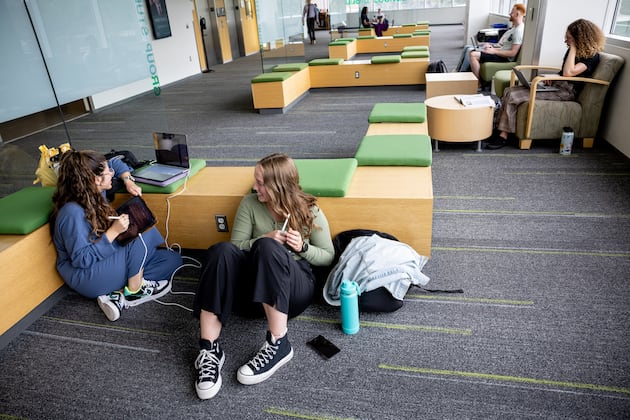
The traditional image of a full-time, residential student is increasingly unrepresentative. The contemporary student demographic is diverse, and meeting their needs is essential for promoting inclusive economic growth and reducing systemic inequalities.
Profile of the Modern Learner:
- Older, working adults
- Parents, often requiring childcare support
- First-generation students
- Individuals returning to education later in life
Challenges to Overcome for SDG Attainment:
- Affordability: High tuition costs remain a primary barrier to equal access, directly impacting SDG 4 and SDG 10.
- Support Services: Lack of available childcare disproportionately affects female learners, hindering progress on SDG 5 (Gender Equality).
- Pathway Efficiency: Friction in credit transfers and inflexible program structures impede progress toward SDG 8 by delaying entry into the workforce.
- Employment Outcomes: A core student concern is whether educational programs lead to meaningful employment, a direct link to SDG 8 (Decent Work and Economic Growth).
Policy and Systemic Reform for Sustainable Outcomes
While recent policy initiatives like the expansion of Workforce Pell Grants represent progress, a more comprehensive framework is required to ensure that educational access translates into sustainable economic outcomes and reduces inequality.
Policy Recommendations for SDG Alignment:
- Strengthen Quality Assurance: Investments in workforce training must be supported by protections that guarantee high-quality programs and trusted credentials, ensuring education leads to decent work (SDG 8).
- Develop a Federal Data System: A robust data system is urgently needed to capture the full diversity of modern students and their learning pathways. This is crucial for accountability and for measuring progress toward SDG 4 and SDG 10.
- Integrate Support Structures: Policy must move beyond funding alone to address systemic barriers, such as childcare and credit transferability, which are essential for creating equitable opportunities.
Innovative Models and Narrative Shifts for Inclusive Education
To correct the distorted public view and accelerate progress on the SDGs, both the narrative and the models of higher education must evolve. New initiatives are demonstrating how to better serve diverse populations and create direct pathways to economic mobility.
Strategic Initiatives:
- Narrative Realignment: The Complete College Photo Library is an example of a strategic effort to visually represent the diversity of students and institutions, promoting a more accurate public understanding aligned with the principles of SDG 10.
- Innovative Educational Models:
- Campus and Marcy Lab School: These models provide alternative, often non-degree, pathways to high-paying careers for underrepresented groups, directly contributing to SDG 8 and SDG 10.
- Vocational and Dual Enrollment Programs: Programs in trades like automotive and welding, and dual enrollment cybersecurity certificates, provide essential skills for stable careers (SDG 8).
- Prison Education Programs: Reinstating federal support for these programs provides skills and dignity, contributing to SDG 4 and SDG 16 (Peace, Justice and Strong Institutions) by facilitating reintegration and reducing recidivism.
The true value of higher education is measured not by endowments but by its capacity to provide opportunity for millions. Policymakers and media must expand their focus to reflect this reality, ensuring the future of higher education is equitable, inclusive, and aligned with the global commitment to sustainable development.
SDGs, Targets, and Indicators in the Article
1. Which SDGs are addressed or connected to the issues highlighted in the article?
-
SDG 4: Quality Education
- The entire article focuses on higher education, discussing its accessibility, affordability, quality, and relevance. It critiques the narrow public perception and advocates for a broader understanding that includes community colleges, technical schools, and workforce training, all of which are central to ensuring inclusive and equitable quality education.
-
SDG 8: Decent Work and Economic Growth
- The article repeatedly links education to employment outcomes and economic mobility. It emphasizes the need for programs that “lead to real employment opportunities” and provide “essential skills for stable careers,” such as automotive, welding, and technology training. This directly connects education to the goal of achieving productive employment and decent work.
-
SDG 10: Reduced Inequalities
- The text highlights disparities in the higher education system, contrasting elite institutions with those serving “working- and middle-class families.” It specifically mentions the need to support “first-generation students,” learners from “underrepresented backgrounds,” and incarcerated individuals through “prison education programs,” all of which are efforts to reduce inequalities and promote social and economic inclusion.
2. What specific targets under those SDGs can be identified based on the article’s content?
-
Under SDG 4: Quality Education
- Target 4.3: By 2030, ensure equal access for all women and men to affordable and quality technical, vocational and tertiary education, including university.
- The article champions community colleges, which “enroll roughly 44% of all undergraduates,” and technical schools. It also raises the question of affordability, stating that for most learners, a pressing concern is “whether tuition is affordable.”
- Target 4.4: By 2030, substantially increase the number of youth and adults who have relevant skills, including technical and vocational skills, for employment, decent jobs and entrepreneurship.
- The article explicitly supports this by mentioning “automotive and welding programs that provide essential skills for stable careers,” “dual enrollment programs that allow high school students to earn an associate degree,” and schools that prepare students for “high-paying careers in technology.”
- Target 4.3: By 2030, ensure equal access for all women and men to affordable and quality technical, vocational and tertiary education, including university.
-
Under SDG 8: Decent Work and Economic Growth
- Target 8.6: By 2030, substantially reduce the proportion of youth not in employment, education or training.
- The focus on “workforce training,” alternative models like the Marcy Lab School, and dual enrollment programs are all aimed at creating clear pathways from education and training directly into the workforce, thereby addressing this target.
- Target 8.6: By 2030, substantially reduce the proportion of youth not in employment, education or training.
-
Under SDG 10: Reduced Inequalities
- Target 10.2: By 2030, empower and promote the social, economic and political inclusion of all, irrespective of age, sex, disability, race, ethnicity, origin, religion or economic or other status.
- The article advocates for a system that serves a diverse student body, including learners who are “older, working, parenting, or returning to school later in life.” It also highlights programs for “young people from underrepresented backgrounds” and “prison education programs” that give people a “chance to start again.”
- Target 10.2: By 2030, empower and promote the social, economic and political inclusion of all, irrespective of age, sex, disability, race, ethnicity, origin, religion or economic or other status.
3. Are there any indicators mentioned or implied in the article that can be used to measure progress towards the identified targets?
-
Indicators for SDG 4 Targets
- Implied Indicator for Target 4.3: Participation rate of adults in tertiary education, particularly in non-traditional settings. The article notes that “Community colleges alone enroll roughly 44% of all undergraduates” and that “Today’s learners are older, working, parenting, or returning to school later in life.” Tracking these enrollment numbers would measure progress.
- Implied Indicator for Target 4.4: The employment rate of graduates from vocational and technical programs. The article stresses the need for a “federal data system that captures the realities of today’s students” and ensures that training “translates into real outcomes,” implying that tracking employment post-graduation is a key metric of success.
-
Indicators for SDG 10 Targets
- Implied Indicator for Target 10.2: Proportion of students from vulnerable or underrepresented groups enrolled in higher education. The article mentions that “First-generation students make up a growing share” and highlights specific programs for students from “underrepresented backgrounds” and incarcerated individuals. Measuring the enrollment and success rates of these specific populations would serve as a direct indicator.
4. Summary Table of SDGs, Targets, and Indicators
| SDGs | Targets | Indicators (Mentioned or Implied) |
|---|---|---|
| SDG 4: Quality Education |
|
|
| SDG 8: Decent Work and Economic Growth |
|
|
| SDG 10: Reduced Inequalities |
|
|
Source: fortune.com
What is Your Reaction?
 Like
0
Like
0
 Dislike
0
Dislike
0
 Love
0
Love
0
 Funny
0
Funny
0
 Angry
0
Angry
0
 Sad
0
Sad
0
 Wow
0
Wow
0