


























































One Year After USAID: How to Actually Fix Foreign Aid – Foreign Policy

Report on Reforming Foreign Aid with Emphasis on Sustainable Development Goals (SDGs)
Introduction
In the past year, significant reductions in U.S. foreign aid have occurred, notably with the closure of the U.S. Agency for International Development (USAID) and termination of over 80% of U.S. foreign aid grants and contracts. Other major donors such as the United Kingdom and Germany have also reduced their contributions. The United Nations’ humanitarian funding decreased by nearly 40% compared to 2024, amounting to $15 billion in 2025. This reduction in aid funding coincides with increased global humanitarian needs, posing challenges to achieving the Sustainable Development Goals (SDGs), particularly SDG 1 (No Poverty), SDG 2 (Zero Hunger), SDG 3 (Good Health and Well-being), and SDG 16 (Peace, Justice and Strong Institutions).
Current Humanitarian and Development Challenges
- Up to 1.6 million lives could have been saved if U.S. funding had not been cut, highlighting the critical role of aid in SDG 3 (Good Health and Well-being).
- Global child mortality is rising for the first time this century, threatening progress towards SDG 3.
- Approximately 23 million lives may be lost by 2030 in low- and middle-income countries due to defunding trends.
- The International Rescue Committee (IRC) reports 2 million clients lost services completely, and 6 million suffered service reductions, impacting SDG 3 and SDG 10 (Reduced Inequalities).
- More than half of health facilities run by IRC in crisis zones have closed or lost critical services.
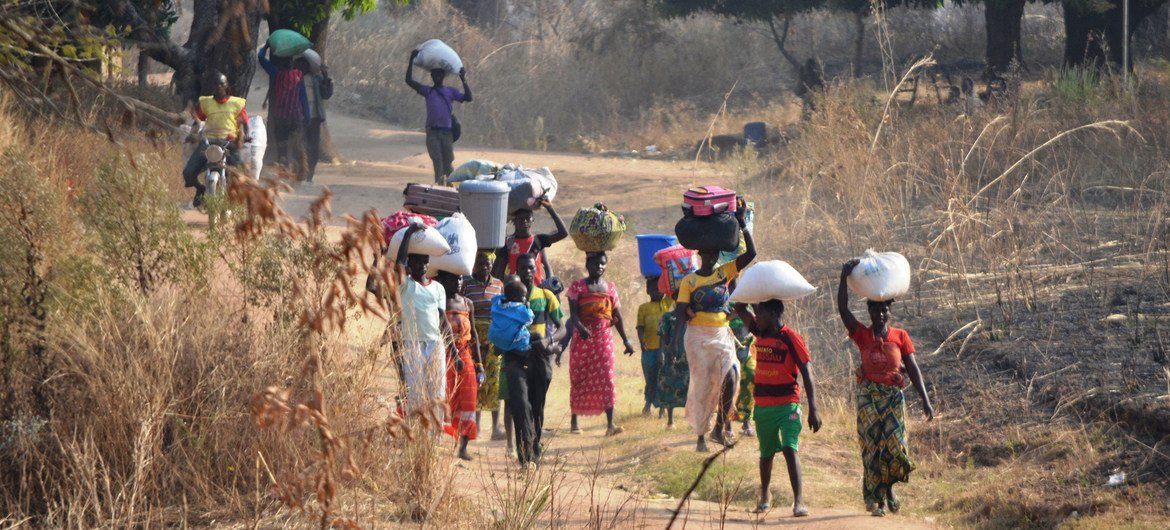
- There are currently around 60 wars worldwide, with over 122 million forcibly displaced people, nearly 40 million facing severe hunger, and 239 million in humanitarian need, severely affecting SDG 16 (Peace, Justice and Strong Institutions) and SDG 2 (Zero Hunger).
Perception and Misconceptions about Foreign Aid
Public perception often overestimates the amount spent on foreign aid, with many Americans believing that a quarter of the federal budget is allocated overseas, whereas the actual figure is about 1%. This misperception affects political support for aid, which is crucial for advancing SDG 17 (Partnerships for the Goals).
Common misconceptions include beliefs that aid is wasteful or ineffective. However, evidence shows:
- Global immunization efforts have saved an estimated 154 million lives over the past 50 years (SDG 3).
- The President’s Emergency Plan for AIDS Relief has saved over 25 million lives (SDG 3).
- Cost-effective interventions, such as delivering vaccines for approximately $2 per shot, demonstrate aid efficiency compared to much higher costs in developed countries.
Need for Aid System Reform
The geography of poverty has shifted, with more than half of the world’s extreme poor now residing in fragile and conflict-affected states. However, only about 25% of global aid flows to these countries, which account for nearly 90% of humanitarian need. This misalignment hinders progress towards SDG 1 (No Poverty), SDG 2 (Zero Hunger), and SDG 16 (Peace, Justice and Strong Institutions).
Key reform considerations include:
- Focusing aid on crisis-affected and fragile states rather than spreading resources thinly across countries with improving economies.
- Implementing simpler, more targeted interventions to increase cost-effectiveness and impact.
- Increasing investment in health and humanitarian interventions, which currently receive only 24% of total aid spending despite strong public support and high impact.
- Enhancing innovation in aid delivery, including predictive forecasting, artificial intelligence for disease diagnosis, and improved vaccine cold-chain technologies to support SDG 3 and SDG 9 (Industry, Innovation and Infrastructure).
- Mobilizing new financial mechanisms such as humanitarian debt swaps and parametric insurance to support vulnerable countries facing debt distress and climate disasters, aligning with SDG 13 (Climate Action) and SDG 17.
Recommendations for a Sustainable Foreign Aid Framework
- Center aid systems on accountability for outcomes rather than inputs, ensuring measurable progress towards SDGs.
- Prioritize aid allocation to fragile and conflict-affected states to address the highest humanitarian needs and support SDG 16.
- Promote innovation and financial instruments to enhance the efficiency and responsiveness of aid programs, supporting SDG 9 and SDG 13.
- Increase public awareness and correct misconceptions about foreign aid to build political and social support for sustainable development efforts (SDG 17).
- Encourage international cooperation and partnerships to mobilize resources and share best practices in aid delivery.
Conclusion
The abolition of USAID marks a significant shift in U.S. foreign aid policy; however, the global community faces a critical choice between continued retreat or purposeful reform. Strengthening foreign aid systems aligned with the Sustainable Development Goals is essential to address escalating humanitarian crises, reduce poverty and inequality, improve health outcomes, and promote peace and stability worldwide.
1. Sustainable Development Goals (SDGs) Addressed or Connected
- SDG 1: No Poverty
- The article discusses the impact of cuts in foreign aid on vulnerable populations in crisis and conflict zones, highlighting increased poverty and humanitarian need.
- SDG 2: Zero Hunger
- Severe hunger affecting close to 40 million people is mentioned, along with malnutrition treatment gaps in conflict zones.
- SDG 3: Good Health and Well-being
- Focus on health services reductions, vaccine delivery, child mortality rise, and treatment of diseases such as AIDS.
- SDG 10: Reduced Inequalities
- Disparities in aid distribution, with fragile and conflict-affected states receiving disproportionately less aid.
- SDG 16: Peace, Justice and Strong Institutions
- References to ongoing conflicts, wars, and displacement affecting millions.
- SDG 17: Partnerships for the Goals
- Emphasis on international aid, reform of aid systems, donor commitments, and global cooperation.
2. Specific Targets Under Those SDGs Identified
- SDG 1 – Target 1.5: Build resilience of the poor and reduce their exposure to climate-related extreme events and other economic, social and environmental shocks and disasters.
- Implied by the need for humanitarian aid in conflict and crisis zones.
- SDG 2 – Target 2.1 and 2.2: End hunger and ensure access to safe, nutritious food; end all forms of malnutrition.
- Article mentions malnutrition treatment gaps and interventions to improve cost-effectiveness.
- SDG 3 – Target 3.2 and 3.3: End preventable deaths of newborns and children under 5; end epidemics of AIDS and other communicable diseases.
- Child mortality rise and AIDS relief programs are discussed.
- SDG 10 – Target 10.2: Empower and promote social, economic and political inclusion of all.
- Unequal aid distribution to fragile states versus middle-income countries.
- SDG 16 – Target 16.1: Significantly reduce all forms of violence and related death rates everywhere.
- Reference to 60 wars and millions displaced.
- SDG 17 – Target 17.2 and 17.9: Developed countries to implement fully their official development assistance commitments; enhance international support for capacity-building in developing countries.
- Discussion on donor aid cuts and calls for reform and innovation in aid delivery.
3. Indicators Mentioned or Implied to Measure Progress
- Lives Saved / Mortality Rates
- Estimates such as 1.6 million lives potentially saved with restored funding, 154 million lives saved by immunization, and 23 million lives lost due to defunding trends.
- Humanitarian Funding Amounts
- UN humanitarian funding cut by 40%, totaling $15 billion in 2025.
- Service Coverage and Access
- Number of clients losing services (2 million lost completely, 6 million reduced), percentage of health facilities closed or reduced services.
- Percentage of children in conflict zones without access to malnutrition treatment (nearly 80%).
- Cost-effectiveness Metrics
- Cost per vaccine shot ($2 in conflict zones vs. $75 in New York), improvements in malnutrition treatment cost-effectiveness by up to 30%.
- Conflict and Displacement Statistics
- Number of wars ongoing (around 60), forcibly displaced people (122 million), people in humanitarian need (239 million).
- Aid Distribution Percentages
- Proportion of aid going to fragile states (14% to Emergency Watchlist countries), middle-income countries (44%), and rich countries (13%).
- Health and humanitarian interventions receiving 24% of total spending.
- Innovation and Anticipatory Action Funding
- Less than 1% of global aid budget spent on anticipatory action.
4. Table of SDGs, Targets, and Indicators
| SDGs | Targets | Indicators |
|---|---|---|
| SDG 1: No Poverty | Target 1.5: Build resilience of the poor and reduce exposure to shocks | Number of people affected by poverty due to aid cuts; humanitarian need statistics |
| SDG 2: Zero Hunger | Target 2.1 & 2.2: End hunger and malnutrition | Percentage of children without access to malnutrition treatment; hunger statistics |
| SDG 3: Good Health and Well-being | Target 3.2 & 3.3: End preventable child deaths; end epidemics of AIDS | Child mortality rates; lives saved by immunization and AIDS relief; vaccine delivery numbers |
| SDG 10: Reduced Inequalities | Target 10.2: Promote inclusion of all | Distribution of aid by country income and fragility status |
| SDG 16: Peace, Justice and Strong Institutions | Target 16.1: Reduce violence and related death rates | Number of ongoing wars; forcibly displaced people; humanitarian need figures |
| SDG 17: Partnerships for the Goals | Target 17.2 & 17.9: Fulfill ODA commitments; enhance capacity-building support | Humanitarian funding amounts; percentage of aid spent on health and humanitarian interventions; funding for innovation and anticipatory action |
Source: foreignpolicy.com
What is Your Reaction?
 Like
0
Like
0
 Dislike
0
Dislike
0
 Love
0
Love
0
 Funny
0
Funny
0
 Angry
0
Angry
0
 Sad
0
Sad
0
 Wow
0
Wow
0