









































Families claim damages over carbon monoxide leak at Balmuildy Primary School – BBC
Report on Health and Safety Failures at East Dunbartonshire School and Implications for Sustainable Development Goals
Introduction and Context
A significant health and safety incident involving a carbon monoxide (CO) leak occurred at Balmuildy Primary School, Bishopbriggs, in February 2020. The local authority, East Dunbartonshire Council, was subsequently fined for breaching health and safety regulations and is currently facing 29 civil damages claims from affected families. This event highlights critical failures in upholding several key United Nations Sustainable Development Goals (SDGs), particularly those related to health, education, and safe community infrastructure.
Analysis of Systemic Failures and Institutional Oversight
An investigation by the Health and Safety Executive (HSE) revealed systemic deficiencies in the council’s management of its school estate, directly impacting the safety of public institutions and contravening the principles of SDG 11 (Sustainable Cities and Communities) and SDG 16 (Peace, Justice and Strong Institutions).
- Lack of Proactive Management: The HSE report noted there “was no system in place for the pro-active management of the gas heating/boiler systems nor was there any system in place for safety inspections/checks to be completed.”
- Widespread Inspection Deficits: Documentation revealed a significant lapse in safety protocols across the council’s jurisdiction. Of 43 schools:
- 12 had not undergone an inspection for as long as six years prior to the incident.
- A further 10 schools had no inspection records, suggesting an even longer period of neglect.
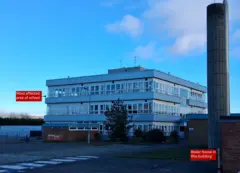
- Immediate Cause of Leak: The incident was caused by a faulty boiler leaking CO into a plant room. An open and unsealed service duct provided a direct pathway for the toxic gas to enter the main school building.
- Systemic Neglect: Following the incident, safety checks across the school estate led to “extensive repairs” on other boilers, which the HSE described as “indicative of a systemic failure to manage the ongoing repair and inspection program in a suitable and sufficient manner.”
Impact on Health, Well-being, and Education (SDG 3 & SDG 4)
The failure to ensure a safe environment had severe consequences for the health and education of students and staff, undermining the objectives of SDG 3 (Good Health and Well-being) and SDG 4 (Quality Education).
- Immediate Health Impact: On the first day of the incident, 35 pupils and four staff members reported symptoms consistent with CO poisoning, including headaches, nausea, and sickness. One child was hospitalized and diagnosed with symptoms resulting from carbon monoxide poisoning.
- Long-Term Health Concerns: Parents have expressed significant concern regarding the long-term health effects of prolonged CO exposure on their children, with some children continuing to suffer from headaches.
- Compromised Educational Environment: The presence of a life-threatening hazard and the subsequent evacuation of the school created an unsafe learning environment, fundamentally violating the prerequisite for quality education as outlined in SDG 4.
- Delayed Detection: The presence of CO was not initially suspected by the council. The alarm was raised only after a teacher brought a personal CO detector to the school, which was later confirmed by additional store-bought monitors, prompting the evacuation.
Institutional Response, Accountability, and Path Forward
The response to the incident and its aftermath are central to evaluating the effectiveness and accountability of public institutions, a core tenet of SDG 16.
- Legal Accountability: East Dunbartonshire Council admitted to breaching health and safety laws, resulting in a criminal fine. The 29 ongoing civil cases represent the families’ pursuit of justice and accountability.
- Corrective Measures: In response to the systemic failures, the council has reportedly implemented a new system that automatically flags when statutory testing and maintenance work are required. This measure is a critical step toward building more resilient and safe public infrastructure in line with SDG 11.
- Challenges in Transparency: Despite the council’s assertion that it kept parents informed, legal representatives for the families state that a lack of open and transparent communication has forced them to pursue legal channels to obtain information.
Analysis of Sustainable Development Goals in the Article
1. Which SDGs are addressed or connected to the issues highlighted in the article?
The article highlights issues directly related to several Sustainable Development Goals. The core problems of health impacts from pollution, unsafe educational environments, and failures in public institutional accountability connect to the following SDGs:
- SDG 3: Good Health and Well-being: The central theme of the article is the carbon monoxide leak and its direct impact on the health of students and staff, causing symptoms like vomiting, fainting, sickness, and headaches.
- SDG 4: Quality Education: The incident occurred in a primary school, compromising the safety of the learning environment. An unsafe school facility directly hinders the provision of quality education.
- SDG 11: Sustainable Cities and Communities: The article discusses the safety of public infrastructure, specifically a school building managed by a local authority. The failure to maintain the school’s boiler system relates to the goal of ensuring safe and resilient community facilities.
- SDG 16: Peace, Justice and Strong Institutions: The article details the failure of a public institution (the local council) to perform its duties, leading to legal consequences (fines and civil claims) and a lack of transparency with the affected families. This addresses the need for effective and accountable institutions.
2. What specific targets under those SDGs can be identified based on the article’s content?
Based on the specific issues discussed, the following SDG targets are relevant:
-
SDG 3: Good Health and Well-being
- Target 3.9: “By 2030, substantially reduce the number of deaths and illnesses from hazardous chemicals and air, water and soil pollution and contamination.” The carbon monoxide leak is a clear instance of air pollution by a hazardous chemical (CO) that led to widespread illness among pupils and staff. The article notes that “35 pupils and four staff members” complained of symptoms and one mother was told her son’s symptoms were “a result of carbon monoxide poisoning.”
-
SDG 4: Quality Education
- Target 4.a: “Build and upgrade education facilities that are child, disability and gender sensitive and provide safe, non-violent, inclusive and effective learning environments for all.” The school was not a safe learning environment due to the faulty boiler and the council’s failure to conduct safety checks. The article describes a “systemic failure to manage the ongoing repair and inspection program,” which directly contradicts the requirement for a safe facility.
-
SDG 16: Peace, Justice and Strong Institutions
- Target 16.6: “Develop effective, accountable and transparent institutions at all levels.” The article highlights the local council’s institutional failures. It mentions there “was no system in place for the pro-active management of the gas heating/boiler systems.” The council’s lack of transparency is also noted, with a lawyer stating, “the council appears to not want to deal with this in an open and transparent way.” The council being fined and facing 29 civil claims further underscores the failure in effectiveness and accountability.
3. Are there any indicators mentioned or implied in the article that can be used to measure progress towards the identified targets?
The article contains several explicit and implicit indicators that can measure progress or failure related to the identified targets:
-
Indicators for SDG 3 (Target 3.9)
- Number of illnesses from air pollution: The article explicitly states that “35 pupils and four staff members” suffered from symptoms like “headaches, nausea and sickness” due to carbon monoxide exposure. This serves as a direct measure of illness caused by hazardous air pollution.
- Mortality rate from unintentional poisoning (Indicator 3.9.3): While the article mentions “no fatalities due to the high level of CO detected,” the potential for death was high. Tracking the number of fatalities (or near-fatalities) from such incidents is a key indicator.
-
Indicators for SDG 4 (Target 4.a)
- Proportion of schools with basic safety services (related to Indicator 4.a.1): The article implies a failure in this area by revealing that of the council’s 43 schools, “12 had had no inspection conducted in as much as six years” and “No records could also be found for another 10.” The number or percentage of schools with up-to-date and certified safety inspections is a clear indicator.
-
Indicators for SDG 16 (Target 16.6)
- Evidence of institutional effectiveness and accountability: The lack of an effective system is shown by the statement that there “was no system in place for the pro-active management of the gas heating/boiler systems.” An indicator of improvement is the council’s implementation of “a system that automatically flags when work or statutory testing is required.”
- Number of legal actions against a public body: The article states the council was “fined in the criminal courts” and is facing “nearly 30 damages claims.” The volume of litigation for negligence serves as an indicator of institutional failure.
4. Table of SDGs, Targets, and Indicators
| SDGs | Targets | Indicators |
|---|---|---|
| SDG 3: Good Health and Well-being | 3.9: Substantially reduce the number of deaths and illnesses from hazardous chemicals and air pollution. |
|
| SDG 4: Quality Education | 4.a: Build and upgrade education facilities to provide safe and effective learning environments for all. |
|
| SDG 16: Peace, Justice and Strong Institutions | 16.6: Develop effective, accountable and transparent institutions at all levels. |
|
Source: bbc.com
What is Your Reaction?
 Like
0
Like
0
 Dislike
0
Dislike
0
 Love
0
Love
0
 Funny
0
Funny
0
 Angry
0
Angry
0
 Sad
0
Sad
0
 Wow
0
Wow
0