
















Mapletree starts construction on 420,000 sq. ft. Poconos industrial development – RE-NJ
Report on Mapletree Investments’ Logistics Center Development in Tobyhanna, Pennsylvania, and its Alignment with Sustainable Development Goals (SDGs)
Project Overview and Strategic Context
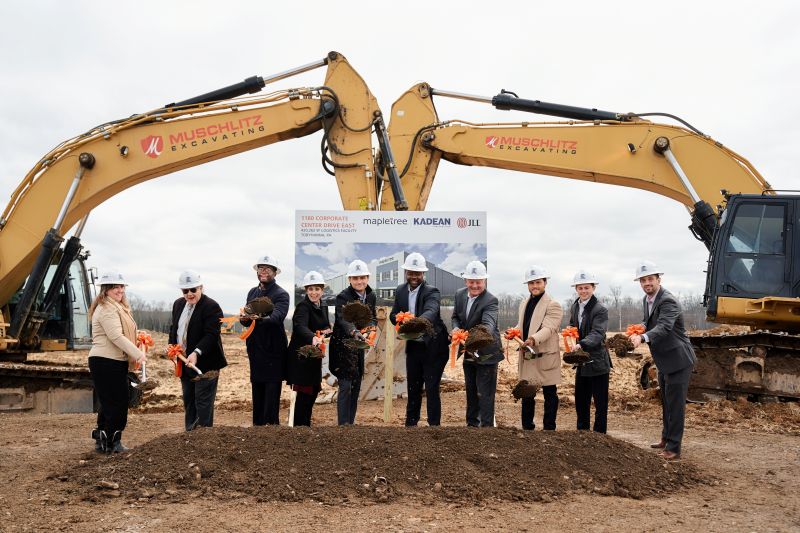
Mapletree Investments has initiated the construction of a new 420,262-square-foot logistics facility at 1180 Corporate Center Drive East in Tobyhanna, Pennsylvania. This development expands the company’s existing regional footprint, which includes a 1.3 million-square-foot warehouse nearby. The project, with a projected completion in Fall 2026, is strategically positioned to enhance logistics capabilities in the Poconos region, leveraging its proximity to major transportation corridors like Interstates 380 and 80.
Contribution to SDG 8: Decent Work and Economic Growth
The development directly supports the objectives of SDG 8 by fostering sustained, inclusive, and sustainable economic growth, full and productive employment, and decent work for all. This is achieved through:
- Job Creation: The construction phase, managed by general contractor Kadean Construction, and the subsequent operational phase of the logistics center will generate significant employment opportunities for the local community.
- Economic Stimulation: The project represents a substantial investment in the region’s economy, promoting local development and strengthening the logistics sector.
- Public-Private Partnership: The involvement of the Pocono Mountains Economic Development Corporation (PMEDC) underscores the collaborative effort to drive regional economic prosperity.
Advancing SDG 9: Industry, Innovation, and Infrastructure
This project contributes to building resilient infrastructure, promoting inclusive and sustainable industrialization, and fostering innovation, in line with SDG 9. The facility is designed to be a modern and efficient component of the national supply chain infrastructure.
- Resilient Infrastructure: The development of a state-of-the-art logistics center enhances the robustness and efficiency of regional and national supply chains.
- Sustainable Industrialization: By providing advanced logistics space, Mapletree supports the growth of industries reliant on efficient distribution and warehousing.
- Technical Specifications: The facility’s design incorporates features that promote industrial efficiency, including:
- 40-foot clear ceiling heights
- 64 dock doors
- 64 trailer stalls
- 189 parking spaces
Commitment to SDG 11 and SDG 12: Sustainable Cities and Responsible Production
Mapletree has integrated key sustainability principles into the project, directly addressing SDG 11 (Sustainable Cities and Communities) and SDG 12 (Responsible Consumption and Production). The primary driver for this alignment is the facility’s design target:
- LEED Silver Certification: The facility is designed to achieve Leadership in Energy and Environmental Design (LEED) silver certification from the U.S. Green Building Council.
- Resource Efficiency: This commitment ensures the adoption of sustainable building practices, focusing on energy efficiency, water conservation, and the use of environmentally friendly materials.
- Sustainable Production Patterns: By constructing a green-certified building, the project promotes responsible production patterns within the construction and real estate sectors, reducing the environmental impact of industrial infrastructure.
Fostering SDG 17: Partnerships for the Goals
The successful implementation of this project exemplifies SDG 17, which emphasizes the importance of partnerships to achieve sustainable development. The collaboration involves multiple stakeholders working towards a common goal:
- Mapletree Investments: The developer leading the investment and project vision.
- JLL: The leasing team facilitating the facility’s integration into the market.
- Kadean Construction: The general contractor responsible for executing the construction according to sustainable standards.
- Pocono Mountains Economic Development Corporation (PMEDC): A key local partner ensuring the project aligns with regional economic development goals.
This multi-stakeholder approach is crucial for realizing the project’s combined economic, social, and environmental objectives.
Analysis of SDGs, Targets, and Indicators
1. Which SDGs are addressed or connected to the issues highlighted in the article?
-
SDG 8: Decent Work and Economic Growth
The article discusses a major construction project and the development of a logistics center, which are significant economic activities. The involvement of the Pocono Mountains Economic Development Corporation (PMEDC) explicitly links the project to local economic development, which inherently involves job creation and economic growth in the region.
-
SDG 9: Industry, Innovation and Infrastructure
The core subject of the article is the construction of a new 420,262-square-foot logistics facility. This is a direct contribution to building resilient infrastructure that supports the logistics industry, trade, and economic activity. The facility’s modern specifications (e.g., 40-foot clear ceiling heights) point towards upgrading industrial infrastructure.
-
SDG 11: Sustainable Cities and Communities
The project includes a commitment to sustainability through its design. The article explicitly states that the facility is designed “to achieve silver certification on the U.S. Green Building Council’s Leadership in Energy and Environmental Design scale.” This commitment to green building practices contributes to making human settlements (in this case, the Tobyhanna area) more sustainable and reduces the environmental impact of new construction.
2. What specific targets under those SDGs can be identified based on the article’s content?
-
Under SDG 8: Decent Work and Economic Growth
- Target 8.2: Achieve higher levels of economic productivity through diversification, technological upgrading and innovation. The development of a modern, large-scale logistics center enhances the productivity and capacity of the logistics sector in the Poconos region.
-
Under SDG 9: Industry, Innovation and Infrastructure
- Target 9.1: Develop quality, reliable, sustainable and resilient infrastructure… to support economic development. The article details the construction of a new logistics center, a key piece of economic infrastructure. The plan for LEED certification directly addresses the “sustainable” aspect of this target.
- Target 9.4: By 2030, upgrade infrastructure and retrofit industries to make them sustainable, with increased resource-use efficiency and greater adoption of clean and environmentally sound technologies and industrial processes. The developer’s decision to design the facility to meet LEED silver certification standards is a direct action towards this target, promoting environmentally sound building technology.
-
Under SDG 11: Sustainable Cities and Communities
- Target 11.a: Support positive economic, social and environmental links between urban, peri-urban and rural areas by strengthening national and regional development planning. The project, supported by the Pocono Mountains Economic Development Corporation, represents a significant regional development that strengthens economic links and infrastructure in the Tobyhanna area.
3. Are there any indicators mentioned or implied in the article that can be used to measure progress towards the identified targets?
-
Direct Indicators:
- Investment in Infrastructure: The size of the new facility, “420,262-square-foot,” serves as a quantitative indicator of the scale of investment in new, modern infrastructure.
- Adoption of Sustainable Practices: The goal to “achieve silver certification on the U.S. Green Building Council’s Leadership in Energy and Environmental Design scale” is a specific, measurable indicator of the adoption of sustainable and environmentally sound building practices.
-
Implied Indicators:
- Job Creation: While not quantified, a construction project of this magnitude and the subsequent operation of a logistics center imply the creation of jobs, which is an indicator for SDG 8. The presence of an Economic Development Corporation reinforces this implication.
- Increased Logistics Capacity: The addition of “64 dock doors” and “64 trailer stalls” are specific metrics that imply an increase in the region’s capacity for logistics and trade, contributing to economic productivity (Target 8.2).
SDGs, Targets and Indicators Table
| SDGs | Targets | Indicators |
|---|---|---|
| SDG 8: Decent Work and Economic Growth | 8.2: Achieve higher levels of economic productivity through diversification, technological upgrading and innovation. |
|
| SDG 9: Industry, Innovation and Infrastructure |
9.1: Develop quality, reliable, sustainable and resilient infrastructure.
9.4: Upgrade infrastructure… to make them sustainable, with… greater adoption of clean and environmentally sound technologies. |
|
| SDG 11: Sustainable Cities and Communities | 11.a: Support positive economic, social and environmental links… by strengthening national and regional development planning. |
|
Source: re-nj.com
What is Your Reaction?
 Like
0
Like
0
 Dislike
0
Dislike
0
 Love
0
Love
0
 Funny
0
Funny
0
 Angry
0
Angry
0
 Sad
0
Sad
0
 Wow
0
Wow
0