Anaerobic Digestion Market Size | Industry Report, 2033 – Grand View Research
Anaerobic Digestion Market Report with Emphasis on Sustainable Development Goals (SDGs)
Market Overview and Sustainable Development Context
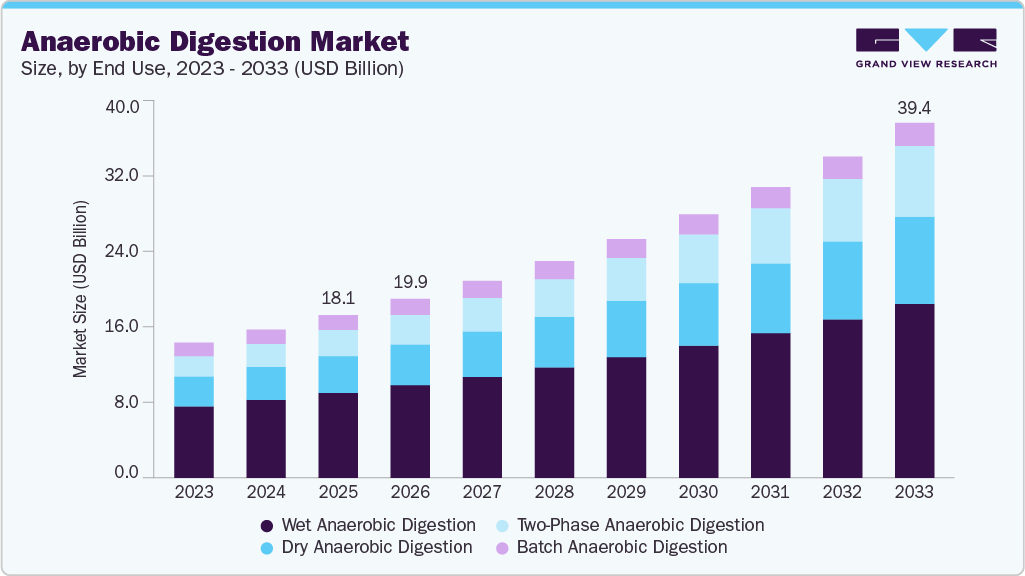
The global anaerobic digestion market was valued at USD 18.07 billion in 2025 and is projected to grow to USD 39.42 billion by 2033, exhibiting a compound annual growth rate (CAGR) of 10.3% from 2026 to 2033. This growth aligns with several Sustainable Development Goals (SDGs), including SDG 7 (Affordable and Clean Energy), SDG 11 (Sustainable Cities and Communities), SDG 12 (Responsible Consumption and Production), and SDG 13 (Climate Action).
Key drivers include the increasing demand for renewable energy, sustainable waste management practices, and stringent regulations targeting greenhouse gas emission reductions, directly contributing to global climate action efforts.
Key Market Trends and Insights
- North America held the largest revenue share (~35.1%) in 2025, reflecting strong policy support for renewable energy (SDG 7) and sustainable infrastructure (SDG 9).
- The United States is a major contributor, with investments supporting clean energy transitions.
- Wet anaerobic digestion technology dominated the market in 2025 due to its efficiency in processing high-moisture organic waste, supporting SDG 12.
- Agricultural waste was the leading feedstock segment, promoting sustainable agriculture (SDG 2) and circular economy principles.
- The agriculture sector accounted for over 30% of end-use market share, enhancing sustainable farming practices and nutrient recycling.
Market Size and Forecast
- 2025 Market Size: USD 18.07 Billion
- 2033 Projected Market Size: USD 39.42 Billion
- CAGR (2026-2033): 10.3%
- Regional Highlights: North America leads in market size; Asia Pacific is the fastest-growing region, advancing SDG 7 and SDG 11.
Role of Anaerobic Digestion in Achieving Sustainable Development Goals
Contribution to SDG 7: Affordable and Clean Energy
Anaerobic digestion facilitates the conversion of organic waste into biogas and renewable natural gas (RNG), providing dispatchable and clean energy sources. This supports energy diversification and reduces reliance on fossil fuels, advancing SDG 7 targets.
Advancement of SDG 12: Responsible Consumption and Production
The technology promotes circular economy practices by converting food waste, manure, sewage sludge, and industrial residues into valuable energy and nutrient-rich digestate, reducing landfill dependency and waste generation.
Support for SDG 13: Climate Action
By mitigating methane emissions from organic waste and generating low-carbon energy, anaerobic digestion contributes to greenhouse gas reduction efforts and national decarbonization targets.
Enhancement of SDG 2: Zero Hunger and Sustainable Agriculture
The use of digestate as an organic fertilizer improves soil health and reduces chemical fertilizer use, supporting sustainable agriculture and food security.
Drivers, Opportunities, and Challenges
Market Drivers
- Increasing organic waste generation and demand for renewable energy.
- Stringent environmental regulations targeting methane and greenhouse gas emissions.
- Government incentives including feed-in tariffs, tax credits, and carbon credit programs aligned with SDG 13.
- Growing adoption of circular economy and sustainable waste management practices.
Opportunities
- Expansion of renewable natural gas markets supported by policy frameworks.
- Technological advancements improving methane yields and operational efficiency.
- Strategic partnerships enhancing feedstock security and integrated waste-to-energy infrastructure.
- Scaling up decentralized energy solutions to support SDG 7 and SDG 11.
Challenges and Restraints
- High initial capital investment for plant development and gas upgrading infrastructure.
- Feedstock supply chain complexities including segregation and logistics.
- Lengthy permitting processes and evolving regulatory frameworks.
- Price volatility in renewable natural gas markets.
Technology Insights
Wet Anaerobic Digestion
Dominating with a 52.2% market share in 2025, wet anaerobic digestion is favored for its maturity, stability, and efficiency in processing high-moisture feedstocks such as food waste and sewage sludge. This technology supports SDG 12 by enabling effective organic waste treatment.
Two-Phase Anaerobic Digestion
Projected to grow at a CAGR of 13.3%, two-phase systems optimize biological processes by separating acidogenesis and methanogenesis, enhancing methane yields and process control. This innovation supports SDG 9 (Industry, Innovation, and Infrastructure) and SDG 7.
Feedstock Insights
Agricultural Waste
Holding the largest market share (~26.6%) in 2025, agricultural waste utilization supports sustainable agriculture (SDG 2) and circular economy models by converting manure and crop residues into renewable energy and organic fertilizers.
Food Waste
Expected to register the fastest growth (CAGR 13.3%), driven by urbanization and regulations diverting organic waste from landfills. This supports SDG 11 by promoting sustainable urban waste management.
End Use Insights
Agriculture Sector
Leading with approximately 30.1% market share, the agriculture sector leverages anaerobic digestion to manage organic waste, generate renewable energy, and produce nutrient-rich digestate, advancing SDG 2 and SDG 12.
Energy Sector
Projected to grow at 11.2% CAGR, the energy sector’s investment in anaerobic digestion enhances renewable energy portfolios, grid reliability, and supports decarbonization mandates (SDG 7 and SDG 13).
Regional Market Insights
North America
Largest market share (~35.1%) due to robust policy frameworks supporting renewable natural gas, landfill diversion, and carbon credit programs. These efforts contribute to SDG 7, SDG 11, and SDG 13.
United States
Key contributor with expanding RNG production and incentives promoting methane reduction and climate goals.
Asia Pacific
Fastest-growing region (CAGR 13.7%) driven by urbanization, organic waste generation, and government focus on renewable energy adoption, supporting SDG 7 and SDG 11.
Europe
Significant market share supported by stringent environmental regulations, carbon neutrality targets, and mature biogas infrastructure, advancing SDG 13 and SDG 12.
Latin America
Steady growth fueled by agricultural expansion and sustainable waste management initiatives, contributing to SDG 2 and SDG 12.
Middle East & Africa
Developing market with increasing renewable energy awareness and waste management improvements, aligned with SDG 7 and SDG 13.
Key Market Players and Innovation
- EnviTec Biogas AG
- PlanET Biogas Group GmbH
- Hitachi Zosen Inova AG
- WELTEC BIOPOWER GmbH
- Anaergia Inc.
- BioConstruct GmbH
- BTS Biogas
- Renergon International AG
- DVO, Inc.
- Organic Recycling Systems Ltd.
These companies focus on advancing anaerobic digestion technologies that enhance methane yields, process stability, and plant efficiency, supporting SDG 9 and SDG 7. Strategic partnerships and modular system developments enable decentralized energy infrastructure and circular economy solutions, contributing to multiple SDGs.
Recent Developments
- March 2025: EnviTec Biogas commissioned its largest U.S. anaerobic digestion facility in South Dakota, processing over 300,000 gallons of dairy manure daily to produce approximately 778 Nm³/h of biomethane, exemplifying scalable sustainable biogas solutions aligned with SDG 7 and SDG 13.
- April 2025: PlanET Biogas became the technology supplier for the Convertus York Biofuels Facility in Ontario, Canada, aiming to convert organic waste into renewable natural gas, supporting SDG 12 and SDG 7.
Market Scope and Segmentation
| Report Attribute | Details |
|---|---|
| Market Definition | Global revenue from technologies converting organic waste into biogas and renewable energy supporting sustainable waste management and decarbonization (SDG 7, SDG 12, SDG 13). |
| Market Size (2026) | USD 19.86 billion |
| Revenue Forecast (2033) | USD 39.42 billion |
| Growth Rate | CAGR of 10.3% (2026-2033) |
| Base Year | 2025 |
| Historical Data | 2021 – 2024 |
| Forecast Period | 2026 – 2033 |
| Quantitative Units | Revenue in USD billion/million and CAGR |
| Report Coverage | Revenue forecast, competitive landscape, growth factors, and trends |
| Segments Covered | Technology, feedstock, end use, region |
| Regional Scope | North America; Europe; Asia Pacific; Latin America; Middle East & Africa |
| Country Scope | U.S., Canada, Mexico, Germany, UK, France, Italy, Spain, China, India, Japan, Brazil, Argentina, Saudi Arabia, UAE, South Africa |
| Key Companies Profiled | EnviTec Biogas AG, PlanET Biogas Group GmbH, Hitachi Zosen Inova AG, WELTEC BIOPOWER GmbH, Anaergia Inc., BioConstruct GmbH, Renergon International AG, BTS Biogas Srl/GmbH, DVO, Inc., Organic Recycling Systems Ltd. |
Global Anaerobic Digestion Market Segmentation
The market is segmented by technology, feedstock, end use, and region to analyze revenue growth and trends from 2021 to 2033.
Technology Outlook
- Wet Anaerobic Digestion
- Dry Anaerobic Digestion
- Two-Phase Anaerobic Digestion
Feedstock Outlook
- Agricultural Waste
- Animal Manure
- Food Waste
- Industrial Waste
- Sewage Sludge
End Use Outlook
- Agriculture
- Energy Sector
- Waste Management
- Food and Beverage
Regional Outlook
- North America (U.S., Canada, Mexico)
- Europe (Germany, UK, France, Italy, Spain)
- Asia Pacific (China, India, Japan)
- Latin America (Brazil, Argentina)
- Middle East & Africa (Saudi Arabia, UAE, South Africa)
Frequently Asked Questions
- The global anaerobic digestion market size was estimated at USD 18.07 billion in 2025 and is expected to reach USD 19.86 billion in 2026.
- The market is expected to grow at a CAGR of 10.3% from 2026 to 2033, reaching USD 39.42 billion by 2033.
- Agricultural waste held the largest revenue share of over 26% in 2025.
- Key vendors include EnviTec Biogas AG, PlanET Biogas Group GmbH, Hitachi Zosen Inova AG, and others.
- Market drivers include rising organic waste generation, demand for renewable natural gas and biogas, environmental regulations, and investments in sustainable waste-to-energy infrastructure supporting global decarbonization.
1. Sustainable Development Goals (SDGs) Addressed in the Article
- SDG 7: Affordable and Clean Energy
- The article discusses the growth of the anaerobic digestion market as a source of renewable energy, including biogas and renewable natural gas (RNG), contributing to clean and sustainable energy solutions.
- SDG 12: Responsible Consumption and Production
- Emphasis on sustainable waste management, circular economy practices, and converting organic waste into energy aligns with responsible consumption and production.
- SDG 13: Climate Action
- Stringent regulations aimed at reducing greenhouse gas emissions and methane emission reductions are highlighted, supporting climate action goals.
- SDG 2: Zero Hunger
- The use of nutrient-rich digestate as organic fertilizer supports sustainable agriculture and soil health.
- SDG 11: Sustainable Cities and Communities
- Municipal waste management and landfill diversion efforts contribute to sustainable urban development.
2. Specific Targets Under the Identified SDGs
- SDG 7: Affordable and Clean Energy
- Target 7.2: Increase substantially the share of renewable energy in the global energy mix.
- Target 7.3: Double the global rate of improvement in energy efficiency.
- SDG 12: Responsible Consumption and Production
- Target 12.5: Substantially reduce waste generation through prevention, reduction, recycling, and reuse.
- Target 12.4: Achieve environmentally sound management of chemicals and all wastes throughout their life cycle.
- SDG 13: Climate Action
- Target 13.2: Integrate climate change measures into national policies, strategies, and planning.
- Target 13.3: Improve education, awareness-raising and human and institutional capacity on climate change mitigation.
- SDG 2: Zero Hunger
- Target 2.4: Ensure sustainable food production systems and implement resilient agricultural practices.
- SDG 11: Sustainable Cities and Communities
- Target 11.6: Reduce the adverse per capita environmental impact of cities, including by paying special attention to air quality and municipal waste management.
3. Indicators Mentioned or Implied to Measure Progress
- Renewable Energy Capacity and Production
- Market size and revenue growth of anaerobic digestion technologies (e.g., USD 18.07 billion in 2025 to USD 39.42 billion by 2033) indicate increased renewable energy deployment.
- Growth rates such as CAGR of 10.3% for the anaerobic digestion market reflect progress in renewable energy adoption.
- Waste Management and Reduction
- Volume of organic waste processed (food waste, agricultural waste, sewage sludge) through anaerobic digestion systems.
- Reduction in landfill dependency and methane emissions implied through adoption of anaerobic digestion.
- Greenhouse Gas Emissions
- Indicators related to methane emission reductions supported by regulatory frameworks and carbon credit programs.
- Use of Digestate as Fertilizer
- Production and application rates of nutrient-rich digestate for agriculture, supporting soil health and reducing chemical fertilizer use.
- Energy Access and Reliability
- Deployment of anaerobic digestion systems providing dispatchable power and integration with combined heat and power (CHP) systems.
4. Table of SDGs, Targets, and Indicators
| SDGs | Targets | Indicators |
|---|---|---|
| SDG 7: Affordable and Clean Energy |
|
|
| SDG 12: Responsible Consumption and Production |
|
|
| SDG 13: Climate Action |
|
|
| SDG 2: Zero Hunger |
|
|
| SDG 11: Sustainable Cities and Communities |
|
|
Source: grandviewresearch.com
What is Your Reaction?
 Like
0
Like
0
 Dislike
0
Dislike
0
 Love
0
Love
0
 Funny
0
Funny
0
 Angry
0
Angry
0
 Sad
0
Sad
0
 Wow
0
Wow
0