
























































Trump is dismantling climate rules. Industry is worried. – Brookings
Report on the Repeal of the Endangerment Finding for Greenhouse Gases and Its Impact on Sustainable Development Goals (SDGs)

Introduction
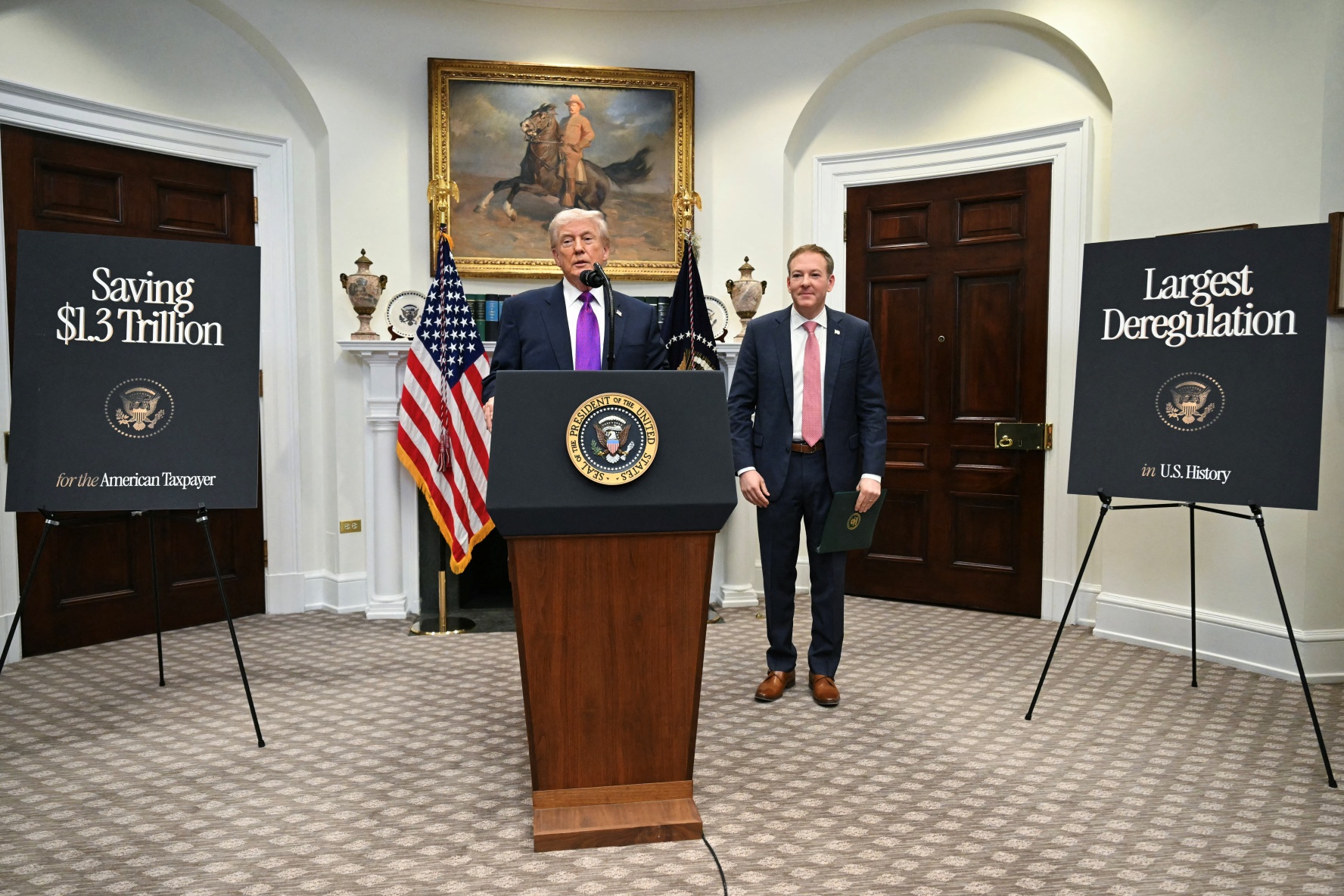
On February 12, 2026, U.S. President Donald Trump and EPA Administrator Lee Zeldin announced the repeal of the Endangerment Finding for Greenhouse Gases (GHGs), a pivotal federal climate policy established in 2009. This repeal represents the largest deregulatory action in U.S. history and has significant implications for climate action and sustainable development.
Background: The Endangerment Finding and Federal GHG Regulation
The Endangerment Finding, based on the 2007 Supreme Court decision in Massachusetts v. EPA, classified GHGs as air pollutants under the Clean Air Act, mandating EPA regulation of emissions from motor vehicles and stationary sources such as power plants and oil and gas operations.
Key Elements of the Endangerment Finding
- Recognition of six GHGs, including carbon dioxide and methane, as threats to public health and welfare.
- Obligation for EPA to regulate emissions from new motor vehicles under Section 202(a) of the Clean Air Act.
- Extension of regulatory authority to stationary sources under Section 111 of the Clean Air Act.
- Implementation of regulations on power plants and methane emissions from oil and gas industries.
Scientific Basis Supporting the Finding
- Evidence of rising GHG concentrations causing climate warming, sea level rise, ocean acidification, and altered precipitation patterns.
- Demonstrated adverse effects on human health and welfare.
- Scientific consensus reinforced by reports from the National Academies, the Fifth National Climate Assessment, and the IPCC Sixth Assessment Report.
Legal Justifications for the Repeal
Claim of Lack of Statutory Authority
- References to recent Supreme Court cases (West Virginia v. EPA and Loper Bright Enterprises v. Raimondo) invoking the “major questions doctrine”.
- Argument that the Clean Air Act does not explicitly authorize EPA to regulate GHG emissions from vehicles or shift electricity generation.
- Legal challenges anticipated, including lawsuits by states and advocacy groups.
Claim that Vehicle GHG Emissions Are Insignificant
- Administration’s assertion that eliminating all vehicle GHG emissions would have a negligible impact on global climate metrics.
- Counterarguments highlight that transportation accounts for 30% of U.S. GHG emissions and is the fastest growing sector.
- Emissions impacts are cumulative globally, making incremental regulation essential.
Scientific Stance in the Repeal
- The repeal does not dispute the underlying climate science.
- Previous attempts to question climate science via the Department of Energy’s Climate Working Group were legally and scientifically challenged.
- EPA’s repeal focuses on legal and regulatory grounds rather than scientific denial.
Implications of the Repeal for Sustainable Development Goals
The repeal affects multiple SDGs, notably:
- SDG 3: Good Health and Well-being – Increased GHG emissions threaten public health through climate-related impacts.
- SDG 7: Affordable and Clean Energy – Deregulation may hinder progress toward clean energy transitions.
- SDG 9: Industry, Innovation, and Infrastructure – Regulatory uncertainty may disrupt long-term investments and technological innovation.
- SDG 13: Climate Action – The repeal undermines federal climate mitigation efforts critical to meeting global climate targets.
- SDG 15: Life on Land – Climate change impacts ecosystems and biodiversity, which are exacerbated by increased emissions.
Regulatory Uncertainty and Economic Impact
- Removal of federal GHG regulation creates a regulatory vacuum likely to be filled by lawsuits and state-level actions, causing inconsistency.
- Investors face uncertainty impacting decisions on vehicle manufacturing, industrial facilities, and energy infrastructure.
- Potential for fragmented state regulations complicates compliance for industries operating nationally.
- Risk of federal public nuisance lawsuits increases without Clean Air Act protections.
Industry Responses
- Automotive companies express concern over regulatory instability and market fragmentation.
- Electric power industry warns of unpredictable outcomes from litigation-based regulation.
- Oil and gas industry supports some methane regulations to maintain international trade relations, especially with the EU.
Broader Context of Deregulation
The repeal is part of a broader deregulatory agenda aimed at reducing federal environmental regulations, which includes:
- Loosening air pollution controls on coal and oil power plants.
- Reducing Clean Water Act jurisdiction over wetlands and streams.
- Rolling back incentives and implementation of renewable energy and clean technology programs.
This approach conflicts with the SDGs’ emphasis on environmental protection, sustainable industrialization, and climate resilience.
Conclusion and Recommendations
The repeal of the Endangerment Finding poses significant challenges to achieving the Sustainable Development Goals, particularly those related to climate action, health, and sustainable industry. Regulatory certainty and science-based policies are essential to:
- Enable effective climate mitigation and adaptation strategies (SDG 13).
- Protect public health and ecosystems (SDGs 3 and 15).
- Foster innovation and sustainable economic growth (SDG 9).
- Support the transition to clean and affordable energy (SDG 7).
Legislative action by the U.S. Congress to establish clear and specific GHG regulations could provide a stable framework to advance these goals. Until then, legal disputes and policy uncertainty will likely continue, impacting the United States’ role in global climate leadership and sustainable development.
1. Which SDGs are addressed or connected to the issues highlighted in the article?
- SDG 13: Climate Action
- The article focuses heavily on greenhouse gas (GHG) emissions regulation and climate change policies in the United States.
- The repeal of the Endangerment Finding directly impacts efforts to mitigate climate change.
- SDG 3: Good Health and Well-being
- The Endangerment Finding identified GHGs as threats to public health and welfare.
- Climate change impacts such as rising sea levels and air pollution affect human health.
- SDG 7: Affordable and Clean Energy
- The article discusses regulation of emissions from power plants and oil and gas operations, affecting energy production and consumption.
- It also mentions renewable energy rollbacks and challenges in clean energy investments.
- SDG 9: Industry, Innovation, and Infrastructure
- Uncertainty in regulations affects industrial investments and innovation in cleaner technologies.
- Legal and regulatory instability impacts infrastructure planning and development.
- SDG 12: Responsible Consumption and Production
- Regulations on emissions from vehicles and industrial sources relate to sustainable production and consumption patterns.
- SDG 17: Partnerships for the Goals
- The article references international trade relations, such as U.S. LNG exports to the EU, linking climate policy to global partnerships.
2. What specific targets under those SDGs can be identified based on the article’s content?
- SDG 13: Climate Action
- Target 13.2: Integrate climate change measures into national policies, strategies, and planning.
- Target 13.3: Improve education, awareness-raising, and human and institutional capacity on climate change mitigation.
- SDG 3: Good Health and Well-being
- Target 3.9: Reduce the number of deaths and illnesses from hazardous chemicals and air, water, and soil pollution and contamination.
- SDG 7: Affordable and Clean Energy
- Target 7.2: Increase substantially the share of renewable energy in the global energy mix.
- Target 7.a: Enhance international cooperation to facilitate access to clean energy research and technology.
- SDG 9: Industry, Innovation, and Infrastructure
- Target 9.4: Upgrade infrastructure and retrofit industries to make them sustainable, with increased resource-use efficiency and greater adoption of clean and environmentally sound technologies.
- SDG 12: Responsible Consumption and Production
- Target 12.4: Achieve environmentally sound management of chemicals and all wastes throughout their life cycle.
- SDG 17: Partnerships for the Goals
- Target 17.11: Significantly increase the exports of developing countries, in particular with a view to doubling the least developed countries’ share of global exports.
- Target 17.16: Enhance the Global Partnership for Sustainable Development.
3. Are there any indicators mentioned or implied in the article that can be used to measure progress towards the identified targets?
- Indicators related to SDG 13 (Climate Action)
- Indicator 13.2.2: Total greenhouse gas emissions per year (the article references U.S. GHG emissions data and inventories).
- Indicator 13.1.1: Number of deaths, missing persons and directly affected persons attributed to disasters related to climate change (implied through discussion of climate impacts).
- Indicators related to SDG 3 (Good Health and Well-being)
- Indicator 3.9.1: Mortality rate attributed to household and ambient air pollution (implied by the discussion of air pollution and health impacts from GHGs and other pollutants).
- Indicators related to SDG 7 (Affordable and Clean Energy)
- Indicator 7.2.1: Renewable energy share in the total final energy consumption (implied by references to renewable energy rollbacks and clean energy investments).
- Indicator 7.a.1: International financial flows to developing countries in support of clean energy research and development (implied by international trade and cooperation references).
- Indicators related to SDG 9 (Industry, Innovation, and Infrastructure)
- Indicator 9.4.1: CO2 emission per unit of value added (industry sector) (implied by discussion of industrial emissions and regulatory impacts).
- Indicators related to SDG 12 (Responsible Consumption and Production)
- Indicator 12.4.2: Hazardous waste generated per capita and proportion of hazardous waste treated, by type of treatment (implied through regulation of pollutants and emissions).
- Indicators related to SDG 17 (Partnerships for the Goals)
- Indicator 17.11.1: Developing countries’ and least developed countries’ share of global exports (implied by discussion of U.S.-EU LNG trade relations).
4. Table of SDGs, Targets and Indicators
| SDGs | Targets | Indicators |
|---|---|---|
| SDG 13: Climate Action |
|
|
| SDG 3: Good Health and Well-being |
|
|
| SDG 7: Affordable and Clean Energy |
|
|
| SDG 9: Industry, Innovation, and Infrastructure |
|
|
| SDG 12: Responsible Consumption and Production |
|
|
| SDG 17: Partnerships for the Goals |
|
|
Source: brookings.edu
What is Your Reaction?
 Like
0
Like
0
 Dislike
0
Dislike
0
 Love
0
Love
0
 Funny
0
Funny
0
 Angry
0
Angry
0
 Sad
0
Sad
0
 Wow
0
Wow
0