
















































Unacceptable or justifiable: Lingering questions about deadly U.S. boat strikes – CBC
;Resize=805#)
Report on U.S. Military Strikes and Their Implications for Sustainable Development Goals
Introduction
Recent United States military operations targeting alleged drug-trafficking vessels in the Caribbean and Pacific have resulted in significant loss of life and sparked international debate. These actions and the ensuing reactions present a direct challenge to the framework of the Sustainable Development Goals (SDGs), particularly SDG 16 (Peace, Justice and Strong Institutions), SDG 3 (Good Health and Well-being), and SDG 17 (Partnerships for the Goals).
Operational Details and Official Justification
Summary of Military Actions
- Date of Commencement: September 2
- Locations: Initial strikes occurred near Venezuela and Trinidad and Tobago, with subsequent operations in the eastern Pacific.
- Casualties: At least 61 fatalities have been reported, with a minimum of two survivors.
U.S. Administration’s Position
The U.S. administration has framed its actions within a counter-narcotics and counter-terrorism context, impacting several SDGs:
- Legal Framework: The operations are classified as a “non-international armed conflict,” with individuals on the targeted vessels considered enemy combatants.
- Link to SDG 3 (Good Health and Well-being): The primary justification cites the public health crisis of drug toxicity deaths within the United States, aligning with SDG Target 3.5 to strengthen the prevention and treatment of substance abuse.
- Allegations: The administration alleges that the Cartel de los Soles, under the auspices of Venezuelan President Nicolás Maduro, is a terrorist entity providing support to the Tren de Aragua gang.
International Response and Adherence to Global Goals
United Nations Human Rights Concerns
The UN High Commissioner for Human Rights, Volker Türk, has called for an investigation, highlighting severe conflicts with international law and SDG 16.
- Violation of SDG 16 (Peace, Justice and Strong Institutions): The UN stated that the intentional use of lethal force is only permissible against an imminent threat to life. Legal experts appointed by the UN Human Rights Council have characterized the use of lethal force in these circumstances as “extrajudicial executions,” undermining SDG Target 16.1 (significantly reduce all forms of violence and related death rates) and SDG Target 16.3 (promote the rule of law at the national and international levels and ensure equal access to justice for all).
Regional Diplomatic Tensions
The strikes have strained international relationships, jeopardizing the collaborative spirit essential for SDG 17 (Partnerships for the Goals).
- Colombian President Gustavo Petro accused the U.S. of murder, alleging a victim was a fisherman, which damages bilateral cooperation on counter-narcotics efforts.
- Mexican President Claudia Sheinbaum has also registered disapproval of the U.S. actions.
- This acrimony undermines progress on SDG Target 17.6, which calls for enhanced international cooperation.
Legal Analysis and Institutional Integrity
Debate on the Rule of Law
The legality of the strikes is a central point of contention, raising questions about the strength and application of national and international legal institutions, a cornerstone of SDG 16.
- International Law: Critics argue the strikes lack a legal basis, as there is no indication the vessels posed an imminent armed threat, a prerequisite for the use of force in self-defence.
- Domestic Law: Concerns have been raised by legal experts and politicians that the administration may have suppressed legal dissent within the Pentagon and not followed established legal consultation processes.
- Access to Justice: The non-signatory status of the U.S. to the International Criminal Court (ICC) effectively denies victims’ families access to international legal recourse, challenging the principle of equal access to justice for all (SDG 16.3).
Divergent Viewpoints and Humanitarian Impact
Contrasting Perspectives
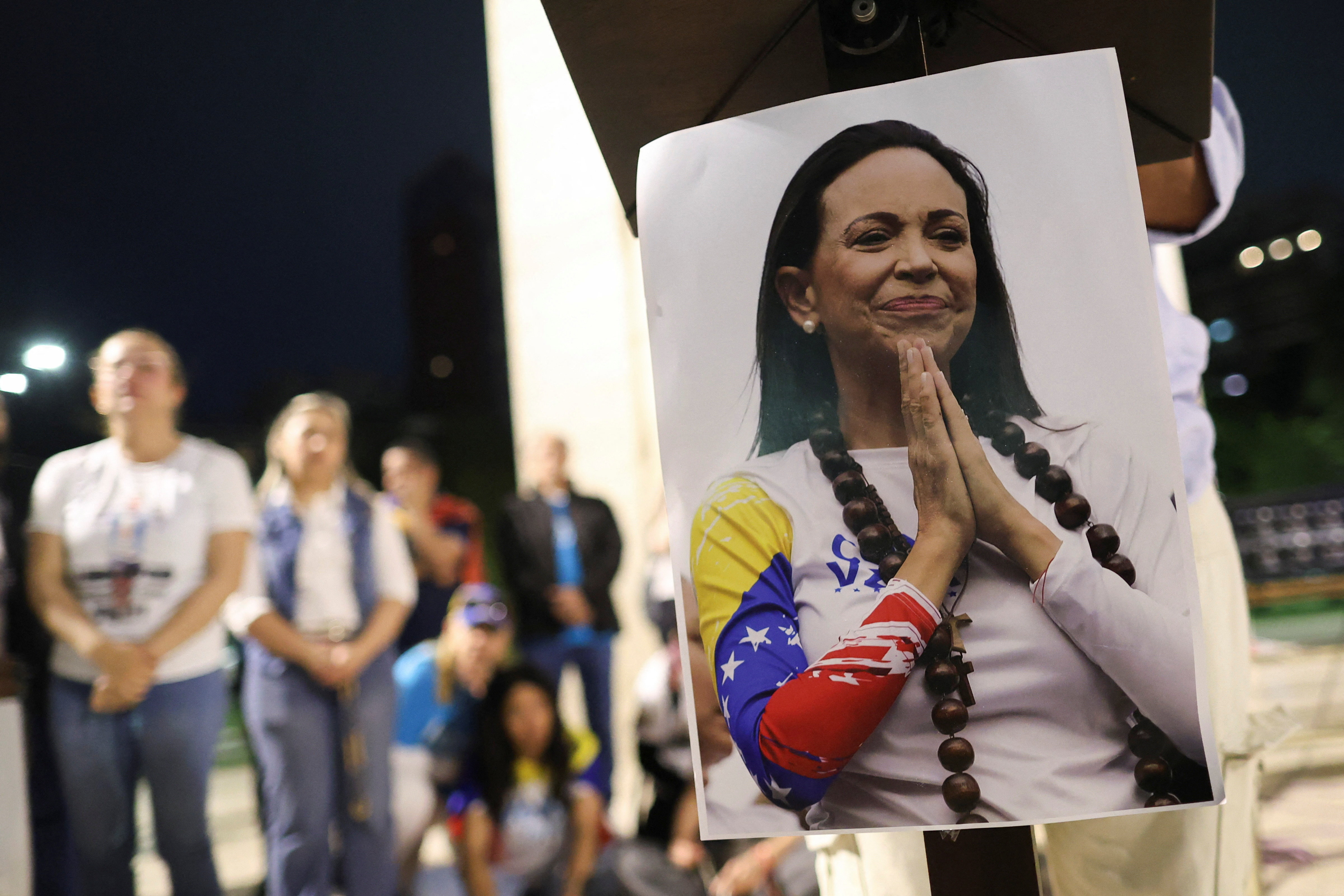
- Nobel Laureate’s Stance: Venezuelan politician and Nobel Peace Prize laureate Maria Machado supports the strikes, framing them as a necessary action to save lives from the consequences of drug trafficking and placing responsibility on President Maduro.
- Public Opinion: A Harvard/Harris poll indicated that a majority of U.S. respondents, including Democrats, supported the military actions, highlighting a public focus on domestic security over international legal norms.
Humanitarian Consequences
The human cost of the operations directly impacts global goals for peace and safety.
- Survivors: Limited information is available on the survivors. One, Andrés Fernando Tufiño Chila, was returned to Ecuador. The other, Jeison Obando Pérez, was repatriated to Colombia reportedly suffering from a brain injury, a stark reminder of the health consequences of violent conflict (SDG 3).
- Lack of Transparency: The U.S. administration has provided minimal information regarding the identities of the deceased or the specific cargo on the vessels, complicating accountability and humanitarian assessment.
Conclusion and Outlook
The ongoing U.S. military strikes represent a complex crisis with profound implications for the 2030 Agenda for Sustainable Development. While justified by the U.S. as a measure to advance SDG 3 by combating drug trafficking, the methods employed are seen by the UN and other international actors as a direct violation of SDG 16, undermining the rule of law, peace, and justice. The resulting diplomatic friction also threatens SDG 17 by eroding the partnerships necessary to address transnational challenges. The U.S. Senate is expected to vote on a resolution to prohibit such strikes, a decision that will further define the commitment to international norms and the principles of the SDGs.
Analysis of the Article in Relation to Sustainable Development Goals
-
Which SDGs are addressed or connected to the issues highlighted in the article?
The article primarily addresses issues related to two Sustainable Development Goals:
-
SDG 16: Peace, Justice and Strong Institutions
This is the most relevant SDG as the article’s core theme revolves around the use of lethal force, international law, human rights, rule of law, and conflict. The discussion about “extrajudicial executions,” the legality of the military strikes, the role of the UN High Commissioner for Human Rights, and the breakdown of international relations directly pertains to promoting peaceful and inclusive societies, providing access to justice, and building effective, accountable institutions.
-
SDG 3: Good Health and Well-being
This SDG is connected because the stated justification for the military action is a public health crisis. The article mentions that the U.S. administration “cites hundreds of thousands of drug toxicity deaths in the U.S. in recent years” as the reason for the strikes, linking the conflict to the broader issue of combating substance abuse and its fatal consequences.
-
-
What specific targets under those SDGs can be identified based on the article’s content?
Based on the article, the following specific targets can be identified:
-
Under SDG 16: Peace, Justice and Strong Institutions
-
Target 16.1: Significantly reduce all forms of violence and related death rates everywhere.
The article directly addresses this target by reporting on the “deadly U.S. strikes” which have “killed at least 61 people.” The entire narrative is about a violent conflict and its resulting fatalities, which the U.S. administration itself has classified as a “non-international armed conflict.”
-
Target 16.3: Promote the rule of law at the national and international levels and ensure equal access to justice for all.
This target is central to the legal debate presented in the article. The UN High Commissioner for Human Rights is quoted stating the strikes “violate international human rights law,” and legal experts label them as “extrajudicial executions.” The discussion questions the legal basis for the strikes and highlights the denial of the right to a “free and fair trial” for those on the boats. Furthermore, the article notes that families of victims have no legal redress through the International Criminal Court (ICC) or U.S. federal courts, indicating a failure to ensure equal access to justice.
-
Target 16.a: Strengthen relevant national institutions, including through international cooperation, to build capacity at all levels… to prevent violence and combat… crime.
The article points to a breakdown in international cooperation, which is crucial for this target. It states that the “acrimony between the U.S.” and countries like Colombia “could jeopardize drug-fighting efforts.” This highlights the negative impact of the conflict on established partnerships aimed at combating transnational crime like drug trafficking.
-
Target 16.1: Significantly reduce all forms of violence and related death rates everywhere.
-
Under SDG 3: Good Health and Well-being
-
Target 3.5: Strengthen the prevention and treatment of substance abuse, including narcotic drug abuse and harmful use of alcohol.
The U.S. administration’s justification for the military strikes is directly linked to this target. The article states the administration “cites hundreds of thousands of drug toxicity deaths in the U.S.” as the rationale, framing the military action as a response to the public health crisis of narcotic drug abuse.
-
Target 3.5: Strengthen the prevention and treatment of substance abuse, including narcotic drug abuse and harmful use of alcohol.
-
-
Are there any indicators mentioned or implied in the article that can be used to measure progress towards the identified targets?
Yes, the article mentions or implies several indicators:
-
Indicators for SDG 16 Targets
- For Target 16.1: The article provides a direct quantitative indicator related to conflict-related deaths. It explicitly states that the strikes have “killed at least 61 people.” This number serves as a direct measure for Indicator 16.1.2 (Conflict-related deaths per 100,000 population).
- For Target 16.3: The article provides qualitative indicators of a failure to uphold the rule of law. The statements from the UN calling the strikes “extrajudicial executions” and a violation of “international human rights law” are strong indicators. The mention that families of victims were denied legal redress in U.S. courts and have no access to the ICC serves as an indicator for the lack of access to justice.
- For Target 16.a: An implied indicator of failing international cooperation is the “acrimony” with Colombia that could “jeopardize drug-fighting efforts.” Furthermore, the article mentions that coca cultivation “is more bountiful now than it was over a decade ago,” which can be seen as an indicator of the ineffectiveness of current or past anti-crime strategies.
-
Indicators for SDG 3 Target
- For Target 3.5: The article provides a key indicator used as justification for the conflict: the “hundreds of thousands of drug toxicity deaths in the U.S. in recent years.” This figure is a direct measure of the mortality rate associated with substance abuse, a critical aspect of monitoring progress on this target.
-
-
Create a table with three columns titled ‘SDGs, Targets and Indicators” to present the findings from analyzing the article. In this table, list the Sustainable Development Goals (SDGs), their corresponding targets, and the specific indicators identified in the article.
SDGs Targets Indicators Identified in the Article SDG 16: Peace, Justice and Strong Institutions 16.1: Significantly reduce all forms of violence and related death rates everywhere. The number of conflict-related deaths, specifically “at least 61 people killed” in the strikes. SDG 16: Peace, Justice and Strong Institutions 16.3: Promote the rule of law at the national and international levels and ensure equal access to justice for all. Qualitative evidence of violations of international law, including accusations of “extrajudicial executions” and lack of “free and fair trial.” Lack of legal redress for victims’ families in national or international courts. SDG 16: Peace, Justice and Strong Institutions 16.a: Strengthen relevant national institutions, including through international cooperation… to combat… crime. Breakdown of international cooperation (“acrimony” with Colombia jeopardizing drug-fighting efforts). Increase in coca cultivation, implying failure of crime prevention strategies. SDG 3: Good Health and Well-being 3.5: Strengthen the prevention and treatment of substance abuse, including narcotic drug abuse. The mortality rate from substance abuse, cited as “hundreds of thousands of drug toxicity deaths in the U.S.”
Source: cbc.ca
What is Your Reaction?
 Like
0
Like
0
 Dislike
0
Dislike
0
 Love
0
Love
0
 Funny
0
Funny
0
 Angry
0
Angry
0
 Sad
0
Sad
0
 Wow
0
Wow
0