




















































At APEC Meeting, Xi pledges wider opening up and inclusive growth – Xinhua
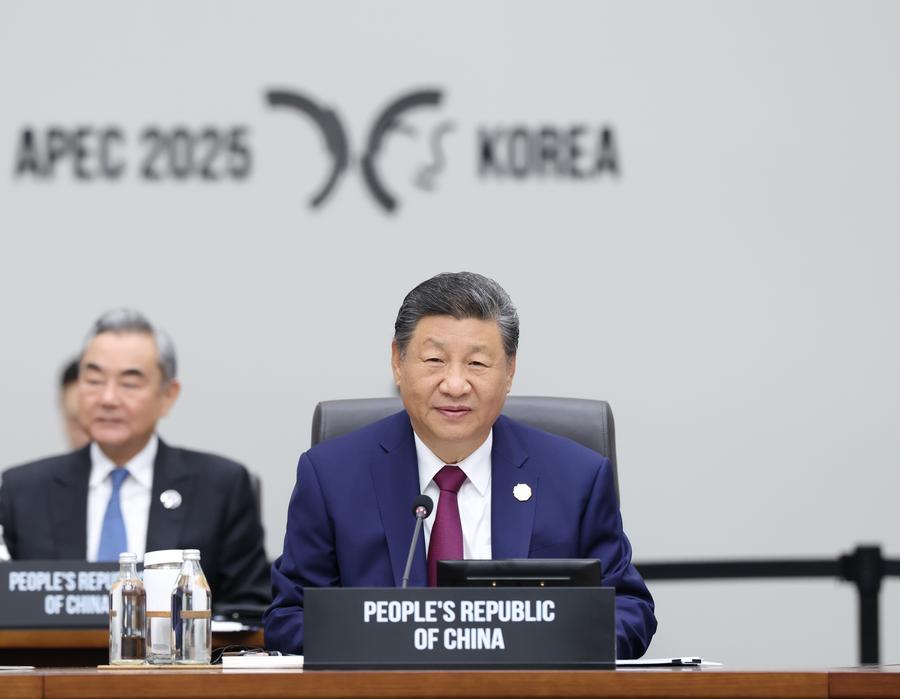
Report on the 32nd APEC Economic Leaders’ Meeting: Aligning Regional Growth with Sustainable Development Goals
At the 32nd Asia-Pacific Economic Cooperation (APEC) Economic Leaders’ Meeting in Gyeongju, South Korea, Chinese President Xi Jinping delivered a keynote address outlining a vision for regional development deeply integrated with the United Nations’ Sustainable Development Goals (SDGs). The address emphasized China’s commitment to fostering an open, inclusive, and sustainable global economy, presenting a strategic framework that directly supports the 2030 Agenda for Sustainable Development.
Advancing Inclusive Growth and Reducing Inequalities (SDGs 1, 8, 10)
A central theme of the address was the promotion of universally beneficial economic globalization, a direct contribution to SDG 8 (Decent Work and Economic Growth) and SDG 10 (Reduced Inequalities). President Xi articulated China’s unwavering policy of economic openness as a countermeasure to rising protectionism.
- Commitment to Open Markets: China reaffirmed its basic state policy of opening up, pledging that its “door to the world will not close; it will only open wider and wider.” This policy aims to create stable economic opportunities for the Asia-Pacific region and the world.
- Support for Least Developed Countries (LDCs): A significant initiative announced was the implementation of zero-tariff treatment on 100 percent of tariff lines for LDCs with diplomatic relations. This measure is a direct action towards SDG 1 (No Poverty) and SDG 10, aiming to enhance the economic participation of the most vulnerable nations.
Fostering Innovation and Sustainable Industrialization (SDGs 7, 9, 13)
China’s strategic direction, as outlined in its 15th Five-Year Plan, is heavily focused on innovation and green development, aligning with SDG 9 (Industry, Innovation, and Infrastructure) and climate-related goals.
Key Pillars of China’s Sustainable Development Strategy:
- Technological Advancement: The plan prioritizes indigenous innovation and the rollout of an “AI Plus” initiative to empower industries, fostering the “new quality productive forces” necessary for modern, sustainable economies.
- Green Transformation: A core component of the strategy is the development of green industries and new energy technologies. The reported 35.2% year-on-year surge in new energy vehicle (NEV) output exemplifies a tangible commitment to SDG 7 (Affordable and Clean Energy) and SDG 13 (Climate Action).
- Investment in the Future: China’s position as a leading destination for foreign investment and a major source of outbound investment underscores its role in driving global economic activity. The focus on green and high-tech sectors offers a platform for global partners to invest in sustainable growth.
A Framework for a Sustainable Asia-Pacific Community (SDG 17)
President Xi put forward a comprehensive proposal aimed at building a resilient and cooperative Asia-Pacific community, reinforcing the principles of SDG 17 (Partnerships for the Goals).
Five-Point Proposal for an Inclusive Asia-Pacific:
- Promote universally beneficial and inclusive economic globalization.
- Uphold multilateralism and open regional cooperation.
- Foster innovation and sustainable development pathways.
- Strengthen connectivity and ensure stable global supply chains.
- Build a cohesive and forward-looking Asia-Pacific community.
This framework, supported by calls from other regional leaders for greater cooperation and solidarity, underscores the region’s commitment to multilateral solutions for shared challenges. The emphasis on stable supply chains and open economic systems was identified as critical for achieving shared prosperity and advancing the global sustainable development agenda.
Analysis of Sustainable Development Goals in the Article
1. Which SDGs are addressed or connected to the issues highlighted in the article?
-
SDG 8: Decent Work and Economic Growth
The article focuses on promoting economic growth through international trade, investment, and development plans. It discusses China’s role as the world’s largest trader in goods, its efforts to attract foreign investment, and its five-year plan aimed at ensuring stable development, which contributes to the global economy.
-
SDG 9: Industry, Innovation and Infrastructure
The article highlights China’s commitment to innovation and technological advancement. It mentions specific initiatives like strengthening “indigenous innovation,” rolling out an “AI Plus” initiative, and developing “new quality productive forces,” all of which are central to building resilient infrastructure and fostering innovation.
-
SDG 10: Reduced Inequalities
The theme of inclusivity and reducing inequality is prominent. The article mentions China’s policy of providing “zero-tariff treatment on 100 percent tariff lines from the least developed countries” to promote a “universally beneficial and inclusive economic globalization,” directly addressing inequality between countries.
-
SDG 13: Climate Action
The article points to efforts related to environmental sustainability and climate action through the promotion of “green growth” and “green industries.” The significant increase in the production and sales of “new energy vehicle output” is a concrete example of action taken to combat climate change by transitioning to cleaner technologies.
-
SDG 17: Partnerships for the Goals
The entire context of the article, which is the APEC Economic Leaders’ Meeting, revolves around international cooperation. President Xi’s five-point proposal, support for multilateralism, and the goal of building an “Asia-Pacific community” all underscore the importance of global partnerships to achieve sustainable development.
2. What specific targets under those SDGs can be identified based on the article’s content?
-
Under SDG 8 (Decent Work and Economic Growth):
- Target 8.1: Sustain per capita economic growth in accordance with national circumstances. The article discusses China’s 15th Five-Year Plan, which maps out the country’s “development path through 2030” to ensure stable growth for itself and the world economy.
-
Under SDG 9 (Industry, Innovation and Infrastructure):
- Target 9.5: Enhance scientific research, upgrade the technological capabilities of industrial sectors in all countries. The article mentions China’s focus on “scientific innovation,” “digitalization, artificial intelligence,” and an “AI Plus” initiative to empower industries.
-
Under SDG 10 (Reduced Inequalities):
- Target 10.a: Implement the principle of special and differential treatment for developing countries, in particular least developed countries. This is directly addressed by China’s policy of granting “zero-tariff treatment on 100 percent tariff lines from the least developed countries.”
-
Under SDG 13 (Climate Action):
- Target 13.2: Integrate climate change measures into national policies, strategies and planning. China’s five-year plan includes “green growth” and the development of “green industries,” and the article highlights the country’s advancement in “new and green technologies.”
-
Under SDG 17 (Partnerships for the Goals):
- Target 17.10: Promote a universal, rules-based, open, non-discriminatory and equitable multilateral trading system. The article emphasizes China’s commitment to an “open world economy,” its support for multilateralism, and its active participation in APEC to build a “unified Asia-Pacific Community.”
3. Are there any indicators mentioned or implied in the article that can be used to measure progress towards the identified targets?
-
For SDG 8:
- The article states that over the past five years, China has attracted “more than 700 billion U.S. dollars in total foreign investment” and its “outbound investment has increased by an average of over five percent annually.” These figures serve as indicators of economic activity and investment flows.
-
For SDG 9:
- The implementation of national strategies like the “AI Plus” initiative and the focus on developing “new quality productive forces” are policy-based indicators of progress in innovation.
-
For SDG 10:
- The specific policy of “zero-tariff treatment on 100 percent tariff lines from the least developed countries” is a direct and measurable indicator of providing preferential treatment to LDCs.
-
For SDG 13:
- The article provides a clear quantitative indicator: “China’s new energy vehicle output surged 35.2 percent year-on-year to more than 11.24 million units in the first nine months of 2025.” This data measures the adoption of green technology in the transport sector.
-
For SDG 17:
- China’s status as the “world’s largest trader in goods” and its active participation and proposals within the APEC framework serve as indicators of its engagement in the multilateral trading system.
4. Summary of Findings
| SDGs | Targets | Indicators |
|---|---|---|
| SDG 8: Decent Work and Economic Growth | Target 8.1: Sustain per capita economic growth. | Attracting over $700 billion in foreign investment over five years; average annual increase of over 5% in outbound investment. |
| SDG 9: Industry, Innovation and Infrastructure | Target 9.5: Enhance scientific research and upgrade technological capabilities. | Implementation of an “AI Plus” initiative; development of “new quality productive forces.” |
| SDG 10: Reduced Inequalities | Target 10.a: Implement special and differential treatment for developing countries. | Policy of providing “zero-tariff treatment on 100 percent tariff lines from the least developed countries.” |
| SDG 13: Climate Action | Target 13.2: Integrate climate change measures into national policies. | A 35.2% year-on-year surge in new energy vehicle output to over 11.24 million units; national strategies focused on “green industries.” |
| SDG 17: Partnerships for the Goals | Target 17.10: Promote a universal, rules-based, open, non-discriminatory and equitable multilateral trading system. | Active participation in APEC; proposals to build an “Asia-Pacific community”; maintaining status as the “world’s largest trader in goods.” |
Source: english.news.cn
What is Your Reaction?
 Like
0
Like
0
 Dislike
0
Dislike
0
 Love
0
Love
0
 Funny
0
Funny
0
 Angry
0
Angry
0
 Sad
0
Sad
0
 Wow
0
Wow
0