
















Mayor Mamdani Announces Opening of Upper East Side Early Childhood Education Center This Fall, Meeting Critical Demand in District – NYC.gov
Opening of District 2 Pre-K and 3-K Center Advances Sustainable Development Goals in Early Childhood Education
Introduction
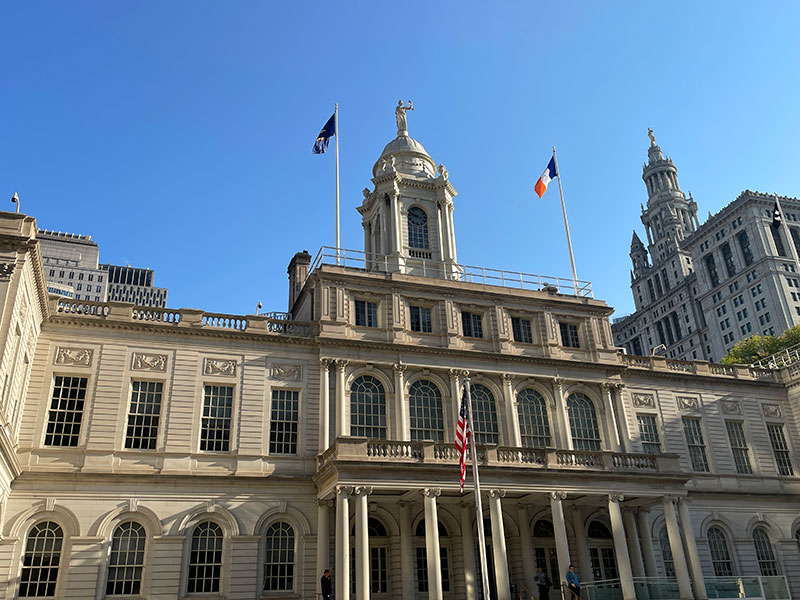
On the Upper East Side of New York City, Mayor Zohran Kwame Mamdani officially announced the opening of the District 2 Pre-K and 3-K Center located at 403 E. 65th St. This new facility adds over 130 Pre-K and 3-K seats starting September 2026, marking a significant step towards achieving inclusive and equitable quality education as outlined in the United Nations Sustainable Development Goal 4 (SDG 4).
Background and Significance
- The center was first announced in 2022 and completed in July 2025.
- Previously unused under the prior administration despite community demand.
- It is the first standalone, city-run early childhood center in the 10065 ZIP code.
- Represents the city’s commitment to improving the 3-K system and delivering universal child care.
Statements from City Leadership
- Mayor Zohran Kwame Mamdani emphasized the urgency of addressing child care needs, stating that no parent in the wealthiest city should have to choose between child-rearing and employment. This aligns with SDG 8 (Decent Work and Economic Growth) by supporting working families.
- Schools Chancellor Kamar Samuels highlighted the importance of high-quality early childhood education for all children regardless of zip code, reinforcing SDG 10 (Reduced Inequalities) and SDG 4 (Quality Education).
- Speaker Julie Menin recognized the center as a victory for families, emphasizing opportunity, affordability, and support for working families, which supports SDG 1 (No Poverty) and SDG 5 (Gender Equality) by enabling parents, especially women, to participate in the workforce.
Citywide Campaign and Community Engagement
To maximize access and inclusivity, the City launched a comprehensive campaign encouraging families to apply for 3-K and Pre-K seats before the February 27, 2026 deadline. Key features include:
- Multilingual advertisements through LinkNYC.
- Engagement with multilingual media and digital content creators.
- Partnerships with faith-based and community organizations.
This campaign supports SDG 17 (Partnerships for the Goals) by fostering collaboration among diverse stakeholders.
Expansion of Early Childhood Education Programs
Further advancing the SDGs, the City is introducing 2-K seats for the first time with an initial rollout of 2,000 seats this fall, funded by Governor Kathy Hochul. Additional initiatives include:
- Issuance of a new Request for Information (RFI) for 2-K and 3-K providers, marking the first invitation in five years for providers to join the 3-K program.
- Plans to expand 3-K capacity for fall 2026 by partnering with community-based and home-based child care providers.
These efforts contribute to SDG 4 by increasing access to early childhood development and education.
Conclusion
The opening of the District 2 Pre-K and 3-K Center and the City’s broader initiatives demonstrate a strong commitment to the Sustainable Development Goals, particularly in promoting quality education, reducing inequalities, and supporting economic growth through universal child care access. These measures aim to ensure that every child in New York City receives a strong educational foundation and that families receive the support necessary to thrive.
1. Sustainable Development Goals (SDGs) Addressed or Connected
- SDG 4: Quality Education
- The article focuses on expanding access to early childhood education (Pre-K, 3-K, and 2-K), which aligns with SDG 4’s goal to ensure inclusive and equitable quality education and promote lifelong learning opportunities for all.
- SDG 5: Gender Equality
- By providing accessible child care, the article indirectly supports gender equality by enabling parents, especially women, to balance work and family responsibilities.
- SDG 10: Reduced Inequalities
- The initiative targets equitable access to early childhood education regardless of zip code or circumstances, addressing inequalities within the city.
- SDG 11: Sustainable Cities and Communities
- By opening a new early childhood center in a specific urban community (Upper East Side), the article relates to making cities inclusive, safe, resilient, and sustainable.
2. Specific Targets Under Those SDGs Identified
- SDG 4: Quality Education
- Target 4.2: Ensure that all girls and boys have access to quality early childhood development, care, and pre-primary education so that they are ready for primary education.
- Target 4.5: Eliminate gender disparities and ensure equal access to all levels of education and vocational training for vulnerable populations.
- SDG 5: Gender Equality
- Target 5.4: Recognize and value unpaid care and domestic work through the provision of public services and social protection policies, including child care services.
- SDG 10: Reduced Inequalities
- Target 10.2: Empower and promote the social, economic and political inclusion of all, irrespective of age, sex, disability, race, ethnicity, origin, religion or economic or other status.
- SDG 11: Sustainable Cities and Communities
- Target 11.7: Provide universal access to safe, inclusive and accessible, green and public spaces, particularly for vulnerable populations.
3. Indicators Mentioned or Implied to Measure Progress
- Number of Early Childhood Education Seats Available
- The article mentions adding more than 130 Pre-K and 3-K seats at the new center and rolling out 2,000 2-K seats, which can be used as an indicator of increased access.
- Enrollment Rates in Pre-K and 3-K Programs
- The citywide campaign encouraging families to apply before the deadline implies tracking enrollment numbers as a measure of uptake and accessibility.
- Geographical Distribution of Child Care Centers
- Opening the first standalone city-run early childhood center in the 10065 ZIP code suggests monitoring equitable distribution of facilities across neighborhoods.
- Provider Participation
- The issuance of a new request for information (RFI) for 2-K and 3-K providers after five years implies tracking the number and diversity of providers engaged in delivering services.
4. Table: SDGs, Targets and Indicators
| SDGs | Targets | Indicators |
|---|---|---|
| SDG 4: Quality Education |
|
|
| SDG 5: Gender Equality |
|
|
| SDG 10: Reduced Inequalities |
|
|
| SDG 11: Sustainable Cities and Communities |
|
|
Source: nyc.gov
What is Your Reaction?
 Like
0
Like
0
 Dislike
0
Dislike
0
 Love
0
Love
0
 Funny
0
Funny
0
 Angry
0
Angry
0
 Sad
0
Sad
0
 Wow
0
Wow
0