
























































Hidden Valley Elementary tries new approach for literacy test: teaching families – WFAE
Report on Literacy Improvement Initiative at Charlotte-Mecklenburg Schools with Emphasis on Sustainable Development Goals
Introduction
Charlotte-Mecklenburg Schools (CMS) is actively working to enhance early literacy skills among students in kindergarten through third grade by improving scores on the Dynamic Indicators of Basic Early Literacy Skills (DIBELS) exam. This standardized test measures key literacy competencies and is administered three times annually across North Carolina. The initiative aligns closely with the United Nations Sustainable Development Goal (SDG) 4: Quality Education, which aims to ensure inclusive and equitable quality education and promote lifelong learning opportunities for all.
Community Engagement Strategy at Hidden Valley Elementary School
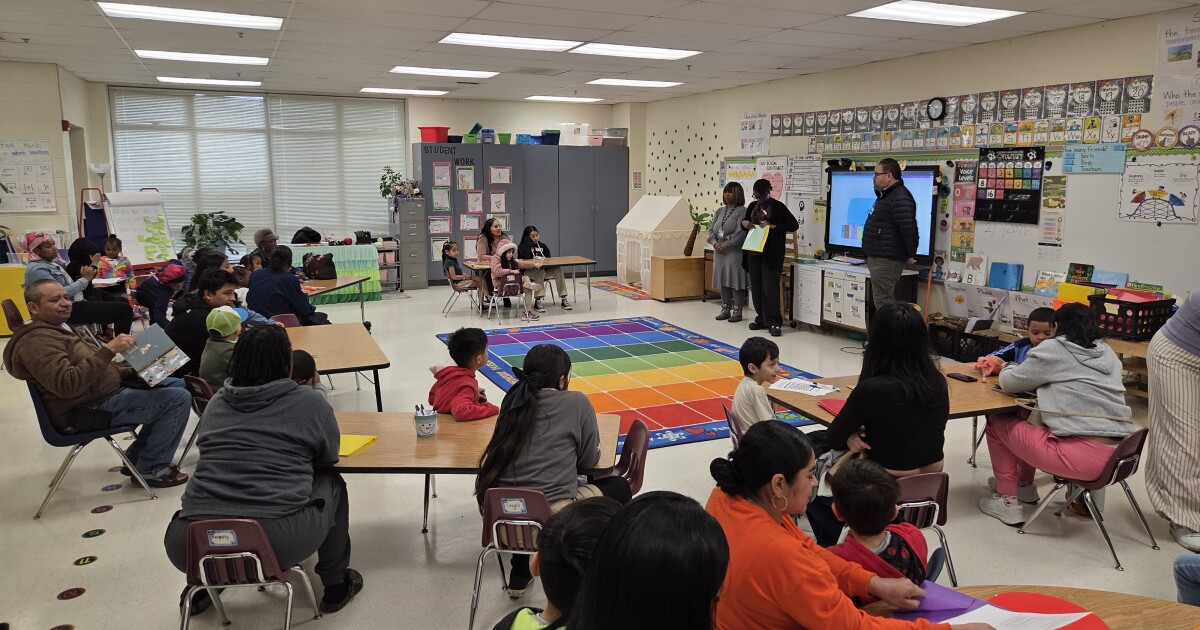
Hidden Valley Elementary, a Title I school with a predominantly Hispanic student population and many English Language Learners, has implemented a family engagement strategy to support literacy development. The school aims to nearly double the percentage of students meeting the DIBELS benchmark from 37% to 70%, contributing to SDG 10: Reduced Inequalities by supporting underserved communities.
- On a designated “DIBELS night,” families participate in literacy exercises such as segmentation, a skill critical for phonemic awareness.
- Instruction is provided bilingually to accommodate Spanish-speaking families, promoting SDG 5: Gender Equality and SDG 10 by ensuring no one is left behind due to language barriers.
- Parents receive take-home materials and tools, including timed drills, to practice literacy skills with their children, fostering inclusive education.
Key Literacy Skills and Assessment Focus
- Segmentation: Breaking words into individual sounds to enhance phonemic awareness.
- Letter Recognition: Timed exercises to identify letters rapidly.
- Nonsense Word Fluency: Decoding made-up words to understand letter-sound relationships.
These skills are integral components of the DIBELS assessment and are critical to improving literacy outcomes, directly supporting SDG 4.
Setting Ambitious Goals and Monitoring Progress
CMS has set a district-wide target to increase the percentage of K-2 students meeting DIBELS benchmarks from 67% in June 2023 to 91% by June 2029. This ambitious goal reflects a commitment to SDG 4 and SDG 17: Partnerships for the Goals, through collaboration among schools, families, and the community.
- Recent improvements in progress monitoring tools enable teachers to identify and support struggling students effectively.
- Data-driven approaches allow targeted interventions at each grade level to meet annual benchmarks.
- School leadership emphasizes transparency and family involvement to foster a supportive learning environment.
Impact on Families and Students
Family participation in literacy nights has shown positive engagement, exemplified by community members like Ann Black, who reconnected with the school system to support her grandson’s learning journey. This engagement promotes SDG 4 by enhancing educational outcomes through community involvement.
Conclusion
The literacy improvement initiative at Charlotte-Mecklenburg Schools, particularly at Hidden Valley Elementary, demonstrates a comprehensive approach to achieving Sustainable Development Goals related to quality education, reduced inequalities, and community partnerships. By empowering families with knowledge and resources, CMS is fostering an inclusive educational environment that supports early literacy development and sets a foundation for lifelong learning.
1. Which SDGs are addressed or connected to the issues highlighted in the article?
- SDG 4: Quality Education
- The article focuses on improving early literacy skills among kindergarten to third-grade students, which directly relates to ensuring inclusive and equitable quality education and promoting lifelong learning opportunities for all.
- SDG 10: Reduced Inequalities
- Hidden Valley Elementary is a Title I school with a high percentage of Hispanic students and English Language Learners, highlighting efforts to reduce educational inequalities among disadvantaged and minority groups.
- SDG 17: Partnerships for the Goals
- The school’s engagement with families and use of translators to involve non-English-speaking parents reflects partnerships and collaboration to achieve educational goals.
2. What specific targets under those SDGs can be identified based on the article’s content?
- Under SDG 4: Quality Education
- Target 4.1: Ensure that all girls and boys complete free, equitable and quality primary and secondary education leading to relevant and effective learning outcomes.
- Target 4.6: Ensure that all youth and a substantial proportion of adults achieve literacy and numeracy.
- Under SDG 10: Reduced Inequalities
- Target 10.2: Empower and promote the social, economic and political inclusion of all, irrespective of age, sex, disability, race, ethnicity, origin, religion or economic or other status.
- Under SDG 17: Partnerships for the Goals
- Target 17.17: Encourage and promote effective public, public-private and civil society partnerships, building on the experience and resourcing strategies of partnerships.
3. Are there any indicators mentioned or implied in the article that can be used to measure progress towards the identified targets?
- DIBELS Benchmark Scores
- The article repeatedly references the percentage of students meeting the DIBELS benchmark as a key measure of literacy skill development. For example, the goal to increase students meeting the benchmark from 37% to 70% at Hidden Valley, and district-wide goals from 67% to 91% by 2029.
- This serves as an indicator to measure progress towards Target 4.1 and 4.6 by tracking literacy proficiency among young students.
- Progress Monitoring and Data Tools
- The use of data tools to track student progress and identify struggling students implies indicators related to student performance monitoring and intervention effectiveness.
- Family Engagement Metrics
- While not explicitly quantified, the article implies measuring family involvement through participation in events like “DIBELS night,” which supports Target 10.2 and 17.17 by promoting inclusion and partnerships.
4. Table of SDGs, Targets and Indicators
| SDGs | Targets | Indicators |
|---|---|---|
| SDG 4: Quality Education |
|
|
| SDG 10: Reduced Inequalities |
|
|
| SDG 17: Partnerships for the Goals |
|
|
Source: wfae.org
What is Your Reaction?
 Like
0
Like
0
 Dislike
0
Dislike
0
 Love
0
Love
0
 Funny
0
Funny
0
 Angry
0
Angry
0
 Sad
0
Sad
0
 Wow
0
Wow
0