Carbon Accounting Software Market Outlook 2024-2032: Growth Drivers, Challenges, and Emerging Opportunities – openPR.com
Carbon Accounting Software Market Analysis: A Report on Global Growth and Alignment with Sustainable Development Goals
Executive Summary and Market Outlook
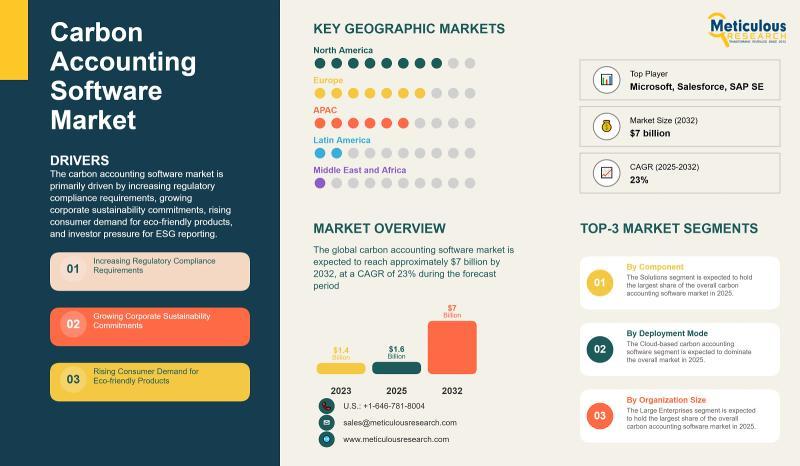
The global carbon accounting software market is experiencing significant expansion, driven by a worldwide commitment to achieving the United Nations Sustainable Development Goals (SDGs), particularly SDG 13 (Climate Action). This report details the market’s trajectory, key drivers, and its role in facilitating corporate sustainability. The market was valued at USD 1.4 billion in 2024 and is projected to grow at a Compound Annual Growth Rate (CAGR) of 23% from 2025 to 2032, reaching an estimated value of nearly USD 7 billion. This growth reflects the increasing integration of digital solutions to monitor, manage, and report on carbon emissions, which is fundamental to sustainable corporate governance.
Alignment with Sustainable Development Goals (SDGs)
The adoption of carbon accounting software is intrinsically linked to the advancement of several SDGs:
- SDG 13 (Climate Action): The primary function of this software is to enable organizations to measure and reduce their greenhouse gas emissions, directly supporting targets aimed at combating climate change and its impacts.
- SDG 12 (Responsible Consumption and Production): By providing detailed insights into emissions across the value chain (Scope 1, 2, and 3), the software promotes sustainable production patterns and enhances corporate transparency and accountability.
- SDG 9 (Industry, Innovation, and Infrastructure): The market represents a significant innovation in sustainable technology, helping industries upgrade their infrastructure and processes to become more environmentally sound and resource-efficient.
- SDG 17 (Partnerships for the Goals): The need for standardized, verifiable data fosters partnerships between corporations, regulatory bodies, and technology providers to achieve global climate targets.
Key Market Drivers and Trends
Several factors are accelerating the adoption of carbon accounting software, all of which reinforce global sustainability objectives.
- Regulatory Compliance: Stringent environmental regulations in North America and Europe, such as the EU’s Corporate Sustainability Reporting Directive (CSRD), compel organizations to adopt precise reporting tools to meet national and international climate commitments under SDG 13.
- Stakeholder and Investor Pressure: There is a growing demand from investors, consumers, and other stakeholders for transparent Environmental, Social, and Governance (ESG) reporting, pushing companies to demonstrate their commitment to SDG 12.
- Corporate Net-Zero Commitments: An increasing number of corporations are voluntarily setting science-based targets and net-zero goals, necessitating advanced software for accurate tracking and strategic planning.
- Technological Innovation: The integration of Artificial Intelligence (AI) and advanced analytics enhances the software’s capability for predictive modeling and automated reporting, contributing to SDG 9 by fostering technological advancement in the sustainability sector.
Challenges to Market Adoption
Despite strong growth drivers, certain barriers may impede market expansion:
- High Implementation Costs: The initial investment and maintenance costs can be prohibitive for small and medium-sized enterprises (SMEs), limiting their capacity to contribute effectively to climate goals.
- Data Complexity and Quality: Acquiring accurate and consistent data, especially for Scope 3 emissions across complex supply chains, remains a significant challenge, hindering progress toward comprehensive reporting aligned with SDG 12.
- Lack of Standardized Frameworks: The absence of a single, globally accepted reporting standard complicates compliance and comparability across different jurisdictions.
- Integration with Legacy Systems: Integrating modern carbon accounting platforms with outdated IT infrastructure can be a technical and financial burden for many organizations.
Emerging Opportunities and Innovations
The market is poised for further growth through key opportunities that enhance corporate contributions to the SDGs.
- AI and Machine Learning Integration: Advanced algorithms are improving the accuracy of emissions forecasting and automating data collection, making climate action more efficient and data-driven.
- Supply Chain Decarbonization: Enhanced software capabilities for tracking Scope 3 emissions are critical for promoting responsible production (SDG 12) throughout the entire value chain.
- Carbon Credit Market Integration: Platforms are increasingly incorporating features for managing and trading carbon credits, creating financial incentives for emissions reduction and supporting market-based mechanisms for climate action (SDG 13).
- Industry-Specific Solutions: The development of tailored software for high-emission sectors like manufacturing and transportation provides customized tools to address unique operational and regulatory challenges.
Market Segmentation Analysis
By Component
- Solutions: This segment is expected to dominate in 2025, driven by demand for tools that facilitate emissions calculations and sustainability performance management.
- Services: Projected to grow at the fastest rate, this segment includes consulting and integration support, reflecting the need for specialized expertise to implement SDG-aligned strategies.
By Deployment
- Cloud: The preferred model due to its scalability and lower upfront costs.
- Hybrid: Expected to record the fastest growth as enterprises seek a balance between cloud flexibility and on-premises data security.
By Enterprise Size
- Large Enterprises: Currently the primary adopters, driven by regulatory and investor pressures.
- Small and Medium-sized Enterprises (SMEs): This segment is anticipated to exhibit the highest growth rate as more accessible and affordable solutions become available.
Regional and Competitive Landscape
The market is geographically concentrated but expanding globally, reflecting worldwide efforts to meet climate targets.
- North America: Leads the market due to stringent environmental regulations and a high rate of technology adoption.
- Europe: A strong secondary market, characterized by advanced carbon management frameworks and corporate commitments to sustainability.
- Asia-Pacific: Projected to be the fastest-growing region, driven by industrial growth and an increasing policy focus on sustainability in key economies.
The competitive landscape features a mix of established technology firms like Microsoft, Salesforce, and SAP, alongside specialized sustainability software providers such as Persefoni, Watershed, and Greenly. These companies are innovating to provide comprehensive solutions that integrate carbon accounting with broader ESG management, thereby empowering organizations to advance their contributions to the Sustainable Development Goals.
Analysis of Sustainable Development Goals in the Article
1. Which SDGs are addressed or connected to the issues highlighted in the article?
-
SDG 9: Industry, Innovation and Infrastructure
- The article discusses the adoption of innovative digital solutions, such as carbon accounting software, AI, and cloud-based platforms, to help industries become more sustainable. It highlights how technology is essential for upgrading industrial processes to monitor and manage environmental impact, which aligns with the goal of building resilient infrastructure and fostering sustainable industrialization.
-
SDG 12: Responsible Consumption and Production
- The article emphasizes the growing need for corporations to adopt sustainable practices and report on their environmental performance. It details how regulatory pressure, investor expectations, and consumer demand are pushing companies toward “transparent emissions reporting” and integrating sustainability into their core operations, directly connecting to the principles of responsible production patterns.
-
SDG 13: Climate Action
- The core theme of the article is the global effort to combat climate change by managing and reducing carbon emissions. It describes how organizations use carbon accounting software to “monitor, manage, and mitigate their carbon footprint,” set “net-zero targets,” and implement “data-driven strategies to minimize environmental impact,” which are urgent actions to address climate change.
2. What specific targets under those SDGs can be identified based on the article’s content?
-
Target 9.4 (under SDG 9)
- This target aims to “upgrade infrastructure and retrofit industries to make them sustainable, with increased resource-use efficiency and greater adoption of clean and environmentally sound technologies.” The article directly addresses this by describing carbon accounting software as a key technology that enables businesses to become more sustainable by efficiently managing their carbon emissions.
-
Target 12.6 (under SDG 12)
- This target encourages companies “to adopt sustainable practices and to integrate sustainability information into their reporting cycle.” The article highlights this through its focus on “regulatory compliance,” “transparent emissions reporting,” and the need for companies to generate reports compliant with frameworks like the Corporate Sustainability Reporting Directive (CSRD).
-
Target 13.2 (under SDG 13)
- This target calls for integrating “climate change measures into national policies, strategies and planning.” The article shows the impact of this target by stating that “Stringent regulations in North America and Europe are key drivers for the carbon accounting software market,” demonstrating how corporate actions are a direct response to government-led climate policies and frameworks.
3. Are there any indicators mentioned or implied in the article that can be used to measure progress towards the identified targets?
-
Indicator for Target 9.4
- The rate of adoption and market growth of clean technologies. The article provides a clear metric for this: the projected growth of the global carbon accounting software market at a “strong CAGR of 23% from 2025 to 2032.” This growth rate serves as a direct indicator of industries adopting environmentally sound technologies.
-
Indicator for Target 12.6
- The number of companies producing sustainability reports. While not giving a precise number, the article implies this indicator through the high demand for software that “generate[s] compliant reports” and automates “Scope 1, Scope 2, and Scope 3 reporting.” The market’s expansion is a proxy for the increasing number of companies engaging in sustainability reporting.
-
Indicator for Target 13.2
- The quantification and tracking of greenhouse gas emissions by organizations. The article specifies that the software empowers organizations to “quantify their carbon footprint” and manage “Scope 1, Scope 2, and Scope 3” emissions. These specific emission categories are key indicators used to measure and report on climate action progress.
4. Summary Table of SDGs, Targets, and Indicators
| SDGs | Targets | Indicators |
|---|---|---|
| SDG 9: Industry, Innovation and Infrastructure | Target 9.4: Upgrade industries to make them sustainable through the adoption of clean and environmentally sound technologies. | The market growth rate of carbon accounting software (projected at a CAGR of 23%), indicating the rate of technology adoption by industries. |
| SDG 12: Responsible Consumption and Production | Target 12.6: Encourage companies to adopt sustainable practices and integrate sustainability information into their reporting cycle. | The increasing demand for software that automates and standardizes sustainability and emissions reporting, driven by regulations like the CSRD. |
| SDG 13: Climate Action | Target 13.2: Integrate climate change measures into policies, strategies, and planning. | The ability of companies to quantify and report on their carbon footprint, including specific metrics like Scope 1, Scope 2, and Scope 3 emissions. |
Source: openpr.com
What is Your Reaction?
 Like
0
Like
0
 Dislike
0
Dislike
0
 Love
0
Love
0
 Funny
0
Funny
0
 Angry
0
Angry
0
 Sad
0
Sad
0
 Wow
0
Wow
0