Caregiving Stress Moderates Dementia Burden in Oman – Bioengineer.org
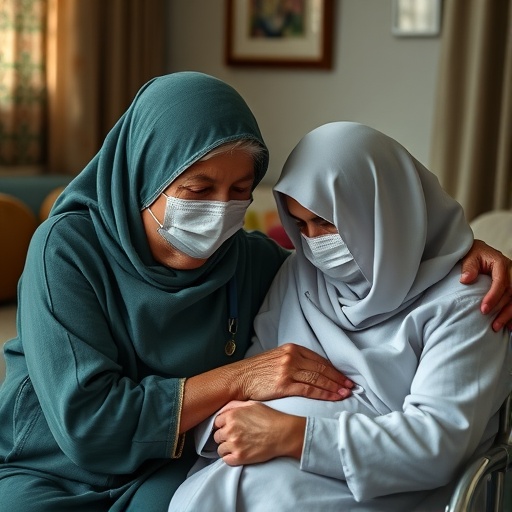
Report on Caregiver Burden in Oman and Alignment with Sustainable Development Goals
Introduction: Advancing Good Health and Well-being (SDG 3)
A cross-sectional study conducted in Oman provides critical insights into the dynamics of dementia caregiving, directly addressing targets within Sustainable Development Goal 3 (Good Health and Well-being). The research investigates the moderated mediation effect of caregiving stress and social support on the relationship between dementia symptoms and caregiver burden. The findings underscore the necessity of integrating caregiver mental health into public health frameworks to ensure healthy lives and promote well-being for all ages.
Research Framework and Key Findings
The study employed a moderated mediation model to analyze data from a diverse group of caregivers in Oman. This approach allowed for a detailed examination of the interplay between psychological stressors and support mechanisms.
- Direct Correlation: An intensification of behavioral and psychological symptoms of dementia was found to directly increase the level of caregiving stress.
- Mediating Factor: Elevated caregiving stress subsequently amplifies the overall caregiver burden, encompassing physical, emotional, and psychological strain.
- Moderating Influence: The presence of robust social support was identified as a crucial moderating factor. Caregivers with strong support networks experienced a significantly reduced burden, even when faced with high levels of stress.
Implications for Sustainable Development Goals (SDGs)
The research findings have profound implications for several SDGs, highlighting the interconnectedness of health, equality, and community development.
- SDG 3: Good Health and Well-being: The study provides a clear mandate for enhancing mental health support services for caregivers. Addressing caregiver burden is essential for preventing mental health disorders and promoting overall well-being within communities, a core target of SDG 3.
- SDG 5: Gender Equality: As caregiving roles are often disproportionately held by women, the unaddressed burden of care can perpetuate gender inequalities. By creating formal support systems, policymakers can recognize, reduce, and redistribute unpaid care work, contributing to the economic and social empowerment of women.
- SDG 10: Reduced Inequalities: Caregivers of individuals with dementia represent a vulnerable population. The study emphasizes the need for targeted interventions to reduce inequalities in health outcomes by ensuring this group has access to necessary resources and support.
- SDG 11: Sustainable Cities and Communities: The research advocates for the development of inclusive and supportive community resources. Building strong social support networks is fundamental to creating resilient communities where all individuals, including caregivers and persons with dementia, can thrive.
Policy Recommendations for Integrated Action
To align with the Sustainable Development Goals, the study’s conclusions support the implementation of strategic, multi-faceted policies.
- Integrate Mental Health Services: Incorporate mental health screening and support for caregivers into primary healthcare and dementia care protocols, directly advancing SDG 3.
- Strengthen Community Support Systems: Invest in and promote community-based organizations that provide practical, emotional, and informational support to caregivers, fostering the community resilience central to SDG 11.
- Develop National Caregiving Strategies: Formulate policies that formally acknowledge the role of caregivers and provide financial and social protections, thereby addressing targets within SDG 5 and SDG 10.
- Foster Multi-Sectoral Partnerships (SDG 17): Encourage collaboration between government health ministries, non-governmental organizations, and community leaders to create a comprehensive support ecosystem for dementia care.
Conclusion
The study by Al Ghammari et al. serves as a critical evidence base for action. Addressing caregiver burden is not merely a healthcare issue but a fundamental development priority. By investing in support systems for caregivers, nations can make significant progress toward achieving key Sustainable Development Goals, particularly those related to health, gender equality, and sustainable communities. A systemic approach that prioritizes the well-being of caregivers is essential for building a more equitable and healthy society for all.
Analysis of Sustainable Development Goals in the Article
-
Which SDGs are addressed or connected to the issues highlighted in the article?
The primary Sustainable Development Goal (SDG) addressed in the article is:
-
SDG 3: Good Health and Well-being
The article is fundamentally centered on health, specifically the mental health and well-being of caregivers for individuals with dementia. It explores the “physical, emotional, and psychological stress experienced by caregivers,” a concept termed “caregiver burden.” The entire study aims to understand and find ways to mitigate this burden, directly aligning with the goal of ensuring healthy lives and promoting well-being for all at all ages. The article explicitly calls for prioritizing the “mental health of caregivers” and incorporating “mental health services into the caregiving framework.”
-
-
What specific targets under those SDGs can be identified based on the article’s content?
Based on the focus on mental health and healthcare systems, the following specific targets under SDG 3 are relevant:
-
Target 3.4: By 2030, reduce by one third premature mortality from non-communicable diseases through prevention and treatment and promote mental health and well-being.
The article directly supports the “promote mental health and well-being” component of this target. The research investigates factors like “caregiving stress” and “caregiver burden,” which are significant mental health challenges. The conclusion that social support can mitigate these negative impacts and the call for “initiatives aimed at improving support frameworks for caregivers” are direct strategies to promote the mental well-being of this vulnerable population.
-
Target 3.8: Achieve universal health coverage, including financial risk protection, access to quality essential health-care services and access to safe, effective, quality and affordable essential medicines and vaccines for all.
The article implies a need to expand health coverage to include caregivers, who are often overlooked. The recommendation that “Policymakers and health professionals are encouraged to incorporate these findings into initiatives” and the emphasis on the “necessity of incorporating mental health services into the caregiving framework” point towards improving access to quality essential healthcare services for caregivers. This ensures a “holistic approach” to the “caregiving ecosystem.”
-
-
Are there any indicators mentioned or implied in the article that can be used to measure progress towards the identified targets?
The article does not mention official SDG indicators, but it discusses several concepts that can be used as measurable indicators to track progress towards the identified targets:
-
Prevalence and level of “caregiver burden”
The central theme of the study is “caregiver burden,” which it defines as the “physical, emotional, and psychological stress experienced by caregivers.” This is a quantifiable psychological construct. Measuring the level of caregiver burden within a population over time would serve as a direct indicator of the mental well-being of this group (Target 3.4).
-
Level of social support available to caregivers
The study identifies “social support as a moderating factor,” finding that “caregivers with stronger social support networks experienced a reduced burden.” Therefore, the availability and strength of social support systems—measured through the presence of family, friends, and community services—can be used as an indicator. An increase in perceived or actual social support would indicate progress (Target 3.4).
-
Availability and accessibility of mental health services for caregivers
The article advocates for integrating “mental health services into the caregiving framework.” An implied indicator is the number of caregivers who have access to and utilize these services. Tracking the development and reach of such resources would measure progress towards providing essential healthcare services to this group (Target 3.8).
-
Number and variety of community support resources
The study calls for the “development of community resources that can bolster support networks for caregivers.” Progress could be measured by tracking the number and type of available resources, such as support groups, respite care services, and informational programs, which contribute to both mental well-being and access to care (Targets 3.4 and 3.8).
-
-
Table of SDGs, Targets, and Indicators
SDGs Targets Indicators (Identified from the article) SDG 3: Good Health and Well-being Target 3.4: Promote mental health and well-being. - Prevalence and level of “caregiver burden.”
- Levels of “caregiving stress” among caregivers.
- Level of social support available to and perceived by caregivers.
SDG 3: Good Health and Well-being Target 3.8: Achieve universal health coverage, including access to quality essential health-care services. - Availability and accessibility of mental health services for caregivers.
- Number and variety of community support resources (e.g., support groups, informational services) for caregivers.
Source: bioengineer.org
What is Your Reaction?
 Like
0
Like
0
 Dislike
0
Dislike
0
 Love
0
Love
0
 Funny
0
Funny
0
 Angry
0
Angry
0
 Sad
0
Sad
0
 Wow
0
Wow
0