




































Development cooperation agreement marks new phase in UN-Iraq partnership – UN News
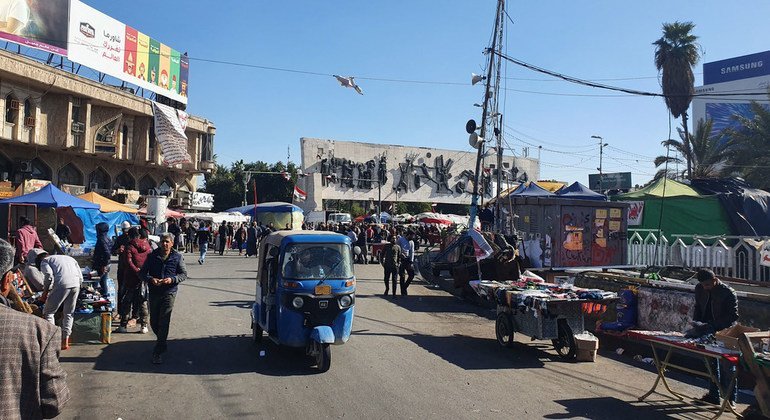
UN and Iraq Sign Sustainable Development Cooperation Framework 2025-2029
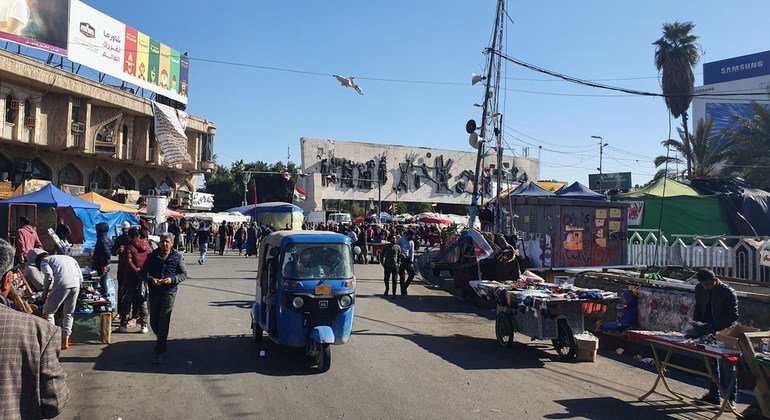
On Thursday, the United Nations and the Government of Iraq signed a new agreement titled the Sustainable Development Cooperation Framework for 2025 to 2029. This framework aims to assist Iraq in advancing its national development goals, which are aligned with the 2030 Agenda for Sustainable Development adopted by UN Member States in 2015.
The signing of this agreement precedes the closure of the UN Assistance Mission for Iraq (UNAMI), which has supported the Iraqi government on critical policy issues for over two decades.
Mohamed Al Hassan, UNAMI chief, stated, “Signing the Framework is a natural and honourable transition of the relationship between the United Nations and the Republic of Iraq. It reflects an orderly and responsible departure from support to political stability to the stage of consolidating sustainable development partnership between Iraq and the organization.”
About the Sustainable Development Cooperation Framework
To realize the objectives of the 2030 Agenda and the 17 Sustainable Development Goals (SDGs), countries must collaborate internationally while also advancing their national agendas.
Sustainable Development Cooperation Frameworks are formal agreements between the UN and individual governments that provide tools for planning, implementation, and monitoring of sustainable development initiatives.
The Framework for Iraq focuses on four strategic priorities that align with the country’s national development plan and the SDGs:
- Improved access to education, health, and social services (SDG 3, SDG 4, SDG 10).
- Creating opportunities for jobs and economic growth (SDG 8).
- Protecting the environment and addressing climate change (SDG 13, SDG 15).
- Strengthening rule of law and good governance (SDG 16).
Implementation and Monitoring
The execution, monitoring, and reporting of the UN-Iraq Sustainable Development Cooperation Framework will be overseen by a steering committee co-chaired by Iraq’s Ministry of Planning and the UN Resident Coordinator, who leads the UN country team.
Key government institutions and UN agencies will convene annually to review progress and ensure alignment with the SDGs and national priorities.
Implementation will be supported by a dedicated fund and a resource mobilization strategy to secure necessary financing for sustainable development projects.
Closure of the UN Assistance Mission for Iraq (UNAMI)
Established in 2003 following the fall of Saddam Hussein, UNAMI has played a vital role in Iraq’s political transition, post-conflict recovery, and counter-terrorism efforts against ISIL (Da’esh). The mission’s mandate will officially end on 31 December 2025.
With Iraq now significantly more stable, the country is progressing towards greater self-reliance and sustainable development in line with the SDGs.
Mr. Al Hassan emphasized, “Iraq believes it is ready to move to another phase, solidifying its sovereignty and territorial integrity. I wholeheartedly believe that Iraq is ready for that.”
1. Sustainable Development Goals (SDGs) Addressed or Connected to the Issues Highlighted in the Article
- SDG 3: Good Health and Well-being – The article mentions improving access to health services as a strategic priority.
- SDG 4: Quality Education – Improved access to education is explicitly listed as a priority.
- SDG 8: Decent Work and Economic Growth – Creating opportunities for jobs and economic growth is a key focus.
- SDG 13: Climate Action – Protecting the environment and addressing climate change are highlighted.
- SDG 16: Peace, Justice and Strong Institutions – Strengthening rule of law and good governance is emphasized.
2. Specific Targets Under Those SDGs Identified Based on the Article’s Content
- SDG 3 Targets:
- 3.8 – Achieve universal health coverage, including access to quality essential health-care services.
- 3.c – Increase health financing and recruitment, development, training and retention of the health workforce.
- SDG 4 Targets:
- 4.1 – Ensure that all girls and boys complete free, equitable and quality primary and secondary education.
- 4.5 – Eliminate gender disparities in education and ensure equal access to all levels of education.
- SDG 8 Targets:
- 8.3 – Promote development-oriented policies that support productive activities, decent job creation, entrepreneurship, and innovation.
- 8.5 – Achieve full and productive employment and decent work for all women and men.
- SDG 13 Targets:
- 13.1 – Strengthen resilience and adaptive capacity to climate-related hazards and natural disasters.
- 13.2 – Integrate climate change measures into national policies, strategies and planning.
- SDG 16 Targets:
- 16.6 – Develop effective, accountable and transparent institutions at all levels.
- 16.7 – Ensure responsive, inclusive, participatory and representative decision-making.
3. Indicators Mentioned or Implied in the Article to Measure Progress Towards the Identified Targets
- Access to Education and Health Services: Indicators such as enrollment rates, completion rates, and coverage of essential health services can be implied to measure progress on SDG 3 and 4 targets.
- Employment and Economic Growth: Indicators like unemployment rate, labor productivity, and number of new enterprises relate to SDG 8 targets.
- Environmental Protection and Climate Action: Indicators measuring greenhouse gas emissions, adoption of climate policies, and resilience to climate hazards are relevant for SDG 13.
- Rule of Law and Governance: Indicators such as the existence of accountable institutions, transparency indexes, and participation rates in governance processes apply to SDG 16.
- Monitoring and Reporting Mechanisms: The article mentions annual reviews by government institutions and UN agencies, implying the use of progress reports and data collection as indicators of implementation success.
4. Table: SDGs, Targets and Indicators
| SDGs | Targets | Indicators |
|---|---|---|
| SDG 3: Good Health and Well-being |
|
|
| SDG 4: Quality Education |
|
|
| SDG 8: Decent Work and Economic Growth |
|
|
| SDG 13: Climate Action |
|
|
| SDG 16: Peace, Justice and Strong Institutions |
|
|
Source: news.un.org
What is Your Reaction?
 Like
0
Like
0
 Dislike
0
Dislike
0
 Love
0
Love
0
 Funny
0
Funny
0
 Angry
0
Angry
0
 Sad
0
Sad
0
 Wow
0
Wow
0