








































Foreign ministry plans increases to foreign aid – Taipei Times
Report on Taiwan’s Foreign Aid Budget and Alignment with Sustainable Development Goals
Proposed Budget Increase for International Development
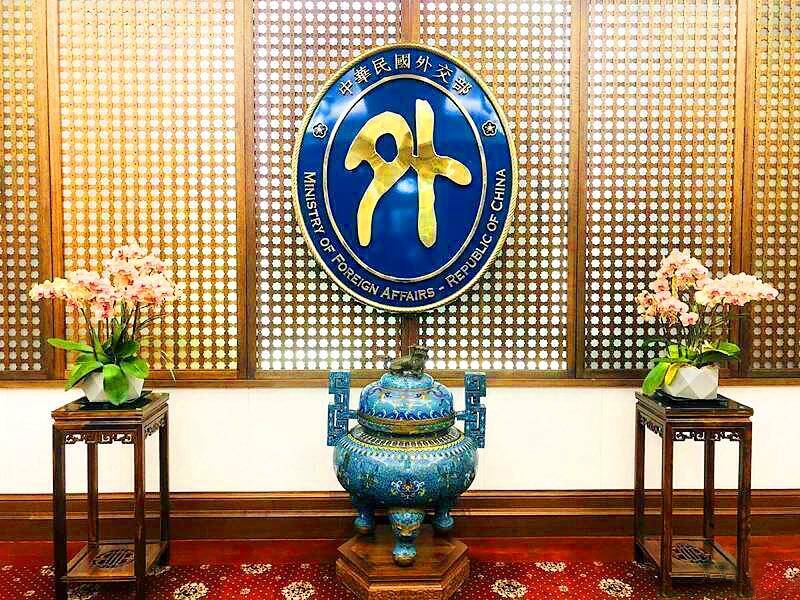
The Ministry of Foreign Affairs has announced a plan to increase funding for its primary foreign aid agency, the International Cooperation and Development Fund (TaiwanICDF), by NT$3 billion (US$95.86 million) in the upcoming fiscal year. This proposed increase is part of the ministry’s total budget proposal of NT$41.5 billion for fiscal 2026, which is pending legislative review. The additional allocation is intended to significantly boost Taiwan’s capacity for international development assistance and strengthen its contributions to global partnerships, a core principle of the Sustainable Development Goals (SDGs).
Strategic Alignment with Global SDGs
TaiwanICDF’s mission is directly aligned with the 2030 Agenda for Sustainable Development. The agency’s current budget of approximately NT$12.4 billion is utilized to support partner nations through initiatives that advance multiple SDGs. The planned funding increase will enhance these efforts.
- Socio-economic Development: Projects focus on alleviating poverty and promoting economic growth, directly contributing to SDG 1 (No Poverty) and SDG 8 (Decent Work and Economic Growth).
- Human Resource Development: Programs aimed at improving education and skills training support SDG 4 (Quality Education).
- Technical and Financial Cooperation: Assistance in sectors such as public health, agriculture, and infrastructure advances SDG 3 (Good Health and Well-being) and SDG 2 (Zero Hunger).
- Humanitarian Aid: Efforts to provide relief and support stable institutions align with SDG 16 (Peace, Justice and Strong Institutions).
Official Development Assistance (ODA) Analysis and SDG 17
A key indicator of a nation’s commitment to SDG 17 (Partnerships for the Goals) is its Official Development Assistance (ODA) as a percentage of Gross National Income (GNI). Taiwan’s ODA contribution in the last year was approximately 0.049% of its GNI. This figure is considerably below the United Nations’ suggested target and the contributions of other regional partners.
- United Nations Target: 0.7%
- Japan: 0.39%
- South Korea: 0.21%
- Australia: 0.19%
- Taiwan: 0.049%
The proposed budget increase represents a strategic step toward closing this gap and reinforcing Taiwan’s role as a responsible global partner dedicated to sustainable development.
Historical Funding Context
TaiwanICDF was established in 1996 with an initial government pledge of NT$30 billion. However, the initial allocation was NT$11.6 billion. Despite subsequent annual budget increases of NT$800 million, a cumulative shortfall of NT$17.5 billion from the original pledge remains. The planned NT$3 billion increase for the next fiscal year is a significant move to address this long-standing deficit and enhance the scale and impact of Taiwan’s contributions to achieving the Sustainable Development Goals worldwide.
Analysis of Sustainable Development Goals in the Article
1. Which SDGs are addressed or connected to the issues highlighted in the article?
- SDG 17: Partnerships for the Goals: This is the most prominent SDG addressed. The entire article focuses on Taiwan’s commitment to international development assistance, which is the core of global partnerships. It discusses funding for its foreign aid agency (TaiwanICDF), the amount of Official Development Assistance (ODA) provided, and compares its contributions to the UN-suggested international standard.
- SDG 1: No Poverty: The article states that TaiwanICDF’s goals include assisting developing countries with “socio-economic…development” through “financial assistance and humanitarian aid.” These activities are fundamental to poverty reduction efforts in developing nations.
- SDG 8: Decent Work and Economic Growth: The mission of TaiwanICDF to aid in “socio-economic…development” through “technical cooperation” directly supports the promotion of sustained, inclusive, and sustainable economic growth in partner countries.
- SDG 4: Quality Education: The article mentions that TaiwanICDF assists with “human resource development.” This is directly linked to providing inclusive and equitable quality education and promoting lifelong learning opportunities, which are central to SDG 4.
2. What specific targets under those SDGs can be identified based on the article’s content?
- Target 17.2: “Developed countries to implement fully their official development assistance commitments, including the commitment by many developed countries to achieve the target of 0.7 per cent of ODA/GNI to developing countries…” The article explicitly references this target by stating that Taiwan’s spending of “0.049 percent of its gross national income (GNI) on official development assistance (ODA) last year” is “far below the 0.7 percent suggested by the UN.”
- Target 1.a: “Ensure significant mobilization of resources from a variety of sources, including through enhanced development cooperation, in order to provide adequate and predictable means for developing countries… to implement programmes and policies to end poverty in all its dimensions.” The planned increase of “NT$3 billion” in funding for TaiwanICDF is a direct example of mobilizing financial resources for development cooperation aimed at socio-economic improvement.
- Target 8.a: “Increase Aid for Trade support for developing countries…” While not using the exact term “Aid for Trade,” the article’s description of TaiwanICDF’s work—providing “technical cooperation” and “financial assistance” to boost “socio-economic…development”—aligns with the objective of this target.
- Target 4.b: “By 2020, substantially expand globally the number of scholarships available to developing countries…” The goal of supporting “human resource development” implies investment in education and skills training, which is the broader aim of this target. The increased funding can be seen as a means to expand such programs.
3. Are there any indicators mentioned or implied in the article that can be used to measure progress towards the identified targets?
- Indicator 17.2.1: “Net official development assistance… as a proportion of the Organization for Economic Cooperation and Development (OECD) Development Assistance Committee donors’ gross national income (GNI).” This indicator is explicitly used in the article. It quantifies Taiwan’s contribution at “0.049 percent of its gross national income (GNI)” and compares it to the UN benchmark (0.7%) and the figures for Japan (0.39%), South Korea (0.21%), and Australia (0.19%).
-
Implied Indicator: Total volume of development finance. The article provides specific monetary values that serve as practical indicators of Taiwan’s commitment. These include:
- The planned funding increase of “NT$3 billion” for the foreign aid agency.
- The current annual budget for TaiwanICDF, which is “about NT$12.4 billion.”
These figures directly measure the “mobilization of resources” mentioned in Target 1.a and the overall financial capacity to support other development goals.
4. Table of SDGs, Targets, and Indicators
| SDGs | Targets | Indicators |
|---|---|---|
| SDG 17: Partnerships for the Goals | Target 17.2: Developed countries to achieve the target of 0.7 per cent of ODA/GNI. | Indicator 17.2.1: Net official development assistance as a proportion of gross national income (GNI). (Explicitly mentioned as 0.049% for Taiwan vs. the 0.7% UN target). |
| SDG 1: No Poverty | Target 1.a: Ensure significant mobilization of resources… through enhanced development cooperation. | Implied Indicator: The planned increase in funding by NT$3 billion for financial and humanitarian aid. |
| SDG 8: Decent Work and Economic Growth | Target 8.a: Increase Aid for Trade support for developing countries. | Implied Indicator: Funding allocated for technical cooperation and financial assistance to support socio-economic development. |
| SDG 4: Quality Education | Target 4.b: Substantially expand globally the number of scholarships available to developing countries. | Implied Indicator: Funding allocated for “human resource development” in partner countries. |
Source: taipeitimes.com
What is Your Reaction?
 Like
0
Like
0
 Dislike
0
Dislike
0
 Love
0
Love
0
 Funny
0
Funny
0
 Angry
0
Angry
0
 Sad
0
Sad
0
 Wow
0
Wow
0