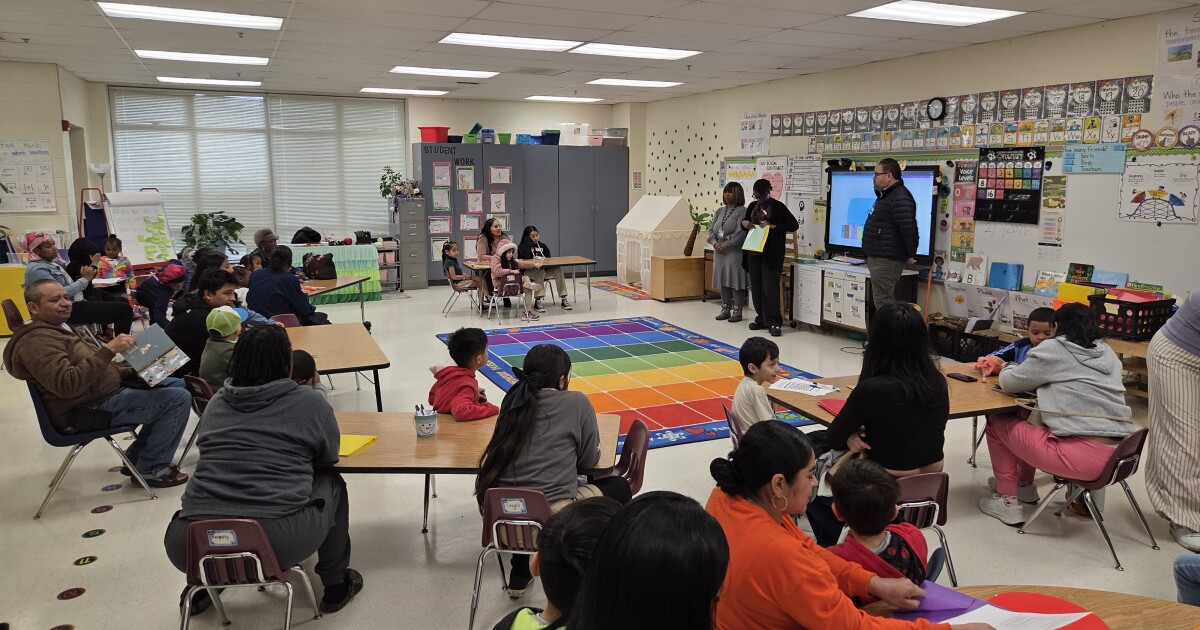
Healdsburg Unified recognized by state for improved graduation rates, test scores – The Press Democrat

Healdsburg Unified School District: A Case Study in Advancing Sustainable Development Goals
Executive Summary
The Healdsburg Unified School District (HUSD) has demonstrated significant progress in achieving key educational and wellness metrics, aligning with the United Nations’ Sustainable Development Goals (SDGs). Despite regional challenges, the district has improved academic outcomes, enhanced student well-being, and maintained fiscal stability. This report outlines HUSD’s achievements, with a specific focus on its contributions to SDG 4 (Quality Education), SDG 3 (Good Health and Well-being), and SDG 10 (Reduced Inequalities).
Alignment with SDG 4: Quality Education
Enhancing Educational Outcomes and Equity
HUSD has made substantial strides toward ensuring inclusive and equitable quality education for all, a core objective of SDG 4. The district was one of only four statewide recognized by the State Superintendent for its performance. Key achievements include:
- Graduation Rate: Increased by 7.2%, with nearly 97% of 12th graders graduating, directly supporting Target 4.1 on completion of secondary education.
- College and Career Readiness: Increased by 17%, with 70.9% of high school students meeting preparedness standards.
- Academic Proficiency: Scores improved across all state-tracked categories, including a 13.9-point increase in English proficiency and a 4.1-point increase in math scores.
- Student Engagement: Chronic absenteeism dropped by 3.2%, indicating improved access to and participation in learning.
Strategic Investments in Educational Support
The district’s success is attributed to targeted investments designed to support both educators and students, fostering an environment conducive to quality learning. Key strategies include:
- Teacher Development: Implementation of professional learning committees to improve instructional fundamentals, contributing to the supply of qualified teachers as noted in SDG Target 4.c.
- Expanded Counseling Services: A multi-year effort to widen counseling services across all grade levels to provide comprehensive student support.
- Targeted Interventions: A focus on strengthening support for the most vulnerable students to close existing achievement gaps.
Integration of SDG 3: Good Health and Well-being
Prioritizing Student Wellness as a Foundation for Learning
Recognizing the critical link between well-being and academic success, HUSD has invested heavily in mental and emotional health resources, aligning with SDG Target 3.4 to promote mental health and well-being. These initiatives remove learning obstacles for students.
- Elementary Level Support: A full-time bilingual counselor has been added to support younger students.
- High School Wellness Center: A dedicated center is staffed with two credentialed family counselors, providing students with access to targeted resources and support.
Addressing SDG 10: Reduced Inequalities
Closing the Achievement Gap for Vulnerable Populations
With a student body that is 66.1% socioeconomically disadvantaged and 62.8% Latino, HUSD’s strategy directly addresses SDG 10 by focusing on reducing inequalities of outcome. The district’s efforts are designed to ensure equal opportunity for all students.
- Equitable Resource Allocation: Investments are specifically aimed at supporting the district’s most vulnerable students.
- Inclusive Support Systems: The addition of bilingual counseling services directly addresses the needs of the district’s large Latino student population, promoting inclusion.
Sustainable Financial Management for Long-Term Impact
Ensuring Institutional Viability and Program Longevity
HUSD’s achievements are underpinned by a sustainable financial model that ensures the long-term viability of its educational and wellness programs, reflecting the principles of SDG 11 (Sustainable Cities and Communities).
- Stable Funding Base: As a “basic aid” district, HUSD receives 75% of its $36.1 million budget from local property taxes, providing a stable revenue source independent of enrollment fluctuations.
- Prudent Fiscal Planning: The district carefully managed one-time pandemic-era funds to avoid a future financial cliff, ensuring that new staff positions could be sustained.
- Strong Financial Reserves: The district maintains a reserve of 13% of its budget ($4.68 million), well above the state-mandated 3%, ensuring fiscal health and resilience.
- Proactive Grant Seeking: HUSD is actively seeking alternative grant funding to permanently absorb impactful positions, such as counselors, into its general fund.
Analysis of Sustainable Development Goals in the Article
-
Which SDGs are addressed or connected to the issues highlighted in the article?
The article highlights issues and achievements that are directly connected to several Sustainable Development Goals (SDGs). The primary focus is on education, but it also touches upon well-being and inequality.
- SDG 4: Quality Education: This is the most prominent SDG in the article. The entire text revolves around the Healdsburg Unified School District’s achievements in academic performance, graduation rates, and college readiness, which are central to ensuring inclusive and equitable quality education.
- SDG 3: Good Health and Well-being: The article explicitly mentions the district’s investment in “wellness support.” This includes adding counselors and a wellness center to support students’ mental health, which is a key component of ensuring healthy lives and promoting well-being for all at all ages.
- SDG 10: Reduced Inequalities: The article points out that a significant portion of the student body is “socioeconomically disadvantaged” (66%) and Latino (63%). The district’s stated goal to “strengthen support for our most vulnerable students… and shorten the achievement gap” directly addresses the aim of reducing inequalities within and among countries.
-
What specific targets under those SDGs can be identified based on the article’s content?
Based on the specific actions and outcomes described, several SDG targets can be identified:
- Target 4.1: By 2030, ensure that all girls and boys complete free, equitable and quality primary and secondary education leading to relevant and effective learning outcomes. The article’s focus on increasing graduation rates (to nearly 97%) and improving academic performance in English and math directly aligns with this target of ensuring completion and effective learning in secondary education.
- Target 4.5: By 2030, eliminate gender disparities in education and ensure equal access to all levels of education and vocational training for the vulnerable. The district’s deliberate efforts to support its “most vulnerable students,” including a majority socioeconomically disadvantaged and Latino population, and to “shorten the achievement gap” are a direct attempt to ensure equal access and opportunity, which is the core of this target.
- Target 3.4: By 2030, reduce by one third premature mortality from non-communicable diseases through prevention and treatment and promote mental health and well-being. The article’s emphasis on investing in “wider counseling services for all grade levels,” a “full-time bilingual counselor,” and a “wellness center” staffed with counselors directly contributes to the “promote mental health and well-being” aspect of this target.
- Target 10.2: By 2030, empower and promote the social, economic and political inclusion of all, irrespective of… race, ethnicity… or economic or other status. By investing heavily in resources to support a student body that is over 60% Latino and socioeconomically disadvantaged, the district is actively working to promote social and economic inclusion through education, ensuring these students are prepared for college and careers.
-
Are there any indicators mentioned or implied in the article that can be used to measure progress towards the identified targets?
Yes, the article provides several specific quantitative and qualitative indicators that can be used to measure progress.
- Indicators for Target 4.1:
- Graduation Rate: The article states a 7.2% increase, with nearly 97% of 12th graders graduating. This is a direct measure of secondary education completion.
- Academic Proficiency: The article provides specific metrics on learning outcomes, including an almost 14-point increase in English proficiency and a 4-point increase in math scores.
- College and Career Readiness: This is measured by the 17% increase, with nearly 71% of high schoolers meeting the standards.
- School Attendance: The 3.2% drop in chronic absenteeism is an indicator of student engagement and a factor in achieving learning outcomes.
- Indicators for Target 4.5 & 10.2:
- Resource Allocation for Vulnerable Groups: While not providing disaggregated data, the article implies progress by describing the implementation of support systems like “professional learning committees” for teachers and expanded counseling services aimed at closing the achievement gap for its majority-disadvantaged student population. The overall academic improvements serve as an indirect indicator of success for these groups.
- Indicators for Target 3.4:
- Availability of Mental Health Services: The article provides qualitative indicators by mentioning the creation of a “wellness center” and the addition of specific staff: a “full-time bilingual counselor” and “two credentialed family counselors.” The number of dedicated mental health professionals and facilities serves as a direct indicator of the promotion of well-being.
- Indicators for Target 4.1:
-
Create a table with three columns titled ‘SDGs, Targets and Indicators” to present the findings from analyzing the article.
SDGs Targets Indicators SDG 4: Quality Education 4.1 Ensure all children complete free, equitable and quality primary and secondary education. - Graduation rate increase of 7.2% (to 97%)
- English proficiency score increase of 14 points
- Math score increase of 4 points
- College and career readiness increase of 17% (to 71%)
- Chronic absenteeism drop of 3.2%
4.5 Ensure equal access to all levels of education for the vulnerable. - Implementation of support systems to “shorten the achievement gap” for a student body that is 66% socioeconomically disadvantaged and 63% Latino.
SDG 3: Good Health and Well-being 3.4 Promote mental health and well-being. - Addition of a full-time bilingual counselor
- Establishment of a high school wellness center
- Staffing of the wellness center with two credentialed family counselors
SDG 10: Reduced Inequalities 10.2 Empower and promote the social and economic inclusion of all. - Heavy investment in academic and wellness support specifically aimed at vulnerable students to improve educational outcomes and readiness for future economic participation.
Source: pressdemocrat.com
What is Your Reaction?
 Like
0
Like
0
 Dislike
0
Dislike
0
 Love
0
Love
0
 Funny
0
Funny
0
 Angry
0
Angry
0
 Sad
0
Sad
0
 Wow
0
Wow
0