How to Actually Combat Economic Inequality – Nautilus | Science Connected
Report on Social Perception of Inequality and its Impact on Sustainable Development Goals
Introduction: The Challenge of Economic Inequality and SDG 10
The widening gap between high-income and low-income populations in many nations presents a significant obstacle to achieving Sustainable Development Goal 10 (Reduced Inequalities). While there is a general consensus against inequality, disagreement persists regarding effective solutions. Recent research indicates that public opinion on redistributive policies is heavily influenced by individuals’ direct observation and perception of economic disparity within their own social networks. These perceptions are often skewed, as social circles tend to be homogenous in terms of wealth, leading to an underestimation of broader societal inequality and affecting political will for policies aimed at achieving SDG 10.
Research Methodology and Experimental Design
A study published in PNAS Nexus by researchers from the Santa Fe Institute and the London School of Economics investigated how social network structures influence voting behavior on wealth redistribution. The research combined a simulation model with an online experiment to test predictions.
- Participants: The experiment involved 1,440 participants based in the United States.
- Setup: Participants were randomly assigned roles as “poor” or “rich” and placed in simulated mini-societies.
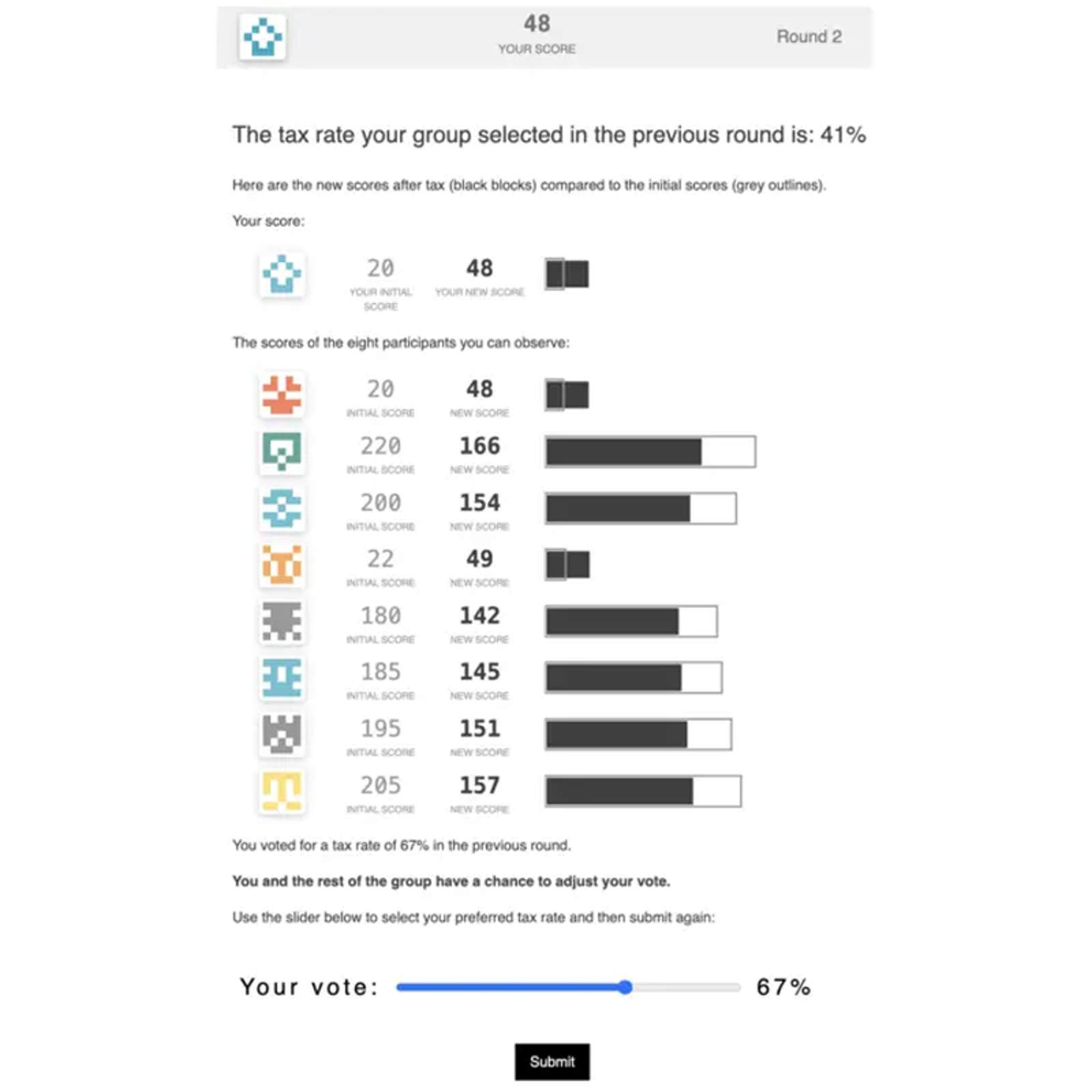
- Social Network Simulation: Each participant’s view was limited to eight other individuals at a time, representing their immediate social network. The composition of these networks varied, creating scenarios of both wealth-segregated and wealth-integrated environments.
- Task: Over three rounds, participants voted on a tax rate for wealth redistribution. The median vote determined the tax rate, which was then equally allotted among all users in the group.
Key Findings: Implications for SDG 10 and SDG 1
The study’s results reveal critical social dynamics that impact the implementation of policies essential for SDG 10 (Reduced Inequalities) and SDG 1 (No Poverty).
- Visibility of Wealth Increases Support for Redistribution: When lower-income participants were exposed to a greater number of higher-income individuals, their support for wealth redistribution through taxation increased significantly. This suggests that making wealth disparities more visible can build momentum for policies that reduce inequality.
- Segregation Upholds the Status Quo: In segregated networks, where individuals primarily saw others of a similar economic status, support for redistribution was at its lowest. This “apathy of the poor” in segregated environments acts as a major barrier to tackling inequality, effectively hindering progress on SDG 10.
- Asymmetrical Response from Different Income Groups: Support for redistribution among higher-income participants did not increase, regardless of their network’s composition. In contrast, support among lower-income participants grew as they observed the positive effects of higher tax rates over multiple rounds.
The Trade-off: Redistribution vs. Social Cohesion (SDG 16)
The research identified a significant trade-off between achieving greater economic equality and maintaining social harmony, a core component of SDG 16 (Peace, Justice and Strong Institutions).
- Increased Polarization: Social networks that prompted the highest levels of wealth redistribution (i.e., where the poor could see the rich) also generated the most polarization, dissatisfaction, and perceived unfairness among participants.
- Conflict Risk: The “radicalization” of lower-income participants to demand higher taxation in response to visible wealth, without a corresponding increase in support from higher-income groups, points to a rising risk of social conflict.
- Challenge for Inclusive Societies: This finding suggests that the path to reduced inequality (SDG 10) may inherently involve social friction, posing a direct challenge to the goal of building peaceful and inclusive societies (SDG 16).
Policy Recommendations and Future Directions
The study concludes that wealth segregation is a primary enabler of inequality, as it maintains the status quo by obscuring the true extent of economic disparity. To advance the Sustainable Development Goals, particularly SDG 1 and SDG 10, the researchers propose a clear, albeit challenging, path forward.
- Increase Awareness of Wealth Disparity: Policymakers and civil society should focus on raising the visibility of extreme wealth through media, public discourse, and data transparency.
- Navigate Social Friction for Change: It must be acknowledged that the dissatisfaction and polarization resulting from increased awareness may be a necessary catalyst for social change in highly unequal societies.
- Strengthen Institutions: The potential for social friction underscores the importance of robust, fair, and transparent institutions, as outlined in SDG 16, to manage the process of social and economic transformation peacefully and effectively.
Analysis of Sustainable Development Goals in the Article
1. Which SDGs are addressed or connected to the issues highlighted in the article?
-
SDG 10: Reduced Inequalities
The article’s central theme is the “gap between the haves and have-nots,” focusing on income and wealth inequality within wealthier nations. It explores how perceptions of this inequality influence public support for redistributive policies like taxes, which directly relates to the goal of reducing economic disparities.
-
SDG 16: Peace, Justice and Strong Institutions
The article touches upon the societal consequences of visible inequality, such as “rising risks of conflict” and political polarization. It examines how public opinion, shaped by social networks, influences voting on tax policies, which connects to the development of inclusive and participatory decision-making processes within institutions.
2. What specific targets under those SDGs can be identified based on the article’s content?
-
SDG 10: Reduced Inequalities
- Target 10.2: By 2030, empower and promote the social, economic and political inclusion of all, irrespective of… economic or other status. The article discusses how social segregation (“homogenous niches”) can limit people’s understanding of broader inequality, affecting their political participation (voting on taxes) and sentiments towards policies that promote economic inclusion.
- Target 10.3: Ensure equal opportunity and reduce inequalities of outcome, including by… promoting appropriate… policies and action in this regard. The study’s focus on using taxes for wealth redistribution is a direct examination of a policy designed to reduce inequalities of outcome. The article explores the conditions under which the public supports such policies.
-
SDG 16: Peace, Justice and Strong Institutions
- Target 16.7: Ensure responsive, inclusive, participatory and representative decision-making at all levels. The experiment simulates a democratic decision-making process (voting on tax rates) and analyzes how different social structures and perceptions of inequality affect the outcome. It highlights that while observing wealth can increase support for redistribution, it can also lead to less satisfaction and more polarized votes, posing a challenge to inclusive and agreeable decision-making.
3. Are there any indicators mentioned or implied in the article that can be used to measure progress towards the identified targets?
-
Indicators for SDG 10
- Public support for wealth redistribution: The article explicitly measures this through the experiment where participants voted on tax rates. The finding that “when lower-income people see lots of richer people in their milieu, they’re more in favor of wealth redistribution” makes this a key implied indicator.
- Perception of inequality: The article states that people’s opinions vary based on “how—and whether—they observe inequality around them.” The study’s design, which controls what participants see in their “hypothetical social network,” implies that measuring the public’s perception of wealth gaps is a crucial indicator for understanding attitudes towards inequality.
-
Indicators for SDG 16
- Level of vote polarization: The article notes that when poorer participants viewed richer ones, “their votes were more polarized.” This is a direct indicator of social friction and challenges to achieving consensus in participatory decision-making.
- Public satisfaction with policy outcomes: The study surveyed participants on their opinions, finding that in scenarios with higher redistribution, “people reported less satisfaction.” This serves as an indicator of the perceived fairness and inclusivity of institutional outcomes.
4. Table of SDGs, Targets, and Indicators
| SDGs | Targets | Indicators |
|---|---|---|
| SDG 10: Reduced Inequalities |
|
|
| SDG 16: Peace, Justice and Strong Institutions |
|
|
Source: nautil.us
What is Your Reaction?
 Like
0
Like
0
 Dislike
0
Dislike
0
 Love
0
Love
0
 Funny
0
Funny
0
 Angry
0
Angry
0
 Sad
0
Sad
0
 Wow
0
Wow
0