

























LSU hosts annual International Education Week to connect campus and cultures from across the globe – lsureveille.com

Report on Louisiana State University’s International Education Week and its Alignment with Sustainable Development Goals
Introduction: Fostering Global Citizenship and Quality Education (SDG 4)
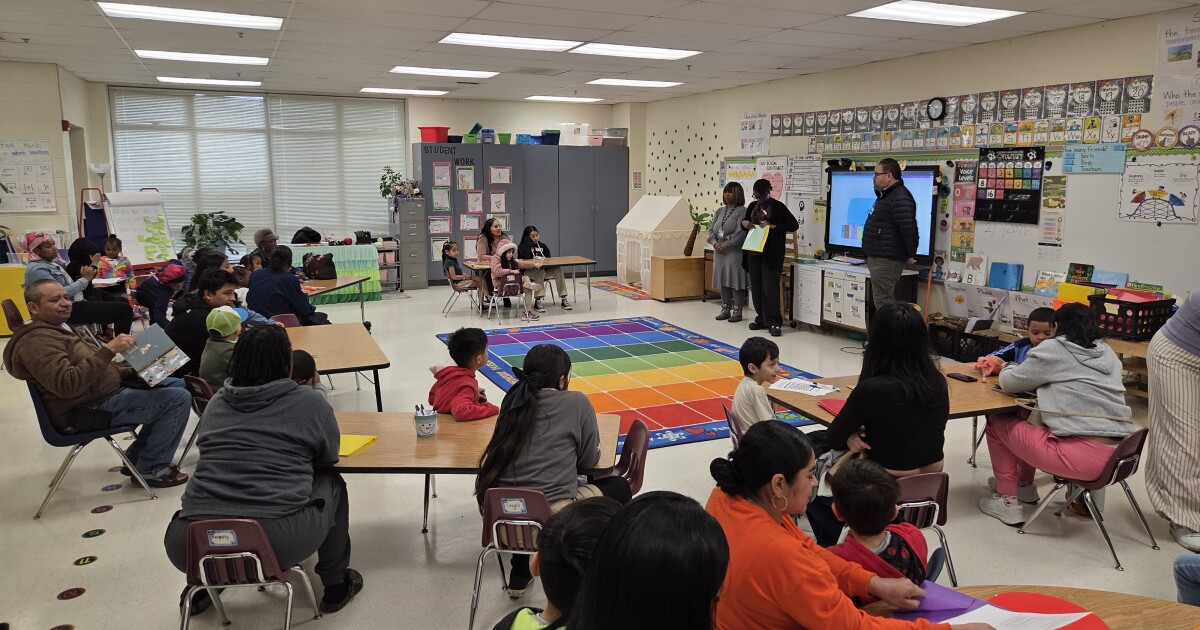
Louisiana State University (LSU), through its Office of Global Affairs, recently concluded its annual International Education Week, an initiative designed to promote international cultural awareness. This event, held for over a decade, underscores the university’s role as a center for community change and its commitment to the Sustainable Development Goals, particularly SDG 4: Quality Education. Daniela Chu-Rodriguez, Director of International Student Engagement, highlighted the pivotal role of universities in fostering global perspectives, noting the presence of nearly 2,000 international students on campus. The week’s activities align directly with SDG Target 4.7, which aims to ensure all learners acquire the knowledge and skills needed to promote sustainable development, including through education for global citizenship and appreciation of cultural diversity.
Promoting Sustainable Production and Cultural Diversity (SDG 2, SDG 12)
A key event, the Thankful Global Village Festival, demonstrated a practical application of sustainability principles, linking cultural celebration with responsible consumption. The festival’s focus on rice-based dishes showcased global cuisines while supporting local agriculture, a core tenet of SDG 2 (Zero Hunger) and SDG 12 (Responsible Consumption and Production). Supreme Rice, a Louisiana-based company, supplied the primary ingredient, thereby promoting local supply chains.
- Sri Lankan Student Association: Prepared milk rice with caramelized onions in a sambal sauce.
- Vietnamese Student Association: Prepared cơm tấm, a grilled pork and steamed rice dish.
- West Indian Student Association: Prepared Haitian rice and beans.
- Indian Student Association: Prepared chicken biryani.
The festival also featured a display of global spices, further educating attendees on the agricultural origins of common ingredients and fostering an appreciation for global biodiversity.
Enhancing Global Learning and Reducing Inequalities (SDG 4, SDG 10)
The week provided structured opportunities for students to engage in global learning, directly contributing to SDG 4 (Quality Education) and SDG 10 (Reduced Inequalities) by making international experiences more accessible and understood.
- Global Ambassadors Program (GAP): This interdisciplinary initiative selects a student to travel to West Africa, with this year’s destination being Senegal. Such programs provide immersive, firsthand experience in different cultural and economic contexts, fostering a deeper understanding that helps reduce prejudice and inequality.
- Study Abroad Advising: Peer advisers were available to guide students through various study abroad options. These opportunities are presented as critical resume-building experiences that equip students with cross-cultural competencies necessary for the global workforce, thereby enhancing their educational and career outcomes.
Building Partnerships for Inclusive and Peaceful Societies (SDG 16, SDG 17)
International Education Week is a model of SDG 17 (Partnerships for the Goals). The event is a collaborative effort involving multiple stakeholders dedicated to promoting international education.
- LSU’s Office of Global Affairs
- The International Student Association
- The U.S. State and Education Departments
- The National Association of Foreign Student Advisors (NAFSA)
These partnerships facilitate events like the concluding Cultural Night, which brought together diverse student populations to share in cultural traditions. By creating spaces for interaction and mutual appreciation, the university contributes to building a more peaceful and inclusive community, reflecting the aims of SDG 16 (Peace, Justice and Strong Institutions). Doctoral student Maganizo Kapita noted that the week’s greatest success was its ability to bring “all these people together from different parts of the world, and appreciating each other and showcasing each other’s cultures.”
Analysis of SDGs in the Article
1. Which SDGs are addressed or connected to the issues highlighted in the article?
The article on LSU’s International Education Week connects to several Sustainable Development Goals (SDGs) by focusing on global citizenship, cultural exchange, and partnerships in an educational setting. The primary SDGs addressed are:
- SDG 4: Quality Education – The core theme of the article is education, specifically international education aimed at broadening students’ cultural awareness and global perspectives.
- SDG 10: Reduced Inequalities – By creating an inclusive environment where students from nearly 2,000 international backgrounds can share their cultures, the initiative promotes social inclusion and appreciation for diversity, which helps in reducing inequalities.
- SDG 17: Partnerships for the Goals – The event’s success relies on collaborations between the university, student associations, non-profit organizations, government departments, and private companies.
2. What specific targets under those SDGs can be identified based on the article’s content?
Based on the activities and goals described in the article, the following specific SDG targets can be identified:
-
SDG 4: Quality Education
- Target 4.7: “By 2030, ensure that all learners acquire the knowledge and skills needed to promote sustainable development, including, among others, through education for… global citizenship and appreciation of cultural diversity and of culture’s contribution to sustainable development.”
Explanation: The entire International Education Week is designed to achieve this. The article states its purpose is to “promote greater awareness of international cultures and customs among students.” Events like the Thankful Global Village Festival, where different cultural cuisines were shared, and the Global Ambassadors Program, which sends students to West Africa, directly foster global citizenship and an appreciation for cultural diversity.
- Target 4.7: “By 2030, ensure that all learners acquire the knowledge and skills needed to promote sustainable development, including, among others, through education for… global citizenship and appreciation of cultural diversity and of culture’s contribution to sustainable development.”
-
SDG 10: Reduced Inequalities
- Target 10.2: “By 2030, empower and promote the social, economic and political inclusion of all, irrespective of… origin…”
Explanation: The article highlights the social inclusion of international students. Maganizo Kapita, a doctoral student, emphasizes this by stating, “LSU is able to bring all these people together from different parts of the world, and appreciating each other and showcasing each other’s cultures.” This demonstrates the promotion of an inclusive campus environment for people of all national origins.
- Target 10.2: “By 2030, empower and promote the social, economic and political inclusion of all, irrespective of… origin…”
-
SDG 17: Partnerships for the Goals
- Target 17.6: “Enhance North-South, South-South and triangular regional and international cooperation on and access to science, technology and innovation and enhance knowledge sharing…”
Explanation: The study abroad opportunities and the Global Ambassadors Program, which sends students to Senegal, are forms of international cooperation and knowledge sharing. The article mentions that through these programs, students “get the chance to go abroad and experience other countries and other cultures while also continuing on your academic journey.” - Target 17.17: “Encourage and promote effective public, public-private and civil society partnerships…”
Explanation: The article details a multi-stakeholder partnership. LSU’s Office of Global Affairs (public institution) collaborates with the U.S. State and Education departments (public), NAFSA (non-profit/civil society), various international student associations (civil society), and Supreme Rice (private company) to organize the week’s events.
- Target 17.6: “Enhance North-South, South-South and triangular regional and international cooperation on and access to science, technology and innovation and enhance knowledge sharing…”
3. Are there any indicators mentioned or implied in the article that can be used to measure progress towards the identified targets?
The article does not mention official SDG indicators but implies several qualitative and quantitative measures that could be used to track progress:
- Number of international students enrolled and engaged: The article explicitly states there are “almost 2,000 international students on our campus,” which serves as a baseline indicator for inclusion (Target 10.2). Their active participation in events like the Cultural Night and food festival is a qualitative measure of engagement.
- Number and variety of cultural and educational programs: The article lists several initiatives, including the Thankful Global Village Festival, the Global Ambassadors Program, study abroad advising sessions, and the Cultural Night. The existence and continuation of these programs are indicators of the university’s commitment to promoting global citizenship (Target 4.7).
- Number of students participating in international exchange: The mention of peer advisers for study abroad and the specific Global Ambassadors Program trip to Senegal implies that the university tracks participation in these international experiences, which is a direct measure of knowledge sharing and cooperation (Target 17.6).
- Number of active partnerships: The article identifies multiple partners involved in the event (LSU, NAFSA, U.S. government departments, student associations, Supreme Rice). The number and diversity of these collaborations can be used as an indicator for measuring progress on building effective partnerships (Target 17.17).
4. Create a table with three columns titled ‘SDGs, Targets and Indicators” to present the findings from analyzing the article.
| SDGs | Targets | Indicators (Implied from the article) |
|---|---|---|
| SDG 4: Quality Education | 4.7: Ensure all learners acquire knowledge and skills for sustainable development, including global citizenship and appreciation of cultural diversity. |
|
| SDG 10: Reduced Inequalities | 10.2: Empower and promote the social inclusion of all, irrespective of origin. |
|
| SDG 17: Partnerships for the Goals | 17.6: Enhance international cooperation and knowledge sharing. |
|
| 17.17: Encourage and promote effective public, public-private and civil society partnerships. |
|
Source: lsureveille.com
What is Your Reaction?
 Like
0
Like
0
 Dislike
0
Dislike
0
 Love
0
Love
0
 Funny
0
Funny
0
 Angry
0
Angry
0
 Sad
0
Sad
0
 Wow
0
Wow
0