

















Mapping the Early Childhood Education Ecosystem – National Governors Association

Report on Mapping State and Territory Early Care and Education Ecosystems with Emphasis on Sustainable Development Goals (SDGs)
Introduction
The 2025 Governors’ Education Policy Advisors Institute convened a panel discussion focused on lessons learned and best practices for mapping state and territory early care and education (ECE) ecosystems. These ecosystems comprise a complex mix of state-administered and locally operated programs, presenting challenges for streamlining ECE services. Governors hold a pivotal role in leading coordination efforts across agency leadership, funding streams, and state priorities. This report highlights key insights from experts and state examples, emphasizing alignment with the United Nations Sustainable Development Goals (SDGs), particularly SDG 4: Quality Education, and SDG 3: Good Health and Well-being.
Panel Speakers
- Jeffrey Capizzano, Founder and President, Policy Equity Group
- Jenna Conway, Deputy Superintendent, Virginia Department of Education
- Taylor Dunn, Director, Watershed Advisors – Moderator
Key Recommendations for State and Territory Leaders
- Activate the Governor as a Champion
Governors should convene and empower diverse state administrative and oversight mechanisms to improve coordination across ECE programs. This leadership role stimulates collaboration and streamlines management, advancing SDG 17: Partnerships for the Goals. - Prioritize Sustainability
Ensuring the longevity of infrastructure improvements is critical. While executive orders can expedite actions, leveraging legislative vehicles is recommended for establishing enduring structural and organizational enhancements in ECE systems, supporting SDG 16: Peace, Justice, and Strong Institutions. - Identify a North Star
Establishing a clear guiding goal creates urgency and focus. States such as Louisiana and Virginia have used “school readiness” as their north star to ensure every infant and toddler is prepared to thrive in kindergarten, aligning with SDG 4.2: Early Childhood Development and Pre-primary Education. - Align Programs Under a Single Entity
Consolidating ECE programs under one state or territory agency or aligning goals across programs allows a unified voice addressing health, safety, quality, and learning. This integration supports SDG 3 and SDG 4 by improving service delivery and quality standards. - Align Outcome Measurements Across Systems
Harmonizing metrics, especially regarding teacher-child interactions and curriculum, reduces barriers for parents and providers and facilitates informed educational choices, advancing SDG 4.1: Quality Primary and Secondary Education. - Engage All Stakeholders Across the ECE Sector
Recognizing the diversity of providers is essential to meet the varied needs of children from birth to five years. Supporting a mixed-delivery system ensures comprehensive coverage and inclusivity, promoting SDG 10: Reduced Inequalities.
Background on State and Territory ECE Programs
Government investments in child care and early education have evolved to reflect social values and economic changes, resulting in numerous programs addressing children’s care, safety, and brain development. Despite increased federal and state funding, fragmentation remains a significant barrier to maximizing investments and outcomes.
Federal Funding Streams and Challenges
- Major federal funding sources include:
- Child Care and Development Block Grant (CCDBG)
- Head Start and Early Head Start
- State Preschool Programs
- Individuals with Disabilities Education Act (IDEA) Part B and Part C
- Each program operates with distinct administrative procedures, eligibility requirements, target populations, and performance standards.
- Approximately 40% of federal ECE investments flow directly to program operators (e.g., Head Start), limiting state oversight.
- This fragmentation leads to:
- Complex eligibility rules for families
- Challenges for providers in blending funds
- Difficulty for states in tracking investments and outcomes
- Inconsistent quality across programs
These inefficiencies adversely affect school readiness, reduce the effective reach of investments, and hinder scaling of successful models statewide, counteracting the objectives of SDG 4 and SDG 1: No Poverty.
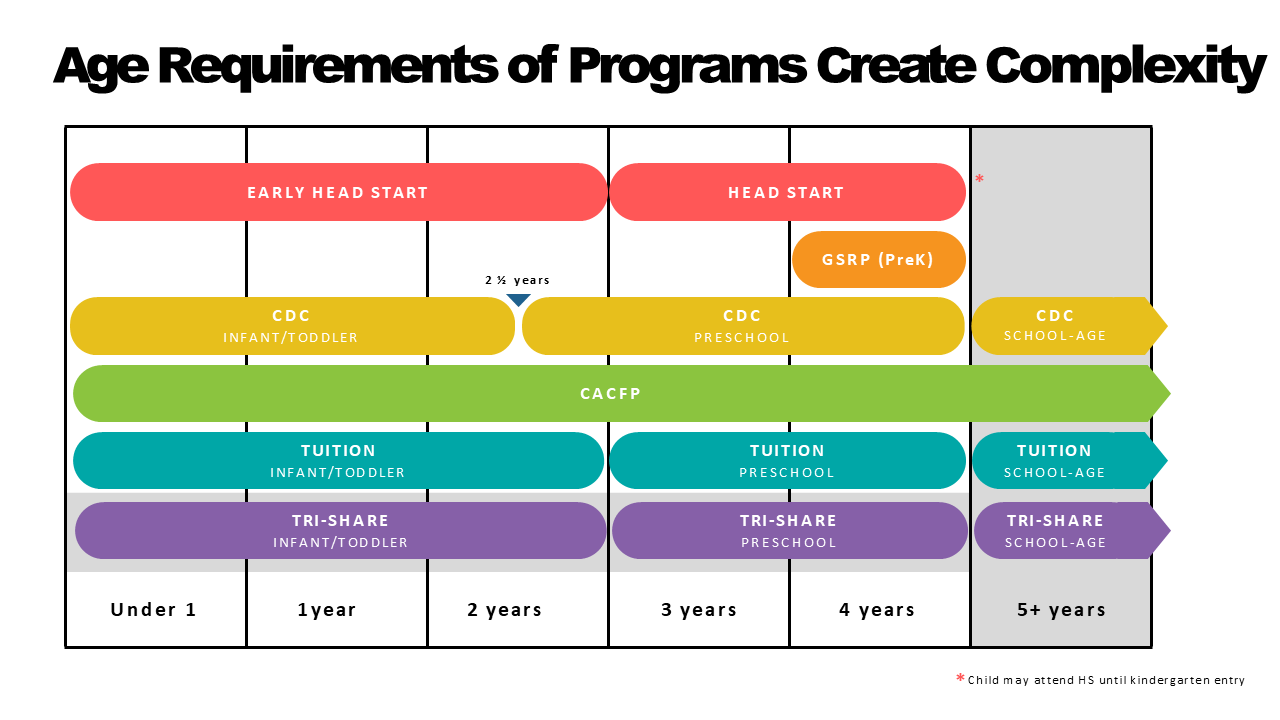
Case Study: Michigan’s Approach to Eligibility Mapping
To address eligibility complexity, Michigan developed a mapping of income eligibility thresholds to assist providers in blending funding streams, thereby easing the burden on families. This sliding scale approach aligns eligibility with income increases and age requirements, facilitating access to services and promoting equity in early childhood education.

Conclusion
Effective mapping and coordination of state and territory ECE ecosystems are essential to achieving the Sustainable Development Goals related to quality education, health, and equity. Governors’ leadership in championing integrated, sustainable, and outcome-aligned systems can significantly enhance early childhood development outcomes nationwide.
Additional Resources
For further insights, view the panel discussion video:
1. Sustainable Development Goals (SDGs) Addressed or Connected
- SDG 4: Quality Education
- The article focuses on early care and education (ECE) ecosystems, emphasizing school readiness and educational outcomes for children birth to five.
- SDG 3: Good Health and Well-being
- Health and safety are mentioned as integral parts of ECE programs, indicating a connection to children’s health and well-being.
- SDG 10: Reduced Inequalities
- The discussion on fragmentation of programs, eligibility complexities, and efforts to streamline funding and access highlights issues related to reducing inequalities in access to early education.
- SDG 17: Partnerships for the Goals
- The article stresses coordination among state agencies, federal funding streams, and stakeholders, reflecting the importance of partnerships and collaboration.
2. Specific Targets Under Those SDGs Identified
- SDG 4: Quality Education
- Target 4.2: Ensure that all girls and boys have access to quality early childhood development, care and pre-primary education so that they are ready for primary education.
- Target 4.c: Increase the supply of qualified teachers, including through international cooperation for teacher training.
- SDG 3: Good Health and Well-being
- Target 3.8: Achieve universal health coverage, including access to quality essential health-care services.
- SDG 10: Reduced Inequalities
- Target 10.2: Empower and promote the social, economic and political inclusion of all, irrespective of age, sex, disability, race, ethnicity, origin, religion or economic or other status.
- SDG 17: Partnerships for the Goals
- Target 17.17: Encourage and promote effective public, public-private and civil society partnerships.
3. Indicators Mentioned or Implied to Measure Progress
- School Readiness Metrics
- Use of “school readiness” as a north star implies measurement of children’s preparedness for kindergarten, which can be linked to indicators such as the proportion of children developmentally on track in health, learning and psychosocial well-being.
- Teacher-Child Interaction and Curriculum Quality
- Aligning outcome measurements around teacher-child interactions and curriculum suggests indicators related to quality of education delivery and learning environments.
- Eligibility and Access Metrics
- Mapping income eligibility thresholds and age requirements (as in Michigan’s case study) implies indicators measuring equitable access to ECE programs across income levels and age groups.
- Program Coordination and Funding Utilization
- Tracking the footprint of investments and outcomes to ensure consistent quality and maximize funding efficiency suggests indicators related to funding allocation, program reach, and administrative coordination.
4. Table: SDGs, Targets and Indicators
| SDGs | Targets | Indicators |
|---|---|---|
| SDG 4: Quality Education |
|
|
| SDG 3: Good Health and Well-being |
|
|
| SDG 10: Reduced Inequalities |
|
|
| SDG 17: Partnerships for the Goals |
|
|
Source: nga.org
What is Your Reaction?
 Like
0
Like
0
 Dislike
0
Dislike
0
 Love
0
Love
0
 Funny
0
Funny
0
 Angry
0
Angry
0
 Sad
0
Sad
0
 Wow
0
Wow
0