Marine Biostimulants Market | Global Market Analysis Report – 2035 – Fact.MR
Marine Biostimulants Market: A Report on Sustainable Agricultural Advancement
Executive Summary and Market Forecast
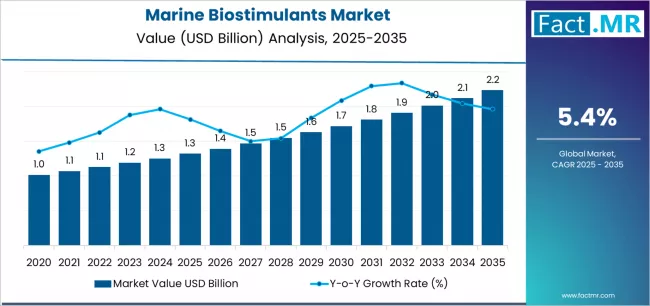
The global marine biostimulants market is forecast to experience significant growth, expanding from a valuation of USD 1.32 billion in 2025 to USD 2.23 billion by 2035. This projection represents a compound annual growth rate (CAGR) of 5.4% and an absolute increase of USD 0.91 billion. The market’s expansion is intrinsically linked to the global imperative to achieve the Sustainable Development Goals (SDGs), particularly those concerning food security, sustainable production, and climate action. The increasing adoption of organic and regenerative farming practices, driven by a need for enhanced crop productivity and soil health, underpins this growth trajectory.
- Market Value (2025): USD 1.32 billion
- Forecast Market Value (2035): USD 2.23 billion
- Forecast CAGR (2025-2035): 5.4%
- Primary Ingredient: Seaweed Extracts (70.1%)
- Primary End Use: Row Crops & Cereals (60.2%)
- Primary Application Mode: Foliar Treatment (78.9%)
Alignment with Sustainable Development Goals (SDGs)
The growth of the marine biostimulants market is a direct response to the global demand for agricultural systems that support the UN Sustainable Development Goals. These products offer a viable pathway to more resilient and productive farming while minimizing environmental impact.
- SDG 2: Zero Hunger: By enhancing crop yields, improving nutrient use efficiency, and increasing plant resilience to abiotic stress (e.g., drought, salinity), marine biostimulants directly contribute to global food security and the promotion of sustainable agriculture.
- SDG 12: Responsible Consumption and Production: The market promotes sustainable production patterns by providing a natural alternative to synthetic fertilizers and chemicals. This shift supports organic farming and reduces the chemical load on ecosystems.
- SDG 13: Climate Action: Marine biostimulants improve soil health and structure, which can enhance carbon sequestration. Furthermore, by making crops more resilient to climate-related stressors, they support climate change adaptation in agriculture.
- SDG 14: Life Below Water: The industry’s focus on sustainable harvesting of marine resources like seaweed is crucial. Additionally, by reducing agricultural runoff of synthetic chemicals, the use of biostimulants helps protect marine ecosystems from pollution.
- SDG 15: Life on Land: By fostering healthier soils and reducing reliance on synthetic inputs, marine biostimulants help combat land degradation, halt biodiversity loss, and promote sustainable management of terrestrial ecosystems.
Market Drivers and Strategic Opportunities
Primary Growth Drivers
Market expansion is propelled by the increasing integration of sustainability into global agricultural operations. The demand for environmentally responsible crop inputs that enhance yields without compromising ecosystem health is a primary driver. The proven efficacy of marine-derived biostimulants in improving plant resilience and nutrient uptake positions them as a critical tool for achieving the objectives of SDG 2 and SDG 12.
Technological and Application Advancements
Innovations in marine extraction and processing technologies are yielding more potent and effective biostimulant formulations. These advancements, coupled with the integration of precision agriculture platforms, allow for optimized application, maximizing agronomic benefits while minimizing waste. This trend supports SDG 9 (Industry, Innovation, and Infrastructure) by applying technology to create more sustainable production systems.
Opportunity Pathways
- Seaweed Extract Dominance: This segment, holding a 70.1% market share, is fundamental to sustainable crop nutrition. Its role in improving stress tolerance and nutrient uptake aligns directly with the need for resilient agriculture under SDG 13.
- Row Crops & Cereals Leadership: The application in staple crops (60.2% share) is critical for global food security (SDG 2). Improving yields in large-scale agriculture through sustainable inputs is a key pathway to market growth.
- Asia Pacific Market Acceleration: High growth in India (6.9% CAGR) and China (6.6% CAGR) is driven by national initiatives for agricultural intensification and sustainable farming, reflecting regional commitments to SDG 2.
- Foliar Treatment Efficiency: As the dominant application method (78.9% share), foliar treatments offer targeted and efficient nutrient delivery, contributing to responsible production patterns (SDG 12).
- Innovation in Extraction Technologies: Investment in advanced processing to isolate bioactive compounds provides a competitive edge and enhances product efficacy, driving the industry towards more sophisticated and sustainable solutions.
Segmental Market Analysis
Analysis by Ingredient
Seaweed extracts are projected to account for 70.1% of the market in 2025. This dominance is attributed to their proven broad-spectrum efficacy, containing natural growth-promoting compounds that enhance plant vigor. Their compatibility with organic certification standards makes them a preferred choice for agricultural systems aligned with SDG 12, supporting a transition away from synthetic inputs.
Analysis by End Use
The row crops and cereals segment is forecast to represent 60.2% of market demand. The large cultivation area of these staple crops makes them a critical focus for achieving global food security (SDG 2). The application of marine biostimulants in this segment provides a scalable solution for sustainable intensification, improving yields and resource efficiency in major food production systems.
Analysis by Mode of Application
Foliar treatment is the leading application method, projected to hold a 78.9% market share. Its prominence is due to the rapid plant response and high efficiency, allowing for targeted correction of nutrient deficiencies and stress mitigation. This precision aligns with the principles of sustainable production (SDG 12) by optimizing input use and minimizing environmental loss.
Regional Market Analysis
High-Growth Developing Markets
- India (6.9% CAGR): Growth is driven by government support for organic farming and sustainable agriculture to enhance food security (SDG 2). The expansion of natural input infrastructure is creating significant opportunities for biostimulant deployment.
- China (6.6% CAGR): Agricultural modernization and rising food safety standards are increasing demand for natural crop enhancement solutions. The market supports China’s goals of reducing chemical dependency and promoting sustainable food systems (SDG 12).
- Brazil (6.2% CAGR): As a leading agricultural exporter, Brazil’s adoption of sustainable practices in its extensive commodity crop operations is a key growth driver, balancing productivity with environmental compliance (SDG 15).
Mature Markets Focused on Sustainability
- USA (5.7% CAGR): The market is characterized by sophisticated deployment in organic and specialty crop sectors. Strong organic certification infrastructure and consumer demand for sustainably produced food drive growth, reflecting a mature implementation of SDG 12.
- Germany (5.4% CAGR): Leadership in organic farming and stringent environmental standards create substantial demand for high-quality biostimulants. The market emphasizes evidence-based agronomy to achieve both productivity and sustainability goals.
- Europe Overview: The European market, valued at USD 342.7 million in 2025, is projected to reach USD 597.8 million by 2035. Germany, France, and Spain are key markets, driven by strong organic farming sectors and policies promoting sustainable agriculture.
Competitive Landscape
The market is competitive, featuring specialized agricultural input manufacturers and global crop nutrition organizations. Key players are focused on technological innovation, efficacy validation, and building robust distribution networks. Strategic emphasis is placed on developing formulations that meet stringent performance and sustainability standards, thereby supporting farmers in their transition towards more resilient and productive agricultural models.
Key Market Players
- Acadian Plant Health
- ASL (Acadian Seaplants Limited)
- BASF SE
- UPL
- BioAtlantis Ltd.
- Algea
- Qingdao Blue Treasure Seaweed Biotech
- Qingdao Seawin Biotech Group
- Futureco Bioscience
- Brandt Inc.
- Haifa Negev technologies LTD
- Corteva
- FMC Corporation
- Thorvin Inc.
- ClimaCrew Pvt Ltd
- Uist Asco Ltd
- Arramara
Analysis of Sustainable Development Goals in the Marine Biostimulants Market
1. Which SDGs are addressed or connected to the issues highlighted in the article?
-
SDG 2: Zero Hunger
The article extensively discusses enhancing crop productivity, improving crop yields, and optimizing soil health. Marine biostimulants are presented as a key input for achieving “enhanced crop yield outcomes,” “stress tolerance capabilities,” and “nutrient use efficiency,” which are all central to ensuring food security and promoting sustainable agriculture.
-
SDG 9: Industry, Innovation and Infrastructure
The article highlights that market growth is “underpinned by technological innovations in marine extraction processes, particularly advanced seaweed processing techniques and protein hydrolysate development.” It also emphasizes the role of “integration of precision agriculture platforms” and “data-driven application recommendations,” connecting the industry’s growth to technological advancement and innovation in the agricultural sector.
-
SDG 12: Responsible Consumption and Production
A core theme of the article is the shift towards sustainable production patterns in agriculture. It emphasizes the “exponential demand for sustainable agricultural inputs,” “environmentally friendly agricultural solutions,” and the goal to “reduce dependence on synthetic agricultural chemicals.” The growth of the marine biostimulants market is directly linked to more responsible and sustainable agricultural practices.
-
SDG 14: Life Below Water
The article focuses on products derived from marine resources, such as “seaweed extracts,” “fish protein hydrolysates,” and “chitosan & marine polysaccharides.” It mentions that key market players, like ASL (Acadian Seaplants Limited), place an “emphasis on sustainable harvesting practices,” which is crucial for the conservation and sustainable use of marine resources for economic development.
2. What specific targets under those SDGs can be identified based on the article’s content?
-
Target 2.4 (under SDG 2): By 2030, ensure sustainable food production systems and implement resilient agricultural practices that increase productivity and production, that help maintain ecosystems, that strengthen capacity for adaptation to climate change, extreme weather, drought, flooding and other disasters and that progressively improve land and soil quality.
The article directly supports this target by describing how marine biostimulants contribute to “sustainable agriculture,” “regenerative farming protocols,” “soil health optimization,” and enhanced “plant stress resilience.” The entire premise of the market’s growth is based on providing inputs for more sustainable and productive farming.
-
Target 9.5 (under SDG 9): Enhance scientific research, upgrade the technological capabilities of industrial sectors in all countries, in particular developing countries, including, by 2030, encouraging innovation and substantially increasing the number of research and development workers per 1 million people and public and private research and development spending.
The article identifies “Advanced Extraction Technologies & Formulation Innovation” as a key opportunity pathway. It states that companies investing in “sophisticated seaweed processing techniques, protein hydrolysate optimization, and advanced bioactive compound isolation gain competitive advantages,” directly pointing to the upgrading of technological capabilities and innovation within the industry.
-
Target 12.2 (under SDG 12): By 2030, achieve the sustainable management and efficient use of natural resources.
The article discusses the market for marine biostimulants as an alternative to synthetic inputs, promoting a more efficient use of natural processes to enhance agriculture. The focus on “natural biostimulants,” “organic farming,” and “environmental stewardship” aligns with the goal of sustainable management of natural resources in food production systems.
-
Target 14.2 (under SDG 14): By 2020, sustainably manage and protect marine and coastal ecosystems to avoid significant adverse impacts, including by strengthening their resilience, and take action for their restoration in order to achieve healthy and productive oceans.
The article implies a connection to this target by highlighting that a leading company, ASL (Acadian Seaplants Limited), focuses on “sustainable harvesting practices.” Since the market’s primary ingredient is seaweed extract (70.1% share), sustainable management of these marine resources is essential for the long-term viability of the industry and the health of marine ecosystems.
3. Are there any indicators mentioned or implied in the article that can be used to measure progress towards the identified targets?
- Indicator for Target 2.4: The article provides clear quantitative data on the growth of an industry dedicated to sustainable agricultural inputs. The projected market growth from USD 1.32 billion in 2025 to USD 2.23 billion by 2035, along with the 5.4% CAGR, serves as a proxy indicator for the increasing adoption of sustainable agricultural practices (Indicator 2.4.1: Proportion of agricultural area under productive and sustainable agriculture). The growth in countries like India (6.9% CAGR) is explicitly linked to “organic farming expansion.”
- Indicator for Target 9.5: While not a direct measure of R&D spending, the article quantifies the economic value of innovation. The “Opportunity Pathway E – Advanced Extraction Technologies & Formulation Innovation” is valued at a “Technology premium: USD 290.9-491.2 million.” This figure represents the market value attributed directly to technological advancement and innovation, serving as an indicator of private sector investment in upgrading industrial technology.
- Indicator for Target 12.2: The market’s overall growth is an indicator of a shift in production patterns. The article states that China’s market growth is driven by a need to “reduce dependence on synthetic agricultural chemicals.” The increasing market share and value of natural, marine-derived inputs over synthetic alternatives can be used as a measure of progress towards more sustainable resource management in agriculture.
- Indicator for Target 14.2: The article implies an indicator through the business practices of key players. The mention of a market leader’s focus on “sustainable harvesting practices” suggests that corporate sustainability reporting and certifications within this industry could serve as indicators for the sustainable management of marine resources. The market’s reliance on a sustainably sourced primary ingredient (seaweed) makes this a critical factor for its long-term success.
4. Create a table with three columns titled ‘SDGs, Targets and Indicators” to present the findings from analyzing the article.
| SDGs | Targets | Indicators |
|---|---|---|
| SDG 2: Zero Hunger | Target 2.4: Ensure sustainable food production systems and implement resilient agricultural practices. | The projected market growth of marine biostimulants from USD 1.32 billion to USD 2.23 billion by 2035, driven by the adoption of “sustainable agriculture” and “organic farming practices.” |
| SDG 9: Industry, Innovation and Infrastructure | Target 9.5: Enhance scientific research and upgrade the technological capabilities of industrial sectors. | The identified “Technology premium” opportunity valued at USD 290.9-491.2 million, reflecting investment in “advanced seaweed processing techniques” and “integration of precision agriculture platforms.” |
| SDG 12: Responsible Consumption and Production | Target 12.2: Achieve the sustainable management and efficient use of natural resources. | The market’s 5.4% CAGR, driven by demand for “environmentally friendly agricultural solutions” and the stated goal to “reduce dependence on synthetic agricultural chemicals.” |
| SDG 14: Life Below Water | Target 14.2: Sustainably manage and protect marine and coastal ecosystems. | The emphasis on “sustainable harvesting practices” by key market players for seaweed, the market’s leading ingredient (70.1% share), indicating a move toward sustainable management of marine resources. |
Source: factmr.com
What is Your Reaction?
 Like
0
Like
0
 Dislike
0
Dislike
0
 Love
0
Love
0
 Funny
0
Funny
0
 Angry
0
Angry
0
 Sad
0
Sad
0
 Wow
0
Wow
0