

















































OHSU part of U.K.-based initiative to transform modeling of human disease – OHSU News
International Research Initiative Advances Sustainable Development Goals through Medical Innovation
Executive Summary
A new international research initiative, with participation from Oregon Health & Science University (OHSU), has been established to advance medical science through the use of artificial intelligence and lab-grown systems. With total funding of £15.9 million, the project directly supports several United Nations Sustainable Development Goals (SDGs), particularly in the areas of health, innovation, sustainable practices, and global partnerships.
Contribution to SDG 3: Good Health and Well-being
The initiative’s core mission is to improve human health by accelerating the development of new medications and enhancing the understanding of complex diseases. This directly aligns with the objectives of SDG 3.
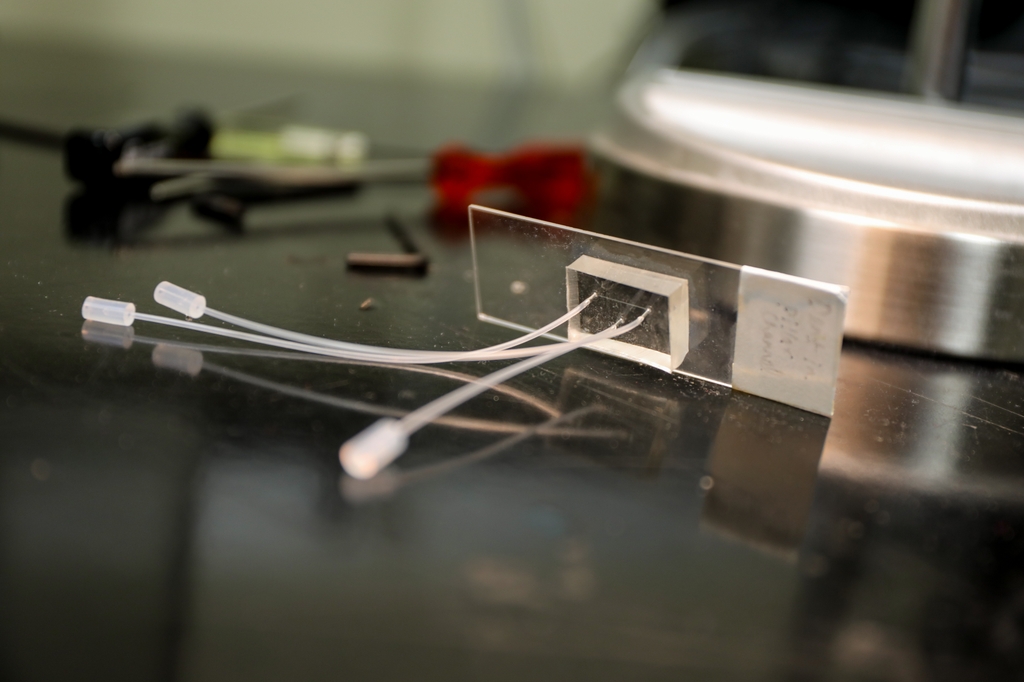
- Targeting Non-Communicable Diseases: The OHSU-led portion of the research focuses on developing artificial blood vessels to combat cardiovascular disease, which is responsible for nearly a third of all global deaths. This work supports SDG Target 3.4, which aims to reduce premature mortality from non-communicable diseases.
- Accelerating Drug Discovery: By creating reliable models of the human circulatory system, the project aims to develop safer and more effective drugs to prevent heart attacks and strokes.
- Broad Health Impact: The initiative encompasses multiple arms of research, including studies on the liver, brain, cancer, and pain, promising wide-ranging benefits for global health.
Contribution to SDG 9: Industry, Innovation, and Infrastructure
This project is a significant investment in scientific research and technological innovation, fostering the development of infrastructure necessary for 21st-century medical advancement, as outlined in SDG 9.
- Leveraging Advanced Technology: The use of artificial intelligence to enhance “organs-on-a-chip” represents a major step forward in medical technology. OHSU President Shereef Elnahal, M.D., M.B.A., noted this era is an “inflection point in the advancement of new tools to improve treatment of disease.”
- Enhancing Research Capabilities: The project, specifically the ARTEMIS (ARTificial blood vessels for Thrombosis, Endothelial Modeling and artificial intelligence Simulation) component, builds sophisticated, scalable models that enhance the technological capabilities of research institutions.
Contribution to SDG 12: Responsible Consumption and Production
A key long-term objective of the initiative is to establish more sustainable and ethical research practices, contributing to the principles of SDG 12.
- Reducing Animal Models: Researchers expect these “new approach methodologies” to significantly reduce, and ultimately eliminate, the reliance on animal models for medical testing.
- Developing Sustainable Methods: According to Simon Calaminus, Ph.D., the principal investigator at Hull York Medical School, a primary goal is “to build reliable, non-animal methods that are fit for modern drug discovery,” promoting a more sustainable pattern of scientific production.
Contribution to SDG 17: Partnerships for the Goals
The initiative exemplifies the collaborative approach essential to achieving the SDGs, as detailed in SDG 17, by uniting institutions and funders across international borders.
- Multi-Stakeholder Collaboration: The project is a joint effort between academic and funding organizations.
- Key Partners Include:
- Oregon Health & Science University (U.S.)
- Hull York Medical School (U.K.)
- Medical Research Council (U.K. Funder)
- Wellcome (U.K. Funder)
- Innovate UK (U.K. Funder)
- Global Cooperation for Health: This international partnership enhances global cooperation on science and technology to address the shared challenge of human disease.
Analysis of SDGs, Targets, and Indicators
1. Which SDGs are addressed or connected to the issues highlighted in the article?
- SDG 3: Good Health and Well-being
- SDG 9: Industry, Innovation, and Infrastructure
- SDG 17: Partnerships for the Goals
2. What specific targets under those SDGs can be identified based on the article’s content?
-
SDG 3: Good Health and Well-being
-
Target 3.4: By 2030, reduce by one-third premature mortality from non-communicable diseases through prevention and treatment and promote mental health and well-being.
Explanation: The article states the research aims to “accelerate effective treatments for cardiovascular disease, which accounts for almost a third of global mortality,” with a focus on heart attacks and strokes, which are major non-communicable diseases. -
Target 3.b: Support the research and development of vaccines and medicines for the communicable and non-communicable diseases that primarily affect developing countries, provide access to affordable essential medicines and vaccines.
Explanation: The entire initiative is focused on research (“harnessing artificial intelligence to develop and enhance lab-grown systems”) to “accelerate new medications” and create “safe drugs to prevent heart attack and stroke.”
-
Target 3.4: By 2030, reduce by one-third premature mortality from non-communicable diseases through prevention and treatment and promote mental health and well-being.
-
SDG 9: Industry, Innovation, and Infrastructure
-
Target 9.5: Enhance scientific research, upgrade the technological capabilities of industrial sectors in all countries, in particular developing countries, including, by 2030, encouraging innovation and substantially increasing the number of research and development workers per 1 million people and public and private research and development spending.
Explanation: The article describes a “new international research initiative” with a total funding of “£15.9 million — more than $18.4 million.” It focuses on advanced technologies like “artificial intelligence” and “organs-on-a-chip” to “transform human disease modelling” and create “new approach methodologies.”
-
Target 9.5: Enhance scientific research, upgrade the technological capabilities of industrial sectors in all countries, in particular developing countries, including, by 2030, encouraging innovation and substantially increasing the number of research and development workers per 1 million people and public and private research and development spending.
-
SDG 17: Partnerships for the Goals
-
Target 17.6: Enhance North-South, South-South and triangular regional and international cooperation on and access to science, technology and innovation.
Explanation: The project is an “international initiative” explicitly involving collaboration between Oregon Health & Science University (OHSU) in the United States and the Hull York Medical School in the United Kingdom, demonstrating international cooperation in science and technology. -
Target 17.16: Enhance the Global Partnership for Sustainable Development, complemented by multi-stakeholder partnerships that mobilize and share knowledge, expertise, technology and financial resources.
Explanation: The initiative is a multi-stakeholder partnership, jointly funded by the Medical Research Council, Wellcome, and Innovate UK, and involves academic institutions from different countries (OHSU and Hull York Medical School) to share knowledge and resources.
-
Target 17.6: Enhance North-South, South-South and triangular regional and international cooperation on and access to science, technology and innovation.
3. Are there any indicators mentioned or implied in the article that can be used to measure progress towards the identified targets?
-
For SDG 3: Good Health and Well-being
-
Indicator 3.4.1: Mortality rate attributed to cardiovascular disease, cancer, diabetes or chronic respiratory disease.
Explanation: The article directly implies this indicator by stating that the research targets cardiovascular disease, which “accounts for almost a third of global mortality.” The success of the research would be measured by a reduction in this mortality rate.
-
Indicator 3.4.1: Mortality rate attributed to cardiovascular disease, cancer, diabetes or chronic respiratory disease.
-
For SDG 9: Industry, Innovation, and Infrastructure
-
Indicator 9.5.1: Research and development expenditure as a proportion of GDP.
Explanation: The article explicitly mentions the financial investment in the research initiative: “The overall £15.9 million initiative — more than $18.4 million.” This figure represents a direct investment in research and development. -
Indicator 9.5.2: Researchers (in full-time equivalent) per million inhabitants.
Explanation: While not providing a specific number, the article implies this indicator by naming key researchers leading the project (Owen McCarty, Ph.D., and Simon Calaminus, Ph.D.) and mentioning their respective teams at OHSU and Hull York Medical School, who are dedicated to this research.
-
Indicator 9.5.1: Research and development expenditure as a proportion of GDP.
-
For SDG 17: Partnerships for the Goals
-
Indicator 17.16.1: Number of countries reporting progress in multi-stakeholder development effectiveness monitoring frameworks that support the achievement of the sustainable development goals.
Explanation: The article provides a concrete example of such a framework in action. The collaboration between institutions in the United States (OHSU) and the United Kingdom (Hull York Medical School, Medical Research Council, Wellcome, Innovate UK) is a multi-stakeholder partnership focused on science and health, contributing to the SDGs.
-
Indicator 17.16.1: Number of countries reporting progress in multi-stakeholder development effectiveness monitoring frameworks that support the achievement of the sustainable development goals.
4. Summary Table of SDGs, Targets, and Indicators
| SDGs | Targets | Indicators |
|---|---|---|
| SDG 3: Good Health and Well-being |
3.4: Reduce premature mortality from non-communicable diseases.
3.b: Support the research and development of vaccines and medicines. |
3.4.1: The article notes that cardiovascular disease accounts for “almost a third of global mortality,” which this research aims to reduce. |
| SDG 9: Industry, Innovation, and Infrastructure | 9.5: Enhance scientific research and upgrade technological capabilities. |
9.5.1: The article specifies the research is funded by a “£15.9 million initiative,” representing R&D expenditure.
9.5.2: The article mentions the involvement of research teams led by named principal investigators, implying an increase in research personnel. |
| SDG 17: Partnerships for the Goals |
17.6: Enhance international cooperation on science, technology and innovation.
17.16: Enhance the Global Partnership for Sustainable Development through multi-stakeholder partnerships. |
17.16.1: The article describes a specific multi-stakeholder partnership between US (OHSU) and UK (Hull York Medical School, MRC, Wellcome, Innovate UK) institutions. |
Source: news.ohsu.edu
What is Your Reaction?
 Like
0
Like
0
 Dislike
0
Dislike
0
 Love
0
Love
0
 Funny
0
Funny
0
 Angry
0
Angry
0
 Sad
0
Sad
0
 Wow
0
Wow
0