













































Promising Waste Management Stocks To Add to Your Watchlist – November 29th – MarketBeat

Report on Waste Management Sector’s Contribution to Sustainable Development Goals
An analysis of key publicly traded companies in the waste management sector reveals significant alignment with and contribution towards the United Nations Sustainable Development Goals (SDGs). These companies provide essential environmental services that are fundamental to creating sustainable urban environments, promoting responsible consumption, and developing clean energy solutions. Their operations, which span waste collection, processing, recycling, and disposal, are integral to achieving a circular economy. The following seven companies have been identified for their notable trading volume and their roles in advancing global sustainability targets.
Analysis of Key Companies and SDG Alignment
-
Waste Management, Inc. (WM)
Waste Management, Inc. provides comprehensive environmental solutions across the United States and Canada, directly supporting several SDGs through its core operations.
- SDG 11 (Sustainable Cities and Communities): By offering collection, transport, and disposal services for residential, commercial, and municipal waste, the company is crucial for maintaining clean and safe urban environments (Target 11.6).
- SDG 12 (Responsible Consumption and Production): The operation of material recovery facilities (MRFs) promotes recycling and the circular economy, directly contributing to the substantial reduction of waste generation (Target 12.5).
- SDG 7 (Affordable and Clean Energy): The company develops and operates landfill facilities that capture landfill gas, a renewable energy source used for generating electricity, advancing the goal of increasing the share of renewable energy (Target 7.2).
-
GFL Environmental Inc. (GFL)
GFL Environmental Inc. delivers a broad range of environmental services in North America, focusing on non-hazardous solid waste management, liquid waste management, and soil remediation.
- SDG 11 (Sustainable Cities and Communities): Its solid waste management services for municipal and residential customers are fundamental to reducing the environmental impact of cities (Target 11.6).
- SDG 12 (Responsible Consumption and Production): Through its collection, transfer, recycling, and disposal services, GFL plays a key role in achieving the environmentally sound management of waste (Target 12.4) and reducing waste generation (Target 12.5).
- SDG 6 (Clean Water and Sanitation): The company’s liquid waste management and soil remediation services help prevent pollution of water bodies, supporting the goal of improving water quality (Target 6.3).
-
Custom Truck One Source, Inc. (CTOS)
Custom Truck One Source, Inc. provides specialty equipment that serves as critical infrastructure for various sectors, including waste management.
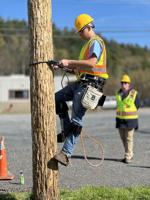
- SDG 9 (Industry, Innovation, and Infrastructure): By supplying essential equipment to the waste management, utility, and telecommunications industries, the company enables the development of resilient and sustainable infrastructure necessary for achieving other SDGs.
-
Concrete Pumping Holdings, Inc. (BBCP)
While primarily focused on concrete pumping, the company’s Eco-Pan brand provides vital waste management services to the construction industry.
- SDG 12 (Responsible Consumption and Production): The Eco-Pan brand offers industrial cleanup and containment services, which directly address the need to manage construction waste responsibly and prevent pollution, contributing to the reduction of waste generation (Target 12.5).
- SDG 11 (Sustainable Cities and Communities): Effective management of construction waste is a key component of sustainable urban development and infrastructure projects (Target 11.6).
-
Avalon Holdings Corporation (AWX)
Avalon Holdings Corporation specializes in waste management services for a diverse client base, including industrial, commercial, and governmental customers.
- SDG 12 (Responsible Consumption and Production): The company’s focus on hazardous and nonhazardous waste disposal and management services is critical for the environmentally sound management of chemicals and all wastes throughout their life cycle (Target 12.4).
- SDG 11 (Sustainable Cities and Communities): Through captive landfill management and turnkey operational services, Avalon contributes to the overall waste management infrastructure required for sustainable cities (Target 11.6).
-
LanzaTech Global (LNZAW)
LanzaTech Global is a carbon recycling company that utilizes biotechnology to transform waste carbon into sustainable fuels and chemicals.
- SDG 13 (Climate Action): By capturing and recycling carbon emissions that would otherwise enter the atmosphere, the company’s technology directly contributes to mitigating climate change.
- SDG 9 (Industry, Innovation, and Infrastructure): LanzaTech’s innovative approach represents a significant advancement in industrial sustainability and the development of clean technology.
- SDG 12 (Responsible Consumption and Production): The company’s process creates a circular economy for carbon, turning waste into valuable products and promoting sustainable production patterns.
-
ESGL Holdings Limited (ESGLW)
Based in Singapore, ESGL Holdings Limited provides waste solutions that regenerate industrial waste into circular products.
- SDG 12 (Responsible Consumption and Production): The company’s core mission is to create circular products from industrial waste, directly embodying the principles of reducing, reusing, and recycling, and substantially reducing waste generation (Target 12.5).
- SDG 9 (Industry, Innovation, and Infrastructure): ESGL utilizes innovative technologies to achieve its circular economy goals, promoting sustainable industrialization.
- SDG 7 (Affordable and Clean Energy): The use of renewable energy in its regeneration processes further enhances its contribution to a sustainable and low-carbon economy.
Analysis of Sustainable Development Goals in the Article
-
Which SDGs are addressed or connected to the issues highlighted in the article?
- SDG 7: Affordable and Clean Energy – The article mentions that Waste Management, Inc. “owns, develops, and operates landfill facilities that produce landfill gas used as renewable natural gas for generating electricity.” This directly connects to the goal of increasing the share of renewable energy.
- SDG 9: Industry, Innovation and Infrastructure – The article highlights companies like Custom Truck One Source that provide equipment to “infrastructure-related industries.” It also notes that growth in the waste management sector is driven by “infrastructure investment,” linking the industry’s activities to the development of resilient and sustainable infrastructure.
- SDG 11: Sustainable Cities and Communities – The core business of the companies discussed is providing “environmental solutions to residential, commercial, industrial, and municipal customers.” This involves the collection, transport, and disposal of municipal waste, which is a key component of making cities and human settlements inclusive, safe, resilient, and sustainable.
- SDG 12: Responsible Consumption and Production – This goal is central to the article. The companies are engaged in activities to “collect, transport, process, recycle and dispose of municipal, industrial, and hazardous waste.” Companies like GFL Environmental offer recycling services, and ESGL Holdings “regenerates industrial waste into circular products,” directly supporting sustainable consumption and production patterns by managing waste and promoting a circular economy.
-
What specific targets under those SDGs can be identified based on the article’s content?
- Target 7.2: By 2030, increase substantially the share of renewable energy in the global energy mix. This is addressed by Waste Management, Inc.’s practice of converting landfill gas into renewable natural gas for electricity generation.
- Target 9.4: By 2030, upgrade infrastructure and retrofit industries to make them sustainable, with all countries taking action in accordance with their respective capabilities. The services provided by the mentioned companies, such as industrial cleanup, soil remediation, and regenerating industrial waste, contribute to making other industries more sustainable.
- Target 11.6: By 2030, reduce the adverse per capita environmental impact of cities, including by paying special attention to air quality and municipal and other waste management. The primary function of companies like Waste Management, GFL Environmental, and Avalon is the management of municipal and industrial waste, directly addressing this target.
- Target 12.4: By 2020, achieve the environmentally sound management of chemicals and all wastes throughout their life cycle… and significantly reduce their release to air, water and soil. Avalon Holdings Corporation’s provision of “hazardous and nonhazardous waste disposal brokerage and management services” aligns with this target.
- Target 12.5: By 2030, substantially reduce waste generation through prevention, reduction, recycling and reuse. The article repeatedly mentions recycling services, the operation of “material recovery facility (MRF),” and the regeneration of waste into “circular products” (ESGL Holdings), which are all key strategies for this target.
-
Are there any indicators mentioned or implied in the article that can be used to measure progress towards the identified targets?
- Implied Indicator for Target 7.2: While not explicitly stating a number, the activity of “generating electricity” from “landfill gas” implies a measurable output. This relates to Indicator 7.2.1 (Renewable energy share in the total final energy consumption), as the amount of energy produced from waste can be quantified.
- Implied Indicator for Target 11.6: The core business of collecting and managing waste for municipal customers implies progress can be measured. This relates to Indicator 11.6.1 (Proportion of municipal solid waste collected and managed in controlled facilities out of total municipal waste generated, by cities). The volume of waste handled by these companies would be a direct measure.
- Implied Indicator for Target 12.4: The mention of “hazardous and nonhazardous waste disposal” services implies a quantifiable amount of waste being managed. This relates to Indicator 12.4.2 (Proportion of hazardous waste treated, by type of treatment). The tonnage of hazardous waste processed by a company like Avalon would serve as a metric.
- Implied Indicator for Target 12.5: The description of recycling services and “material recovery facility (MRF)” operations implies that the amount of recycled material can be measured. This relates to Indicator 12.5.1 (National recycling rate, tons of material recycled). The volume of materials processed for recycling by these companies is a direct indicator of progress.
SDGs, Targets, and Indicators Analysis
| SDGs | Targets | Indicators (Implied from the article) |
|---|---|---|
| SDG 7: Affordable and Clean Energy | 7.2: Increase substantially the share of renewable energy in the global energy mix. | The amount of renewable energy generated from landfill gas (related to Indicator 7.2.1). |
| SDG 9: Industry, Innovation and Infrastructure | 9.4: Upgrade infrastructure and retrofit industries to make them sustainable. | Provision of environmental services (e.g., soil remediation, industrial cleanup) to make infrastructure-related industries more sustainable. |
| SDG 11: Sustainable Cities and Communities | 11.6: Reduce the adverse per capita environmental impact of cities, including… municipal and other waste management. | The proportion of municipal solid waste collected and managed in controlled facilities (related to Indicator 11.6.1). |
| SDG 12: Responsible Consumption and Production | 12.4: Achieve the environmentally sound management of chemicals and all wastes throughout their life cycle. | The volume of hazardous waste managed and treated (related to Indicator 12.4.2). |
| SDG 12: Responsible Consumption and Production | 12.5: Substantially reduce waste generation through prevention, reduction, recycling and reuse. | The tonnage of material recycled and regenerated into circular products (related to Indicator 12.5.1). |
Source: marketbeat.com
What is Your Reaction?
 Like
0
Like
0
 Dislike
0
Dislike
0
 Love
0
Love
0
 Funny
0
Funny
0
 Angry
0
Angry
0
 Sad
0
Sad
0
 Wow
0
Wow
0