

















Renesas Releases its First Wi-Fi 6 and Wi-Fi/Bluetooth LE Combo MCUs for IoT and Connected Home Applications – Renesas Electronics
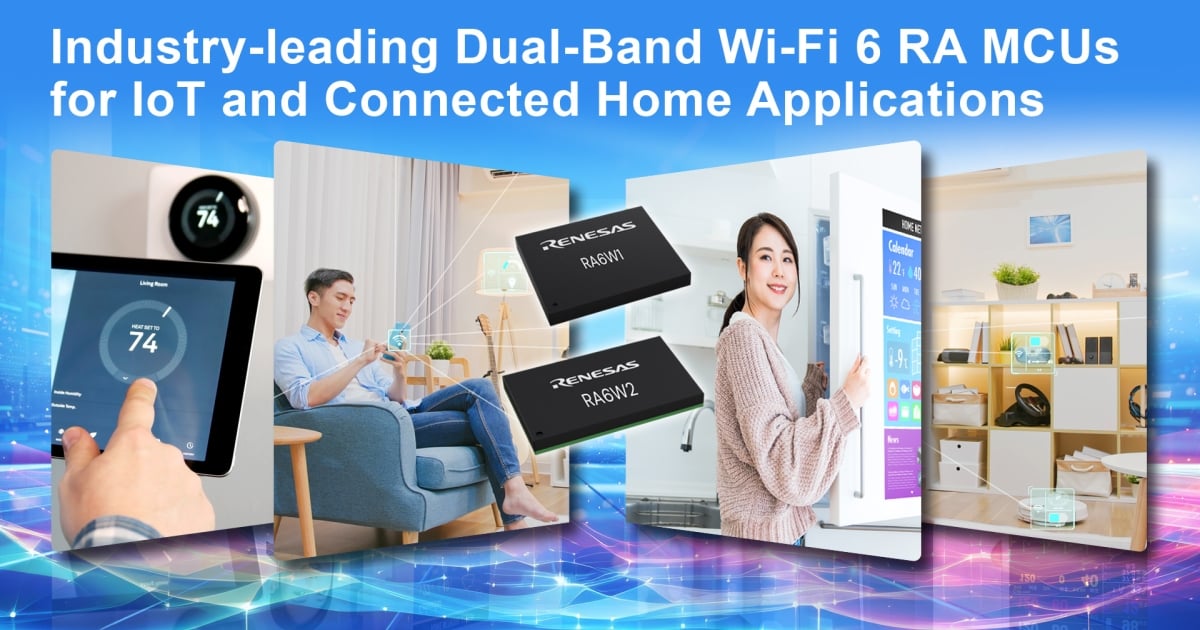
Renesas Electronics Launches Advanced Wi-Fi 6 MCUs Supporting Sustainable IoT Development

Tokyo, Japan – Renesas Electronics Corporation (TSE:6723), a leading semiconductor solutions provider, has introduced the RA6W1 dual-band Wi-Fi 6 wireless microcontroller (MCU) and the RA6W2 MCU, which integrates both Wi-Fi 6 and Bluetooth® Low Energy (LE) technologies. These innovations cater to the increasing demand for always-connected, ultra-low-power IoT devices across smart home, industrial, medical, and consumer sectors, aligning with multiple Sustainable Development Goals (SDGs) including SDG 9 (Industry, Innovation and Infrastructure), SDG 11 (Sustainable Cities and Communities), and SDG 12 (Responsible Consumption and Production).
Ultra Low Power Operation for Sustainable IoT Connectivity
Renesas’ new Wi-Fi 6 MCUs feature ultra-low power consumption, critical for extending battery life and reducing environmental impact, directly supporting SDG 7 (Affordable and Clean Energy) and SDG 13 (Climate Action). The devices incorporate Target Wake Time (TWT) technology, enabling extended sleep periods without sacrificing cloud connectivity or responsiveness. This capability is essential for applications such as environmental sensors, smart locks, thermostats, surveillance cameras, and medical monitors, which require real-time control, remote diagnostics, and over-the-air updates to enhance efficiency and sustainability.
- Sleep mode current consumption: as low as 200nA to 4µA
- Delivery Traffic Indication Message (DTIM10) current: under 50µA
- “Sleepy connected” Wi-Fi functionality minimizes power draw while maintaining connectivity
Scalable RA MCU Architecture and Comprehensive Software Support
Built on the Arm® Cortex®-M33 CPU core running at 160 MHz with 704 KB SRAM, the RA6W1 and RA6W2 MCUs provide a scalable platform that supports cost-effective, standalone IoT applications. This architecture promotes innovation and infrastructure development (SDG 9) by enabling flexible system designs without the need for external MCUs. The MCUs are compatible with Renesas’ Flexible Software Package (FSP) and e² studio integrated development environment, facilitating seamless software reuse across the RA family and accelerating sustainable product development.
High-Performance Dual-Band Wi-Fi 6 Connectivity
The MCUs support both 2.4 GHz and 5 GHz bands, delivering superior throughput, low latency, and reduced power consumption. Their dual-band capability dynamically selects the optimal band based on real-time conditions, ensuring stable, high-speed connections even in dense urban environments. Advanced features such as Orthogonal Frequency Division Multiple Access (OFDMA) and TWT enhance performance and energy efficiency, supporting SDG 11 by enabling smarter, more connected urban systems.
Key Connectivity Features:
- Dual-band Wi-Fi 6 (2.4 GHz and 5 GHz)
- Dynamic band selection for optimal performance
- OFDMA and Target Wake Time for energy efficiency
Robust Security and Matter-Certified Interoperability
Security is a priority in the RA6W1 and RA6W2 MCUs, which include advanced features such as AES-256 encryption, secure boot, key storage, true random number generator (TRNG), and execute-in-place (XiP) with on-the-fly decryption. The RA6W1 is RED certified (Radio Equipment Directive) and Matter 1.4 certified, ensuring interoperability across smart home platforms and future-proofing designs. These security measures contribute to SDG 16 (Peace, Justice and Strong Institutions) by protecting data integrity and privacy.
Integrated Modules Accelerate Sustainable Development
Renesas also introduced fully integrated modules—Wi-Fi 6 (RRQ61001) and Wi-Fi/Bluetooth LE combo (RRQ61051)—that include built-in antennas, wireless protocol stacks, and pre-validated RF connectivity. These modules comply with global certification standards (FCC, IC, ANATEL, CE/RED, UKCA, Telec, KCC, SRRC, NCC), simplifying design and reducing time to market, which supports SDG 9 by fostering innovation and sustainable industrialization.
Benefits of Integrated Modules:
- Certified RF components and wireless stacks
- Global network standards compliance
- Reduced design effort and accelerated development
Winning Combinations for Faster Time to Market
Renesas offers over 400 “Winning Combinations,” which are technically vetted system architectures combining the new Wi-Fi 6 and Wi-Fi/Bluetooth LE MCUs with compatible devices from its portfolio. These combinations enable optimized, low-risk designs that accelerate product development and commercialization, contributing to SDG 8 (Decent Work and Economic Growth) by fostering innovation and job creation in technology sectors.
Examples include:
Availability and Development Support
The RA6W1 MCU is currently available in FCQFN and WLCSP packages, along with the RRQ61001 Wi-Fi 6 and RRQ61051 Wi-Fi/Bluetooth LE modules. The RA6W2 MCU (BGA package) is expected in Q1 2026. These devices are supported by Renesas’ Flexible Software Package (FSP), e² studio IDE, evaluation kits, and software development kits (SDKs) that include flash memory, PCB trace antennas, connectors, and embedded power profilers for power consumption analysis. Renesas also provides comprehensive software tools and Production Line Tool (PLT) for production testing, facilitating efficient and sustainable product development.
About Renesas Electronics Corporation
Renesas Electronics Corporation (TSE: 6723) is a global leader empowering a safer, smarter, and more sustainable future through advanced semiconductor solutions. By combining expertise in embedded processing, analog, power, and connectivity, Renesas delivers comprehensive solutions that accelerate innovation in automotive, industrial, infrastructure, and IoT applications. These efforts contribute directly to multiple SDGs by enabling billions of connected, intelligent devices that improve quality of life and promote sustainable development.
Learn more at renesas.com.
1. Sustainable Development Goals (SDGs) Addressed or Connected
- SDG 7: Affordable and Clean Energy
- The article highlights ultra-low power consumption features of the RA6W1 and RA6W2 MCUs, which contribute to energy efficiency in IoT devices.
- SDG 9: Industry, Innovation and Infrastructure
- Renesas’ advanced semiconductor solutions and scalable MCU architecture promote innovation and infrastructure development in IoT and connected systems.
- SDG 11: Sustainable Cities and Communities
- The dual-band Wi-Fi 6 MCUs support smart home and industrial applications, enhancing urban living through improved connectivity and energy-efficient devices.
- SDG 3: Good Health and Well-being
- Medical monitors and remote diagnostics enabled by these MCUs contribute to health monitoring and well-being.
- SDG 12: Responsible Consumption and Production
- Energy-efficient designs and long product longevity programs support sustainable consumption and production patterns.
- SDG 13: Climate Action
- Energy-efficient IoT devices help reduce overall energy consumption, indirectly contributing to climate action efforts.
2. Specific Targets Under Those SDGs Identified
- SDG 7: Affordable and Clean Energy
- Target 7.3: By 2030, double the global rate of improvement in energy efficiency.
- SDG 9: Industry, Innovation and Infrastructure
- Target 9.5: Enhance scientific research, upgrade technological capabilities of industrial sectors.
- Target 9.b: Support domestic technology development and innovation.
- SDG 11: Sustainable Cities and Communities
- Target 11.6: Reduce the adverse per capita environmental impact of cities, including air quality and waste management.
- SDG 3: Good Health and Well-being
- Target 3.8: Achieve universal health coverage, including access to quality essential health-care services.
- SDG 12: Responsible Consumption and Production
- Target 12.2: Achieve sustainable management and efficient use of natural resources.
- Target 12.5: Substantially reduce waste generation through prevention, reduction, recycling and reuse.
- SDG 13: Climate Action
- Target 13.1: Strengthen resilience and adaptive capacity to climate-related hazards and natural disasters.
3. Indicators Mentioned or Implied to Measure Progress
- Energy Efficiency Indicators
- Power consumption metrics such as sleep mode current (200nA to 4µA) and DTIM10 current (
- Technological Innovation Indicators
- Number of IoT devices using advanced MCUs with Wi-Fi 6 and Bluetooth LE technologies can measure progress towards Target 9.5 and 9.b.
- Availability of scalable MCU architectures and software support tools as a measure of technology adoption.
- Health and Well-being Indicators
- Deployment of medical monitors and remote diagnostics devices enabled by these MCUs can be tracked to assess progress on Target 3.8.
- Sustainable Consumption Indicators
- Product longevity programs (15 years for MCUs, 10 years for modules) serve as indicators for sustainable consumption and production (Targets 12.2 and 12.5).
- Connectivity and Infrastructure Indicators
- Number of certified wireless modules compliant with global standards (FCC, CE/RED, etc.) reflects progress in infrastructure and innovation (Targets 9.5 and 9.b).
4. Table of SDGs, Targets, and Indicators
| SDGs | Targets | Indicators |
|---|---|---|
| SDG 7: Affordable and Clean Energy | 7.3: Double the global rate of improvement in energy efficiency by 2030 | Power consumption in sleep mode (200nA to 4µA), DTIM10 current ( |
| SDG 9: Industry, Innovation and Infrastructure | 9.5: Enhance technological capabilities; 9.b: Support domestic technology development | Number of IoT devices using Wi-Fi 6/Bluetooth LE MCUs; availability of scalable MCU architectures and software tools |
| SDG 11: Sustainable Cities and Communities | 11.6: Reduce environmental impact of cities | Deployment of energy-efficient smart home and industrial IoT devices |
| SDG 3: Good Health and Well-being | 3.8: Achieve universal health coverage and access to quality health services | Use of medical monitors and remote diagnostics enabled by MCUs |
| SDG 12: Responsible Consumption and Production | 12.2: Sustainable management of natural resources; 12.5: Reduce waste generation | Product longevity programs (15 years MCU, 10 years modules) |
| SDG 13: Climate Action | 13.1: Strengthen resilience and adaptive capacity to climate hazards | Energy-efficient IoT devices reducing overall energy consumption |
Source: renesas.com
What is Your Reaction?
 Like
0
Like
0
 Dislike
0
Dislike
0
 Love
0
Love
0
 Funny
0
Funny
0
 Angry
0
Angry
0
 Sad
0
Sad
0
 Wow
0
Wow
0