
























































Segregation, quotas and gender ideology: Minnesota’s schools are going backward – Alpha News MN
Report on Educational Developments in Minnesota and Their Alignment with Sustainable Development Goals (SDGs)
Introduction
Minnesota has emerged as one of the most proactive states in reshaping education, with significant implications for civil rights and social equity. This report examines recent educational policies and practices in Minnesota, emphasizing their relationship to the United Nations Sustainable Development Goals (SDGs), particularly SDG 4 (Quality Education), SDG 10 (Reduced Inequalities), and SDG 16 (Peace, Justice, and Strong Institutions).
Racial Segregation in Minneapolis Public Schools
In October, Defending Education filed a civil rights complaint with the U.S. Department of Education concerning racially segregated classes in Minneapolis Public Schools. These classes appeared to be exclusively available to Black students, contravening Title VI of the Civil Rights Act and the Equal Protection Clause of the 14th Amendment.
This practice contradicts the Supreme Court’s 1954 ruling in Brown v. Board of Education, which declared racial segregation in public schools unconstitutional.
Ethnic Studies Curriculum and Its Implications
Minnesota mandates that by 2026 every high school must offer an ethnic studies course counting toward graduation requirements alongside history, geography, economics, and civics. However, the curriculum has been criticized for:
- Employing a race-based, anti-capitalist, and Marxist framework in analyzing racism and colonialism.
- Promoting Critical Race Theory and attributing systemic issues such as slavery, genocide, colonialism, and white supremacy to capitalism and Western culture.
- Encouraging students to challenge prevailing narratives and engage in activism through Youth Led Participatory Action Research projects.
While ethnic studies aim to foster tolerance and cultural understanding, concerns arise regarding the framing of society as divided between oppressors and the oppressed, potentially impacting social cohesion (SDG 16).
Gender Inclusion and Title IX Controversies
Minnesota is contesting federal directives related to “Gender Ideology” and “Sports Ban” orders, which are viewed as unlawful modifications of Title IX. Concurrently, school board candidates affiliated with Gender Justice advocate for the full inclusion of transgender and nonbinary students in school athletics, asserting Title IX protections.
These developments highlight ongoing debates about inclusivity and equality in education, directly relating to SDG 5 (Gender Equality) and SDG 10 (Reduced Inequalities).
Race-Based Educational Programs and Funding
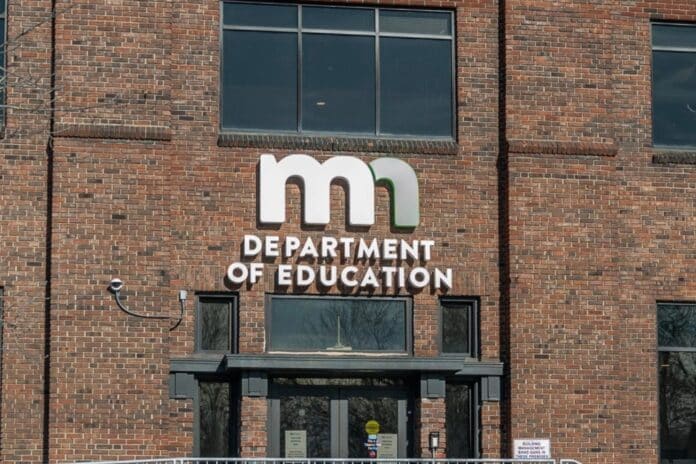
The Minnesota Department of Education (MDE) administers numerous race-based initiatives, including:
- A 2025 law requiring grants to increase the number of teacher candidates who are people of color or American Indian.
- A $9.4 million grant competition aimed at increasing licensed school psychologists, nurses, counselors, and social workers of color and Indigenous backgrounds, effectively excluding others and raising concerns about compliance with Title VI.
These programs intend to diversify the educational workforce but raise questions about equity and non-discrimination principles embedded in SDG 10.
Teacher Licensing and Professional Standards
State administrative rules establish “Standards of Effective Practice” for teacher licensing, including a requirement for racial consciousness and reflection. Teachers must understand how ethnocentrism, Eurocentrism, deficit-based teaching, and white supremacy undermine pedagogical equity.
Additionally, the statewide “Grow Your Own” program offers grants to district employees pursuing teacher licensure but imposes race-based eligibility criteria, such as:
- Districts must have at least 30% students of color to qualify.
- At least 80% of grant funds must support scholarships or stipends for people of color or American Indians.
- Student participation must reflect racial proportionality relative to district demographics.
These measures aim to address representation disparities but may conflict with merit-based and equal opportunity principles.
Implications for Sustainable Development Goals
The educational policies and practices in Minnesota intersect with several SDGs as follows:
- SDG 4 (Quality Education): Efforts to diversify educators and implement ethnic studies seek to improve educational inclusivity and relevance.
- SDG 5 (Gender Equality): Advocacy for transgender and nonbinary student inclusion promotes gender equality in education.
- SDG 10 (Reduced Inequalities): Race-based programs aim to reduce disparities but raise concerns about equitable treatment and non-discrimination.
- SDG 16 (Peace, Justice, and Strong Institutions): Segregated classes and ideologically driven curricula challenge principles of justice and equal rights.
Conclusion
Minnesota’s educational landscape reflects a complex interplay between efforts to promote diversity and inclusion and challenges related to civil rights and equality under the law. The state’s approach serves as a critical case study for balancing social equity objectives with constitutional protections and the broader goals of sustainable development.
Author Information
Kendall Tietz is an investigative reporter for Defending Education, with prior experience at Fox News Digital and the Wall Street Journal Opinion page. She holds a degree in Journalism from the University of Texas at Austin.
1. Sustainable Development Goals (SDGs) Addressed or Connected
- SDG 4: Quality Education
- The article focuses on education policies, curriculum content, teacher licensure, and educational equity in Minnesota.
- SDG 10: Reduced Inequalities
- The article discusses racial segregation in schools, race-based grant programs, and equity initiatives that relate to reducing inequalities.
- SDG 16: Peace, Justice and Strong Institutions
- The article highlights civil rights complaints, constitutional issues regarding segregation and discrimination, and legal challenges related to Title IX and Title VI.
2. Specific Targets Under Those SDGs Identified
- SDG 4: Quality Education
- Target 4.5: Eliminate gender disparities and ensure equal access to all levels of education and vocational training for the vulnerable, including persons with disabilities, indigenous peoples, and children in vulnerable situations.
- Target 4.c: Increase the supply of qualified teachers, including through international cooperation for teacher training in developing countries.
- SDG 10: Reduced Inequalities
- Target 10.2: Empower and promote the social, economic and political inclusion of all, irrespective of age, sex, disability, race, ethnicity, origin, religion or economic or other status.
- SDG 16: Peace, Justice and Strong Institutions
- Target 16.3: Promote the rule of law at the national and international levels and ensure equal access to justice for all.
- Target 16.b: Promote and enforce non-discriminatory laws and policies for sustainable development.
3. Indicators Mentioned or Implied to Measure Progress
- For SDG 4 (Quality Education)
- Indicator 4.c.1: Proportion of teachers in pre-primary, primary, and secondary education who have received at least the minimum organized teacher training.
- Implied measurement of educational content and curriculum inclusivity, such as the presence of ethnic studies courses and their content.
- Data on student enrollment in segregated or race-based classes.
- For SDG 10 (Reduced Inequalities)
- Indicator 10.2.1: Proportion of people living below 50% of median income, by age, sex and persons with disabilities.
- Implied indicators related to racial and ethnic representation among teachers and students, such as the percentage of teachers of color or American Indian teachers licensed through grant programs.
- Eligibility and allocation of grants based on racial composition of districts and participants.
- For SDG 16 (Peace, Justice and Strong Institutions)
- Indicator 16.3.1: Proportion of victims of violence in the previous 12 months who reported their victimization to competent authorities or other officially recognized conflict resolution mechanisms.
- Implied measurement of compliance with civil rights laws such as Title VI and Title IX, including complaints filed and legal rulings.
4. Table of SDGs, Targets and Indicators
| SDGs | Targets | Indicators |
|---|---|---|
| SDG 4: Quality Education |
|
|
| SDG 10: Reduced Inequalities |
|
|
| SDG 16: Peace, Justice and Strong Institutions |
|
|
Source: alphanews.org
What is Your Reaction?
 Like
0
Like
0
 Dislike
0
Dislike
0
 Love
0
Love
0
 Funny
0
Funny
0
 Angry
0
Angry
0
 Sad
0
Sad
0
 Wow
0
Wow
0