


























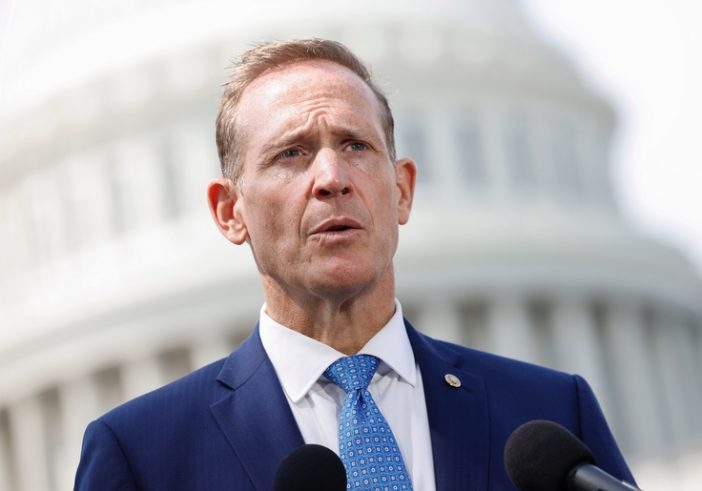
Senator Budd Leads Colleagues in Effort to Ban Terrorist Sympathizers from the United States – U.S. Senator Ted Budd (.gov)
Report on the Terrorist Inadmissibility Codification Act and its Alignment with Sustainable Development Goals
Executive Summary
A legislative proposal, titled the Terrorist Inadmissibility Codification Act, has been introduced in the U.S. Senate to amend the Immigration and Nationality Act (INA). The primary objective of this act is to enhance national security by preventing individuals who are members of or publicly endorse designated foreign terrorist organizations from entering the United States. This initiative directly supports several United Nations Sustainable Development Goals (SDGs), particularly those focused on peace, security, and the establishment of strong, inclusive institutions.
Alignment with Sustainable Development Goals (SDGs)
The proposed legislation significantly contributes to the global agenda for sustainable development by reinforcing the principles embedded in key SDGs:
- SDG 16: Peace, Justice and Strong Institutions
- The Act aims to strengthen national legal frameworks (Target 16.3) and institutions to significantly reduce all forms of violence and related death rates (Target 16.1). By codifying inadmissibility for supporters of terrorism, the bill seeks to prevent the entry of individuals who could undermine domestic peace and security.
- SDG 11: Sustainable Cities and Communities
- This legislation supports the goal of making cities and human settlements inclusive, safe, and resilient (Target 11.1). Preventing the entry of individuals who advocate for terrorist violence helps protect communities from threats that destabilize public safety and social cohesion.
- SDG 4: Quality Education
- In the context of rising extremist rhetoric on university campuses, the Act contributes to ensuring safe and non-violent learning environments (Target 4.a). By addressing the status of international students on visas who publicly endorse terrorism, the bill aims to maintain educational institutions as spaces for inclusive and equitable quality education.
- SDG 10: Reduced Inequalities
- The bill’s focus on countering antisemitism and hate speech associated with terrorist organizations promotes the social and political inclusion of all, irrespective of religion or origin (Target 10.2). It seeks to protect vulnerable communities from incitement to violence and discrimination.
Key Provisions of the Proposed Act
The Terrorist Inadmissibility Codification Act proposes to expand existing immigration law through the following measures:
- It broadens the current inadmissibility clause that applies to officers and representatives of the Palestine Liberation Organization.
- The expansion will include any individual who is a member of, or who publicly endorses the terrorist activities of, specific foreign terrorist organizations.
- The designated organizations include Hamas, Hezbollah, Al-Qaeda, ISIS, and Palestine Islamic Jihad, as well as any of their successor or affiliate groups.
- Affected individuals would be barred from receiving a visa or being granted admission into the United States.
Legislative Rationale and Support
Proponents of the bill have cited several key reasons for its introduction, framed as necessary steps toward achieving a more peaceful and just society:
- Response to Current Events: The legislation is a direct response to what sponsors describe as a significant increase in pro-Hamas and antisemitic rhetoric following the terrorist attacks of October 7, 2023.
- Closing Legal Loopholes: The bill is intended to remove ambiguity in the INA, ensuring that support for terrorism is a clear basis for inadmissibility.
- National Security: A primary goal is to protect U.S. citizens and national security by preventing individuals associated with terrorist ideologies from entering the country.
- Upholding Visa Integrity: The act aims to ensure that the U.S. visa system is not exploited by individuals who promote violence and hatred.
Legislative Status
The bill was introduced in the U.S. Senate by Senator Ted Budd and is co-sponsored by Senators Bill Cassidy, Cynthia Lummis, Marsha Blackburn, Dave McCormick, Steve Daines, John Cornyn, Pete Ricketts, and Rick Scott. A companion bill was previously introduced in the House of Representatives by Representative August Pfluger.
Analysis of Sustainable Development Goals in the Article
-
Which SDGs are addressed or connected to the issues highlighted in the article?
The primary Sustainable Development Goal (SDG) addressed in the article is:
- SDG 16: Peace, Justice and Strong Institutions
This goal aims to “promote peaceful and inclusive societies for sustainable development, provide access to justice for all and build effective, accountable and inclusive institutions at all levels.” The article’s focus on introducing the Terrorist Inadmissibility Codification Act to prevent individuals associated with terrorist organizations from entering the United States directly relates to strengthening national institutions and laws to ensure peace, safety, and security. The legislation is a measure to combat terrorism and prevent violence, which are core components of SDG 16. As Senator McCormick stated, the bill is a “commonsense effort to further prevent terrorist sympathizers and associates from coming to the U.S., threatening our national security.”
- SDG 16: Peace, Justice and Strong Institutions
-
What specific targets under those SDGs can be identified based on the article’s content?
Based on the article’s discussion of the proposed legislation, the following specific targets under SDG 16 can be identified:
- Target 16.1: Significantly reduce all forms of violence and related death rates everywhere.
The article implicitly connects to this target by proposing a preventative measure against potential violence. The bill aims to deny entry to individuals who endorse or are members of terrorist groups like “Hamas, Hezbollah, Al-Qaeda, ISIS, and Palestine Islamic Jihad.” The rationale, as articulated by Senator Ricketts, is that “Terrorist organizations… seek to murder Americans… This bill will keep Americans safe.” By preventing potential actors of violence from entering the country, the legislation aims to reduce the risk of violent acts and related deaths on U.S. soil. - Target 16.a: Strengthen relevant national institutions, including through international cooperation, to build capacity at all levels… to prevent violence and combat terrorism and crime.
This target is directly addressed. The article is entirely about a legislative effort to strengthen a key national institution—the immigration system—and its legal framework, the Immigration and Nationality Act (INA). The bill is designed to “close ambiguous loopholes in our immigration law” and provide “the statutory tools to prevent terrorist sympathizers from exploiting our visa system,” as stated by Senators Budd and Lummis. This action represents a direct attempt to build national capacity to combat terrorism.
- Target 16.1: Significantly reduce all forms of violence and related death rates everywhere.
-
Are there any indicators mentioned or implied in the article that can be used to measure progress towards the identified targets?
The article implies several indicators that could be used to measure progress towards the identified targets:
- Indicator for Target 16.a: Existence and implementation of national legislation and policies to prevent and combat terrorism.
The primary indicator is the proposed legislation itself—the Terrorist Inadmissibility Codification Act. Its introduction, passage, and implementation would be a direct measure of progress in strengthening national institutions to combat terrorism. The article’s purpose is to announce the introduction of this bill, making the legislation the central measurable outcome. - Indicator for Target 16.a: Number of visas denied or revoked based on terrorism-related criteria.
The article implies this indicator by referencing past actions and the intended effect of the new bill. The background section notes, “The Trump administration has revoked the visas of individuals who engaged in pro-Hamas advocacy and tightened the vetting process to detect such advocacy.” The new bill aims to codify and expand this practice. Therefore, tracking the number of individuals deemed inadmissible or having their visas revoked under this specific legislation would serve as a direct indicator of its enforcement and impact.
- Indicator for Target 16.a: Existence and implementation of national legislation and policies to prevent and combat terrorism.
-
Create a table with three columns titled ‘SDGs, Targets and Indicators” to present the findings from analyzing the article.
SDGs Targets Indicators SDG 16: Peace, Justice and Strong Institutions 16.1: Significantly reduce all forms of violence and related death rates everywhere. Implied: Reduction in potential violent threats by preventing the entry of individuals who are members of or endorse terrorist organizations. SDG 16: Peace, Justice and Strong Institutions 16.a: Strengthen relevant national institutions… to prevent violence and combat terrorism and crime. - Existence and implementation of national legislation (the Terrorist Inadmissibility Codification Act) to combat terrorism.
- Number of visas denied or revoked for individuals supporting designated terrorist organizations.
Source: budd.senate.gov
What is Your Reaction?
 Like
0
Like
0
 Dislike
0
Dislike
0
 Love
0
Love
0
 Funny
0
Funny
0
 Angry
0
Angry
0
 Sad
0
Sad
0
 Wow
0
Wow
0