
















Taps may run dry in this country, where the water crisis is so severe it can be seen from space – CNN
Report on Iran’s Water Crisis and its Implications for Sustainable Development Goals
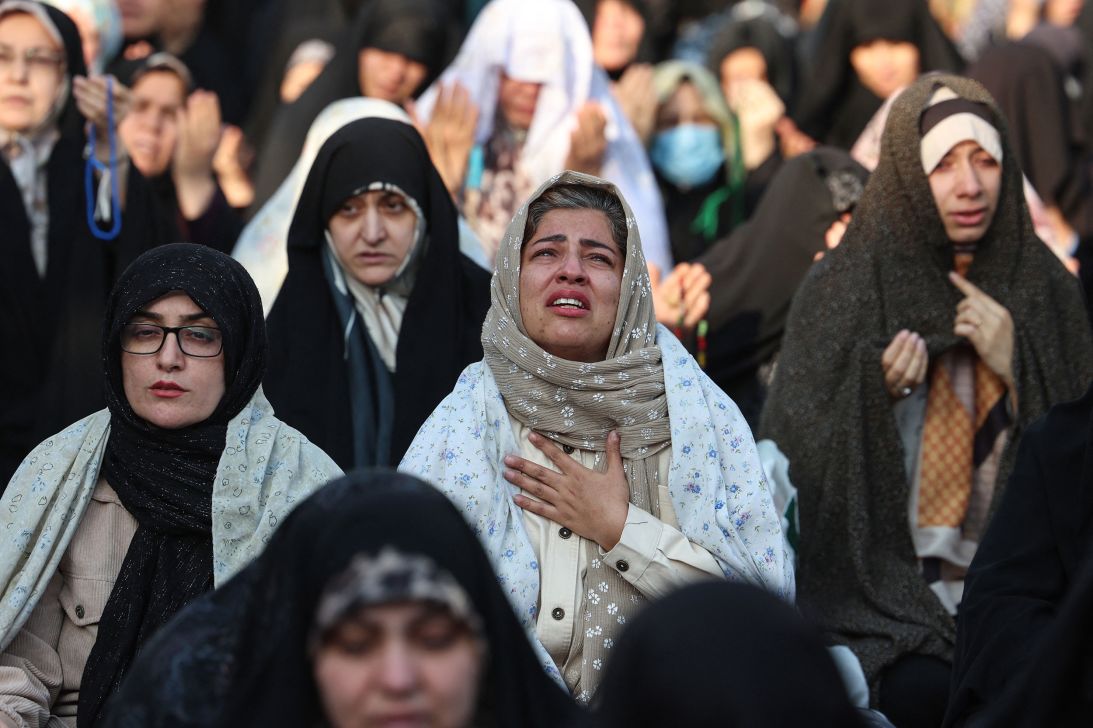
Iran is confronting a severe water crisis with profound implications for its progress toward the United Nations Sustainable Development Goals (SDGs). The capital, Tehran, home to approximately 15 million people, faces the prospect of complete water depletion, prompting warnings from President Masoud Pezeshkian of potential rationing and evacuation. This report analyzes the crisis, its root causes, and its direct impact on key SDGs.
Impact on Sustainable Development Goals (SDGs)
The ongoing water shortage represents a significant setback for multiple SDGs, threatening not only environmental stability but also urban sustainability, food security, and public health.
SDG 6: Clean Water and Sanitation
The crisis is a direct challenge to SDG 6, which aims to ensure the availability and sustainable management of water for all. The situation is critical across the nation:
- Tehran’s main water reservoirs are reportedly at only 11% capacity.
- Reservoirs supplying Mashhad, Iran’s second-largest city, are at approximately 3% capacity.
- The Latyan Dam and Amir Kabir Dam, crucial for Tehran, are at 9% and 8% capacity, respectively.
- This failure to manage water resources sustainably jeopardizes the fundamental right to clean water for millions of citizens.
SDG 11: Sustainable Cities and Communities
The viability of Iran’s urban centers is under threat, directly contravening the objectives of SDG 11. The potential need to evacuate Tehran, as suggested by the President, underscores the escalating unsustainability of the metropolitan area. The crisis highlights the vulnerability of large urban populations to environmental resource depletion.
SDG 2: Zero Hunger & SDG 15: Life on Land
Efforts to achieve food self-sufficiency (related to SDG 2) have paradoxically fueled the water crisis. Unsustainable agricultural practices are the primary driver of water depletion.
- Approximately 90% of Iran’s water is allocated to agriculture, much of it for water-intensive crops like rice.
- This over-extraction has led to what experts term “water bankruptcy,” where water is withdrawn from surface and groundwater sources faster than it can be replenished.
- The ecological devastation is exemplified by the shrinking of Lake Urmia, once one of the world’s largest saltwater lakes. Its decline, driven by the damming of rivers for irrigation, represents a catastrophic failure to protect ecosystems as mandated by SDG 15.
SDG 13: Climate Action
The crisis is inextricably linked to climate change, highlighting the urgent need for climate action under SDG 13. A recent analysis by the World Weather Attribution network concluded that the prolonged drought, now in its sixth consecutive year, would not have been possible without human-caused climate change. This demonstrates the severe, localized impacts of global warming.
Causal Factors of the Water Shortage
The crisis stems from a combination of long-term mismanagement and environmental pressures, including:
- Systemic Over-extraction: Decades of policies encouraging irrigated agriculture in arid regions have depleted aquifers and rivers.
- Inefficient Infrastructure: An estimated 30% of treated drinking water is lost due to aging and leaky distribution systems, with minimal water recycling.
- Mismanagement: Experts cite a history of poor water resource management and a lack of coherent, long-term planning.
- Climate Change: A multi-year drought, characterized by low rainfall and soaring temperatures, has severely exacerbated the underlying issues.
Government Response and Public Reaction
The government’s response has been multifaceted but has struggled to address the crisis’s scale. Official actions have included organizing public prayers for rain and employing cloud seeding technology, a method with limited scientific consensus on its effectiveness. Communication with the public has been described as inconsistent, fostering mistrust. Residents in Tehran report reduced water pressure and intermittent outages, indicating informal rationing is already underway.
Conclusion: A Long-Term Developmental Challenge
Iran’s water crisis is not a short-term emergency but a long-term catastrophe with irreversible environmental damage. The situation of “water bankruptcy” threatens the nation’s social, political, and economic future. Addressing this crisis requires fundamental, widespread reforms that align with the principles of sustainable development. Experts recommend diversifying the economy away from water-intensive sectors and implementing modern, efficient water management systems. Without such structural changes, Iran faces continued degradation of its natural resources, jeopardizing the well-being of its population and its ability to achieve the Sustainable Development Goals.
Analysis of Sustainable Development Goals in the Article
1. Which SDGs are addressed or connected to the issues highlighted in the article?
-
SDG 6: Clean Water and Sanitation
- The entire article revolves around a severe water crisis in Iran, particularly in Tehran. It discusses the lack of rainfall, drying reservoirs, potential water rationing, and the threat of running out of water completely, which directly relates to the availability and sustainable management of water.
-
SDG 11: Sustainable Cities and Communities
- The crisis is framed around its impact on major urban centers, including Tehran (15 million people) and Mashhad (3 million people). The president’s suggestion of evacuating Tehran highlights the extreme risk to urban populations, making cities unsafe and unsustainable. The article also mentions aging, leaky infrastructure in cities, which contributes to water loss.
-
SDG 13: Climate Action
- The article explicitly links the water crisis to climate change, stating it is “driving hotter, drier weather.” It cites an analysis that the conditions causing the drought “would not have been possible without human-caused climate change,” directly connecting the local disaster to global climate action.
-
SDG 2: Zero Hunger
- The article identifies the government’s policy of achieving “food self-sufficiency” as a primary driver of the water crisis. This policy led to the expansion of “irrigated agriculture in arid regions,” with about 90% of the country’s water going to agriculture. This highlights the conflict between food production goals and sustainable water use.
-
SDG 15: Life on Land
- The impact on freshwater ecosystems is a key issue. The article uses the example of Lake Urmia, “once one of the planet’s largest saltwater lakes,” which has “shriveled over the past decades” due to the diversion of water for agriculture. This demonstrates the degradation of water-related ecosystems.
2. What specific targets under those SDGs can be identified based on the article’s content?
-
Under SDG 6 (Clean Water and Sanitation):
- Target 6.1: By 2030, achieve universal and equitable access to safe and affordable drinking water for all. The article shows this is under threat, with residents experiencing “reduced water pressure” and taps running dry, and the government considering rationing.
- Target 6.4: By 2030, substantially increase water-use efficiency across all sectors and ensure sustainable withdrawals and supply of freshwater to address water scarcity. The article highlights severe inefficiency and unsustainable practices, describing the country as being in “water bankruptcy” due to over-extraction for agriculture (90% of water use) and industry, and a 30% loss of drinking water through leaky infrastructure.
- Target 6.5: By 2030, implement integrated water resources management at all levels. The article points to a failure in this area, citing “decades of over-extraction,” “mismanagement,” and a “proliferation of dams” as root causes of the crisis.
- Target 6.6: By 2020, protect and restore water-related ecosystems, including mountains, forests, wetlands, rivers, aquifers and lakes. The shrinking of Lake Urmia is a direct example of the failure to meet this target.
-
Under SDG 11 (Sustainable Cities and Communities):
- Target 11.5: By 2030, significantly reduce the number of deaths and the number of people affected by disasters, including water-related disasters. The water crisis is described as a “rolling, long-term catastrophe,” with millions in Tehran and Mashhad affected and facing the potential disaster of complete water loss or evacuation.
-
Under SDG 13 (Climate Action):
- Target 13.1: Strengthen resilience and adaptive capacity to climate-related hazards and natural disasters in all countries. The article shows Iran’s struggle to adapt to a “sixth consecutive year of drought” that has been intensified by climate change, indicating a lack of resilience.
-
Under SDG 2 (Zero Hunger):
- Target 2.4: By 2030, ensure sustainable food production systems and implement resilient agricultural practices. The article demonstrates that Iran’s agricultural practices are unsustainable, with policies encouraging “the expansion of irrigated agriculture in arid regions” and the cultivation of “thirsty” crops, which has depleted water resources.
-
Under SDG 15 (Life on Land):
- Target 15.1: By 2020, ensure the conservation, restoration and sustainable use of terrestrial and inland freshwater ecosystems and their services. The dramatic shrinking of Lake Urmia due to dams and wells built for farming shows a direct failure to conserve a critical inland freshwater ecosystem.
3. Are there any indicators mentioned or implied in the article that can be used to measure progress towards the identified targets?
-
Indicators for SDG 6:
- Level of water stress: The article describes Iran as being in “water bankruptcy,” implying an extremely high level of water stress.
- Water levels in reservoirs: Specific figures are provided as indicators of water availability.
- Tehran’s main reservoirs: ~11% full.
- Latyan Dam: ~9% full.
- Amir Kabir Dam: ~8% of capacity.
- Mashhad’s reservoirs: ~3% full.
- Nationally: ~10% of dams have run dry.
- Proportion of water lost: The article states, “An estimated 30% of treated drinking water is lost through old, leaky distribution systems,” serving as a direct indicator of infrastructure inefficiency.
- Water allocation by sector: The fact that “around 90%” of Iran’s water goes to agriculture is a key indicator of water use patterns.
-
Indicators for SDG 11:
- Number of people affected by water-related disasters: The article mentions the populations of affected cities: Tehran’s metropolitan area with “around 15 million people” and Mashhad with “around 3 million people.”
-
Indicators for SDG 13:
- Frequency and duration of droughts: The article notes that Iran is in its “sixth consecutive year of drought” and that the current drought is the “worst for at least 40 years.”
-
Indicators for SDG 2:
- Change in agricultural land area: The article states that “irrigated farmland has doubled since 1979,” indicating the scale of agricultural expansion.
-
Indicators for SDG 15:
- Change in the extent of water-related ecosystems: The article describes Lake Urmia having “shriveled over the past decades” and the Latyan Dam reservoir leaving an “almost entirely dry riverbed,” which are qualitative and visual indicators of ecosystem collapse.
4. Table of SDGs, Targets, and Indicators
| SDGs | Targets | Indicators |
|---|---|---|
| SDG 6: Clean Water and Sanitation |
6.1: Achieve universal access to safe drinking water.
6.4: Increase water-use efficiency and address water scarcity. 6.5: Implement integrated water resources management. 6.6: Protect and restore water-related ecosystems. |
– Reduced water pressure and taps running dry for residents. – Percentage of water lost through leaky infrastructure (30%). – Percentage of water used by agriculture (90%). – Water levels in key reservoirs (Tehran: 11%, Latyan Dam: 9%, Amir Kabir Dam: 8%, Mashhad: 3%). – Qualitative description of “water bankruptcy” due to mismanagement. |
| SDG 11: Sustainable Cities and Communities | 11.5: Reduce the number of people affected by water-related disasters. |
– Number of people in affected urban areas (Tehran: 15 million, Mashhad: 3 million). – Presidential suggestion of city-wide evacuation as a disaster response. |
| SDG 13: Climate Action | 13.1: Strengthen resilience and adaptive capacity to climate-related hazards. |
– Duration of current drought (sixth consecutive year). – Severity of drought (worst in at least 40 years). – Attribution of drought conditions to human-caused climate change. |
| SDG 2: Zero Hunger | 2.4: Ensure sustainable food production systems. |
– Increase in irrigated farmland (doubled since 1979). – Unsustainable government policy of food self-sufficiency driving water over-extraction. |
| SDG 15: Life on Land | 15.1: Ensure conservation and restoration of freshwater ecosystems. |
– Qualitative assessment of Lake Urmia, which has “shriveled over the past decades.” – Description of the Latyan Dam reservoir leaving an “almost entirely dry riverbed.” |
Source: cnn.com
What is Your Reaction?
 Like
0
Like
0
 Dislike
0
Dislike
0
 Love
0
Love
0
 Funny
0
Funny
0
 Angry
0
Angry
0
 Sad
0
Sad
0
 Wow
0
Wow
0