The REEFLINE Project Turns Public Art into Ecological Infrastructure – observer.com

Report on the REEFLINE Project: An Integrated Approach to Marine Restoration and Sustainable Development
1.0 Introduction and Project Mandate
The REEFLINE initiative in Miami, Florida, represents a novel form of resilient coastal infrastructure designed to address significant ecological degradation. Historically, Miami’s coastline was artificially engineered through sand importation, which severely damaged the region’s near-shore coral reef tract. REEFLINE is a multidisciplinary, nonprofit project established to counteract this damage. Its primary mandate is to construct a seven-mile underwater public sculpture park that functions as an artificial reef. This report analyzes the project’s methodology and its direct contributions to the United Nations Sustainable Development Goals (SDGs).
2.0 Strategic Alignment with Sustainable Development Goals (SDGs)
The REEFLINE project is fundamentally aligned with several key SDGs, employing an innovative synthesis of art, science, and community engagement to achieve its objectives.
2.1 SDG 14: Life Below Water
The project’s core mission is the conservation and restoration of marine ecosystems, directly addressing the targets of SDG 14.
- Habitat Restoration: REEFLINE aims to rebuild a vital section of the Florida Reef Tract, which has suffered an estimated 90% loss of its coral population. The artificial reef structures provide a substrate for new coral growth and restore critical habitat.
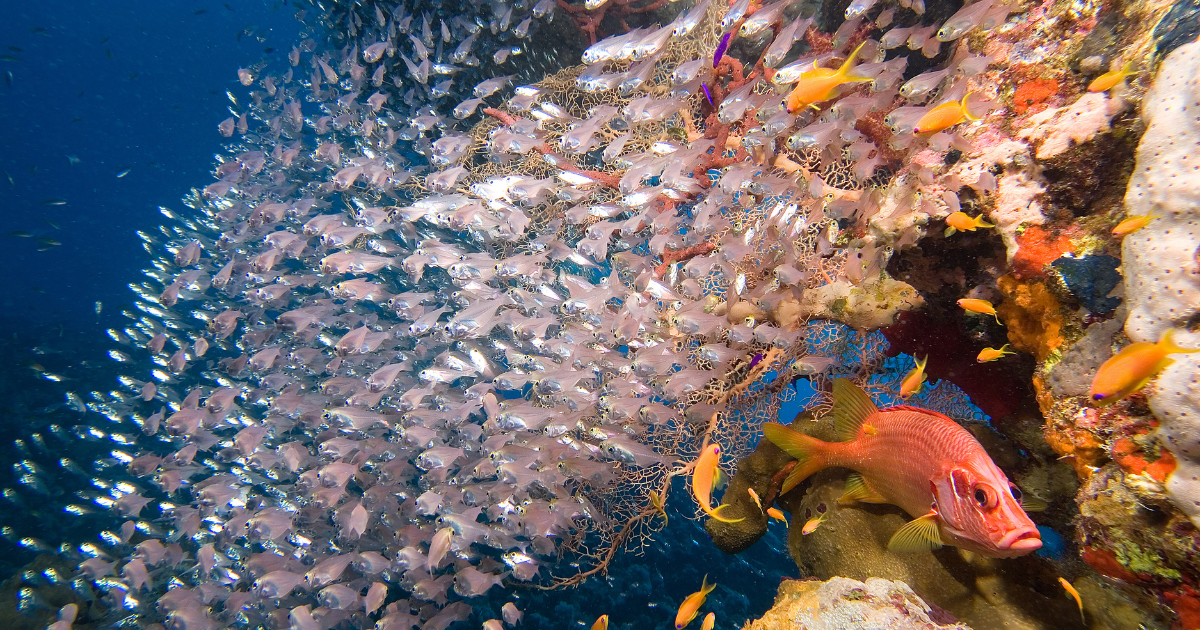
- Biodiversity Enhancement: The submerged sculptures, cast in marine-grade concrete, are designed to function as living ecosystems. The initial installation, Leandro Erlich’s Concrete Coral, was seeded with 2,200 corals and has already demonstrated rapid colonization by diverse fish and marine species, reversing local biodiversity loss.
- Sustainable Use of Marine Resources: By creating a new destination for eco-tourism (snorkeling and diving), the project promotes the sustainable use of marine resources while fostering public appreciation for marine conservation.
2.2 SDG 13: Climate Action
REEFLINE provides a tangible solution for climate adaptation and raises awareness about climate change impacts.
- Coastal Resilience: The artificial reef structure serves as a natural breakwater, protecting the shoreline from erosion and the impacts of rising sea levels, thereby strengthening the climate resilience of the coastal community.
- Climate Change Awareness: The art installation Concrete Coral, featuring submerged cars in a traffic jam, serves as a powerful metaphor for the role of carbon emissions in driving climate change and environmental degradation. This transforms a symbol of pollution into a catalyst for ecological recovery and public dialogue.
2.3 SDG 11: Sustainable Cities and Communities
The project is framed as a form of sustainable “civic infrastructure,” contributing to the creation of inclusive, safe, resilient, and sustainable urban environments.
- Resilient Infrastructure: REEFLINE functions as a protective ecological corridor for Miami Beach, a city identified as highly vulnerable to climate change. It is a community amenity that integrates environmental protection with public access and recreation.
- Civic Engagement and Ownership: A significant portion of the project’s funding was secured through a General Obligation Bond approved by Miami Beach voters, demonstrating a high level of civic awareness and a collective commitment to investing in environmental sustainability.
2.4 SDG 4: Quality Education
Education and public outreach are central components of the REEFLINE initiative, promoting lifelong learning opportunities for all.
- Formal Education Integration: Through partnerships like the “Green Schools Challenge,” the project’s themes of ocean conservation and environmental art are integrated into the curricula of over 125 schools, reaching more than 10,000 students.
- Public Learning Platforms: The initiative operates a Floating Marine Learning Center and a Community Coral Outplanting Program in partnership with the University of Miami’s Rescue a Reef program. These platforms provide hands-on learning experiences for residents and volunteers, turning citizens into active participants in ecosystem restoration.
2.5 SDG 17: Partnerships for the Goals
REEFLINE exemplifies a multi-stakeholder partnership model, which is essential for achieving the SDGs.
- Cross-Disciplinary Collaboration: The project is powered by a collective of marine biologists, coastal engineers, artists, designers, and environmental specialists.
- Public-Private-Civic Partnership: Funding is secured through a combination of public grants, voter-approved bonds, philanthropic donations, and corporate support, demonstrating a robust partnership between government, the private sector, and civil society.
3.0 Implementation and Methodology
3.1 Art as a Catalyst for Ecological Restoration
Art is utilized not merely for aesthetic purposes but as a functional driver of the project. The sculptures are scientifically designed to support marine life while their cultural significance attracts public interest, media attention, and funding. The Blue Arts Award has been established to commission new artists, ensuring the project’s continued evolution as both an ecological and cultural landmark.
3.2 Scientific Monitoring and Validation
The project’s ecological impact is continuously monitored. A dedicated science director and partnerships with academic institutions, such as the University of Miami, ensure that data is collected on species colonization and habitat formation. Initial observations confirm that the marine biological response has been more rapid than anticipated, validating the efficacy of the art-based reef structures.
4.0 Conclusion
The REEFLINE project serves as a global model for how coastal cities can creatively address environmental crises. By integrating art, science, and community action, it provides a holistic solution that simultaneously restores marine ecosystems, enhances climate resilience, educates the public, and builds sustainable community infrastructure. Its successful alignment with multiple Sustainable Development Goals demonstrates that innovative, cross-sectoral approaches are critical to building a sustainable future. REEFLINE is not simply an art installation or a conservation effort; it is a new typology of civic infrastructure where art becomes a direct solution to environmental challenges.
Analysis of Sustainable Development Goals in the Article
1. Which SDGs are addressed or connected to the issues highlighted in the article?
-
SDG 14: Life Below Water
- The article’s central theme is the restoration of a damaged marine ecosystem. It details the historical degradation of Miami’s near-shore reef tract due to beach nourishment projects and introduces the REEFLINE initiative, which is explicitly designed to “rebuilding the precious reef line,” “restore a vital section of the Florida Reef Tract,” and “fostering biodiversity.”
-
SDG 13: Climate Action
- The project addresses climate change adaptation by “protecting the shoreline from erosion and rising sea levels.” It also aims to raise public awareness about environmental crises, using art to symbolize the impact of carbon emissions and transform “a symbol of pollution into one of hope.”
-
SDG 11: Sustainable Cities and Communities
- The article presents REEFLINE as a model for how coastal cities can become more resilient. It is described as “civic infrastructure” and a “community project” for Miami Beach, a city identified as “ground zero for sea-level rise.” The project strengthens efforts to protect the city’s natural heritage (the reef) through a cultural initiative.
-
SDG 4: Quality Education
- A significant component of the REEFLINE initiative is education. The article highlights partnerships to weave “ocean conservation and contemporary art” into school curricula, community outplanting programs, and a “Floating Marine Learning Center” to provide hands-on learning and raise civic awareness about marine ecology and sustainability.
-
SDG 17: Partnerships for the Goals
- The project is a prime example of a multi-stakeholder partnership. It is powered by a “multidisciplinary collective of marine biologists, coastal engineers, designers, artists and environmental specialists” and funded through a combination of public grants, voter-approved bonds, philanthropic donations, and corporate support, demonstrating a collaborative approach to achieving its goals.
2. What specific targets under those SDGs can be identified based on the article’s content?
-
Under SDG 14 (Life Below Water)
- Target 14.2: By 2020, sustainably manage and protect marine and coastal ecosystems to avoid significant adverse impacts, including by strengthening their resilience, and take action for their restoration in order to achieve healthy and productive oceans.
- The article directly addresses this target by describing REEFLINE’s mission to “repair some of that damage” done to the marine ecosystem and “rebuilding the precious reef line.” The project actively restores the Florida Reef Tract, which has “suffered a loss of about 90 percent of its coral.”
- Target 14.5: By 2020, conserve at least 10 per cent of coastal and marine areas, consistent with national and international law and based on the best available scientific information.
- The project creates a “seven-mile underwater public sculpture park, snorkel trail and hybrid reef,” establishing a managed and protected marine area dedicated to conservation and restoration.
- Target 14.a: Increase scientific knowledge, develop research capacity and transfer marine technology…
- The initiative functions as a “living laboratory” and involves partnerships with universities, such as the University of Miami’s Rescue a Reef program, for “long-term monitoring” and scientific oversight to understand the changing marine ecosystem.
- Target 14.2: By 2020, sustainably manage and protect marine and coastal ecosystems to avoid significant adverse impacts, including by strengthening their resilience, and take action for their restoration in order to achieve healthy and productive oceans.
-
Under SDG 13 (Climate Action)
- Target 13.1: Strengthen resilience and adaptive capacity to climate-related hazards and natural disasters in all countries.
- The project’s goals include “protecting the shoreline from erosion and rising sea levels,” which directly enhances the coastal city’s resilience to climate-related hazards.
- Target 13.3: Improve education, awareness-raising and human and institutional capacity on climate change mitigation, adaptation, impact reduction and early warning.
- REEFLINE uses art as a tool for “raising public awareness about marine conservation” and the impacts of climate change, such as using car sculptures as a “metaphor for carbon emissions.”
- Target 13.1: Strengthen resilience and adaptive capacity to climate-related hazards and natural disasters in all countries.
-
Under SDG 11 (Sustainable Cities and Communities)
- Target 11.4: Strengthen efforts to protect and safeguard the world’s cultural and natural heritage.
- The project is a unique fusion of protecting natural heritage (the Florida Reef Tract) and creating cultural heritage (a large-scale public art installation). Funding is secured through cultural grants and bonds, explicitly linking cultural preservation with environmental protection.
- Target 11.4: Strengthen efforts to protect and safeguard the world’s cultural and natural heritage.
-
Under SDG 4 (Quality Education)
- Target 4.7: By 2030, ensure that all learners acquire the knowledge and skills needed to promote sustainable development…
- The article explicitly states that “ocean conservation and contemporary art are being woven into school curricula,” reaching thousands of students. It also offers hands-on experiences through the “Community Coral Outplanting Program” and the “Floating Marine Learning Center,” directly providing education for sustainable development.
- Target 4.7: By 2030, ensure that all learners acquire the knowledge and skills needed to promote sustainable development…
-
Under SDG 17 (Partnerships for the Goals)
- Target 17.17: Encourage and promote effective public, public-private and civil society partnerships, building on the experience and resourcing strategies of partnerships.
- The project is described as a “cross-disciplinary” collaboration involving artists, scientists, engineers, and environmental specialists. Its funding model, which includes a “$5 million Arts & Culture General Obligation Bond approved by Miami Beach voters,” philanthropic donations, and corporate support, exemplifies a public-private-civil society partnership.
- Target 17.17: Encourage and promote effective public, public-private and civil society partnerships, building on the experience and resourcing strategies of partnerships.
3. Are there any indicators mentioned or implied in the article that can be used to measure progress towards the identified targets?
-
For SDG 14 (Life Below Water)
- Indicator for Target 14.2: The article mentions a “loss of about 90 percent of its coral.” Progress can be measured by the percentage increase in coral cover on the restored reef. The initial seeding of “2,200 corals” serves as a baseline metric. The observation that the site is “teeming with fish and marine creatures” implies that species diversity and biomass are key indicators of ecosystem health.
- Indicator for Target 14.5: The project’s planned size of a “seven-mile underwater public sculpture park” serves as a direct indicator of the total area of marine habitat under conservation and restoration management.
-
For SDG 13 (Climate Action)
- Indicator for Target 13.1: While not quantified, the project’s success in “protecting the shoreline from erosion” could be measured by monitoring changes in the rate of coastal erosion along the protected seven-mile stretch.
-
For SDG 11 (Sustainable Cities and Communities)
- Indicator for Target 11.4: The article specifies the amount of funding mobilized for this cultural and natural heritage project, including a “$5 million Arts & Culture General Obligation Bond,” “$1.5 million in philanthropic donations,” and a total project cost of “$40 million.” These figures serve as an indicator of the total expenditure dedicated to the preservation and protection of this natural and cultural site.
-
For SDG 4 (Quality Education)
- Indicator for Target 4.7: The article provides precise numbers for measuring educational outreach: the program has reached “more than 10,000 students, 125 schools and 200 teachers” and is part of the curriculum in “approximately 50 schools.” These are direct indicators of the number of learners and institutions reached by education for sustainable development.
-
For SDG 17 (Partnerships for the Goals)
- Indicator for Target 17.17: The article describes the partnership as a “multidisciplinary collective” and lists various funding sources (public bonds, philanthropy, corporate donors). The number and diversity of organizations (public, private, academic, non-profit) involved in the project serve as an indicator of a successful multi-stakeholder partnership.
4. Table of SDGs, Targets, and Indicators
| SDGs | Targets | Indicators |
|---|---|---|
| SDG 14: Life Below Water |
14.2: Sustainably manage, protect, and restore marine and coastal ecosystems.
14.5: Conserve coastal and marine areas. 14.a: Increase scientific knowledge and research capacity. |
– Percentage increase in coral cover (reversing the 90% loss). – Number of corals outplanted (baseline of 2,200). – Increase in marine species diversity and biomass. – Total area under conservation (7-mile corridor). – Number of scientific monitoring programs and partnerships (e.g., with University of Miami). |
| SDG 13: Climate Action |
13.1: Strengthen resilience and adaptive capacity to climate-related hazards.
13.3: Improve education and awareness-raising on climate change. |
– Reduction in coastal erosion rates along the protected shoreline. – Number of people engaged in awareness activities (e.g., dives, educational programs). |
| SDG 11: Sustainable Cities and Communities | 11.4: Strengthen efforts to protect and safeguard the world’s cultural and natural heritage. | – Total expenditure on the preservation of the natural and cultural site (e.g., $5M bond, $1.5M donations, toward a $40M total). |
| SDG 4: Quality Education | 4.7: Ensure all learners acquire knowledge and skills for sustainable development. |
– Number of students reached by education for sustainable development (10,000+). – Number of schools and teachers participating (125 schools, 200 teachers). – Number of schools integrating the program into their curriculum (approx. 50). |
| SDG 17: Partnerships for the Goals | 17.17: Encourage and promote effective public, public-private and civil society partnerships. |
– Number and diversity of partners involved (artists, scientists, engineers, universities, government, private donors). – Amount of funding mobilized through multi-stakeholder partnerships. |
Source: observer.com
What is Your Reaction?
 Like
0
Like
0
 Dislike
0
Dislike
0
 Love
0
Love
0
 Funny
0
Funny
0
 Angry
0
Angry
0
 Sad
0
Sad
0
 Wow
0
Wow
0