









































UN Officials issue warning on deepening insecurity worldwide through illegal firearms – Jurist.org
Report on the Impact of Illicit Small Arms Trafficking on Sustainable Development Goals
Undermining SDG 16: Peace, Justice and Strong Institutions
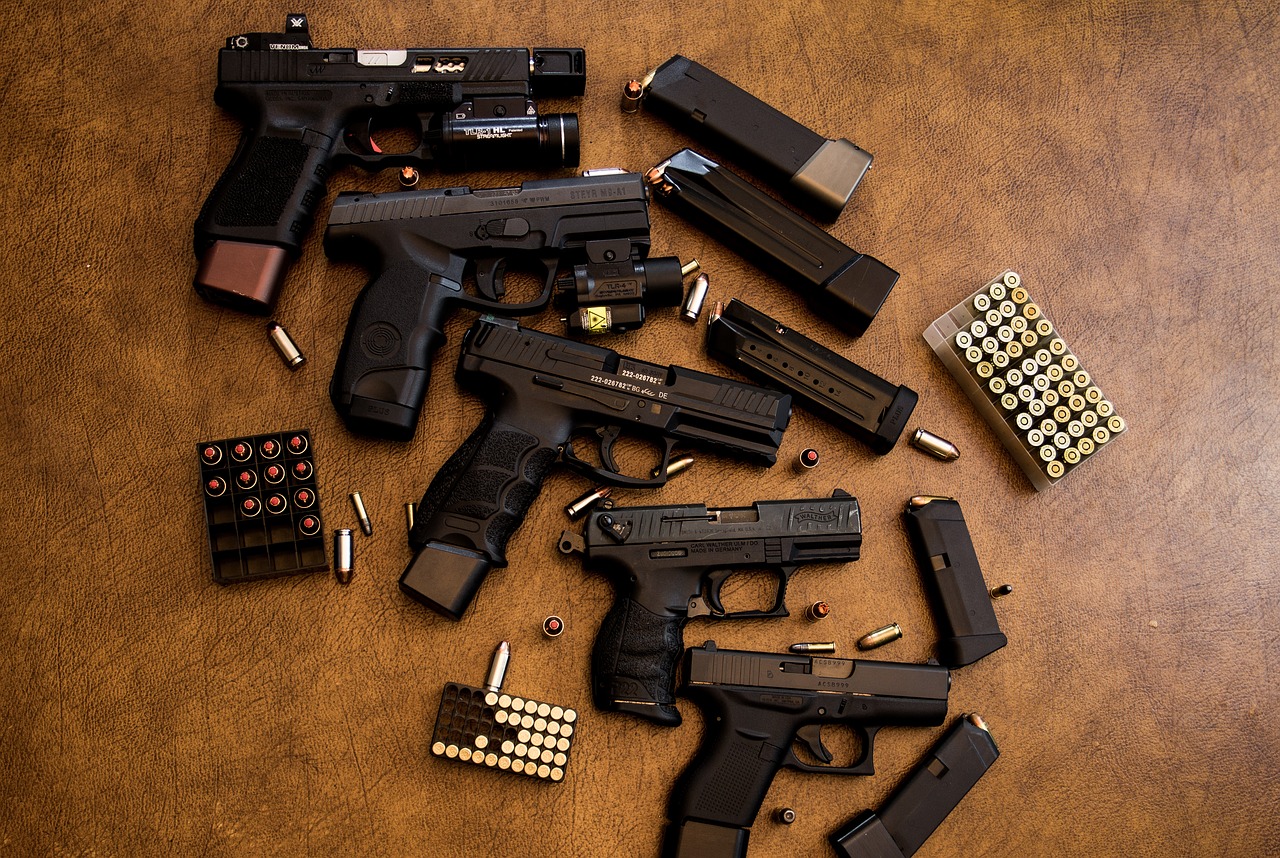
The cross-border exchange of small arms and light weapons (SALW) poses a direct and significant threat to the achievement of Sustainable Development Goal 16. UN Deputy Disarmament Chief Adedeji Ebo reported to the Security Council that the proliferation of these weapons is a primary driver of instability and violence, directly contravening the targets of SDG 16.
- Target 16.1 (Reduce Violence): The illicit arms trade is directly linked to escalating conflict, organised crime, and violence in regions from Haiti to the Sahel. In Sudan’s Darfur region, these weapons are used to inflict horrific violence and suffering.
- Target 16.4 (Reduce Illicit Arms Flows): Illicit arms trafficking and the diversion of weapons, often in violation of UN Security Council-mandated embargoes, remain a critical challenge. The difficulty in identifying the origin and supply chain of seized weapons further complicates efforts to meet this target.
- Target 16.a (Strengthen Institutions): The failure of sanctions to significantly mitigate gang violence in Haiti underscores the need to strengthen institutional capacity for monitoring and enforcement.
Cascading Effects on Socio-Economic Development Goals
The failure to control SALW and achieve SDG 16 creates cascading negative impacts across the 2030 Agenda for Sustainable Development, undermining progress in multiple areas.
- SDG 1 (No Poverty) & SDG 8 (Decent Work and Economic Growth): Conflict fueled by illicit arms leads to the mass displacement of people, destroys infrastructure, and destabilises economies, reversing progress on poverty reduction and sustainable growth.
- SDG 2 (Zero Hunger) & SDG 3 (Good Health and Well-being): Armed violence exacerbates humanitarian crises, disrupts food supply chains, and places an immense burden on health systems, leading to increased mortality and suffering. The situation in El Fasher, which fell after a 500-day siege, exemplifies this humanitarian collapse.
- SDG 11 (Sustainable Cities and Communities): The flow of arms into urban areas, as seen in Haiti, makes cities and communities unsafe and unsustainable, undermining peace and stability.
High-Level Recommendations for Advancing the 2030 Agenda
To mitigate the destabilising impact of SALW and realign efforts with the Sustainable Development Goals, UN officials and international partners have issued several key recommendations.
- Integrate Arms Control into Peace and Development Strategies (SDG 16): The Security Council is urged to fully integrate small arms controls into peace operations, peacebuilding strategies, and sanctions monitoring to prevent the diversion and illicit manufacturing of weapons.
- Enhance Global Partnerships (SDG 17): Officials recommend bridging the gap between UN policy communities to foster a more cohesive and effective international response to the illicit arms trade.
- Reinforce Regional Initiatives (SDG 16): Support for regional efforts, such as the African Union’s “Silencing the Guns” initiative, is critical to addressing the specific drivers of conflict and instability on the continent.
- Strengthen Embargoes and Sanctions (SDG 16.4): The international community must reinforce existing arms embargoes and sanctions regimes to ensure they are effective tools for reducing violence and illicit arms flows.
Analysis of Sustainable Development Goals in the Article
1. Which SDGs are addressed or connected to the issues highlighted in the article?
-
SDG 16: Peace, Justice and Strong Institutions
This is the most relevant SDG as the article’s central theme is the threat to peace and stability caused by the illicit trade of small arms and light weapons. The text explicitly discusses issues such as increasing violence, conflict, organised crime, and the undermining of peace efforts, all of which are core components of SDG 16. The role of the UN Security Council and calls for stronger controls and peace operations directly relate to building effective and accountable institutions.
2. What specific targets under those SDGs can be identified based on the article’s content?
-
Target 16.1: Significantly reduce all forms of violence and related death rates everywhere.
The article directly addresses this target by highlighting the “increasing chain of violence across the world” and the “horrific violence and suffering” in regions like Haiti, the Sahel, and Darfur, which are fueled by the proliferation of small arms.
-
Target 16.4: By 2030, significantly reduce illicit financial and arms flows, strengthen the recovery and return of stolen assets and combat all forms of organized crime.
This target is explicitly connected through the article’s focus on the “cross-border exchange of small arms and light weapons,” “illicit arms trafficking and diversion,” and the resulting increase in “organised crime.” The UN’s call to prevent the “diversion and illicit manufacturing of small arms” is a direct effort to achieve this target.
-
Target 16.a: Strengthen relevant national institutions, including through international cooperation, for building capacity at all levels, in particular in developing countries, to prevent violence and combat terrorism and crime.
The article supports this target by mentioning the UN Security Council’s efforts to reinforce arms embargoes and the recommendation to “integrate small arms controls into peace operations, peacebuilding strategies, and sanctions monitoring.” This points to the need for strengthening institutional capacity through international cooperation to manage and prevent conflict.
3. Are there any indicators mentioned or implied in the article that can be used to measure progress towards the identified targets?
-
Implied Indicator for Target 16.1 (Conflict-related deaths):
While no specific numbers are given, the article’s references to “wars,” “humanitarian crises,” and violence that “escalated in El Fasher” imply the relevance of measuring conflict-related deaths and the scale of violence (Indicator 16.1.2: Conflict-related deaths per 100,000 population) as a key metric of the problem.
-
Implied Indicator for Target 16.4 (Tracing illicit arms):
The article directly points to a key performance indicator by stating there is a “challenge of identifying the origin and supply chain of seized weapons and ammunition.” This implies that progress could be measured by the proportion of seized arms that can be successfully traced (Indicator 16.4.2: Proportion of seized, found or surrendered arms whose illicit origin or context has been traced or established by a competent authority).
-
Implied Indicator for Target 16.a (Human rights institutions):
The mention of the ICC prosecutor issuing “alarms about the ongoing human rights violations” in El Fasher suggests the need for and importance of institutions that monitor and report on such violations. The existence and effectiveness of such institutions (related to Indicator 16.a.1: Existence of independent national human rights institutions) is an implied measure of institutional strength to prevent violence.
4. Table of SDGs, Targets, and Indicators
| SDGs | Targets | Indicators |
|---|---|---|
| SDG 16: Peace, Justice and Strong Institutions | 16.1: Significantly reduce all forms of violence and related death rates everywhere. | Implied (related to 16.1.2): The level of conflict-related deaths and humanitarian crises in affected regions like Sudan and Haiti. |
| SDG 16: Peace, Justice and Strong Institutions | 16.4: Significantly reduce illicit financial and arms flows… and combat all forms of organized crime. | Implied (related to 16.4.2): The ability to identify the “origin and supply chain of seized weapons and ammunition.” |
| SDG 16: Peace, Justice and Strong Institutions | 16.a: Strengthen relevant national institutions… to prevent violence and combat… crime. | Implied (related to 16.a.1): The presence and effectiveness of institutions monitoring “ongoing human rights violations,” as highlighted by the ICC prosecutor. |
Source: jurist.org
What is Your Reaction?
 Like
0
Like
0
 Dislike
0
Dislike
0
 Love
0
Love
0
 Funny
0
Funny
0
 Angry
0
Angry
0
 Sad
0
Sad
0
 Wow
0
Wow
0