









































We’re launching a health equity beat – The 51st
Report on Health Equity Initiatives in Washington, D.C. and Alignment with Sustainable Development Goals
Addressing Health Disparities in Line with SDG 3 and SDG 10
Significant health disparities persist in Washington, D.C., presenting a direct challenge to the achievement of Sustainable Development Goal 3 (Good Health and Well-being) and SDG 10 (Reduced Inequalities). Analysis of public health data reveals critical inequities based on geographic location and race.
- Life expectancy can differ by as much as a decade between different city wards.
- Black residents face a nearly 2.5 times higher likelihood of having heart disease, impacting progress toward SDG target 3.4 on non-communicable diseases.
- Residents of Ward 8 are four times more likely to have diabetes compared to other areas.
- Between 2014 and 2018, Black individuals accounted for 90 percent of maternal deaths despite representing only half of births, a stark contrast to the aims of SDG target 3.1 to reduce maternal mortality.
Community-Led Interventions Advancing SDG Targets
In response to these challenges, community-based organizations are implementing targeted solutions that directly support specific SDG targets. These initiatives demonstrate effective local action in promoting health and well-being for all.
- Mamatoto Village: This organization is actively working to improve maternal health outcomes, directly contributing to SDG 3.1. By training community members as birth workers, it provides culturally relevant care that has been shown to improve birth outcomes for Black individuals, thereby also addressing SDG 5 (Gender Equality).
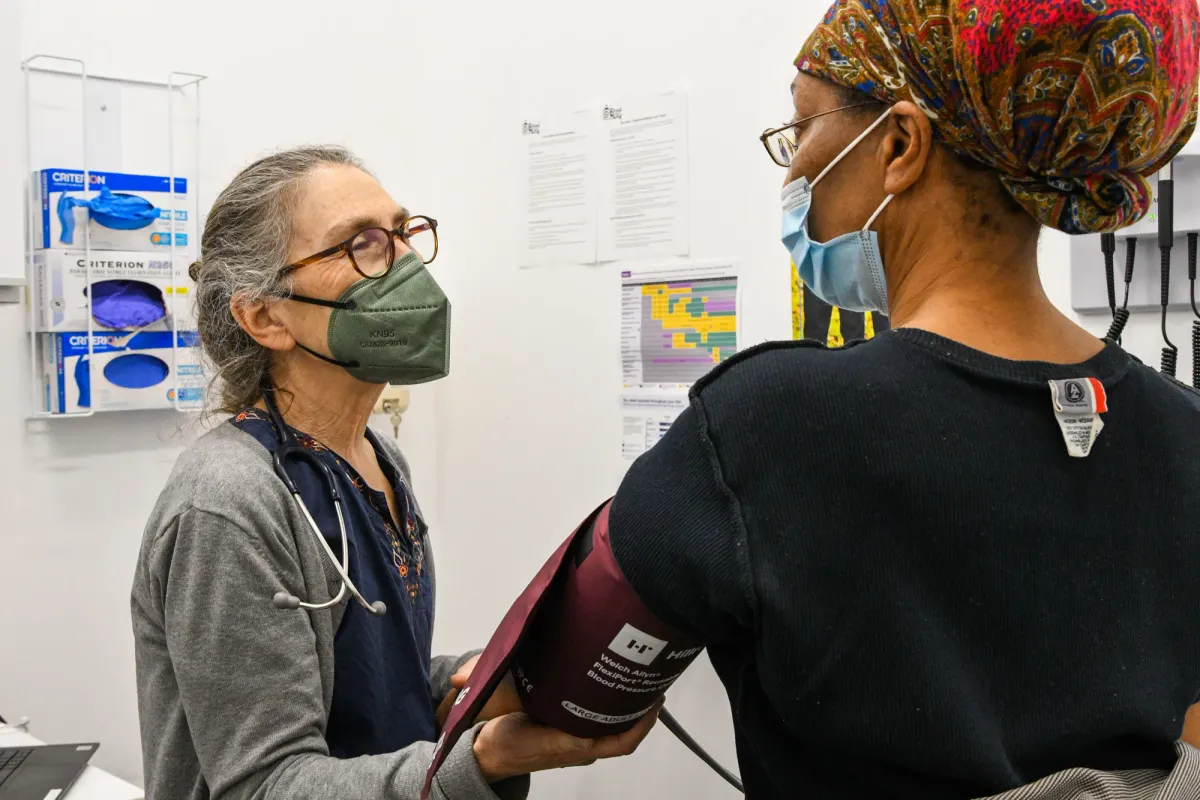
- Dr. Edwin C. Chapman’s Clinic: The clinic provides lifesaving treatment for opioid addiction, focusing on older Black men, the demographic most vulnerable to overdose deaths in the District. This work is a critical local implementation of SDG target 3.5, which aims to strengthen the prevention and treatment of substance abuse.
Strategic Partnerships and Media Engagement for Health Justice (SDG 17)
To amplify these stories and investigate systemic health issues, The 51st news outlet is launching a dedicated health equity beat. This initiative is supported by a strategic partnership under SDG 17 (Partnerships for the Goals) through a fellowship at the Georgetown – Howard Center for Medical Humanities and Health Justice.
This collaboration will expand networks and foster innovative approaches to health communication. The fellowship cohort is engaged in several projects that align with SDG 3:
- A project utilizing quilting to share experiences with hypertension in Wards 7 and 8, addressing SDG 3.4.
- A podcast focused on intergenerational healing, contributing to mental health and well-being (SDG 3.4).
- The use of oral history to improve healthcare delivery for D.C. natives, supporting the goal of universal access to quality healthcare (SDG 3.8).
Resource Mobilization and Future Outlook
The fellowship provides partial funding for this new reporting initiative for one year. To ensure the sustainability and expansion of this work, an additional $30,000 in funding is required. These resources will cover remaining salary costs and the hiring of freelance journalists and photographers to comprehensively report on health equity. Community and foundational support are essential for continuing this coverage, which aims to hold systems accountable and promote solutions that advance health equity for all residents of the District, in line with the universal promise of the Sustainable Development Goals.
Analysis of Sustainable Development Goals (SDGs) in the Article
1. Which SDGs are addressed or connected to the issues highlighted in the article?
- SDG 3: Good Health and Well-being: The article’s central theme is health equity, directly addressing disparities in health outcomes such as life expectancy, chronic diseases, maternal mortality, and substance abuse.
- SDG 10: Reduced Inequalities: The article explicitly details how these health disparities are linked to race and geographic location (wards within D.C.), highlighting systemic inequalities in health outcomes for different population groups.
2. What specific targets under those SDGs can be identified based on the article’s content?
-
Target 3.1: By 2030, reduce the global maternal mortality ratio.
- Explanation: The article directly addresses maternal mortality by stating, “While Black people made up only half of births in D.C., they accounted for 90 percent of maternal deaths from 2014 to 2018.” It also highlights a community solution, Mamatoto Village, which aims to improve maternal health outcomes.
-
Target 3.4: By 2030, reduce by one-third premature mortality from non-communicable diseases through prevention and treatment and promote mental health and well-being.
- Explanation: The article points to significant disparities in non-communicable diseases, noting that “Black residents are almost 2.5 times more likely to have heart disease; Ward 8 residents are four times as likely to have diabetes.” This aligns with the target’s focus on reducing mortality from such diseases.
-
Target 3.5: Strengthen the prevention and treatment of substance abuse, including narcotic drug abuse and harmful use of alcohol.
- Explanation: The article discusses the work of Dr. Edwin C. Chapman’s clinic, which provides “lifesaving treatment for older Black men — the District residents most vulnerable to opioid overdoses.” This directly relates to the target of treating substance abuse.
-
Target 10.2: By 2030, empower and promote the social, economic and political inclusion of all, irrespective of age, sex, disability, race, ethnicity, origin, religion or economic or other status.
- Explanation: The entire article is framed around the exclusion of certain groups (specifically Black residents and those in certain wards) from equitable health outcomes. The disparities mentioned—”Life expectancy in our city can vary by a decade depending on the ward you live in”—are a direct result of systemic inequalities that this target aims to eliminate.
-
Target 10.3: Ensure equal opportunity and reduce inequalities of outcome…
- Explanation: The article provides clear evidence of inequalities of outcome in the health sector. The statistics on heart disease, diabetes, and maternal mortality among Black residents compared to others are stark examples of the unequal outcomes that this target seeks to address.
3. Are there any indicators mentioned or implied in the article that can be used to measure progress towards the identified targets?
-
Maternal Mortality Ratio (Indicator 3.1.1):
- Explanation: The article provides a specific, albeit localized, indicator of this by stating that Black people accounted for “90 percent of maternal deaths from 2014 to 2018.” This data point directly measures maternal mortality and highlights the racial disparity.
-
Mortality rate attributed to cardiovascular disease, cancer, diabetes or chronic respiratory disease (Indicator 3.4.1):
- Explanation: While not providing mortality rates, the article implies this indicator by citing the prevalence and disparity of the underlying conditions: “Black residents are almost 2.5 times more likely to have heart disease; Ward 8 residents are four times as likely to have diabetes.” These prevalence rates are precursors to mortality and serve as a measure of the problem’s scale.
-
Mortality rate due to substance abuse:
- Explanation: The article implies this indicator by mentioning “opioid overdoses killing older Black men.” The number of deaths from overdoses is a direct measure of the mortality rate associated with substance abuse, a key component of monitoring progress on Target 3.5.
-
Disparities in life expectancy by geographic location and race:
- Explanation: The statement, “Life expectancy in our city can vary by a decade depending on the ward you live in,” serves as a powerful, high-level indicator for Target 10.3. It measures the inequality of outcome in the most fundamental way—the length of one’s life.
4. Table of SDGs, Targets, and Indicators
| SDGs | Targets | Indicators |
|---|---|---|
| SDG 3: Good Health and Well-being |
3.1: Reduce maternal mortality.
3.4: Reduce mortality from non-communicable diseases. 3.5: Strengthen prevention and treatment of substance abuse. |
– Disproportionate maternal mortality rate among Black women (90% of deaths).
– Higher prevalence of heart disease (2.5x) and diabetes (4x) in specific populations. – Deaths from opioid overdoses among older Black men. |
| SDG 10: Reduced Inequalities |
10.2: Promote social inclusion of all, irrespective of race or origin.
10.3: Ensure equal opportunity and reduce inequalities of outcome. |
– Variation in life expectancy by up to a decade depending on the residential ward.
– Racial and geographical disparities in health outcomes (maternal mortality, heart disease, diabetes). |
Source: 51st.news
What is Your Reaction?
 Like
0
Like
0
 Dislike
0
Dislike
0
 Love
0
Love
0
 Funny
0
Funny
0
 Angry
0
Angry
0
 Sad
0
Sad
0
 Wow
0
Wow
0