
















































A window underground: New sensors measure emissions from soil in real time – University of Colorado Boulder
Report on Advanced Soil Sensor Technology for Sustainable Agriculture
Introduction: Addressing Agricultural Emissions and Inefficiencies
A collaborative research initiative is developing low-cost, real-time soil sensors to address significant environmental and economic challenges in modern agriculture. The project focuses on mitigating nitrous oxide (N₂O) emissions, a potent greenhouse gas originating from agricultural soils, primarily due to fertilizer use. This technological advancement directly supports multiple United Nations Sustainable Development Goals (SDGs) by aiming to enhance food production sustainability, combat climate change, and promote responsible resource management.
The Challenge: Monitoring Soil’s Environmental Impact
The intricate microbial processes within soil, which convert elements like nitrogen into plant nutrients, are difficult and expensive to monitor. This presents a major obstacle to sustainable farming.
- Nitrous Oxide Emissions: Agricultural soils are the largest human source of N₂O, a greenhouse gas with a warming potential approximately 265 times that of carbon dioxide. These emissions often occur in brief, intense periods known as “hot moments,” which are easily missed by traditional measurement techniques.
- Economic Inefficiency: Over-application of fertilizers represents a significant financial burden for farmers, with estimates suggesting it can account for over 40% of operating costs for major crops like corn and wheat.
- Technological Barriers: Current high-precision monitoring systems, such as cavity ring-down spectrometers, are prohibitively expensive, costing over $100,000 to monitor a small area. This cost prevents widespread adoption.
An Innovative Solution: Low-Cost, Deployable Sensor Networks
Researchers at the University of Colorado Boulder and the University of California, Berkeley, are developing a novel sensor suite to overcome these barriers. The technology leverages advanced screen-printing techniques to create affordable and scalable electronics.
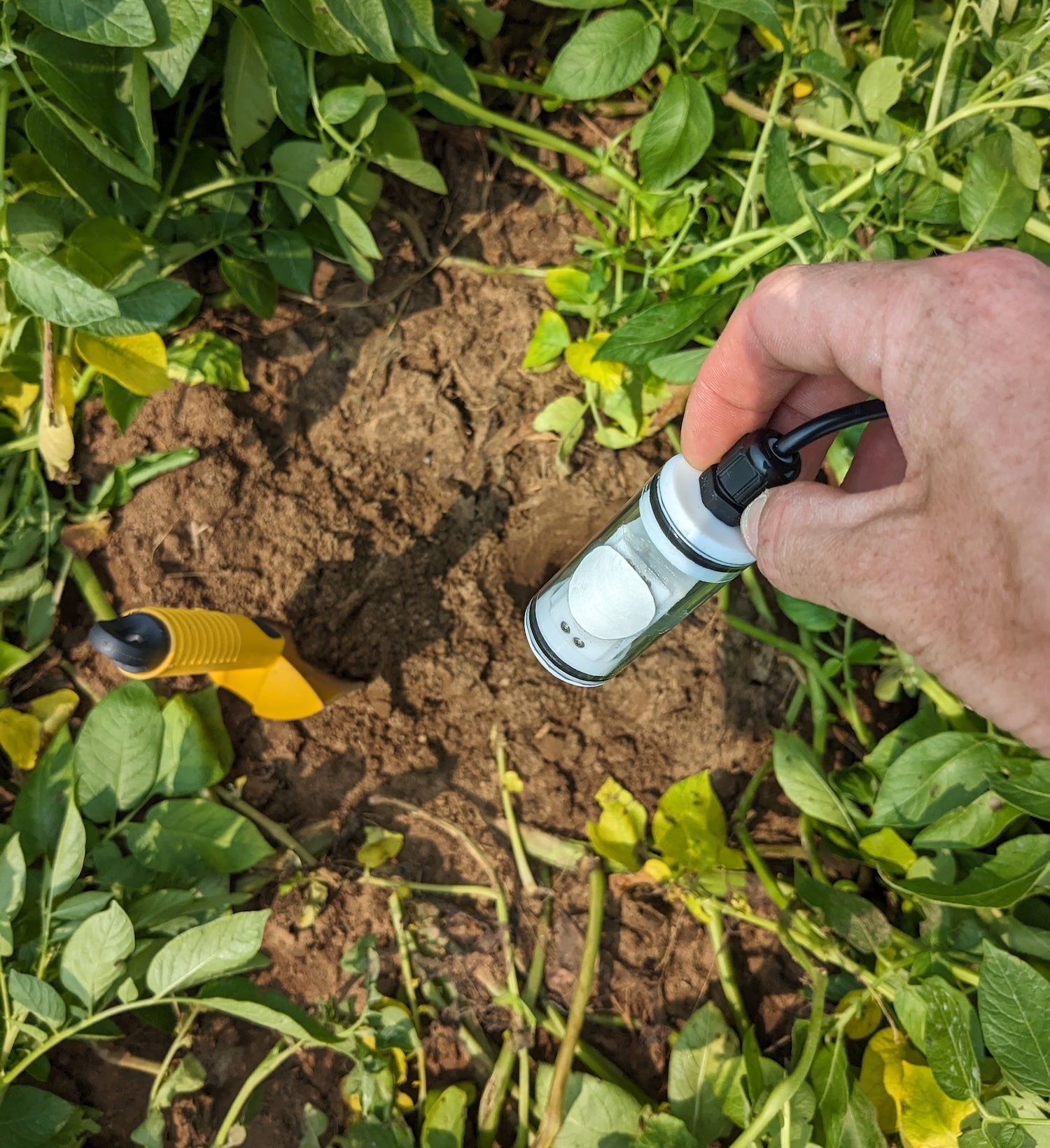
- Sensor Functionality: The sensors do not measure N₂O directly. Instead, they monitor key soil characteristics—including temperature, moisture, and oxygen levels—that are known precursors to N₂O emissions. This data is used to calculate a reliable estimate of emissions in real time.
- Manufacturing and Cost: Utilizing screen-printing with specially formulated inks allows for mass production. The project has a target production cost of just $10 per sensor, making large-scale deployment across entire fields economically viable.
- Deployment and Validation: The sensors are currently undergoing field trials at a working corn farm in California to validate their performance and data accuracy over a full growing season.
Alignment with Sustainable Development Goals (SDGs)
This project provides a direct pathway to achieving several key SDGs through technological innovation in agriculture.
- SDG 2 (Zero Hunger): By enabling precision agriculture, the sensors help optimize fertilizer use, which can improve crop yields and ensure food is produced more sustainably to support a growing global population.
- SDG 13 (Climate Action): The primary goal is to reduce agricultural N₂O emissions, directly contributing to the mitigation of climate change.
- SDG 12 (Responsible Consumption and Production): The technology promotes efficient resource use by giving farmers the data needed to apply only the necessary amount of fertilizer, reducing chemical waste and promoting sustainable production patterns.
- SDG 9 (Industry, Innovation, and Infrastructure): The project represents a significant innovation in environmental monitoring technology. The development and planned commercialization through the startup Tierra Metrics foster sustainable industrial and technological progress.
- SDG 14 (Life Below Water) & SDG 15 (Life on Land): Reducing excess fertilizer application prevents nitrogen runoff, which pollutes waterways and harms aquatic ecosystems. It also contributes to maintaining the health and biodiversity of soil, a critical component of terrestrial ecosystems.
Conclusion and Future Outlook
The development of this affordable soil sensor technology marks a critical step toward data-driven, sustainable agriculture. By providing farmers with actionable, real-time feedback from their fields, the project has the potential to significantly reduce greenhouse gas emissions, cut operational costs, and protect vital ecosystems. The successful commercialization of this technology could revolutionize agricultural practices globally, aligning food production with critical environmental and sustainability targets.
Analysis of Sustainable Development Goals in the Article
1. Which SDGs are addressed or connected to the issues highlighted in the article?
-
SDG 2: Zero Hunger
The article directly addresses food production and agricultural sustainability. It highlights the importance of soil for human survival and the need to produce more food for a growing population. The entire project is aimed at optimizing agriculture to “keep doing it for a long time,” which is central to ensuring food security.
-
SDG 6: Clean Water and Sanitation
The article explicitly mentions the negative impact of fertilizer overuse on water systems, stating that “Excess nitrogen can pollute waterways.” By developing technology to reduce excess fertilizer, the project contributes to improving water quality.
-
SDG 9: Industry, Innovation, and Infrastructure
The core of the article is about a technological innovation: developing “reliable, inexpensive and easy-to-deploy sensors” to monitor soil. It describes a scientific research project led by universities (CU Boulder and UC Berkeley) using advanced techniques like screen printing to create new electronic tools, which directly relates to enhancing scientific research and technological capabilities.
-
SDG 12: Responsible Consumption and Production
The project aims to make agricultural production more efficient and sustainable. By helping farmers “optimize their use of fertilizers,” the technology promotes the efficient use of resources (fertilizers) and reduces chemical waste, which aligns with achieving environmentally sound management of chemicals and reducing their release into the environment.
-
SDG 13: Climate Action
A primary focus of the article is the mitigation of greenhouse gas emissions. It identifies nitrous oxide from agricultural soils as a “potent greenhouse gas that can trap about 265 times more heat in the atmosphere by weight than carbon dioxide.” The goal of the sensors is to reduce these emissions, directly contributing to climate action.
-
SDG 15: Life on Land
The article is fundamentally about soil, a critical component of terrestrial ecosystems. It discusses the “intricate network of bacteria and other microbes” in soil and how the project aims to better understand and manage this “mysterious realm underground.” Reducing soil pollution from excess fertilizers helps protect and restore life on land.
-
SDG 17: Partnerships for the Goals
The article describes a collaborative effort to achieve these sustainability goals. It is a “$2 million project, led by the University of California Berkeley” in partnership with CU Boulder and funded by the “U.S. Department of Energy’s Advanced Research Projects Agency–Energy (ARPA-E).” This collaboration between academic institutions and a government agency exemplifies a multi-stakeholder partnership.
2. What specific targets under those SDGs can be identified based on the article’s content?
-
Target 2.4 (under SDG 2)
“By 2030, ensure sustainable food production systems and implement resilient agricultural practices that increase productivity and production… and that progressively improve land and soil quality.” The article’s focus on creating a method for farmers to optimize fertilizer use is a direct effort to implement a more sustainable agricultural practice that improves soil health and ensures long-term food production.
-
Target 6.3 (under SDG 6)
“By 2030, improve water quality by reducing pollution…” The article states that a consequence of fertilizer overuse is that “Excess nitrogen can pollute waterways.” The sensor technology, by enabling reduced fertilizer application, directly contributes to the goal of reducing this form of water pollution.
-
Target 9.5 (under SDG 9)
“Enhance scientific research, upgrade the technological capabilities of industrial sectors… encouraging innovation…” The project is a clear example of enhancing scientific research at universities to develop an innovative technology (low-cost sensors) to address a major challenge in the agricultural sector.
-
Target 12.4 (under SDG 12)
“By 2030, achieve the environmentally sound management of chemicals… and significantly reduce their release to air, water and soil…” The project’s goal is to reduce the use of synthetic fertilizers (chemicals) and thereby minimize the release of nitrous oxide into the air and excess nitrogen into waterways and soil.
-
Target 13.3 (under SDG 13)
“Improve education, awareness-raising and human and institutional capacity on climate change mitigation…” The sensors are designed to “give the farmers an idea of how much they should be fertilizing and watering,” which builds their capacity to mitigate climate change by reducing their farm’s nitrous oxide emissions.
-
Target 15.3 (under SDG 15)
“By 2030, combat desertification, restore degraded land and soil, including land affected by… pollution…” By providing tools to prevent the overuse of fertilizers, the project helps reduce soil pollution, contributing to the maintenance and restoration of healthy, non-degraded soil.
-
Target 17.16 (under SDG 17)
“Enhance the Global Partnership for Sustainable Development, complemented by multi-stakeholder partnerships that mobilize and share knowledge, expertise, technology and financial resources…” The article details a partnership between UC Berkeley, CU Boulder, and the government agency ARPA-E, which mobilizes financial resources ($2 million), knowledge, and technology to tackle the issue.
3. Are there any indicators mentioned or implied in the article that can be used to measure progress towards the identified targets?
-
Nitrous Oxide Emissions
The primary indicator mentioned is the volume of nitrous oxide emissions from soil. The article states the project’s aim is to “accurately estimate the nitrous oxide emissions from soil—in real time.” Reducing these emissions is a direct measure of progress towards climate action (SDG 13) and responsible production (SDG 12).
-
Fertilizer Use and Cost
The article implies that a key indicator of success would be a reduction in fertilizer application. It quantifies the current problem by stating fertilizer can “make up more than 40% of the operating costs for corn and wheat growers.” A reduction in this cost and the amount of fertilizer used would be a clear indicator of more efficient and sustainable agriculture (SDG 2, SDG 12).
-
Soil Condition Metrics
The sensors themselves provide indicators of soil health. The article specifies that they “measure multiple other features of soil, including temperature, moisture and oxygen levels.” These measurements serve as direct indicators for monitoring and improving soil quality (SDG 15).
-
Cost and Deployment of Technology
An indicator of innovation and accessibility (SDG 9) is the cost and scalability of the new technology. The article mentions a specific target for the sensors: “producing these sensors for just $10 a pop.” The successful development and deployment of these low-cost sensors across entire fields would be a measure of progress.
4. Table of SDGs, Targets, and Indicators
| SDGs | Targets | Indicators |
|---|---|---|
| SDG 2: Zero Hunger | 2.4: Ensure sustainable food production systems and resilient agricultural practices. | Reduction in fertilizer use while maintaining or improving crop yields. |
| SDG 6: Clean Water and Sanitation | 6.3: Improve water quality by reducing pollution. | Implied reduction of nitrogen pollution in waterways due to optimized fertilizer use. |
| SDG 9: Industry, Innovation, and Infrastructure | 9.5: Enhance scientific research and upgrade technological capabilities. | Development and deployment of low-cost sensors (target price of “$10 a pop”). |
| SDG 12: Responsible Consumption and Production | 12.4: Achieve environmentally sound management of chemicals and reduce their release to air, water, and soil. | Reduction in nitrous oxide emissions; reduction in excess fertilizer application. |
| SDG 13: Climate Action | 13.3: Improve capacity on climate change mitigation. | Real-time measurement and subsequent reduction of nitrous oxide emissions from soil. |
| SDG 15: Life on Land | 15.3: Combat land degradation and restore degraded soil. | Direct measurement of soil health features like temperature, moisture, and oxygen levels. |
| SDG 17: Partnerships for the Goals | 17.16: Enhance multi-stakeholder partnerships. | The existence of the collaborative project between UC Berkeley, CU Boulder, and ARPA-E. |
Source: colorado.edu
What is Your Reaction?
 Like
0
Like
0
 Dislike
0
Dislike
0
 Love
0
Love
0
 Funny
0
Funny
0
 Angry
0
Angry
0
 Sad
0
Sad
0
 Wow
0
Wow
0