
















Approaching the Dry Season, Power Costs Rise, Weighted Average Cost of Aluminum Expected to Increase MoM in December – Shanghai Metals Market
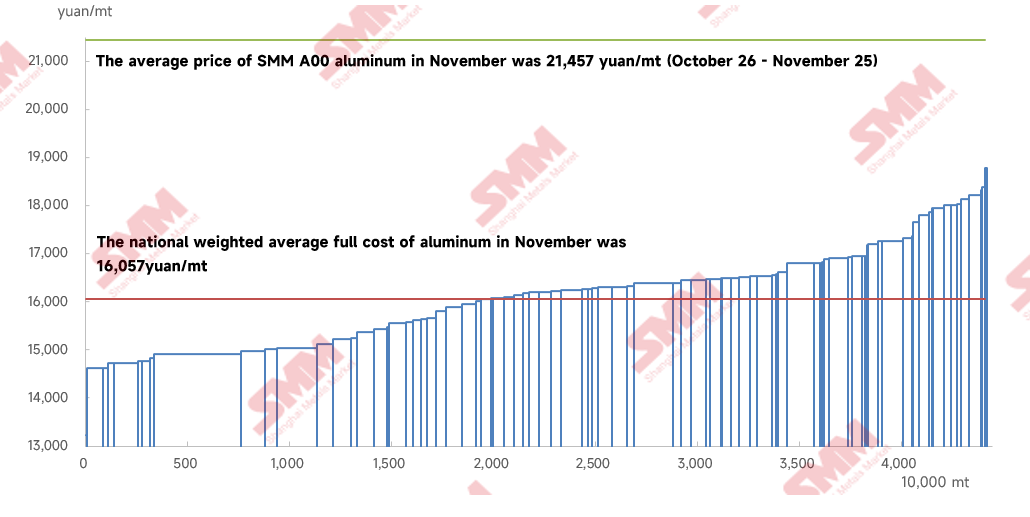
Report on China’s Aluminum Industry Costs and Sustainability Performance: November 2025
Executive Summary: Economic Viability and Sustainable Production
In November 2025, China’s aluminum industry demonstrated strong economic performance, a key indicator for Sustainable Development Goal 8 (Decent Work and Economic Growth). However, rising operational costs, particularly in energy, highlight ongoing challenges related to SDG 7 (Affordable and Clean Energy) and SDG 12 (Responsible Consumption and Production). This report analyzes the cost structure, profitability, and future outlook for the sector, assessing its alignment with global sustainability targets.
- Average Full Cost (Tax-Inclusive): 16,057 yuan/mt
- Month-on-Month Change: +1.1%
- Year-on-Year Change: -21%
- Average Industry Profit: Approximately 5,400 yuan/mt
- Operating Capacity Status: 100% of domestic capacity was profitable.
Comprehensive Cost Analysis in the Context of SDG 12
A detailed breakdown of production costs is essential for evaluating the industry’s resource efficiency and progress towards the principles of SDG 12 (Responsible Consumption and Production). In November, cost increases were driven primarily by energy and auxiliary materials, offsetting a slight decline in raw material prices.
1. Raw Material Costs: Alumina
The management of raw material supply chains is fundamental to sustainable industrial practices. In November, the alumina market experienced a surplus, leading to a modest price reduction.
- Average SMM Alumina Index: 2,856 yuan/mt (a decrease of 82 yuan/mt MoM).
- Market Conditions: Both domestic and international markets remained in surplus, though sluggish trading limited the price decline.
- December Outlook: Alumina fundamentals are expected to remain in surplus, with costs for aluminum producers projected to decline further. This trend supports more stable and predictable production cycles.
2. Auxiliary Material Costs
The sourcing and pricing of auxiliary materials reflect the interconnectedness of industrial supply chains. In November, overall costs in this category increased.
- Prebaked Anodes: Prices rose due to increased production costs.
- Fluoride Salts: Prices fell as cost support from raw material fluorite weakened.
- December Outlook: Costs for both prebaked anodes and fluoride salts are anticipated to rise, leading to an overall increase in auxiliary material expenditures for the industry.
3. Energy Costs: A Challenge for SDG 7 and SDG 13
Energy consumption is a critical component of the aluminum industry’s environmental footprint and economic stability. The reliance on hydropower presents challenges that directly impact SDG 7 (Affordable and Clean Energy) and SDG 13 (Climate Action).
- November Analysis: The onset of the dry season led to a significant increase in electricity prices in provinces with a high dependency on hydropower, elevating overall power costs for aluminum production. This highlights the vulnerability of climate-dependent renewable energy sources.
- December Outlook: Power costs are expected to continue rising as the dry season progresses. This trend underscores the urgent need for investment in a diversified and resilient clean energy infrastructure, in line with SDG 9 (Industry, Innovation, and Infrastructure), to mitigate price volatility and ensure a stable energy supply for sustainable industrial operations.
Industry Profitability and Economic Performance (SDG 8)
The financial health of the aluminum sector is a direct contributor to SDG 8 (Decent Work and Economic Growth). Despite rising costs, the industry maintained full profitability in November, signaling robust economic resilience.
- Domestic Operating Capacity (End of November): 44.23 million mt.
- Full Cost Range: Varied from a low of 13,229 yuan/mt to a high of 18,782 yuan/mt.
- Profitability Rate: Based on the monthly average spot price of 21,457 yuan/mt, 100% of the operating capacity was profitable, supporting stable employment and economic contribution.
Outlook for December 2025: Balancing Growth and Sustainability
The forecast for December indicates continued cost pressures, primarily from energy and auxiliary materials, which will slightly outweigh the benefits of lower alumina prices. This dynamic presents a critical test of the industry’s ability to balance economic growth with its sustainability commitments.
- Projected Cost Component Changes:
- Alumina Costs: Slight decline.
- Auxiliary Material Costs: Rebound.
- Power Costs: Continued increase, representing the dominant factor.
- Forecasted Average Full Cost: Estimated to be between 16,100 and 16,500 yuan/mt.
Moving forward, managing the volatility of energy costs will be paramount for the Chinese aluminum industry to maintain its competitiveness while advancing its contributions to the Sustainable Development Goals, particularly in the realms of clean energy, responsible production, and climate action.
Analysis of Sustainable Development Goals in the Article
1. Which SDGs are addressed or connected to the issues highlighted in the article?
-
SDG 7: Affordable and Clean Energy
- The article directly discusses energy as a critical component of aluminum production costs. It specifically highlights the role of hydropower, a form of clean energy, and the economic consequences of its variable availability.
-
SDG 8: Decent Work and Economic Growth
- The text focuses on the economic performance of a major industry. It details production costs, spot prices, and overall profitability, which are key metrics for assessing economic growth and the health of an industrial sector.
-
SDG 9: Industry, Innovation, and Infrastructure
- The article analyzes the operational capacity and cost structure of the Chinese aluminum industry. It implicitly points to the industry’s reliance on existing energy infrastructure (hydropower) and its vulnerability to environmental factors.
-
SDG 12: Responsible Consumption and Production
- The detailed breakdown of production costs, including raw materials like alumina and auxiliary materials like fluoride salt, relates to the efficient use of natural resources in industrial production processes.
-
SDG 13: Climate Action
- The article links a climate-related phenomenon, the “dry season,” to a direct economic impact on the industry. The reduced availability of hydropower during this period demonstrates a lack of resilience to climate variability.
2. What specific targets under those SDGs can be identified based on the article’s content?
-
SDG 7: Affordable and Clean Energy
- Target 7.2: By 2030, increase substantially the share of renewable energy in the global energy mix. The article’s focus on “provinces with a high share of hydropower” shows the relevance of renewable energy to the industry. However, it also highlights the challenges of relying on a source that is vulnerable to seasonal changes.
-
SDG 8: Decent Work and Economic Growth
- Target 8.2: Achieve higher levels of economic productivity through diversification, technological upgrading and innovation. The article provides data on the industry’s economic productivity, such as the “domestic aluminum industry averaging a profit of about 5,400 yuan/mt” and “100% of domestic operating aluminum capacity was profitable.”
-
SDG 9: Industry, Innovation, and Infrastructure
- Target 9.4: By 2030, upgrade infrastructure and retrofit industries to make them sustainable, with increased resource-use efficiency. The article’s discussion of rising “power costs” due to reliance on climate-sensitive hydropower infrastructure points to the need for more resilient and sustainable industrial systems. The cost analysis itself is a measure of resource-use efficiency.
-
SDG 12: Responsible Consumption and Production
- Target 12.2: By 2030, achieve the sustainable management and efficient use of natural resources. The article breaks down the costs of key natural resources, including “alumina raw material” and “raw material fluorite,” reflecting the industry’s consumption patterns and the economic pressures related to efficient resource management.
-
SDG 13: Climate Action
- Target 13.1: Strengthen resilience and adaptive capacity to climate-related hazards and natural disasters in all countries. The article provides a clear example of a climate-related hazard impacting industry, stating that “as the dry season approaches, electricity prices in provinces with a high proportion of hydropower have increased significantly.” This demonstrates the industry’s vulnerability and the need for greater adaptive capacity.
3. Are there any indicators mentioned or implied in the article that can be used to measure progress towards the identified targets?
-
For SDG 7 (Target 7.2):
- Indicator: Volatility of electricity prices from renewable sources. The article mentions a “significant increase in electricity costs” as the dry season affects hydropower, which can be used as an indicator of the stability and reliability of the clean energy supply.
-
For SDG 8 (Target 8.2):
- Indicators: Industry-wide profitability and production capacity. Specific data points from the article include:
- Average industry profit: “about 5,400 yuan/mt.”
- Percentage of profitable capacity: “100% of domestic operating aluminum capacity was profitable.”
- Total operating capacity: “44.23 million mt.”
- Indicators: Industry-wide profitability and production capacity. Specific data points from the article include:
-
For SDG 9 (Target 9.4):
- Indicator: Cost of energy as a component of total production cost. The article states that “power costs for aluminum production in November” were raised, and the “impact from power costs is anticipated to be dominant” in future cost increases. This measures the resource efficiency of the industrial process.
-
For SDG 12 (Target 12.2):
- Indicators: Prices and costs of raw materials. The article provides specific figures that can serve as indicators for the management of natural resources:
- Average alumina price: “2,856 yuan/mt.”
- Changes in material costs: “prebaked anode prices rose,” “fluoride salt prices fell.”
- Indicators: Prices and costs of raw materials. The article provides specific figures that can serve as indicators for the management of natural resources:
-
For SDG 13 (Target 13.1):
- Indicator: Economic impact of climate-related events on industry. The “significant increase in electricity costs” directly linked to the “dry season” serves as a quantifiable indicator of the economic vulnerability of the industry to climate variability.
4. Summary Table of SDGs, Targets, and Indicators
| SDGs | Targets | Indicators |
|---|---|---|
| SDG 7: Affordable and Clean Energy | 7.2: Increase substantially the share of renewable energy in the global energy mix. | The “significant increase in electricity costs” in provinces with a high share of hydropower during the “dry season,” indicating the price volatility and reliability challenges of this renewable source. |
| SDG 8: Decent Work and Economic Growth | 8.2: Achieve higher levels of economic productivity. | Average industry profit (“5,400 yuan/mt”), percentage of profitable capacity (“100%”), and total operating capacity (“44.23 million mt”). |
| SDG 9: Industry, Innovation, and Infrastructure | 9.4: Upgrade infrastructure and retrofit industries to make them sustainable, with increased resource-use efficiency. | The rising “power costs” as a component of total production cost, highlighting the vulnerability of the energy infrastructure and its impact on resource efficiency. |
| SDG 12: Responsible Consumption and Production | 12.2: Achieve the sustainable management and efficient use of natural resources. | Monthly average price of raw materials like alumina (“2,856 yuan/mt”) and price fluctuations of auxiliary materials (“prebaked anode,” “fluoride salt”). |
| SDG 13: Climate Action | 13.1: Strengthen resilience and adaptive capacity to climate-related hazards. | The direct economic impact (“increased significantly”) on electricity prices for the aluminum industry as a result of a climate-related event (the “dry season”). |
Source: news.metal.com
What is Your Reaction?
 Like
0
Like
0
 Dislike
0
Dislike
0
 Love
0
Love
0
 Funny
0
Funny
0
 Angry
0
Angry
0
 Sad
0
Sad
0
 Wow
0
Wow
0