Bogotá to Belém: The Unfinished Business of Integrating SRHR into Climate Action – New Security Beat
Report on Integrating Sexual and Reproductive Health and Rights (SRHR) within Climate Action: Emphasizing Sustainable Development Goals

Introduction
Between November 2025 and December 2025, two pivotal international conferences—the International Conference on Family Planning (ICFP) in Bogotá and the United Nations Framework Convention on Climate Change (UNFCCC) COP30 in Belém—highlighted the critical intersection of climate justice and reproductive justice. Despite growing evidence supporting the integration of sexual and reproductive health and rights (SRHR) into climate policies, political challenges continue to impede explicit commitments.
ICFP 2025: Evidence-Based Advances in SRHR and Climate Change
Introduction of Environment and Climate Change Track
ICFP 2025 marked a milestone by introducing a dedicated Environment and Climate Change track, attended by over 3,500 participants. This initiative underscored the following key findings:
- Climate shocks such as floods, droughts, and heatwaves disrupt access to contraception and increase maternal mortality.
- Unintended pregnancies rise as a consequence of climate-related disruptions.
- Funding for SRHR remains largely absent from global climate finance mechanisms.
Evidence from Climate-Vulnerable Countries
Research from Uganda and other vulnerable nations revealed:
- Women face disproportionate health risks during climate disasters.
- Women are systematically excluded from climate adaptation planning.
This evidence led to the rallying principle: “There is no climate justice without SRHR and gender justice.”
Bogotá-Belém Declaration
The conference culminated in the Bogotá-Belém Declaration, endorsed by SRHR and climate organizations, which called for:
- Integration of SRHR into the UNFCCC Gender Action Plan.
- Inclusion of reproductive health indicators in the Global Goal on Adaptation.
- Recognition of SRHR services as legitimate climate adaptation strategies within climate finance mechanisms.
COP30 in Belém: Political Negotiations and Outcomes
Adoption of the Belém Gender Action Plan
COP30 delegates adopted a nine-year Belém Gender Action Plan guiding gender-responsive climate policy through 2034. The plan includes:
- Five priority areas: capacity-building, gender balance and leadership, coherence, gender-responsive implementation, and monitoring/reporting.
- Mainstreaming gender considerations across all UNFCCC workstreams including mitigation, adaptation, finance, technology, capacity-building, and transparency.
- Commitments to track adaptation progress using health indicators.
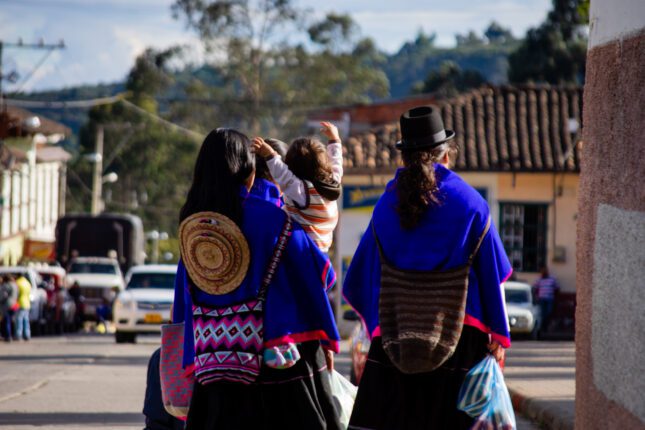
- Focus on Indigenous, Afro-descendant, and rural women’s full and meaningful participation.
Challenges in SRHR Language Inclusion
Despite progress, explicit language on SRHR was removed from the Gender Action Plan due to political contention. Key points include:
- Original references to “sexual and reproductive health and rights, gender-based violence, and unpaid care work” were heavily debated.
- Several countries sought to delete or generalize SRHR terminology.
- Six countries introduced formal footnotes defining “gender” to reach a compromise.
- SRHR was integrated more broadly under health-related activities addressing women’s differentiated climate impacts.
Health Systems and Climate Adaptation: The Belém Health Action Plan
Launch and Significance
The World Health Organization (WHO) and Brazil’s COP Presidency launched the Belém Health Action Plan, the first international climate adaptation framework dedicated to health. Key features include:
- 60 concrete actions to adapt health systems to climate impacts.
- Explicit calls for gender-responsive approaches across climate and health adaptation efforts.
- Emphasis on continuity of sexual and reproductive health and rights, pediatric, and psychosocial care during and after climate emergencies.
Endorsements and Funding
Over 30 countries endorsed the plan, committing to report progress by the 2028 Global Stocktake. However:
- No new government funding commitments were announced.
- A coalition of over 35 philanthropies pledged a one-time $300 million grant to support climate-health adaptation.
Strategic Opportunities and Challenges
Leveraging Gender Action Plan Activities
Despite the removal of explicit SRHR language in the Gender Action Plan, several activities provide entry points to advance SRHR integration:
- Activity A.3.9: National gender assessments to document climate impacts on reproductive health services, maternal mortality, and contraception access.
- Activities A.3.10 and A.3.11: Mandated dialogues and workshops to disseminate evidence linking climate adaptation to reproductive health outcomes.
Political Dynamics
The COP30 negotiations revealed ongoing political sensitivities surrounding women’s health and bodily autonomy, even within forums acknowledging gendered climate impacts.
Recommendations and Path Forward
Advocacy and Policy Integration
- Health advocates should utilize openings in the Gender Action Plan to submit robust evidence linking climate change and SRHR.
- Push for reforms in climate finance governance to explicitly recognize SRHR as eligible for adaptation funding through mechanisms such as the Green Climate Fund and Adaptation Fund.
- Maintain and strengthen coalitions formed around the Bogotá-Belém Declaration with sustained funding and coordinated advocacy.
Aligning with Sustainable Development Goals (SDGs)
The integration of SRHR within climate action directly supports multiple SDGs, including:
- SDG 3: Good Health and Well-being – by ensuring access to sexual and reproductive health services amid climate challenges.
- SDG 5: Gender Equality – by promoting gender-responsive climate policies and women’s leadership.
- SDG 13: Climate Action – by embedding health and reproductive rights within adaptation and mitigation strategies.
- SDG 10: Reduced Inequalities – by focusing on marginalized groups such as Indigenous, Afro-descendant, and rural women.
Conclusion
The journey from Bogotá to Belém has established critical frameworks and coalitions that recognize the inseparable link between climate resilience and reproductive health and rights. While political challenges remain, the existing infrastructure—comprising the Belém Gender Action Plan, Belém Health Action Plan, Global Goal on Adaptation health indicators, and collaborative networks—provides a strong foundation to advance SRHR within climate policy. Continued advocacy and strategic engagement are essential to ensure that climate action centers the health, rights, and dignity of women and vulnerable communities, thereby advancing the Sustainable Development Goals.
Sources
- Frontiers Media
- Green Climate Fund
- Health Policy Watch
- ICFP2025 Environment and Climate Change Sub-Committee
- UNFCCC
- World Health Organization (WHO)
Author: Nakuya Niona Kasekende Ssebukulu, Gender, Health & Environment Lead at Regenerate Africa
Photo Credits: Licensed by Adobe Stock.
1. Sustainable Development Goals (SDGs) Addressed or Connected
- SDG 3: Good Health and Well-being
- Focus on sexual and reproductive health and rights (SRHR), maternal mortality, and health system resilience in the face of climate change.
- SDG 5: Gender Equality
- Emphasis on gender-responsive climate policies, women’s leadership, and addressing gender-based violence and unpaid care work.
- SDG 13: Climate Action
- Integration of SRHR into climate adaptation frameworks and gender action plans, recognition of climate change impacts on women, and climate finance mechanisms supporting SRHR as adaptation strategies.
- SDG 10: Reduced Inequalities
- Focus on Indigenous, Afro-descendant, and rural women’s participation and addressing disproportionate impacts of climate change on vulnerable groups.
2. Specific Targets Under Those SDGs Identified
- SDG 3 Targets
- 3.1: Reduce the global maternal mortality ratio.
- 3.7: Ensure universal access to sexual and reproductive health-care services.
- 3.d: Strengthen the capacity of all countries for early warning, risk reduction, and management of health risks.
- SDG 5 Targets
- 5.1: End all forms of discrimination against all women and girls everywhere.
- 5.2: Eliminate all forms of violence against women and girls.
- 5.5: Ensure women’s full and effective participation and equal opportunities for leadership at all levels.
- 5.b: Enhance the use of enabling technology, in particular information and communications technology, to promote the empowerment of women.
- SDG 13 Targets
- 13.1: Strengthen resilience and adaptive capacity to climate-related hazards and natural disasters.
- 13.2: Integrate climate change measures into national policies, strategies, and planning.
- 13.b: Promote mechanisms for raising capacity for effective climate change-related planning and management.
- SDG 10 Targets
- 10.2: Empower and promote the social, economic and political inclusion of all, irrespective of age, sex, disability, race, ethnicity, origin, religion or economic or other status.
3. Indicators Mentioned or Implied to Measure Progress
- Health Indicators in the Global Goal on Adaptation
- Indicators tracking the continuity and accessibility of sexual and reproductive health services during climate-related emergencies.
- Maternal mortality rates affected by climate shocks such as floods and droughts.
- Access to contraception disrupted by climate disasters.
- Gender-Responsive Climate Policy Indicators
- Monitoring women’s participation and leadership in climate action.
- Tracking gender balance and addressing gender-based violence and unpaid care work in climate adaptation efforts.
- Assessment of differentiated impacts of climate change on women, including health and care work.
- Climate Finance Indicators
- Allocation of climate finance to support SRHR services as legitimate adaptation strategies.
- Tracking funding commitments and expenditures related to health and SRHR in climate adaptation.
- National Gender Assessments and Workshops
- Documentation and dissemination of evidence linking climate change to reproductive health outcomes.
4. Table of SDGs, Targets, and Indicators
| SDGs | Targets | Indicators |
|---|---|---|
| SDG 3: Good Health and Well-being |
|
|
| SDG 5: Gender Equality |
|
|
| SDG 13: Climate Action |
|
|
| SDG 10: Reduced Inequalities |
|
|
Source: newsecuritybeat.org
What is Your Reaction?
 Like
0
Like
0
 Dislike
0
Dislike
0
 Love
0
Love
0
 Funny
0
Funny
0
 Angry
0
Angry
0
 Sad
0
Sad
0
 Wow
0
Wow
0