Conservation Agriculture in Malawi: Balancing Challenges and Opportunities – Bioengineer.org
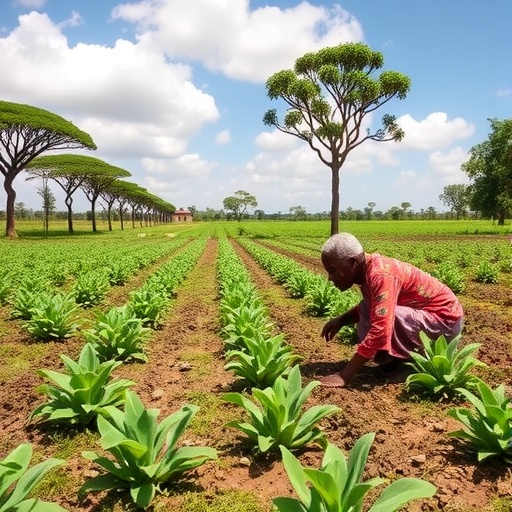
Report on Conservation Agriculture in Malawi: A Framework for Achieving Sustainable Development Goals
Malawi’s agricultural sector, while rich in potential, faces significant challenges including food insecurity and the escalating impacts of climate change. Conservation Agriculture (CA) presents a strategic pathway to address these issues, aligning national development with the global Sustainable Development Goals (SDGs). This report analyzes the opportunities and challenges of adopting CA technologies in Malawi, with a specific focus on their contribution to achieving the SDGs.
The Role of Conservation Agriculture in Advancing the SDGs
Conservation Agriculture is an agricultural system founded on principles that directly support multiple SDGs. Its implementation is critical for building a resilient and sustainable food system in Malawi.
Core Principles and Environmental Benefits
- Minimal Soil Disturbance: This practice reduces soil erosion and enhances carbon sequestration, directly contributing to SDG 13 (Climate Action) and SDG 15 (Life on Land).
- Permanent Organic Soil Cover: Using crop residues or cover crops improves water retention and soil fertility, which is vital for adapting to climate change (SDG 13) and ensuring sustainable production (SDG 12: Responsible Consumption and Production).
- Crop Rotation and Diversification: This enhances soil health, breaks pest cycles, and improves nutritional outcomes, supporting SDG 2 (Zero Hunger) and promoting biodiversity (SDG 15).
Together, these practices enhance agricultural productivity and resilience, forming a foundational strategy for achieving food security and mitigating poverty, central tenets of SDG 2 and SDG 1 (No Poverty).
Challenges to CA Adoption and SDG Attainment in Malawi
The widespread adoption of CA in Malawi is hindered by several interconnected barriers, each impeding progress toward specific SDGs.
Key Barriers Identified
- Educational and Cultural Barriers: Skepticism and adherence to traditional farming methods, coupled with a lack of adequate training, obstruct the adoption of sustainable practices. This challenge directly impacts the achievement of SDG 4 (Quality Education) by highlighting gaps in agricultural extension services.
- Economic Constraints: The high initial investment costs for seeds and equipment deter smallholder farmers, creating a significant barrier to improving livelihoods and thus hindering progress on SDG 1 (No Poverty) and SDG 8 (Decent Work and Economic Growth).
- Resource and Infrastructure Deficits: Limited access to essential inputs and poor infrastructure, such as road networks, impede the scaling of CA. This reflects a critical need for investment in SDG 9 (Industry, Innovation and Infrastructure) to build resilient supply chains.
- Gender Disparities: Women, who are central to agricultural production, often lack access to training and resources. Overlooking their role undermines the effectiveness of CA initiatives and obstructs progress on SDG 5 (Gender Equality).
Strategic Interventions for Scaling CA and Achieving the SDGs
A multi-faceted approach is required to overcome the identified challenges and leverage CA as a tool for sustainable development.
A Multi-Stakeholder Framework for Success
- Policy and Governance: The government must create supportive policies that promote agricultural research, innovation, and development. Such frameworks are essential for creating an enabling environment for SDG 2 and SDG 9.
- Market Development: Establishing fair market access and strengthening farmer cooperatives are crucial for ensuring economic viability. These actions directly support SDG 1 and SDG 8 by making sustainable agriculture a profitable venture.
- Empowerment of Women: Targeted training and resource provision for women farmers are necessary to advance SDG 5. Empowering women enhances household food security and community resilience, contributing to SDG 2.
- Technological Integration: The use of Information and Communication Technology (ICT) can bridge knowledge gaps by providing farmers with access to market data and climate information, fostering innovation as envisioned in SDG 9.
- Collaborative Partnerships: Success depends on strong collaboration between government, NGOs, research institutions, and local communities. This approach embodies the spirit of SDG 17 (Partnerships for the Goals), pooling resources and expertise to drive systemic change.
- Education and Outreach: Practical, hands-on training programs adapted to local contexts are paramount. These initiatives advance SDG 4 by building the human capital needed to sustain a modern, resilient agricultural sector.
Conclusion: A Pathway to a Sustainable and Resilient Agricultural Future
The adoption of Conservation Agriculture in Malawi is more than a technical shift; it is a comprehensive development strategy aligned with the Sustainable Development Goals. By addressing the educational, economic, and structural barriers through a collaborative, multi-stakeholder approach, Malawi can transform its agricultural landscape. This transformation will not only enhance food security (SDG 2) and protect ecosystems (SDG 15) but also build climate resilience (SDG 13) and promote inclusive economic growth (SDG 8), setting a precedent for sustainable development across the region.
Analysis of Sustainable Development Goals in the Article
1. Which SDGs are addressed or connected to the issues highlighted in the article?
The article on Conservation Agriculture (CA) in Malawi addresses several interconnected Sustainable Development Goals (SDGs) due to its focus on agriculture, food security, environmental sustainability, and socio-economic development. The following SDGs are prominently featured:
- SDG 1: No Poverty – The article discusses the economic challenges farmers face, such as the initial financial investments required for CA. By aiming to enhance productivity and incomes, the adoption of CA is linked to poverty alleviation among farming communities.
- SDG 2: Zero Hunger – This is the central theme of the article. It directly addresses the issue of “food insecurity, which afflicts a significant percentage of its population” and presents CA as a critical solution to enhance food production and create resilient agricultural systems.
- SDG 4: Quality Education – The article repeatedly emphasizes the importance of education, training, and access to information for farmers to overcome skepticism and successfully adopt new CA techniques. It highlights that a “lack of access to information or adequate training” is a major obstacle.
- SDG 5: Gender Equality – The role and empowerment of women in agriculture are explicitly mentioned. The article states, “Empowering women farmers through targeted training and support can lead to more significant benefits,” linking sustainable agriculture directly to gender equality.
- SDG 9: Industry, Innovation and Infrastructure – The text points to infrastructural deficits, such as “poor road networks and unreliable supply chains,” as barriers to CA adoption. It also highlights the potential of “technological innovations” and ICT to support farmers.
- SDG 13: Climate Action – The article frames CA as a response to the intensifying effects of climate change. It notes that CA helps build “higher resilience against climate variability” and mitigates the impacts of “irregular rainfall.”
- SDG 15: Life on Land – The core principles of CA—minimal soil disturbance, crop rotation, and organic soil cover—are aimed at preserving the environment. The article discusses how these methods combat “soil degradation” and “enhance soil health.”
- SDG 17: Partnerships for the Goals – The need for a multi-stakeholder approach is a key conclusion. The article calls for “collaboration among various stakeholders,” including “governments, NGOs, research institutions, and local communities,” to drive the adoption of CA.
2. What specific targets under those SDGs can be identified based on the article’s content?
Based on the issues discussed, several specific SDG targets can be identified:
- Target 2.1: By 2030, end hunger and ensure access by all people, in particular the poor and people in vulnerable situations, including infants, to safe, nutritious and sufficient food all year round.
- The article’s primary goal is to fight “food insecurity” in Malawi, directly aligning with this target.
- Target 2.3: By 2030, double the agricultural productivity and incomes of small-scale food producers, in particular women, indigenous peoples, family farmers, pastoralists and fishers.
- The article promotes CA to “enhance productivity” and discusses the need for fair prices and market access to improve farmer incomes. It also specifically mentions empowering “women farmers.”
- Target 2.4: By 2030, ensure sustainable food production systems and implement resilient agricultural practices that increase productivity and production, that help maintain ecosystems, that strengthen capacity for adaptation to climate change, extreme weather, drought, flooding and other disasters and that progressively improve land and soil quality.
- This target is the core of the article. Conservation Agriculture is presented as a “holistic approach towards sustainable farming” that enhances “resilience against climate variability” and improves soil health.
- Target 4.4: By 2030, substantially increase the number of youth and adults who have relevant skills, including technical and vocational skills, for employment, decent jobs and entrepreneurship.
- The article stresses the need for “education and training programs” to provide farmers with the practical skills and scientific knowledge required to implement CA.
- Target 5.a: Undertake reforms to give women equal rights to economic resources, as well as access to ownership and control over land and other forms of property, financial services, inheritance and natural resources, in accordance with national laws.
- The call to empower women farmers through “targeted training and support” implies providing them with access to the resources and knowledge needed for economic advancement in agriculture.
- Target 9.1: Develop quality, reliable, sustainable and resilient infrastructure, including regional and transborder infrastructure, to support economic development and human well-being.
- The article identifies “poor road networks and unreliable supply chains” as critical challenges, highlighting the need for better infrastructure to support the agricultural sector.
- Target 13.1: Strengthen resilience and adaptive capacity to climate-related hazards and natural disasters in all countries.
- The article positions CA as a key strategy for farmers to adapt to climate change effects like “irregular rainfall” and build resilience.
- Target 15.3: By 2030, combat desertification, restore degraded land and soil, including land affected by desertification, drought and floods, and strive to achieve a land degradation-neutral world.
- The article explains that CA practices directly address “soil degradation” and work to “enhance soil health,” contributing to land restoration.
- Target 17.17: Encourage and promote effective public, public-private and civil society partnerships, building on the experience and resourcing strategies of partnerships.
- The conclusion explicitly calls for a “multi-faceted approach that incorporates… collaboration among all stakeholders involved,” which directly reflects this target.
3. Are there any indicators mentioned or implied in the article that can be used to measure progress towards the identified targets?
The article does not mention official SDG indicators, but it implies several measurable factors that can be used to track progress towards the identified targets:
- Rate of adoption of CA technologies: This is a primary implied indicator. Measuring the percentage of farmers in Malawi who transition from traditional methods to CA would directly reflect the success of educational, financial, and policy interventions discussed.
- Agricultural productivity levels: The goal to “enhance productivity” implies that crop yields (e.g., tonnes per hectare) would be a key indicator to measure the impact of CA on food production (Target 2.3).
- Farmer income levels: The article links CA to economic benefits. Tracking changes in the average income of small-scale farmers who adopt CA would be an indicator of progress towards poverty reduction (Target 1.1) and enhanced livelihoods (Target 2.3).
- Prevalence of food insecurity: The article opens by stating that food insecurity “afflicts a significant percentage of its population.” A reduction in this percentage would be a direct measure of success for Target 2.1.
- Number of farmers trained: As “education and training programs” are highlighted as essential, the number of farmers (disaggregated by gender) participating in and completing these programs would be a clear indicator for Target 4.4 and Target 5.a.
- Soil health metrics: The article’s focus on enhancing “soil health” and combating “soil degradation” implies indicators such as soil organic matter content, water retention capacity, and reduced soil erosion rates (Target 15.3).
- Access to markets and fair prices: The mention of strengthening “farmer cooperatives” and ensuring farmers “can sell their produce at fair prices” suggests that indicators could include the percentage of produce sold through cooperatives or the price stability for sustainably produced goods.
- Number of multi-stakeholder partnerships: The call for “collaboration among governments, NGOs, research institutions, and local communities” implies that the number of active, funded partnerships focused on promoting CA could be an indicator for Target 17.17.
4. Table of SDGs, Targets, and Indicators
| SDGs | Targets | Indicators (Mentioned or Implied in the Article) |
|---|---|---|
| SDG 1: No Poverty | 1.5: Build the resilience of the poor and those in vulnerable situations. | – Increase in farmer income levels after adopting CA. – Reduction in economic vulnerability to climate shocks. |
| SDG 2: Zero Hunger | 2.1: End hunger and ensure access to food. 2.3: Double agricultural productivity and incomes of small-scale food producers. 2.4: Ensure sustainable food production systems and resilient agricultural practices. |
– Reduction in the percentage of the population experiencing food insecurity. – Increase in crop yields and overall farm productivity. – Rate of adoption of CA technologies by farmers. |
| SDG 4: Quality Education | 4.4: Increase the number of youth and adults who have relevant skills. | – Number of farmers participating in CA training programs. – Increased access to agricultural information via ICT. |
| SDG 5: Gender Equality | 5.a: Give women equal rights to economic resources. | – Number of women farmers receiving targeted training and support. – Women’s participation in farmer cooperatives and decision-making. |
| SDG 9: Industry, Innovation and Infrastructure | 9.1: Develop quality, reliable, sustainable and resilient infrastructure. | – Improvement in road networks and supply chain efficiency. – Farmer access to and use of ICT for market and weather information. |
| SDG 13: Climate Action | 13.1: Strengthen resilience and adaptive capacity to climate-related hazards. | – Reduced crop failure rates during irregular rainfall or drought. – Farmer-reported increase in resilience to climate variability. |
| SDG 15: Life on Land | 15.3: Combat desertification, restore degraded land and soil. | – Measurable improvements in soil health (e.g., organic matter, water retention). – Reduction in rates of soil degradation and erosion. |
| SDG 17: Partnerships for the Goals | 17.17: Encourage and promote effective public, public-private and civil society partnerships. | – Number of active partnerships between government, NGOs, and farmer communities. – Amount of pooled resources for scaling up CA practices. |
Source: bioengineer.org
What is Your Reaction?
 Like
0
Like
0
 Dislike
0
Dislike
0
 Love
0
Love
0
 Funny
0
Funny
0
 Angry
0
Angry
0
 Sad
0
Sad
0
 Wow
0
Wow
0