
















Construction Watch: Marine Drive Site Work – Buffalo Rising

Report: Marine Drive Apartments Redevelopment Project and Alignment with Sustainable Development Goals
Project Overview
Site work has commenced for the redevelopment of the Marine Drive Apartments, a 75-year-old complex, into a modern affordable housing community. This initiative is a direct contribution to achieving several United Nations Sustainable Development Goals (SDGs), particularly SDG 11: Sustainable Cities and Communities, by ensuring access to safe, affordable, and adequate housing. The project is managed through a multi-stakeholder partnership, reflecting SDG 17: Partnerships for the Goals, and includes the following entities:
- Buffalo Municipal Housing Authority (through its entity, Bridges Development)
- The Habitat Company
- Duverney & Brooks
Contribution to Sustainable Development Goals (SDGs)
The comprehensive redevelopment plan is strategically aligned with key global sustainability targets:
- SDG 1 (No Poverty) & SDG 10 (Reduced Inequalities): By increasing the stock of affordable housing, the project directly addresses housing insecurity, a primary factor in urban poverty and inequality.
- SDG 8 (Decent Work and Economic Growth): The $400+ million investment stimulates the local economy through job creation during the construction phases and provides permanent economic opportunities through 5,000 square feet of new commercial space.
- SDG 9 (Industry, Innovation, and Infrastructure): The project involves building resilient, modern infrastructure, including a new street grid, which replaces outdated facilities and improves urban mobility and safety.
- SDG 11 (Sustainable Cities and Communities): The core of the project is to upgrade urban housing, create inclusive public spaces such as plazas and green areas, and improve community infrastructure, making the city more inclusive, safe, resilient, and sustainable.
Phase One Implementation
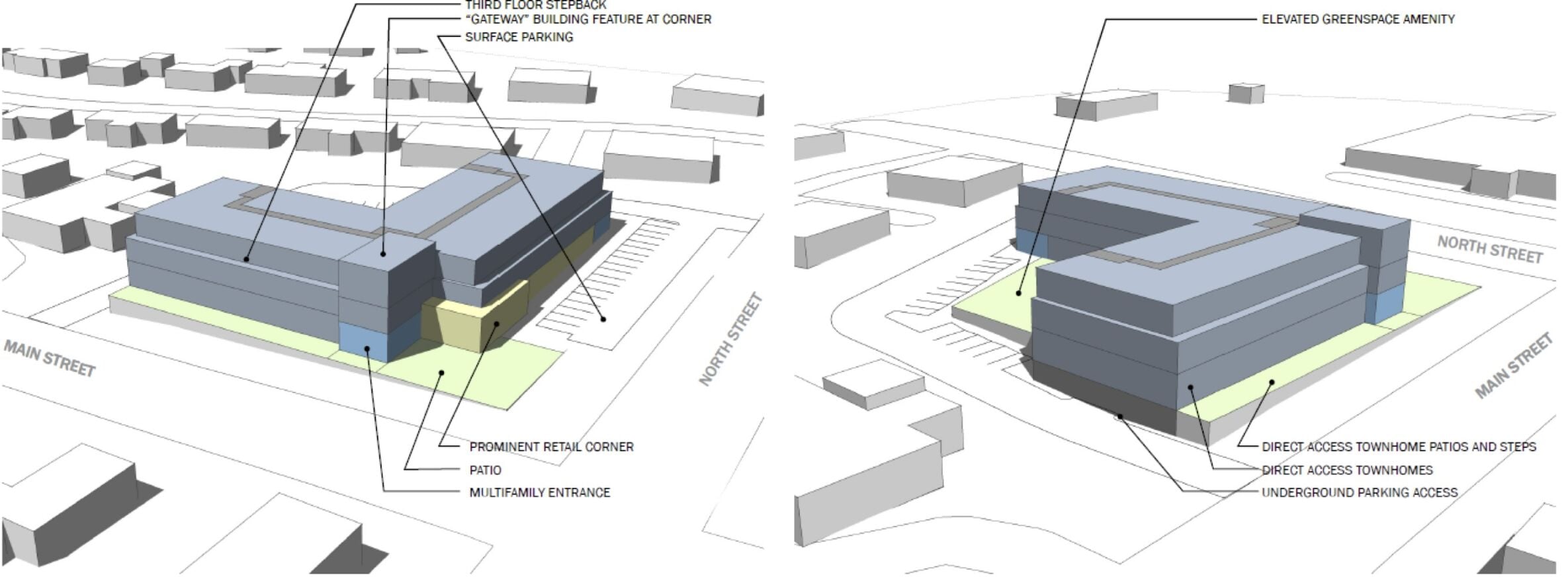
The initial phase focuses on constructing new buildings on a former surface parking lot, a sustainable land-use practice that avoids urban sprawl. This phase will deliver 254 units of affordable housing and foundational community infrastructure.
- Housing Construction:
- A 12-story building containing 150 one-, two-, and three-bedroom apartments.
- A seven-story building with 91 one- and two-bedroom units.
- A three-story, rowhouse-style building with 12 units, ranging from studios to four-bedroom apartments, accommodating diverse family sizes.
- Community and Commercial Infrastructure: The development includes community rooms and commercial space to foster social cohesion and local economic activity, supporting targets within SDG 8 and SDG 11.
- Supporting Facilities: An enclosed parking garage with capacity for 188 vehicles will be constructed.
Upon completion of Phase One, tenants will be relocated to the new dwellings, allowing for the demolition of the old towers to proceed with subsequent phases.
Comprehensive Project Scope and Long-Term Impact
The fully realized project will represent a significant investment in sustainable urban development. The final community will feature:
- Increased Affordable Housing: A total of 686 affordable housing units across eight structures, an increase from the current 616 units, directly advancing SDG 11.1.
- Modernized Infrastructure: Parking for 855 vehicles and a new street grid designed to improve traffic flow and residential access, contributing to SDG 9.
- Enhanced Public and Green Spaces: A new community center, public plaza, and landscaped green spaces will be created to improve quality of life and promote community well-being, in line with SDG 11.7.
- Economic Vitality: The inclusion of 5,000 square feet of ground-floor retail and commercial space will support local businesses and create jobs, reinforcing SDG 8.
Analysis of Sustainable Development Goals (SDGs)
1. Which SDGs are addressed or connected to the issues highlighted in the article?
The article on the Marine Drive Apartments project addresses or connects to the following Sustainable Development Goals (SDGs):
- SDG 1: No Poverty
- SDG 8: Decent Work and Economic Growth
- SDG 11: Sustainable Cities and Communities
- SDG 17: Partnerships for the Goals
2. What specific targets under those SDGs can be identified based on the article’s content?
Based on the article’s content, the following specific targets can be identified:
-
SDG 1: No Poverty
- Target 1.4: By 2030, ensure that all men and women, in particular the poor and the vulnerable, have equal rights to economic resources, as well as access to basic services. The project’s focus on creating “modern affordable housing” directly contributes to providing access to a basic service (shelter) for vulnerable populations.
-
SDG 8: Decent Work and Economic Growth
- Target 8.3: Promote development-oriented policies that support productive activities, decent job creation, entrepreneurship, creativity and innovation. The inclusion of “5,000 square feet of ground-floor retail and commercial space” is designed to support local entrepreneurship and create jobs.
-
SDG 11: Sustainable Cities and Communities
- Target 11.1: By 2030, ensure access for all to adequate, safe and affordable housing and basic services and upgrade slums. The project’s primary goal is to “transform the 75-year-old Marine Drive Apartments into modern affordable housing,” increasing the number of units from 616 to 686.
- Target 11.3: By 2030, enhance inclusive and sustainable urbanization and capacity for participatory, integrated and sustainable human settlement planning and management. The development includes a “new street grid to improve traffic flow,” which is an element of integrated urban planning.
- Target 11.7: By 2030, provide universal access to safe, inclusive and accessible, green and public spaces. The plan explicitly includes a “community center, public plaza, and green space with landscaping throughout the new community.”
-
SDG 17: Partnerships for the Goals
- Target 17.17: Encourage and promote effective public, public-private and civil society partnerships. The article states the project is being undertaken by the “Buffalo Municipal Housing Authority” (public) and its partners, “The Habitat Company and Duverney & Brooks” (private), showcasing a public-private partnership.
3. Are there any indicators mentioned or implied in the article that can be used to measure progress towards the identified targets?
Yes, the article mentions or implies several indicators that can be used to measure progress:
-
For SDG 11 (Target 11.1):
- Indicator: The number of affordable housing units constructed. The article specifies that the project will increase the housing supply from 616 to “686 affordable housing units.” This provides a direct quantitative measure of progress.
-
For SDG 11 (Target 11.7):
- Indicator: The creation of public and community spaces. The article mentions the development of a “community center, public plaza, and green space,” which are measurable outcomes.
-
For SDG 8 (Target 8.3):
- Indicator: The amount of commercial space created. The article quantifies this as “5,000 square feet of ground-floor retail and commercial space,” which can be used to track support for local businesses and job creation.
-
For SDG 17 (Target 17.17):
- Indicator: The number and type of organizations involved in the partnership. The article identifies a partnership between one public entity (Buffalo Municipal Housing Authority) and two private companies (The Habitat Company and Duverney & Brooks).
4. Summary Table of SDGs, Targets, and Indicators
| SDGs | Targets | Indicators |
|---|---|---|
| SDG 1: No Poverty | 1.4: Ensure access to basic services for the poor and vulnerable. | Provision of affordable housing. |
| SDG 8: Decent Work and Economic Growth | 8.3: Promote policies that support entrepreneurship and job creation. | Creation of 5,000 square feet of retail and commercial space. |
| SDG 11: Sustainable Cities and Communities | 11.1: Ensure access for all to adequate, safe and affordable housing. | Construction of 686 modern affordable housing units (an increase from 616). |
| 11.3: Enhance inclusive and sustainable urbanization. | Development of a new street grid to improve traffic flow. | |
| 11.7: Provide universal access to safe, inclusive and accessible, green and public spaces. | Creation of a community center, public plaza, and green space. | |
| SDG 17: Partnerships for the Goals | 17.17: Encourage and promote effective public-private partnerships. | Collaboration between the Buffalo Municipal Housing Authority (public) and its partners, The Habitat Company and Duverney & Brooks (private). |
Source: buffalorising.com
What is Your Reaction?
 Like
0
Like
0
 Dislike
0
Dislike
0
 Love
0
Love
0
 Funny
0
Funny
0
 Angry
0
Angry
0
 Sad
0
Sad
0
 Wow
0
Wow
0