








































;Resize=620#)








Consultant outlines components of a small-business ecosystem for Eastpointe – Citizen Portal AI
Report on Small Business Ecosystem Development in Eastpointe and Alignment with Sustainable Development Goals
Introduction
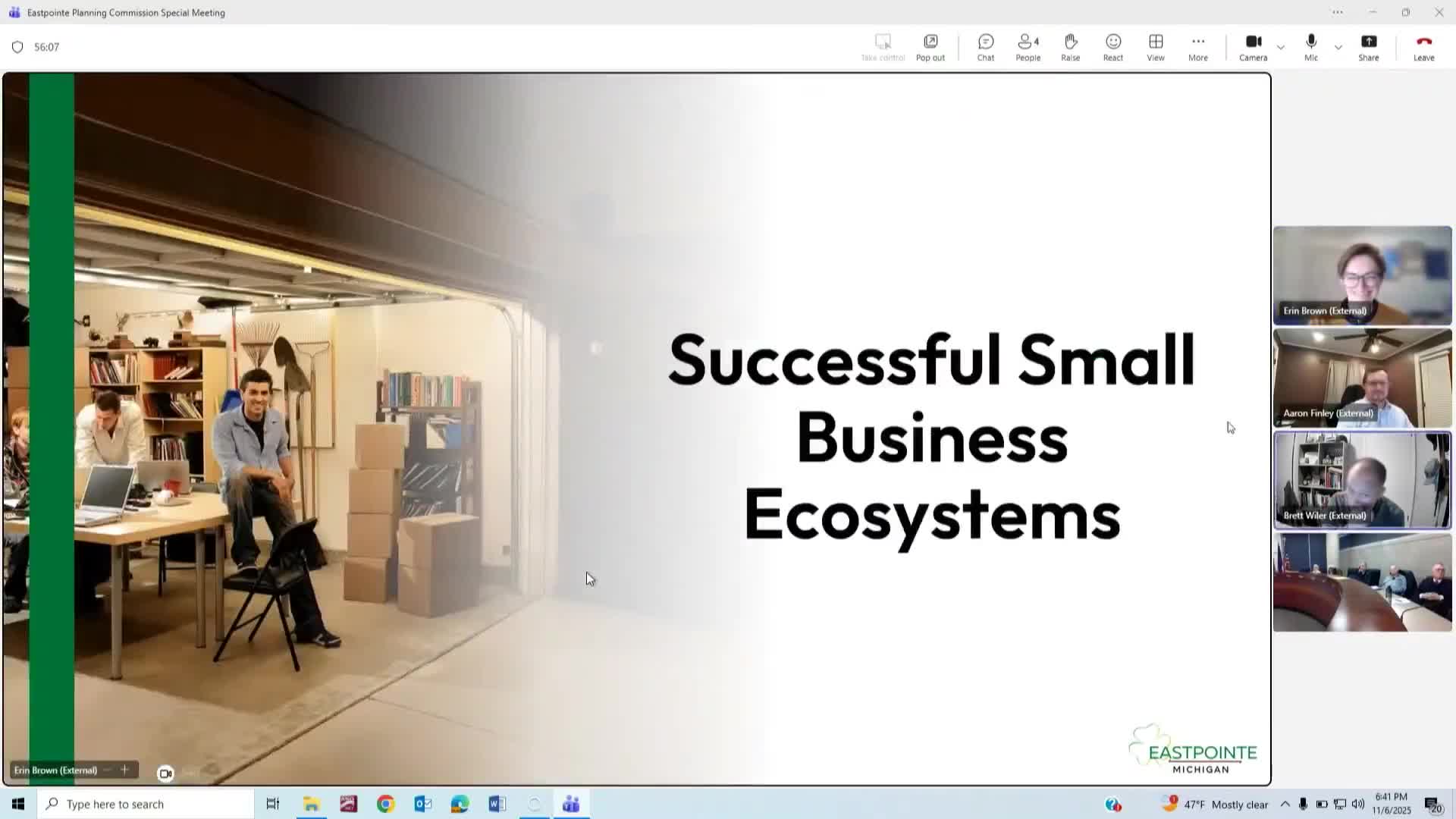
A presentation was delivered to the Eastpointe City Planning Commission by Brett Wyler, Vice President of Economic Development at TPMA. The report outlined a strategic framework for fostering a robust small-business ecosystem, with direct applications for achieving key United Nations Sustainable Development Goals (SDGs).
Analysis of Eastpointe’s Business Landscape and SDG 8
The initial analysis focused on understanding the local business composition as a foundation for targeted economic strategies that support SDG 8: Decent Work and Economic Growth. The current business base in Eastpointe is concentrated in micro and main-street enterprises, presenting an opportunity to formalize and grow these entities to create sustainable local employment.
- Micro-enterprises: Firms with fewer than five employees.
- Main-street Businesses: Enterprises primarily serving local customers.
- Scalable Startups: Ventures designed for rapid growth.
- Mature Firms: Established small businesses with 500 or fewer employees.
Framework for a Sustainable Business Ecosystem
A comprehensive framework was presented, detailing the essential components required to build an environment where local firms can start, survive, and scale. Each component is critical for advancing specific SDGs and fostering a resilient local economy.
- People and Talent: Developing a skilled workforce of entrepreneurs, employees, and mentors is fundamental to achieving SDG 4 (Quality Education) and SDG 8 by ensuring access to lifelong learning and productive employment.
- Access to Capital: Ensuring financial resources are available across the business life cycle through banks, CDFIs, and investors directly supports SDG 9 (Industry, Innovation and Infrastructure) by increasing access to financial services for small-scale enterprises.
- Business-Support Services: The availability of technical assistance, mentorship, and professional services fosters innovation and resilience, contributing to the objectives of SDG 9.
- Markets and Anchors: Connecting businesses to local customers, institutional buyers, and robust supply chains strengthens the local economy, aligning with SDG 11 (Sustainable Cities and Communities) by creating positive economic links within the region.
Additionally, the availability of physical space for businesses was identified as a critical element supporting SDG 11 by promoting inclusive and sustainable urbanization.
Strategic Implementation through Collaborative Partnerships (SDG 17)
The report stressed that successful ecosystem development is contingent upon a culture of coordination and trust. This approach directly embodies the principles of SDG 17: Partnerships for the Goals, which calls for multi-stakeholder collaboration.
Key Stakeholders for Collaboration:
- City Government
- Workforce Boards
- Economic Development Organizations
- Anchor Institutions
- Philanthropic Partners
Consultants will utilize this framework to compare Eastpointe’s existing supports, identify strategic gaps, and formulate an economic development strategy. A future presentation of these findings to the City Council may be scheduled as the analysis progresses.
1. Which SDGs are addressed or connected to the issues highlighted in the article?
The article discusses local economic development strategies focused on supporting small businesses, which connects to several Sustainable Development Goals (SDGs) centered on economic growth, infrastructure, and sustainable communities.
-
SDG 8: Decent Work and Economic Growth
This goal is central to the article, which focuses on creating a supportive ecosystem for small businesses (micro-enterprises, main-street businesses, startups). The entire presentation by Brett Wyler is about fostering enterprise growth, which is a direct driver of economic growth and job creation at the local level.
-
SDG 9: Industry, Innovation and Infrastructure
The article highlights the essential components of a business ecosystem, including “access to capital,” “business-support services,” and “physical space for businesses.” These elements are forms of financial and physical infrastructure necessary to support industrial and enterprise development, particularly for small-scale firms.
-
SDG 11: Sustainable Cities and Communities
The context of the article is a presentation to the “Eastpointe City Planning Commission” about developing an “economic development strategy.” This directly relates to urban planning and creating inclusive, safe, resilient, and sustainable economic environments within cities.
2. What specific targets under those SDGs can be identified based on the article’s content?
The article’s content aligns with several specific targets under the identified SDGs.
-
SDG 8: Decent Work and Economic Growth
- Target 8.3: “Promote development-oriented policies that support productive activities, decent job creation, entrepreneurship, creativity and innovation, and encourage the formalization and growth of micro-, small- and medium-sized enterprises, including through access to financial services.”
The article is a direct reflection of this target. Wyler’s presentation is about how local officials can support enterprise growth, specifically mentioning the need to support “micro-enterprises” and “main-street businesses” by providing “access to capital” and “business-support services.”
- Target 8.3: “Promote development-oriented policies that support productive activities, decent job creation, entrepreneurship, creativity and innovation, and encourage the formalization and growth of micro-, small- and medium-sized enterprises, including through access to financial services.”
-
SDG 9: Industry, Innovation and Infrastructure
- Target 9.3: “Increase the access of small-scale industrial and other enterprises… to financial services, including affordable credit, and their integration into value chains and markets.”
The article explicitly mentions the need for “access to capital across the business life cycle (commercial banks, CDFIs, public financing, equity investors)” and integration into markets through “local customers, institutional buyers and supply chains.” This directly addresses the need for financial access and market integration for small enterprises.
- Target 9.3: “Increase the access of small-scale industrial and other enterprises… to financial services, including affordable credit, and their integration into value chains and markets.”
-
SDG 11: Sustainable Cities and Communities
- Target 11.a: “Support positive economic, social and environmental links between urban, peri-urban and rural areas by strengthening national and regional development planning.”
The discussion involves the “Eastpointe City Planning Commission” and the development of an “economic development strategy.” This is a form of local development planning aimed at creating a positive economic environment and fostering a “culture of coordination and trust” among various local institutions to support the city’s business base.
- Target 11.a: “Support positive economic, social and environmental links between urban, peri-urban and rural areas by strengthening national and regional development planning.”
3. Are there any indicators mentioned or implied in the article that can be used to measure progress towards the identified targets?
The article does not mention specific quantitative indicators, but it implies several qualitative and quantitative measures that could be used to track progress.
-
For Target 8.3:
- Number and growth of small businesses: The article categorizes businesses into “micro-enterprises (under five employees), main-street businesses… scalable startups, and mature firms.” An indicator would be tracking the number and growth rate of firms within each of these categories in Eastpointe.
- Availability of business support: The presence and utilization of “business-support services (technical assistance, mentors, professional services)” could be measured.
-
For Target 9.3:
- Access to finance: Progress could be measured by the number of small businesses successfully accessing capital from sources like “commercial banks, CDFIs, public financing, [and] equity investors.”
- Market integration: An indicator could be the proportion of local small businesses that are part of the supply chains for “institutional buyers.”
- Availability of physical space: The amount of affordable and suitable “physical space for businesses” could be tracked as a key infrastructure indicator.
-
For Target 11.a:
- Implementation of a development plan: A key indicator is the formal adoption and implementation of the “economic development strategy” being discussed.
- Level of institutional coordination: The “culture of coordination and trust among city government, workforce boards, economic development organizations, anchor institutions and philanthropy” can be measured through the number of formal partnerships or joint initiatives established.
4. Create a table with three columns titled ‘SDGs, Targets and Indicators” to present the findings from analyzing the article.
| SDGs | Targets | Indicators (Implied from the Article) |
|---|---|---|
| SDG 8: Decent Work and Economic Growth | Target 8.3: Promote policies for entrepreneurship and the growth of micro-, small-, and medium-sized enterprises. |
|
| SDG 9: Industry, Innovation and Infrastructure | Target 9.3: Increase the access of small-scale enterprises to financial services and their integration into value chains and markets. |
|
| SDG 11: Sustainable Cities and Communities | Target 11.a: Support positive economic links by strengthening regional development planning. |
|
Source: citizenportal.ai
What is Your Reaction?
 Like
0
Like
0
 Dislike
0
Dislike
0
 Love
0
Love
0
 Funny
0
Funny
0
 Angry
0
Angry
0
 Sad
0
Sad
0
 Wow
0
Wow
0