December 2025: Key protein serves as both an environmental sensor and drug target – National Institute of Environmental Health Sciences (.gov)
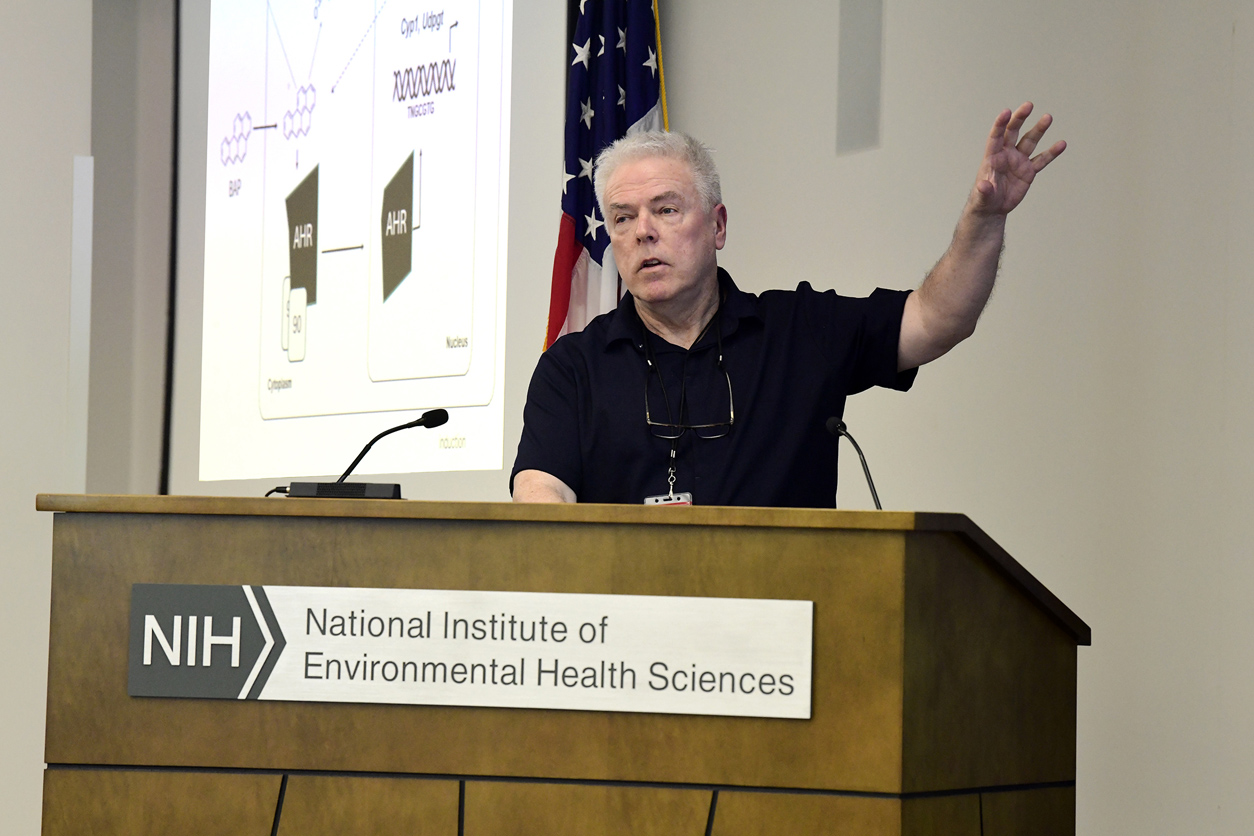
Report on Aryl Hydrocarbon Receptor (AHR) Research and its Contribution to Sustainable Development Goals
Scientific investigation into the severe health effects of dioxins has led to the discovery of the Aryl Hydrocarbon Receptor (AHR), a cellular protein that functions as a critical environmental sensor. This research provides foundational knowledge for achieving several Sustainable Development Goals (SDGs), particularly those related to health, sustainable communities, and responsible production.
Historical Context: Environmental Crises and the Pursuit of Global Health Goals
The Dioxin-AHR Link and Public Health Imperatives
The impetus for AHR research is rooted in environmental health crises such as the Love Canal disaster. This event highlighted the profound risks of improper chemical waste disposal, directly challenging the objectives of SDG 3 (Good Health and Well-being) and SDG 11 (Sustainable Cities and Communities). The subsequent identification of dioxin as a hazardous contaminant and the discovery of its mechanism of action via AHR were pivotal steps in environmental toxicology. This work underscores the importance of managing industrial by-products to protect human health, a core tenet of SDG 12 (Responsible Consumption and Production).
Evolution of Toxicological Research
The discovery and cloning of the AHR receptor transformed the field from merely studying poisons to probing fundamental biology. This shift has enabled a more sophisticated understanding of how environmental exposures impact human health, providing the scientific basis needed to develop policies and interventions that support SDG 3.
AHR’s Role as an Environmental Sensor in Support of SDG 3
A Prototypical Sensor for Environmental Signals
AHR is now understood as a prototype for a superfamily of environmental sensors (the PAS family) that respond to a variety of external and internal cues. When activated by stimuli such as pollutants, these sensors can alter gene expression. This mechanism connects environmental toxicology with other biological systems, demonstrating the intricate link between environmental quality and human health.
Broad Implications for Human Health and Well-being
Research has revealed that AHR’s function extends far beyond mediating chemical toxicity. Its influence is crucial for maintaining systemic health, directly contributing to the aims of SDG 3. Key roles include:
- Regulating normal liver development.
- Maintaining intestinal immune structures.
- Influencing immunity and host-microbiome interactions.
- Preserving the integrity of barrier tissues in the gut, lung, and skin.
- Participating in the regulation of circadian rhythms.
From Toxicant Receptor to Therapeutic Target: Innovations for Health
Harnessing AHR for Medical Advancement
A significant question was why a receptor for industrial toxicants exists in the body. Research revealed that AHR is naturally activated by molecules derived from tryptophan metabolism, playing a protective role in maintaining barrier integrity against pathogens. Toxicants like dioxin effectively hijack this essential system. This understanding has paved the way for therapeutic innovation. The development of AHR-targeting drugs, such as the FDA-approved treatment for psoriasis, exemplifies how fundamental environmental health research can be translated into tangible health solutions, directly advancing SDG 3.
Fostering Scientific Innovation and Partnerships for the Goals (SDG 9 & SDG 17)
Enhancing Scientific Infrastructure and Knowledge Sharing
To ensure the long-term availability of four decades of research assets, including genetically modified models and reagents, a new initiative is underway to digitize and decentralize these resources. By using blockchain platforms and non-fungible tokens (NFTs), the provenance and genomic data of each asset can be transparently and durably documented. This approach represents a significant advancement in scientific infrastructure, aligning with SDG 9 (Industry, Innovation, and Infrastructure).
Promoting Global Collaboration
This decentralized distribution model is designed to prevent future researchers from starting from scratch, thereby accelerating scientific progress. By making critical research tools more accessible to the global scientific community, this initiative embodies the principles of SDG 17 (Partnerships for the Goals), fostering the collaboration required to address complex global health and environmental challenges.
Which SDGs are addressed or connected to the issues highlighted in the article?
-
SDG 3: Good Health and Well-being
The article’s central theme is the impact of toxic chemicals (dioxins) on human health. It explicitly references the Love Canal disaster, where chemical contamination led to “unusually high rates of birth defects, miscarriages, cancers, and other health problems.” It also discusses how understanding the biological mechanisms of toxins can lead to the development of new therapies for diseases like psoriasis, directly linking environmental health research to well-being.
-
SDG 11: Sustainable Cities and Communities
The Love Canal crisis is a direct example of unsustainable and unsafe urban planning, where a residential neighborhood and school were built on top of a toxic chemical landfill. This highlights the critical need for safe waste management and land use policies in communities to protect residents from environmental hazards.
-
SDG 12: Responsible Consumption and Production
The article identifies dioxin as an “unwanted by-product of industry.” This points to unsustainable production patterns that generate hazardous waste. The entire crisis stemmed from the improper disposal of these industrial by-products, underscoring the need for environmentally sound management of chemicals and waste throughout their lifecycle.
-
SDG 9: Industry, Innovation, and Infrastructure
The text is fundamentally about scientific research and innovation. It chronicles the discovery of the AHR, the evolution of toxicology research funded by institutions like NIEHS, and the development of new knowledge. Furthermore, it highlights cutting-edge innovation through the use of blockchain and NFTs to create a decentralized system for sharing scientific resources, thereby strengthening the infrastructure for future research.
-
SDG 17: Partnerships for the Goals
The initiative by Dr. Bradfield’s lab to digitize and share research assets (genetically modified mouse models, plasmids) using a transparent and durable platform is a form of partnership. It aims to “decentralize access” and ensure resources are available for “future generations” of scientists, fostering the knowledge-sharing and collaboration necessary to advance science globally.
What specific targets under those SDGs can be identified based on the article’s content?
-
Target 3.9
“By 2030, substantially reduce the number of deaths and illnesses from hazardous chemicals and air, water and soil pollution and contamination.” This target is directly addressed by the article’s focus on the severe health effects of dioxin contamination from the Love Canal toxic landfill and the broader research into how such chemicals harm the body.
-
Target 11.6
“By 2030, reduce the adverse per capita environmental impact of cities, including by paying special attention to air quality and municipal and other waste management.” The Love Canal disaster serves as a historical case study for the catastrophic failure of toxic waste management within a community, an issue this target aims to prevent.
-
Target 12.4
“By 2020, achieve the environmentally sound management of chemicals and all wastes throughout their life cycle… and significantly reduce their release to air, water and soil in order to minimize their adverse impacts on human health and the environment.” The article’s discussion of dioxin as an industrial by-product that causes widespread harm directly relates to the need for better management of industrial chemicals and waste.
-
Target 9.5
“Enhance scientific research, upgrade the technological capabilities of industrial sectors in all countries… encouraging innovation and substantially increasing the number of research and development workers…” The entire narrative celebrates decades of scientific research, from the initial discovery of the AHR to its therapeutic applications. The NIEHS funding and awards mentioned are mechanisms that encourage and support such research.
-
Target 17.6
“Enhance North-South, South-South and triangular regional and international cooperation on and access to science, technology and innovation and enhance knowledge sharing on mutually agreed terms…” The plan to use blockchain to create a decentralized, transparent, and durable system for sharing research reagents and animal models is a direct mechanism to enhance global access to scientific resources and promote knowledge sharing.
Are there any indicators mentioned or implied in the article that can be used to measure progress towards the identified targets?
-
Incidence rates of diseases linked to pollution
The article’s mention of “unusually high rates of birth defects, miscarriages, cancers” in the Love Canal area implies that tracking the incidence of such non-communicable diseases in populations exposed to pollution is a key indicator for measuring the human health impact of contamination (Target 3.9).
-
Management and release of hazardous waste
The core issue of the Love Canal disaster was a toxic chemical landfill. This implies that an indicator for progress towards Targets 11.6 and 12.4 would be the measurement of hazardous waste generated by industry and the amount that is safely managed versus released into the environment.
-
Investment in and output of scientific research
The article highlights NIEHS-funded studies, awards (RIVER, MERIT), and the generation of a “wealth of reagents.” This suggests that progress on Target 9.5 can be measured by tracking investment in environmental health research and the output of that research, such as publications, patents, and shared scientific resources.
-
Availability and accessibility of shared scientific resources
The initiative to digitize and share research assets via blockchain directly implies an indicator for Target 17.6: the number and accessibility of scientific resources (like animal models, plasmids, and data) made available to the global research community through open and transparent platforms.
SDGs, Targets and Indicators
| SDGs | Targets | Indicators (Implied from the Article) |
|---|---|---|
| SDG 3: Good Health and Well-being | 3.9: Substantially reduce deaths and illnesses from hazardous chemicals and pollution. | Incidence rates of birth defects, miscarriages, and cancers in populations exposed to chemical contaminants. |
| SDG 11: Sustainable Cities and Communities | 11.6: Reduce the adverse environmental impact of cities, paying special attention to waste management. | Number of communities built on or near improperly managed toxic waste sites. |
| SDG 12: Responsible Consumption and Production | 12.4: Achieve environmentally sound management of chemicals and all wastes. | Volume of hazardous industrial by-products (like dioxins) generated and released into the environment. |
| SDG 9: Industry, Innovation, and Infrastructure | 9.5: Enhance scientific research and encourage innovation. | Level of public funding (e.g., from NIEHS) for environmental health research; number of new biological discoveries and therapeutic applications developed. |
| SDG 17: Partnerships for the Goals | 17.6: Enhance access to science, technology, innovation, and knowledge sharing. | Number and accessibility of scientific resources (e.g., mouse models, reagents) shared on decentralized, transparent platforms. |
Source: niehs.nih.gov
What is Your Reaction?
 Like
0
Like
0
 Dislike
0
Dislike
0
 Love
0
Love
0
 Funny
0
Funny
0
 Angry
0
Angry
0
 Sad
0
Sad
0
 Wow
0
Wow
0