
















Energy investor discusses the impacts of the race to power AI – The Stanford Daily
Report on AI’s Energy Consumption and its Implications for Sustainable Development Goals
Introduction: The Emerging Challenge to Global Energy Goals
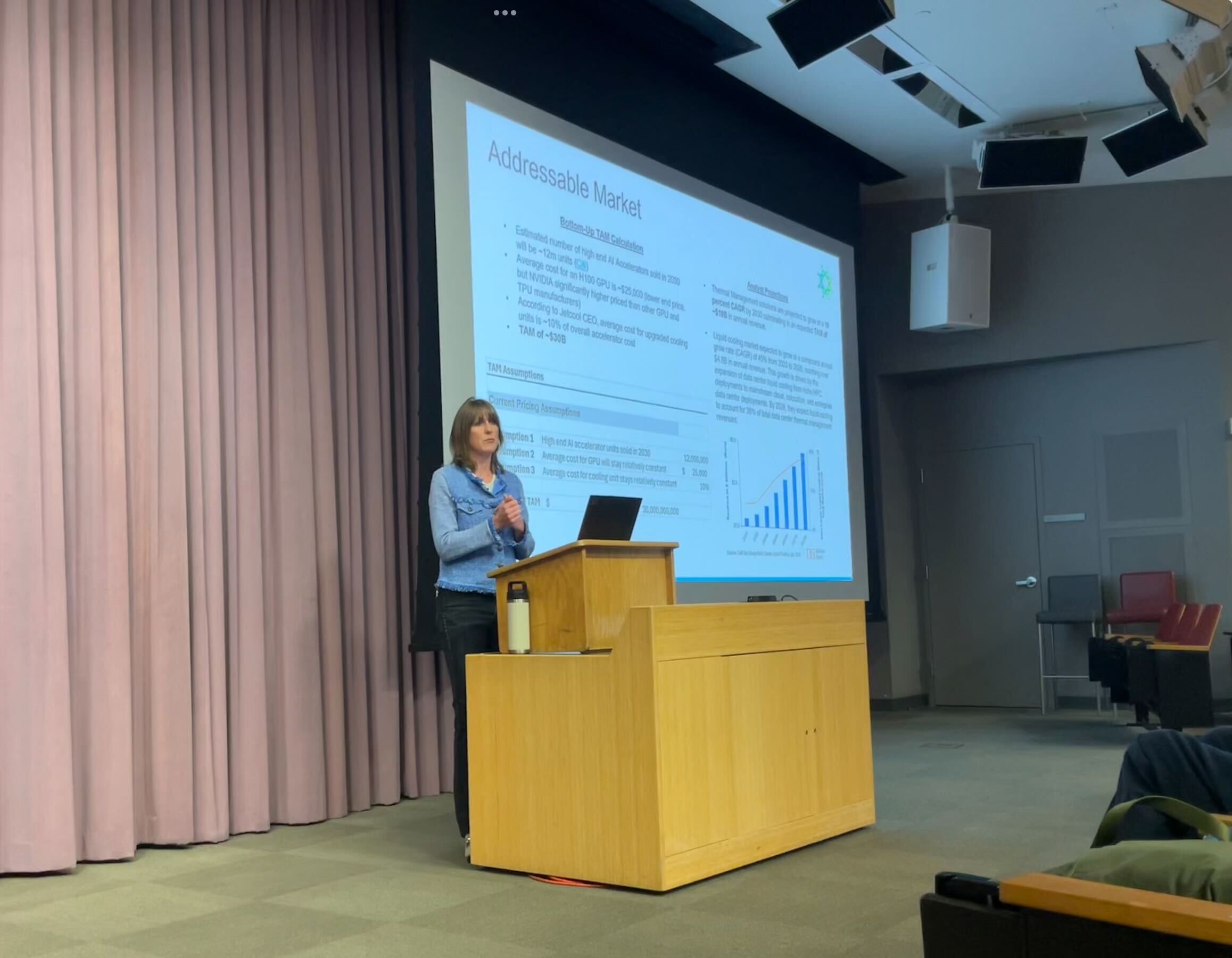
A recent analysis presented at the Stanford Energy Seminar by Libby Wayman, a partner at Breakthrough Energy Ventures, identifies the accelerating electricity demand of artificial intelligence (AI) as a significant challenge to the global clean energy transition. This report outlines the key findings, focusing on the direct implications for achieving the United Nations Sustainable Development Goals (SDGs), particularly SDG 7 (Affordable and Clean Energy), SDG 9 (Industry, Innovation, and Infrastructure), and SDG 13 (Climate Action).
Analysis of Current and Projected Energy Demand
The report highlights a critical shift in U.S. electricity consumption, which, after decades of stability, is now rising. This trend is largely attributed to the proliferation of data centers required to power AI technologies.
- Current Consumption: Data centers constitute approximately 4-5% of total U.S. electricity consumption.
- Exponential Growth: A key inflection point occurred in 2020, when compute workload growth began to outpace efficiency gains, leading to a rapid scaling of energy demand.
- Emission Projections: Without a significant shift to clean energy sources, emissions from data center electricity use are projected to reach 0.5 gigatons by 2030 and potentially 2-3 gigatons by 2050. This is a substantial increase from the 0.07 gigatons recorded in 2023.
- Grid Impact: The development of gigawatt-scale data center projects is already increasing grid emissions and electricity costs across the United States, placing significant strain on existing infrastructure.
Impact on Sustainable Development Goals
The escalating energy requirements of AI present direct challenges to the progress of several key SDGs.
SDG 7: Affordable and Clean Energy
- The surge in demand threatens to slow the transition to renewable energy sources as utilities struggle to meet new power needs.
- Increased strain on the grid can lead to higher electricity costs, undermining the goal of ensuring affordable energy for all.
- The intermittency of large data center power loads complicates the integration of renewable energy, challenging the stability and reliability of clean energy systems.
SDG 13: Climate Action
- The projected increase in electricity consumption, if met by fossil fuels, will lead to a massive rise in greenhouse gas emissions, directly contradicting global climate targets.
- The growth of data centers is already contributing to a higher carbon intensity on national grids, reversing progress made in decarbonization efforts.
SDG 9: Industry, Innovation, and Infrastructure
- Current energy infrastructure is ill-equipped to handle the scale and nature of the power loads demanded by new data centers.
- There is an urgent need for investment and innovation in building resilient, sustainable, and upgraded grid infrastructure to support both industrial growth and electrification in other sectors, such as transportation.
Opportunities for Innovation Aligned with SDGs
The challenges posed by AI’s energy demand also create significant opportunities for innovation that can accelerate progress towards the SDGs. The focus must be on developing technologies that “do more with the power that we have,” a principle that aligns with SDG 12 (Responsible Consumption and Production).
- Advanced Power Solutions: Developing new, clean, and firm power sources is critical to meeting demand without compromising climate goals (SDG 7, SDG 13).
- Efficient Cooling Technologies: Innovations in data center cooling can dramatically reduce ancillary power consumption, promoting energy efficiency (SDG 7, SDG 9).
- Compute Architecture and Networking: Redesigning compute and networking systems for greater energy efficiency can “bend the curve” of electricity demand, fostering sustainable industrialization (SDG 9).
Conclusion: An Integrated Approach for a Sustainable Future
The expansion of AI is inseparable from the mission to secure a sustainable energy future. The electricity demand from data centers, and soon from other electrified sectors like transportation and manufacturing, will define the next several decades of energy policy, investment, and innovation. Achieving the Sustainable Development Goals requires a proactive and integrated strategy where technological advancement in AI is developed in tandem with sustainable energy solutions. Fostering these innovations through partnerships between venture capital, academia, and industry, as highlighted by the work of Breakthrough Energy Ventures, is essential for turning these profound challenges into opportunities for a sustainable and equitable world (SDG 17: Partnerships for the Goals).
Analysis of Sustainable Development Goals in the Article
1. Which SDGs are addressed or connected to the issues highlighted in the article?
-
SDG 7: Affordable and Clean Energy
The article’s central theme is the challenge of meeting the accelerating electricity demands of artificial intelligence (AI) and data centers through a “global clean energy transition.” It discusses U.S. electricity consumption, power needs, and the strain on grid infrastructure, all of which are core components of SDG 7.
-
SDG 9: Industry, Innovation, and Infrastructure
The text highlights the need for innovation in technologies like power solutions, cooling, and compute architecture to manage energy demand. It also discusses the role of venture capital (Breakthrough Energy Ventures) in investing in transformative technologies and the strain on existing grid infrastructure, directly linking to the goals of building resilient infrastructure and fostering innovation.
-
SDG 13: Climate Action
The article explicitly connects the rising energy consumption of data centers to climate change by quantifying greenhouse gas emissions. It mentions that Breakthrough Energy Ventures aims to “dramatically reducing greenhouse gas emissions” and projects that data center emissions could reach “2-3 gigatons by 2050 if powered largely by the grid.” This directly addresses the urgent need to combat climate change and its impacts.
2. What specific targets under those SDGs can be identified based on the article’s content?
-
Under SDG 7 (Affordable and Clean Energy):
- Target 7.2: By 2030, increase substantially the share of renewable energy in the global energy mix. The article discusses the “global clean energy transition” as the context for the challenge posed by AI’s energy demand, implying that the new demand must be met with clean, renewable sources to avoid increasing emissions.
- Target 7.3: By 2030, double the global rate of improvement in energy efficiency. Libby Wayman’s call to “bend the curve” and “do more with the power that we have” through technological advancements in cooling and compute architecture directly addresses the need to improve energy efficiency in the face of rising compute workloads.
- Target 7.a: By 2030, enhance international cooperation to facilitate access to clean energy research and technology… and promote investment in energy infrastructure and clean energy technology. The role of Breakthrough Energy Ventures, which “invests in transformative technologies,” and Wayman’s MIT course, which has produced over 60 companies that have “raised billions of dollars in investment,” exemplify the promotion of investment in clean energy technology.
-
Under SDG 9 (Industry, Innovation, and Infrastructure):
- Target 9.4: By 2030, upgrade infrastructure and retrofit industries to make them sustainable… with greater adoption of clean and environmentally sound technologies. The article notes that gigawatt-scale data centers “strain grid infrastructure,” highlighting the need to upgrade it. The discussion of new technologies for power solutions and cooling represents the call for adopting cleaner, more efficient technologies.
- Target 9.5: Enhance scientific research, upgrade the technological capabilities of industrial sectors… encouraging innovation. The entire article is a call for innovation. It highlights venture investing in “emerging technologies,” Wayman’s encouragement for students to see challenges as “opportunities for innovation,” and the need for “smart minds and brilliant ideas” to solve these problems.
-
Under SDG 13 (Climate Action):
- Target 13.2: Integrate climate change measures into national policies, strategies and planning. The article states that electricity demand from AI is “poised to reshape national energy planning, grid investment and climate innovation,” which is a direct reference to integrating climate and energy considerations into national-level planning.
3. Are there any indicators mentioned or implied in the article that can be used to measure progress towards the identified targets?
-
Indicator for Target 9.4 & 13.2 (CO2 Emissions):
The article provides specific, quantifiable data on greenhouse gas emissions, which can be used as a direct indicator. It states, “Total emissions in the United States from data center electricity usage were approximately 0.07 gigatons in 2023.” It also provides projections that serve as a baseline for measuring future progress: “electricity use from data centers could exceed half a gigaton of emissions by 2030 and potentially reach 2-3 gigatons by 2050.” This aligns with indicators that measure CO2 emissions per sector (Indicator 9.4.1) and total greenhouse gas emissions (Indicator 13.2.2).
-
Indicator for Target 7.2 (Energy Consumption):
The article mentions that data centers “currently make up around 4-5% of U.S. electricity consumption.” This percentage is a key indicator. Tracking this figure, alongside the share of renewable energy used to power these centers, would measure progress towards a clean energy transition (Indicator 7.2.1).
-
Indicator for Target 7.3 (Energy Efficiency):
The article implies an indicator for energy efficiency by noting that “2020 represented a key inflection point when, for the first time, compute workload overtook compute efficiency.” Measuring the relationship between compute workload and energy consumption is an implied indicator of progress towards greater efficiency in the tech industry.
-
Indicator for Target 7.a & 9.5 (Investment in Innovation):
The article implies a financial indicator for investment in clean technology and innovation. It mentions that the companies emerging from Wayman’s MIT course have “raised billions of dollars in investment.” The amount of venture capital and R&D funding directed towards clean energy and efficiency technologies for AI is a measurable indicator of progress.
4. Summary Table of SDGs, Targets, and Indicators
| SDGs | Targets | Indicators Identified in Article |
|---|---|---|
| SDG 7: Affordable and Clean Energy |
7.2: Increase the share of renewable energy. 7.3: Improve energy efficiency. 7.a: Promote investment in clean energy technology. |
– Percentage of U.S. electricity consumed by data centers (currently 4-5%). – The relationship between compute workload and compute efficiency. – Billions of dollars raised in investment for new energy companies. |
| SDG 9: Industry, Innovation, and Infrastructure |
9.4: Upgrade infrastructure and adopt clean technologies. 9.5: Enhance research and encourage innovation. |
– CO2 emissions from data centers (0.07 gigatons in 2023). – Investment by firms like Breakthrough Energy Ventures in transformative technologies. |
| SDG 13: Climate Action | 13.2: Integrate climate measures into national policies and planning. |
– Total greenhouse gas emissions from data centers with future projections (0.5 gigatons by 2030, 2-3 gigatons by 2050). – Reshaping of national energy planning to account for AI’s demand. |
Source: stanforddaily.com
What is Your Reaction?
 Like
0
Like
0
 Dislike
0
Dislike
0
 Love
0
Love
0
 Funny
0
Funny
0
 Angry
0
Angry
0
 Sad
0
Sad
0
 Wow
0
Wow
0