Fighting for their patients, Sharp health care workers go on three-day strike – afscme
Report on Sharp Healthcare Labor Dispute and its Alignment with Sustainable Development Goals
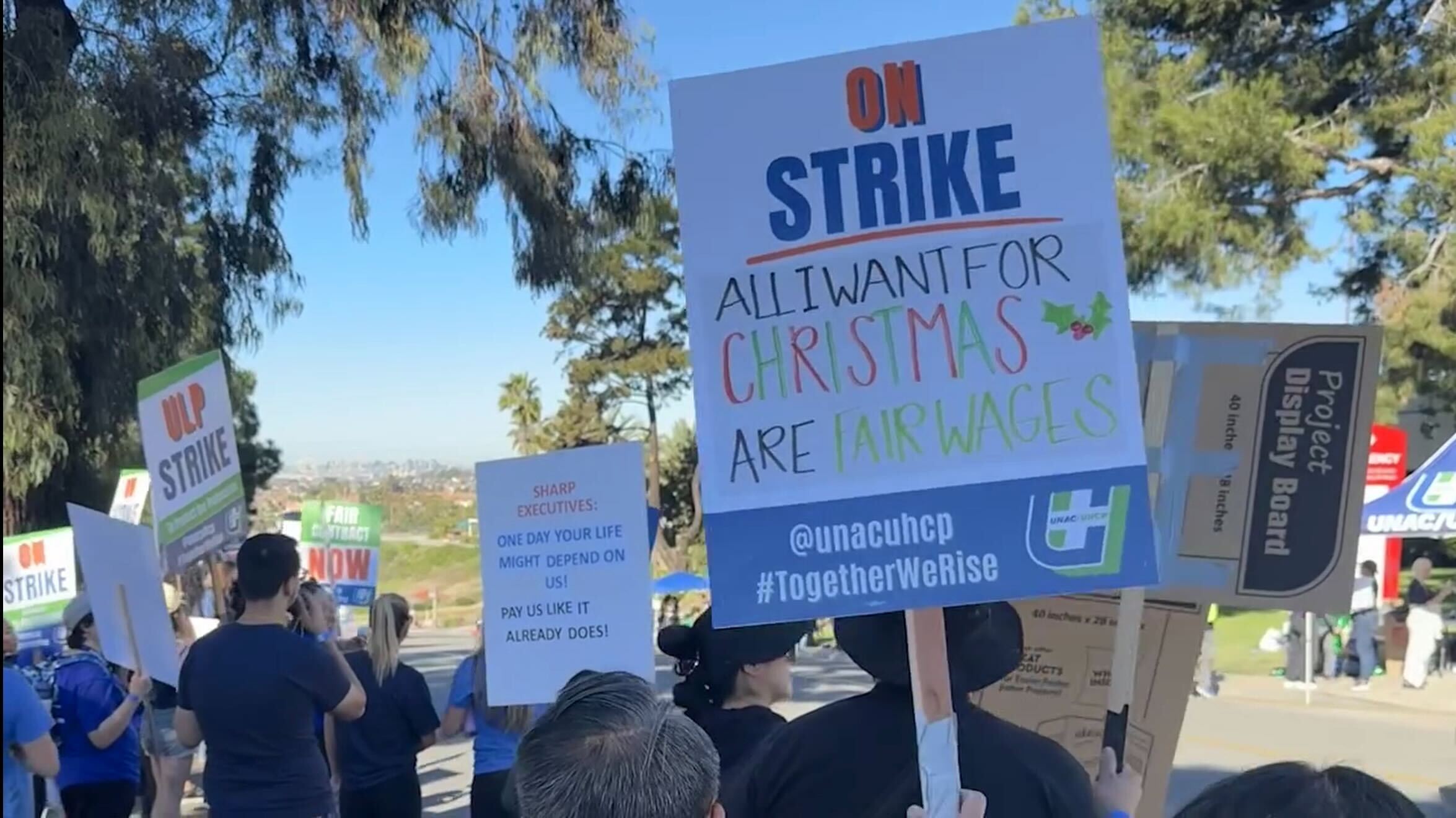
A significant labor action took place in San Diego, where 5,700 nurses and 127 allied healthcare professionals, employed by Sharp Healthcare, conducted a three-day strike. This action highlights critical challenges related to several United Nations Sustainable Development Goals (SDGs), particularly those concerning health, decent work, and institutional integrity.
SDG 3: Good Health and Well-being
The primary impetus for the strike was the protection of patient care standards, a core objective of SDG 3. The healthcare professionals, represented by the Sharp Professional Nurses Network (SPNN), an affiliate of United Nurses Associations of California/Union of Health Care Professionals (UNAC/UHCP) and AFSCME, contend that management’s contract proposals jeopardize public health outcomes. Key concerns that directly impact SDG 3 include:
- Understaffing: Persistent understaffing compromises the quality and safety of patient care.
- Inadequate Sick Leave: The refusal to grant sufficient sick leave poses a significant risk, potentially forcing healthcare workers to attend to patients while ill, thereby threatening the well-being of both patients and staff.
UNAC/UHCP President Charmaine Morales, RN, stated, “Sharp may have forgotten its mission, but we sure haven’t,” emphasizing the workers’ commitment to the foundational principles of healthcare that align with ensuring healthy lives and promoting well-being for all.
SDG 8: Decent Work and Economic Growth
The labor dispute is fundamentally a call for decent work and fair economic conditions, as outlined in SDG 8. After 20 negotiation sessions, the workers rejected proposals they believe undermine their professional and economic security. The conflict points to a failure to protect labor rights and promote a safe and secure working environment. Major points of contention related to SDG 8 are:
- Fair Compensation: Management’s wage proposals would result in some registered nurses not receiving raises in certain years, failing to provide fair and equal remuneration for work of equal value.
- Social Protection: The proposed elimination of retiree medical benefits represents a significant erosion of social protection for workers.
- Economic Inequality: The introduction of a two-tier wage scheme would create pay disparities among employees, contradicting the principles of decent work and economic inclusion.
SDG 10 & SDG 16: Reduced Inequalities and Strong Institutions
The strike also addresses broader social goals. By fighting a two-tier wage system, the workers are actively campaigning against the creation of new economic inequalities within their workplace, aligning with the objectives of SDG 10 (Reduced Inequalities). Furthermore, their demand for a “real voice in the care that they provide” is a call for more accountable, inclusive, and participatory decision-making within Sharp Healthcare, reflecting the principles of SDG 16 (Peace, Justice and Strong Institutions). The collective action, including a prior rally on October 15, demonstrates an effort to hold a major institution accountable to its employees and the community it serves. Negotiations are scheduled to resume, with the outcome poised to have lasting implications for the region’s healthcare system and its adherence to global sustainability and development standards.
Analysis of Sustainable Development Goals in the Article
1. Which SDGs are addressed or connected to the issues highlighted in the article?
- SDG 3: Good Health and Well-being: The article’s central theme is the strike by healthcare professionals to protect “patient care.” Issues like under-staffing and inadequate sick leave directly impact the quality of healthcare services and the well-being of both patients and workers.
- SDG 8: Decent Work and Economic Growth: The labor dispute highlights the struggle for decent work. The workers are demanding fair wages, sufficient benefits, and safe working conditions. The strike itself is an action to protect labor rights and achieve a fair contract, which are core components of this goal.
- SDG 10: Reduced Inequalities: The mention of a “two-tier wage scheme” in the contract proposals directly addresses workplace inequality, where different groups of employees receive different pay for similar work. The workers’ fight against this scheme aligns with the goal of reducing economic inequalities.
2. What specific targets under those SDGs can be identified based on the article’s content?
-
SDG 3: Good Health and Well-being
- Target 3.c: “Substantially increase health financing and the recruitment, development, training and retention of the health workforce…” The article discusses issues that directly threaten the retention of the health workforce, such as proposals for no raises, elimination of retiree benefits, and under-staffing. The strike is an effort to secure conditions that would retain skilled professionals.
-
SDG 8: Decent Work and Economic Growth
- Target 8.5: “By 2030, achieve full and productive employment and decent work for all women and men… and equal pay for work of equal value.” The workers are fighting against “under-valued employees” and a “two-tier wage scheme,” which directly relates to achieving decent work and equal pay.
- Target 8.8: “Protect labour rights and promote safe and secure working environments for all workers…” The strike is a fundamental exercise of labor rights. The workers’ demands regarding under-staffing and “adequate sick leave” are aimed at creating a safer working environment for themselves and their patients.
-
SDG 10: Reduced Inequalities
- Target 10.4: “Adopt policies, especially fiscal, wage and social protection policies, and progressively achieve greater equality.” The workers’ opposition to the “two-tier wage scheme” and their demands for better wages and the protection of “retiree medical benefits” are calls for more equitable social and wage policies within their organization.
3. Are there any indicators mentioned or implied in the article that can be used to measure progress towards the identified targets?
-
SDG 3: Good Health and Well-being
- Implied Indicator: Health worker-to-patient ratio. The concern about “more under-staffing” implies that this ratio is a key metric for measuring the quality and safety of patient care.
- Implied Indicator: Health worker retention/turnover rate. The fight for better wages and benefits is aimed at retaining employees, making retention rates a relevant measure of success.
-
SDG 8: Decent Work and Economic Growth
- Mentioned Indicator: Existence and terms of collective bargaining agreements. The article is centered on the failure to agree on a “contract” after “20 negotiating sessions,” making the final contract’s terms a direct measure of progress.
- Mentioned Indicator: Provision of employee benefits. The article specifically names “retiree medical benefits” and “adequate sick leave” as key sticking points, making their inclusion and quality measurable indicators.
- Mentioned Indicator: Number of workers involved in industrial action. The article states that “5,700 nurses” and “127 other health care professionals” participated in the strike, quantifying the scale of the labor dispute.
-
SDG 10: Reduced Inequalities
- Implied Indicator: Wage gaps between employee tiers. The opposition to a “two-tier wage scheme” implies that the wage differential between different groups of employees is a key indicator of inequality within the workplace.
4. Summary Table of SDGs, Targets, and Indicators
| SDGs | Targets | Indicators |
|---|---|---|
| SDG 3: Good Health and Well-being | 3.c: Substantially increase health financing and the recruitment, development, training and retention of the health workforce. |
|
| SDG 8: Decent Work and Economic Growth |
8.5: Achieve full and productive employment and decent work for all… and equal pay for work of equal value.
8.8: Protect labour rights and promote safe and secure working environments for all workers. |
|
| SDG 10: Reduced Inequalities | 10.4: Adopt policies, especially fiscal, wage and social protection policies, and progressively achieve greater equality. |
|
Source: afscme.org
What is Your Reaction?
 Like
0
Like
0
 Dislike
0
Dislike
0
 Love
0
Love
0
 Funny
0
Funny
0
 Angry
0
Angry
0
 Sad
0
Sad
0
 Wow
0
Wow
0


;Resize=620#)