Global Food Markets Brace for Continued Volatility: Climate, Geopolitics, and Demand Shifts Drive Unpredictable Agricultural Commodity Prices – Markets Financial Content
Report on Global Agricultural Commodity Volatility and its Implications for the Sustainable Development Goals (SDGs)
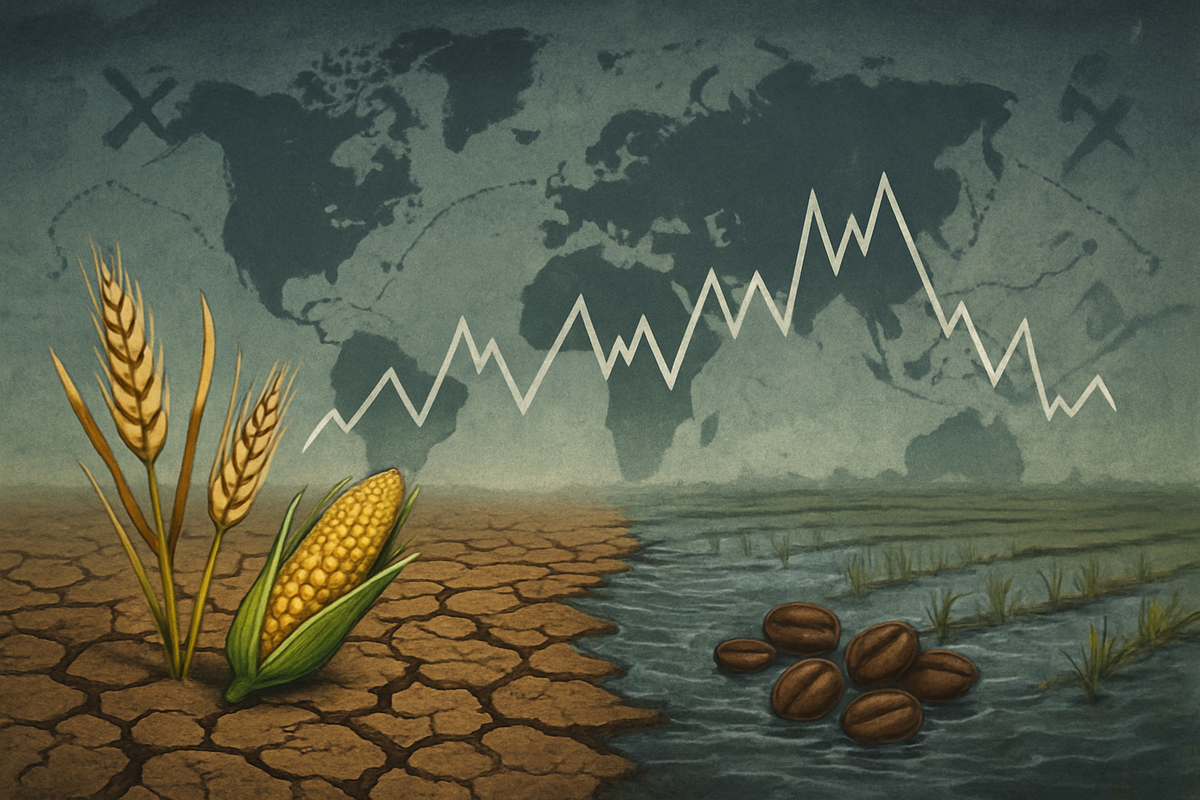
Global agricultural commodity markets are experiencing a period of sustained and heightened price volatility, presenting significant challenges to the achievement of the United Nations Sustainable Development Goals (SDGs). This report analyzes the primary drivers of this instability, its impact on various sectors, and the necessary strategic responses to foster resilient food systems aligned with the 2030 Agenda for Sustainable Development.
Analysis of Key Volatility Drivers Through the Lens of the SDGs
The current market turbulence is driven by a confluence of factors that directly intersect with and threaten several core SDGs. Understanding these drivers is critical to formulating effective mitigation strategies.
Climate Change: A Direct Threat to SDG 2, SDG 13, and SDG 1
Climate change, a central concern of SDG 13 (Climate Action), is the most potent driver of agricultural instability. Its manifestations directly undermine progress on SDG 2 (Zero Hunger) and SDG 1 (No Poverty).
- Extreme Weather Events: Unprecedented droughts, floods, and heatwaves are disrupting traditional farming cycles and reducing crop yields globally. These events compromise food production, a key target of SDG 2.
- Commodity-Specific Impacts:
- Cocoa prices have surged due to adverse weather in West Africa, impacting the livelihoods of smallholder farmers.
- Olive oil production has been severely affected by droughts in Southern Europe.
- The El Niño phenomenon has disrupted rice production, a staple food for billions, threatening food security in Asia and beyond.
- Economic Consequences: Reduced yields and income uncertainty for farmers exacerbate rural poverty, working against the objectives of SDG 1.
Geopolitical Instability: Undermining SDG 16 and Global Food Security
Conflict and trade protectionism create severe disruptions to food supply chains, highlighting the link between SDG 16 (Peace, Justice and Strong Institutions) and global food stability.
- Conflict-Driven Shocks: The Russia-Ukraine war demonstrated the vulnerability of global food supplies, as both nations are critical exporters of wheat, corn, and sunflower oil. The conflict caused immediate price spikes, impacting food access for import-dependent nations and jeopardizing SDG 2.
- Trade Protectionism: Export bans and other protectionist measures enacted by governments to control domestic prices fragment global markets. These actions undermine international cooperation, a principle of SDG 17 (Partnerships for the Goals), and disproportionately harm nations reliant on food imports, worsening inequalities as outlined in SDG 10 (Reduced Inequalities).
Economic Pressures and Production Costs: Implications for SDG 8 and SDG 12
Shifting global demand and high input costs create economic headwinds that affect sustainable production and economic growth.
- Input Costs: Elevated energy and fertilizer prices increase the cost of food production. This challenges the economic viability of farming operations, impacting SDG 8 (Decent Work and Economic Growth), and can lead to less sustainable farming practices if farmers cut costs on essential inputs.
- Demand Dynamics: Growing demand for livestock feed and the use of food crops for biofuels place additional strain on global food supplies, creating a tension with SDG 12 (Responsible Consumption and Production) by diverting resources from direct human consumption.
- Financial Speculation: The role of financial markets can amplify price swings, creating volatility that is disconnected from fundamental supply and demand, further complicating efforts to achieve stable and predictable food systems.
Sectoral Impacts and Corporate Alignment with the SDGs
The volatility creates a complex landscape for public companies, where operational strategies must increasingly align with sustainability and resilience goals to mitigate risk.
Challenges for Food Manufacturers and Agribusiness
Companies across the food value chain face distinct pressures that test their commitment to sustainable practices.
- Agribusiness Giants (e.g., ADM, Bunge): While their global reach allows them to navigate some volatility, they face significant risks from supply chain disruptions. Their operations are central to achieving SDG 2, and their risk management strategies must incorporate climate resilience and ethical sourcing.
- Food Manufacturers (e.g., Nestlé, Kraft Heinz): These companies face rising input costs, which can squeeze profit margins and lead to higher consumer prices. This dynamic directly impacts food affordability, a key component of SDG 2. Their response, whether through product reformulation or sustainable sourcing, is critical for advancing SDG 12.
The Role of Agricultural Support Sectors
Companies providing agricultural inputs and equipment play a pivotal role in the transition to more sustainable and resilient farming.
- Equipment Sector (e.g., Deere & Company): High commodity prices can spur investment in efficiency-enhancing technology, supporting the sustainable agriculture targets of SDG 2. However, farmer income uncertainty can also defer these crucial investments.
- Input Sector (e.g., Nutrien Ltd.): Fertilizer producers are linked to both agricultural productivity and environmental impact. Their challenge is to innovate and provide products that support high yields while minimizing environmental harm, contributing to both SDG 2 and SDG 13.
Strategic Pathways Towards Resilient Food Systems Aligned with the SDGs
Addressing the current volatility requires a concerted effort from governments, the private sector, and international bodies to build a food system that is both productive and sustainable.
Policy Imperatives for a Sustainable Future
Government policies must be designed to enhance food security while promoting the SDGs.
- Promote Climate-Smart Agriculture: Governments must incentivize farming practices that are resilient to climate change, supporting SDG 13 and ensuring long-term food production under SDG 2.
- Foster International Cooperation: In line with SDG 17, nations must work together to avoid trade protectionism, maintain open markets, and manage global food reserves to mitigate crises.
- Invest in Sustainable Infrastructure: Public investment in rural infrastructure, water management, and logistics is essential for building resilient supply chains and supporting farmers.
Corporate Adaptation and Market Opportunities
The private sector must pivot towards business models that embed sustainability at their core.
- Supply Chain Diversification: Companies must reduce reliance on single sourcing regions to mitigate risks from climate and geopolitical shocks.
- Investment in Agri-Tech: There are significant opportunities in technologies that enhance efficiency, reduce waste, and promote sustainability, such as precision agriculture, alternative proteins, and advanced data analytics. This innovation directly supports SDG 2 and SDG 12.
- Enhanced Risk Management: Businesses must integrate climate and geopolitical risk into their long-term strategic planning to ensure resilience.
Conclusion and Outlook
The persistent volatility in agricultural commodity markets is a clear signal that the global food system is under immense pressure from climate change and geopolitical friction. This instability poses a direct threat to achieving the Sustainable Development Goals, particularly those related to poverty, hunger, climate action, and inequality. A transition towards more resilient, sustainable, and equitable food systems is no longer optional but imperative. For investors and stakeholders, companies that demonstrate a clear commitment to the SDGs through resilient supply chains, sustainable practices, and innovative technologies will be best positioned to navigate the turbulent horizon ahead.
Analysis of Sustainable Development Goals in the Article
1. Which SDGs are addressed or connected to the issues highlighted in the article?
-
SDG 2: Zero Hunger
The article’s central theme is the volatility of agricultural commodity prices and its direct impact on global food security, which is the core focus of SDG 2.
-
SDG 13: Climate Action
The text explicitly identifies climate change, manifesting as “extreme weather events,” “searing droughts,” and “catastrophic floods,” as a primary driver of agricultural disruption and price volatility, directly linking the issue to the need for climate action.
-
SDG 1: No Poverty
The article highlights that “Developing nations, heavily reliant on food imports, are particularly vulnerable,” facing “diminished purchasing power” and “heightened risks of food insecurity.” This connects the economic shocks from food price volatility to the well-being of the poor and vulnerable populations.
-
SDG 12: Responsible Consumption and Production
The discussion on the need for “sustainable food systems,” “resilient supply chains,” and adapting to high input costs (energy, fertilizer) relates to creating more sustainable patterns of production.
-
SDG 17: Partnerships for the Goals
The article points to the need for policy responses, mentioning a “renewed focus on international cooperation and multilateral agreements to manage food crises and build more resilient global food systems,” which aligns with the goal of strengthening global partnerships.
2. What specific targets under those SDGs can be identified based on the article’s content?
-
SDG 2: Zero Hunger
-
Target 2.1: By 2030, end hunger and ensure access by all people, in particular the poor and people in vulnerable situations, including infants, to safe, nutritious and sufficient food all year round.
The article addresses this by highlighting how price volatility leads to “soaring food inflation and diminished purchasing power,” which directly threatens access to food, especially for vulnerable populations in “developing nations.”
-
Target 2.4: By 2030, ensure sustainable food production systems and implement resilient agricultural practices that increase productivity and production… and that strengthen capacity for adaptation to climate change, extreme weather, drought, flooding and other disasters.
This target is identified through the article’s call for “climate-resilient farming practices,” “sustainable food systems,” and “resilient supply chains” as necessary adaptations to the challenges posed by climate change.
-
Target 2.c: Adopt measures to ensure the proper functioning of food commodity markets and their derivatives and facilitate timely access to market information… in order to help limit extreme food price volatility.
The entire article is a discussion of this target, focusing on the causes and consequences of “intense and escalating price volatility” in global agricultural commodity markets and the need for “robust policy responses” to stabilize them.
-
Target 2.1: By 2030, end hunger and ensure access by all people, in particular the poor and people in vulnerable situations, including infants, to safe, nutritious and sufficient food all year round.
-
SDG 13: Climate Action
-
Target 13.1: Strengthen resilience and adaptive capacity to climate-related hazards and natural disasters in all countries.
The article directly connects to this target by describing how climate-induced disasters like droughts and floods are disrupting agriculture and emphasizing that “strategic adaptation and robust policy responses” are “more critical than ever.”
-
Target 13.1: Strengthen resilience and adaptive capacity to climate-related hazards and natural disasters in all countries.
-
SDG 1: No Poverty
-
Target 1.5: By 2030, build the resilience of the poor and those in vulnerable situations and reduce their exposure and vulnerability to climate-related extreme events and other economic, social and environmental shocks and disasters.
The article supports this by stating that developing nations are “particularly vulnerable” to the economic shocks of food price volatility, which are driven by climate events and geopolitical instability.
-
Target 1.5: By 2030, build the resilience of the poor and those in vulnerable situations and reduce their exposure and vulnerability to climate-related extreme events and other economic, social and environmental shocks and disasters.
3. Are there any indicators mentioned or implied in the article that can be used to measure progress towards the identified targets?
-
Indicator for Target 2.c (Food Price Volatility): The article provides several explicit indicators by citing specific commodity price movements.
- Price of cocoa (ICE: CC1), which “doubled since early 2023.”
- Price of olive oil, which “surged by over 63% by April 2024.”
- Price of wheat (CBOT: ZW1), which “jumped by 38% in March 2022.”
- Price of corn (CBOT: ZC1), which peaked in 2021 “at their highest levels since 2012.”
-
Indicator for Target 2.1 (Access to Food): The article implies indicators related to economic access to food.
- Consumer Food Inflation: Mentioned directly as “soaring food inflation.”
- Purchasing Power: The article refers to “diminished purchasing power” for consumers.
-
Indicator for Targets 2.4 & 13.1 (Climate Impact on Agriculture): The article points to indicators that measure the impact of climate-related hazards on agriculture.
- Frequency of Extreme Weather Events: The text describes a “relentless barrage of extreme weather events,” including droughts, floods, and heatwaves, as a key driver.
- Agricultural Yields: The article states that climate events are “reducing yields globally” and specifically notes the disruption of “rice production” in India due to floods.
4. Table of SDGs, Targets, and Indicators
| SDGs | Targets | Indicators Identified in the Article |
|---|---|---|
| SDG 2: Zero Hunger | 2.c: Adopt measures to ensure the proper functioning of food commodity markets… to help limit extreme food price volatility. | Specific commodity price changes (e.g., wheat prices +38% in March 2022; cocoa prices doubling since early 2023; olive oil prices +63% by April 2024). |
| SDG 2: Zero Hunger | 2.1: End hunger and ensure access by all people… to safe, nutritious and sufficient food all year round. | Consumer food inflation rates (“soaring food inflation”) and measures of consumer purchasing power (“diminished purchasing power”). |
| SDG 2: Zero Hunger | 2.4: Ensure sustainable food production systems and implement resilient agricultural practices… to strengthen capacity for adaptation to climate change. | Disruptions to agricultural yields and production due to climate events (e.g., reduced yields globally, disruption of rice production in India). |
| SDG 13: Climate Action | 13.1: Strengthen resilience and adaptive capacity to climate-related hazards and natural disasters. | Frequency and intensity of extreme weather events (e.g., “searing droughts,” “catastrophic floods,” “unprecedented heatwaves,” “El Niño phenomenon”). |
| SDG 1: No Poverty | 1.5: Build the resilience of the poor and those in vulnerable situations and reduce their exposure and vulnerability to… shocks and disasters. | Heightened risk of food insecurity in developing nations due to economic shocks from food price volatility. |
Source: markets.financialcontent.com
What is Your Reaction?
 Like
0
Like
0
 Dislike
0
Dislike
0
 Love
0
Love
0
 Funny
0
Funny
0
 Angry
0
Angry
0
 Sad
0
Sad
0
 Wow
0
Wow
0