
















How Can Cocoa Farmers Adapt to Climate Change? – Morning Ag Clips
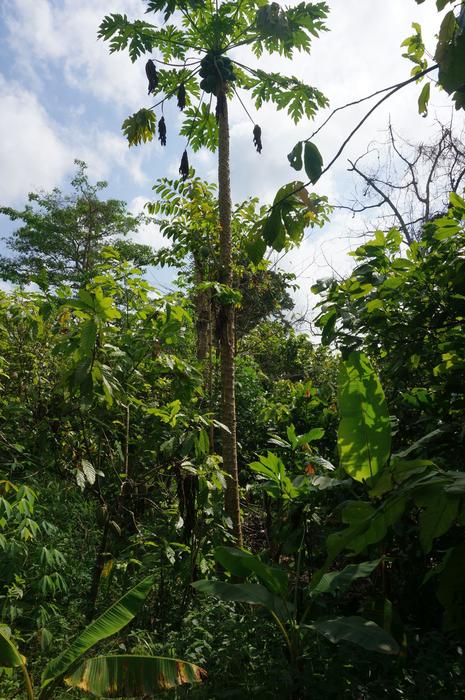
Report on Agroforestry as a Climate Adaptation Strategy in Ghana’s Cocoa Sector
Introduction: Climate Resilience and Sustainable Development
Climate change poses a significant threat to agricultural-dependent economies in sub-Saharan Africa, directly impacting the achievement of several Sustainable Development Goals (SDGs). In Ghana, where the cocoa sector is a cornerstone of the economy and rural livelihoods, rainfall variability jeopardizes production. This report summarizes findings from a study by the University of Göttingen and the European Commission’s Joint Research Centre, which investigates agroforestry as a climate adaptation strategy. The research provides critical insights for advancing SDG 13 (Climate Action) by building resilience, while also supporting SDG 1 (No Poverty) and SDG 8 (Decent Work and Economic Growth) through the protection of farmer incomes.
Methodology
The research employed a comprehensive approach to assess the efficacy of agroforestry in mitigating the effects of reduced rainfall on cocoa yields. The methodology included:
- Collection of survey data from 365 cocoa-producing households.
- Analysis of satellite-measured rainfall data across 44 villages.
- Coverage of five major cocoa-growing regions in Ghana.
- A comparative analysis between 2019 and 2022, contrasting yields for farmers practicing agroforestry with those who do not.
Key Findings: Regional Disparities in Agroforestry Benefits
The study confirms that while declining rainfall generally reduces cocoa yields, the practice of agroforestry can buffer these losses. However, the effectiveness of this strategy is highly dependent on local climatic conditions, a crucial consideration for sustainable land management under SDG 15 (Life on Land).
- Benefits in Wetter Regions: In Ghana’s wetter climate zones, farmers who cultivate cocoa under shade trees experience significantly smaller yield losses during periods of reduced rainfall. This demonstrates agroforestry’s potential as a successful climate adaptation tool in suitable environments.
- Limited Efficacy in Drier Regions: In drier regions, the study found no significant advantage to agroforestry in maintaining yields during rainfall shortages. Researchers posit that in water-scarce environments, shade trees may compete with cocoa plants for limited soil moisture, negating the potential benefits. The choice of shade tree species, such as shallow-rooted avocado trees, can exacerbate this competition.
Implications for Sustainable Development Goals (SDGs)
The findings underscore the need for a nuanced, context-specific approach to agricultural development strategies to meet global sustainability targets.
- SDG 13 (Climate Action): Agroforestry is a valuable tool for climate adaptation, but its promotion must be tailored to local agro-ecological zones to be effective. A one-size-fits-all approach is insufficient for building genuine climate resilience.
- SDG 1 (No Poverty) & SDG 2 (Zero Hunger): Protecting cocoa yields is essential for safeguarding farmer livelihoods and contributing to food security. The study highlights that inappropriate agroforestry practices in drier regions could inadvertently threaten income stability and sustainable food systems.
- SDG 15 (Life on Land): While agroforestry promotes biodiversity and ecosystem health, the research indicates that sustainable implementation requires careful selection of tree species that complement, rather than compete with, primary crops under specific local conditions.
Recommendations and Future Outlook
Based on the research, the following recommendations are proposed to align agricultural adaptation strategies with the Sustainable Development Goals:
- Targeted Policy and Promotion: Agroforestry initiatives should be specifically designed and promoted based on detailed local climate data, moving away from universal recommendations.
- Further Research: Additional investigation is required to identify optimal shade tree species for different climate zones, focusing on water requirements and root structures to ensure synergistic relationships with cocoa crops.
- Crop Diversification: In regions where cocoa production is becoming increasingly unviable due to climate change, a strategic shift towards more drought-tolerant crops, such as cashew nuts, should be considered to ensure long-term economic and environmental sustainability, directly supporting SDG 1 and SDG 8.
1. Which SDGs are addressed or connected to the issues highlighted in the article?
SDG 2: Zero Hunger
- The article focuses on agricultural production, specifically cocoa yields in Ghana. It examines how climate change impacts food production systems and discusses resilient agricultural practices like agroforestry, which directly relates to ensuring sustainable food production. The research is part of a group focused on “Sustainable Food Systems.”
SDG 13: Climate Action
- This is a central theme of the article. It explicitly states that “Climate change threatens agricultural production” and investigates agroforestry as a strategy for “helping farmers adapt to climate change,” specifically to “withstand periods of reduced rainfall.”
SDG 15: Life on Land
- The article discusses agroforestry, which is the practice of integrating trees into agricultural landscapes. This is a form of sustainable land management that helps maintain ecosystems. The discussion on the suitability of land for cocoa production in drier regions and the potential need to shift to “more drought-tolerant crops” also relates to combating land degradation and desertification.
2. What specific targets under those SDGs can be identified based on the article’s content?
SDG 2: Zero Hunger
- Target 2.4: “By 2030, ensure sustainable food production systems and implement resilient agricultural practices that increase productivity and production, that help maintain ecosystems, that strengthen capacity for adaptation to climate change, extreme weather, drought…” The entire study is an analysis of agroforestry as a “resilient agricultural practice” to adapt to drought caused by climate change.
SDG 13: Climate Action
- Target 13.1: “Strengthen resilience and adaptive capacity to climate-related hazards and natural disasters in all countries.” The article directly evaluates how agroforestry helps Ghanaian cocoa farmers build resilience and adaptive capacity to the climate-related hazard of reduced rainfall, finding that they “are better able to withstand” these periods.
SDG 15: Life on Land
- Target 15.3: “By 2030, combat desertification, restore degraded land and soil, including land affected by desertification, drought and floods…” The article addresses the impacts of drought on agricultural land. It notes that in drier regions, growing conditions may become “unviable for cocoa production,” which is a form of land degradation, and suggests adaptation strategies like planting “drought-tolerant crops.”
3. Are there any indicators mentioned or implied in the article that can be used to measure progress towards the identified targets?
Indicator: Agricultural Yields Under Climate Stress
- The study directly measures and compares “cocoa yields” between farms with and without agroforestry during periods of “reductions in rainfall.” This serves as a direct indicator for Target 2.4 and 13.1, measuring the effectiveness of a resilient agricultural practice in maintaining productivity and adapting to climate hazards.
Indicator: Adoption Rate of Resilient Agricultural Practices
- The research surveyed “365 cocoa-producing households” and differentiated between those “practising agroforestry and those who did not.” The proportion of farmers adopting such practices can be used as an indicator to track progress in implementing resilient agricultural systems (Target 2.4).
Indicator: Land Use and Crop Diversification in Climate-Vulnerable Areas
- The article suggests that in some areas, a “shift from cocoa production to more drought-tolerant crops such as cashew nuts should be considered.” Tracking this shift or the diversification of crops in drought-prone regions serves as an indicator of adaptation to land degradation and desertification (Target 15.3).
4. Table of SDGs, Targets, and Indicators
| SDGs | Targets | Indicators |
|---|---|---|
| SDG 2: Zero Hunger | Target 2.4: Ensure sustainable food production systems and implement resilient agricultural practices. | – Cocoa yields under varying rainfall conditions. – Percentage of cocoa-producing households practicing agroforestry. |
| SDG 13: Climate Action | Target 13.1: Strengthen resilience and adaptive capacity to climate-related hazards. | – Difference in yield loss between agroforestry and non-agroforestry farms during periods of reduced rainfall. |
| SDG 15: Life on Land | Target 15.3: Combat desertification and restore degraded land. | – Changes in land viability for specific crops (e.g., cocoa) in drier regions. – Rate of crop diversification towards more drought-tolerant species (e.g., cashew nuts) in vulnerable areas. |
Source: morningagclips.com
What is Your Reaction?
 Like
0
Like
0
 Dislike
0
Dislike
0
 Love
0
Love
0
 Funny
0
Funny
0
 Angry
0
Angry
0
 Sad
0
Sad
0
 Wow
0
Wow
0