











































‘Macronesia’ Sanctuary to Protect Waters of 4 Atlantic Islands and Critical Habitat for Whales – Good News Network
Report on the Establishment of the Macaronesia Marine Sanctuary and its Contribution to Sustainable Development Goals
1.0 Introduction
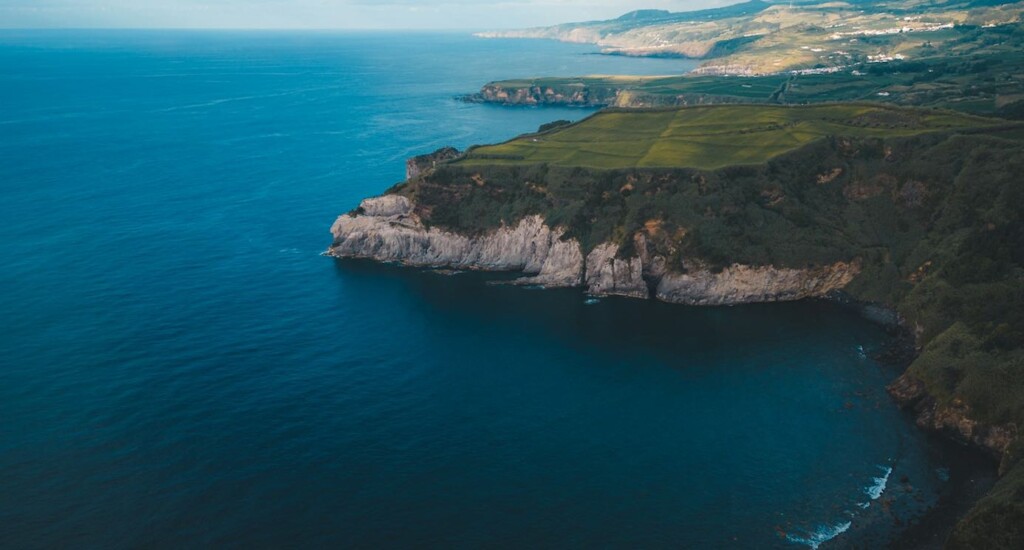
An international resolution has been passed to establish the Macaronesia Marine Sanctuary in the northeastern Atlantic Ocean. This initiative represents a significant advancement in marine conservation, directly aligning with the United Nations Sustainable Development Goals (SDGs), particularly SDG 14 (Life Below Water) and SDG 17 (Partnerships for the Goals). The sanctuary encompasses the waters surrounding the Azores, Cape Verde, the Canary Islands, and Madeira.
2.0 International Cooperation and Partnership (SDG 17)
The establishment of the sanctuary framework exemplifies a successful multi-stakeholder partnership, a core principle of SDG 17. This collaboration involves:
- International Agencies: The resolution was passed with 96.5% approval at the International Union for Conservation of Nature (IUCN) World Conservation Congress.
- Non-Governmental Organizations: The Loro Parque Fundación, a Canarian conservation NGO, spearheaded the initiative.
- National Governments: The governments of the nations within the Macaronesia region have provided support.
- Academic Institutions: Public universities across the Macaronesia nations have signed the Marine Biodiversity Manifesto, creating a research and training alliance to support marine conservation, thereby strengthening the science-policy interface essential for achieving the SDGs.
3.0 Conservation Objectives and Alignment with SDG 14: Life Below Water
The primary objective of the Macaronesia Sanctuary is the conservation and sustainable use of marine resources, directly contributing to the targets of SDG 14.
3.1 Protection of Marine Biodiversity
The sanctuary is designed to protect a critical marine ecosystem, which serves as a migratory route for 84% of all whale and dolphin species in the Atlantic. Key conservation targets include:
- Protecting 32 distinct species of cetaceans.
- Safeguarding one of the most significant marine migratory corridors on Earth.
- Contributing directly to SDG Target 14.5, which calls for the conservation of at least 10 percent of coastal and marine areas.
3.2 Mitigation of Anthropogenic Threats
The initiative aims to reduce marine pollution and protect ecosystems, in line with SDG Target 14.2. The sanctuary will address several human-induced threats:
- Entanglement from fishing gear.
- Collisions with marine vessels (ship strikes).
- Underwater noise pollution.
- Potential impacts from deep-sea mining.
4.0 Future Outlook and Sustainable Development
While the resolution establishes the foundational framework for the sanctuary, the operational details regarding enforcement and funding are yet to be determined. The successful implementation of the Macaronesia Sanctuary will serve as a global model for achieving marine conservation through international cooperation. It will not only advance SDG 14 and SDG 17 but also has the potential to support SDG 8 (Decent Work and Economic Growth) by fostering sustainable tourism and protecting the marine resources upon which local economies depend.
Analysis of Sustainable Development Goals in the Article
1. Which SDGs are addressed or connected to the issues highlighted in the article?
-
SDG 14: Life Below Water
This is the primary goal addressed in the article. The entire focus is on the creation of the “Macronesia” marine sanctuary to conserve and protect marine biodiversity, specifically whales and dolphins, in the northeastern Atlantic Ocean. The initiative aims to safeguard marine ecosystems from various human-induced threats.
-
SDG 17: Partnerships for the Goals
The article highlights the collaborative effort required to establish the sanctuary. It mentions the involvement of “Governments and conservation NGOs,” the International Union for Conservation of Nature (IUCN), a specific NGO called Loro Parque Fundación, and “all public universities across the Macaronesia nations.” This multi-stakeholder partnership is crucial for achieving the conservation objective.
2. What specific targets under those SDGs can be identified based on the article’s content?
SDG 14: Life Below Water
-
Target 14.2: By 2020, sustainably manage and protect marine and coastal ecosystems to avoid significant adverse impacts, including by strengthening their resilience, and take action for their restoration in order to achieve healthy and productive oceans.
The article directly supports this target by describing the sanctuary’s aim to “protect whales from a variety of anthropogenic harms, including entanglement from fishing gear, ship strikes, underwater noise pollution, and deep-sea mining.” This is a clear action to protect a marine ecosystem from adverse impacts.
-
Target 14.5: By 2020, conserve at least 10 per cent of coastal and marine areas, consistent with national and international law and based on the best available scientific information.
The creation of the “world’s most ambitious marine sanctuary” is a direct contribution to this target. The establishment of a large-scale Marine Protected Area (MPA) covering the waters around the Azores, Cape Verde, the Canary Islands, and Madeira is the central theme of the article.
-
Target 14.a: Increase scientific knowledge, develop research capacity and transfer marine technology… in order to improve ocean health and to enhance the contribution of marine biodiversity to the development of developing countries…
The article implies this target through the involvement of scientific and academic institutions. The mention that “all public universities across the Macaronesia nations signed the Marine Biodiversity Manifesto, a research and training alliance” indicates a commitment to increasing scientific knowledge and research capacity to support marine conservation.
SDG 17: Partnerships for the Goals
-
Target 17.16: Enhance the global partnership for sustainable development, complemented by multi-stakeholder partnerships that mobilize and share knowledge, expertise, technology and financial resources…
The initiative described is a model of this target. It is a partnership between governments, international bodies (IUCN), NGOs (Loro Parque Fundación), and academic institutions (public universities) that are pooling their influence and expertise to achieve a common conservation goal.
-
Target 17.17: Encourage and promote effective public, public-private and civil society partnerships, building on the experience and resourcing strategies of partnerships.
The article details a successful civil society partnership, spearheaded by the NGO Loro Parque Fundación, which gained international support from the IUCN and national governments. The resolution passing with “96.5% of all possible votes” demonstrates the effectiveness of this partnership in mobilizing international cooperation.
3. Are there any indicators mentioned or implied in the article that can be used to measure progress towards the identified targets?
Indicators for SDG 14
- Indicator for Target 14.5: The primary indicator is the establishment and size of the “Macronesia” marine sanctuary. While the exact area is not specified, its description as the “world’s most ambitious marine sanctuary” implies a significant coverage of marine area being protected (related to official indicator 14.5.1: Coverage of protected areas in relation to marine areas).
- Indicator for Target 14.2: The article mentions the protection of “32 species of whales and dolphins.” An implied indicator would be the population status and health of these 32 species within the sanctuary. Another would be a measured reduction in incidents like ship strikes and fishing gear entanglement within the protected zone.
Indicators for SDG 17
- Indicator for Target 17.16/17.17: The article provides concrete indicators of partnership success. The “resolution passed with 96.5% of all possible votes” at the IUCN World Conservation Congress is a quantifiable measure of international consensus. Furthermore, the signing of the “Marine Biodiversity Manifesto” by “all public universities across the Macaronesia nations” serves as another specific indicator of a functional multi-stakeholder partnership.
4. Summary Table of SDGs, Targets, and Indicators
| SDGs | Targets | Indicators (Mentioned or Implied in the Article) |
|---|---|---|
| SDG 14: Life Below Water |
14.2: Sustainably manage and protect marine and coastal ecosystems.
14.5: Conserve at least 10% of coastal and marine areas. 14.a: Increase scientific knowledge and research capacity. |
– Number of species protected (32 species of whales and dolphins). – Reduction in anthropogenic harms (ship strikes, entanglement, noise pollution). – The establishment and geographical coverage of the “Macronesia” marine sanctuary. – The creation of the “Marine Biodiversity Manifesto,” a research and training alliance among all public universities in the region. |
| SDG 17: Partnerships for the Goals |
17.16: Enhance the global partnership for sustainable development.
17.17: Encourage and promote effective public, public-private and civil society partnerships. |
– The number and type of stakeholders involved (Governments, IUCN, NGOs, Universities).
– The successful passing of the resolution with 96.5% of votes at the IUCN congress. |
Source: goodnewsnetwork.org
What is Your Reaction?
 Like
0
Like
0
 Dislike
0
Dislike
0
 Love
0
Love
0
 Funny
0
Funny
0
 Angry
0
Angry
0
 Sad
0
Sad
0
 Wow
0
Wow
0