MBARI’s new robotic sampler aims to transform monitoring of aquatic ecosystems – MBARI
Early Detection and Rapid Response for Aquatic Ecosystem Protection
Introduction
Invasive species, pathogens, and parasites pose significant ecological and economic threats to aquatic systems. These biological threats jeopardize commercial and recreational fishing industries and elevate the risk of disease spread. Addressing these challenges aligns with the Sustainable Development Goals (SDGs), particularly SDG 14 (Life Below Water) and SDG 15 (Life on Land), by promoting the conservation and sustainable use of aquatic ecosystems.
Utilization of eDNA for Early Detection
The United States Geological Survey (USGS) has successfully implemented environmental DNA (eDNA) as an early-detection strategy to identify biological threats in aquatic environments. This approach supports SDG 3 (Good Health and Well-being) by reducing disease risks and SDG 12 (Responsible Consumption and Production) by enabling cost-effective management actions.
Innovations by READI-Net and MBARI
- Development of Autonomous eDNA Sampling Technology
- READI-Net has developed advanced autonomous eDNA sampling robots, alongside optimized sampling protocols and analytical tools.
- These innovations empower resource managers and scientists to design tailored early-detection programs that meet specific ecological monitoring needs.
- Collaboration Between MBARI and USGS
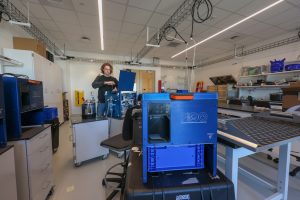
- Since November 2022, the Monterey Bay Aquarium Research Institute (MBARI) has partnered with USGS to create portable robotic DNA samplers.
- These devices are specifically designed to monitor river and stream health and detect biological threats efficiently.
- Over three years, MBARI engineers adapted core components of the Environmental Sample Processor (ESP) into smaller, lighter instruments, enhancing field deployment capabilities.
Advantages of Autonomous eDNA Autosamplers
- Enable continuous biosurveillance regardless of time, personnel availability, or weather conditions, supporting SDG 9 (Industry, Innovation, and Infrastructure).
- Facilitate rapid response to biological threats, increasing the likelihood of effective and targeted management interventions.
- Provide opportunities to eliminate invasive species before establishment and spread, thereby preventing ecological degradation and economic losses.
- Contribute to sustainable aquatic resource management, directly supporting SDG 14 and SDG 15.
Conclusion
The integration of autonomous eDNA sampling technologies represents a significant advancement in early detection and rapid response to aquatic biological threats. These efforts contribute to achieving multiple Sustainable Development Goals by protecting biodiversity, promoting ecosystem health, and ensuring sustainable use of aquatic resources.
1. Sustainable Development Goals (SDGs) Addressed
- SDG 14: Life Below Water
- The article discusses the detection and management of invasive species, pathogens, and parasites in aquatic systems, which directly relates to conserving and sustainably using the oceans, seas, and marine resources.
- SDG 15: Life on Land
- The focus on rivers and streams monitoring and preventing biological threats supports the protection, restoration, and sustainable use of terrestrial ecosystems, including freshwater ecosystems.
- SDG 3: Good Health and Well-being
- Early detection of pathogens and parasites reduces the risk of spreading diseases, contributing to improved health outcomes.
- SDG 9: Industry, Innovation, and Infrastructure
- The development of autonomous eDNA sampling robots and analytical tools highlights innovation and infrastructure development for environmental monitoring.
2. Specific Targets Under Those SDGs
- SDG 14 – Target 14.2: Sustainably manage and protect marine and coastal ecosystems to avoid significant adverse impacts, including by strengthening their resilience and taking action for their restoration.
- SDG 15 – Target 15.1: Ensure the conservation, restoration, and sustainable use of terrestrial and inland freshwater ecosystems and their services.
- SDG 3 – Target 3.d: Strengthen the capacity of all countries for early warning, risk reduction, and management of national and global health risks.
- SDG 9 – Target 9.5: Enhance scientific research, upgrade the technological capabilities of industrial sectors, including environmental monitoring technologies.
3. Indicators Mentioned or Implied in the Article
- Indicator for SDG 14.2: Proportion of fish stocks within biologically sustainable levels; presence and spread of invasive aquatic species detected through eDNA monitoring.
- Indicator for SDG 15.1: Proportion of freshwater ecosystems with good ambient water quality; detection rate of biological threats in rivers and streams using autonomous samplers.
- Indicator for SDG 3.d: Number of countries with early warning systems for health risks; effectiveness of early detection systems for pathogens and parasites in aquatic environments.
- Indicator for SDG 9.5: Number of new technologies developed and deployed for environmental monitoring; usage rate of autonomous eDNA samplers in remote locations.
4. Table of SDGs, Targets, and Indicators
| SDGs | Targets | Indicators |
|---|---|---|
| SDG 14: Life Below Water | 14.2 Sustainably manage and protect marine and coastal ecosystems to avoid significant adverse impacts. | Proportion of fish stocks within biologically sustainable levels; presence and spread of invasive aquatic species detected through eDNA monitoring. |
| SDG 15: Life on Land | 15.1 Ensure conservation, restoration, and sustainable use of terrestrial and inland freshwater ecosystems. | Proportion of freshwater ecosystems with good ambient water quality; detection rate of biological threats in rivers and streams using autonomous samplers. |
| SDG 3: Good Health and Well-being | 3.d Strengthen capacity for early warning, risk reduction, and management of health risks. | Number of countries with early warning systems; effectiveness of early detection systems for pathogens and parasites in aquatic environments. |
| SDG 9: Industry, Innovation, and Infrastructure | 9.5 Enhance scientific research and technological capabilities in environmental monitoring. | Number of new technologies developed and deployed; usage rate of autonomous eDNA samplers in remote locations. |
Source: mbari.org
What is Your Reaction?
 Like
0
Like
0
 Dislike
0
Dislike
0
 Love
0
Love
0
 Funny
0
Funny
0
 Angry
0
Angry
0
 Sad
0
Sad
0
 Wow
0
Wow
0