
















































Monitoring online illegal wildlife trade: Featuring rhino horn pills and wildlife substitutions – Global Initiative against Transnational Organized Crime (GI-TOC)
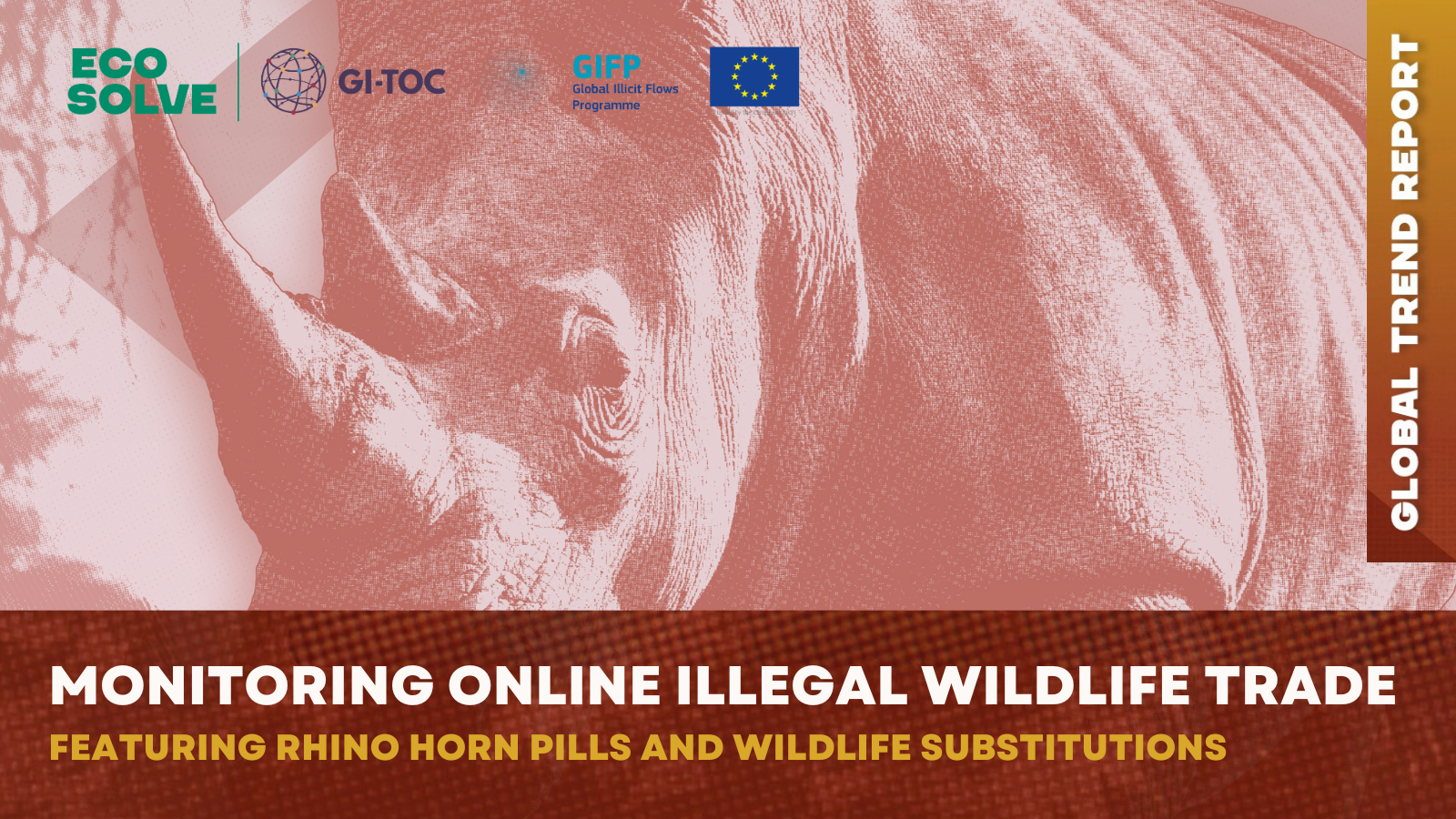
Global Report on Online Illegal Wildlife Trade and its Impact on Sustainable Development Goals
Executive Summary
A comprehensive monitoring effort conducted between April 2024 and August 2025 has identified 13,254 online advertisements for illegal wildlife products across Africa, the Americas, Asia, and the Middle East. The findings reveal a persistent and adaptive trade that directly undermines key Sustainable Development Goals (SDGs), particularly SDG 15 (Life on Land), SDG 16 (Peace, Justice and Strong Institutions), and SDG 12 (Responsible Consumption and Production). The pervasive nature of this illicit activity necessitates a coordinated global response in line with SDG 17 (Partnerships for the Goals).
Direct Threats to SDG 15: Life on Land
The online illegal wildlife trade (IWT) poses a significant and immediate threat to terrestrial ecosystems and biodiversity, directly contravening the targets of SDG 15. The trade accelerates the decline of threatened species and disrupts ecological balance.
- Scale of the Threat: Over 13,000 advertisements were detected, with a dominant presence on Facebook (83.8% of detections).
- Species Targeted: The trade heavily impacts species crucial for biodiversity.
- Mammals, including elephants, big cats (tigers, lions, jaguars), and rhinos.
- Pangolins, with all species listed under CITES Appendix I.
- African grey parrots.
- Other species such as manta rays, crocodilians, and primates.
- Methods of Evasion: Sellers employ tactics that exploit online platforms to circumvent protections for endangered wildlife, including:
- Use of temporary Facebook Stories to avoid detection.
- Coded language, emojis, and deliberate misspellings.
- Normalization of protected species as pets via platforms like YouTube.
Undermining SDG 16: Peace, Justice and Strong Institutions
IWT is a form of transnational organized crime that exploits regulatory gaps, fuels corruption, and generates illicit financial flows, thereby weakening the rule of law and institutional integrity as envisioned in SDG 16.
- Exploitation of Regulatory Loopholes: The trade thrives in blind spots, such as the market for taxidermy, leather goods, and other processed parts, which often receive less enforcement focus than live animal trade.
- Illicit Financial Flows and Sanctions Evasion: The report highlights the case of North Korea’s Angong Niuhuang Wan (ANW) pills, which are explicitly marketed as containing rhinoceros horn.
- The production and international distribution of these pills represent a clear link between IWT and illicit revenue generation for sanctioned entities.
- This network spans from production in Pyongyang to markets across at least nine other Asian countries, demonstrating a sophisticated criminal supply chain.
- Weakening Governance: The inability to enforce CITES regulations, evidenced by numerous advertisements lacking permit information for Appendix I and II species, points to significant challenges in governance and enforcement capacity.
Challenges to SDG 12: Responsible Consumption and Production
The dynamics of IWT highlight unsustainable consumption patterns and complex supply chains that hinder the goals of SDG 12. Market adaptability, product laundering, and substitution make traceability and sustainable sourcing nearly impossible.
- Market Substitution: When regulations tighten on one species, traffickers pivot to substitutes, creating new threats.
- Following the CITES uplisting of pangolins, exports of visually similar pirarucu leather from Mexico increased exponentially.
- Declining availability of tiger parts has led to the substitution with lion and jaguar bones, teeth, and skins in Asian markets.
- Laundering and Mislabeling: Processed products create significant traceability gaps. Online markets feature mislabeled leathers (e.g., pirarucu sold as pangolin), making it difficult for consumers and law enforcement to verify the legality and origin of products.
The Imperative for SDG 17: Partnerships for the Goals
The report’s findings, drawn from ten regional data hubs, underscore that combating online IWT requires a multi-stakeholder, coordinated approach as championed by SDG 17. The adaptive and cross-border nature of the threat cannot be addressed by any single entity.
- Coordinated Monitoring: The success of the regional hub system demonstrates the value of collaborative data collection and analysis.
- Enhanced Enforcement: There is a critical need for cross-border cooperation between law enforcement agencies to dismantle transnational criminal networks.
- Public-Private Partnerships: Collaboration with social media and e-commerce platforms is essential to detect and remove illicit content and close down avenues for traffickers.
- Policy Cohesion: A unified policy response is required to close regulatory loopholes related to processed wildlife products, taxidermy, and species substitution.
Analysis of Sustainable Development Goals in the Article
-
Which SDGs are addressed or connected to the issues highlighted in the article?
The article primarily addresses issues related to two Sustainable Development Goals:
- SDG 15: Life on Land: This goal is central to the article, which focuses on the illegal wildlife trade (IWT) and its impact on protected species. The text details the trafficking of animals like elephants, big cats, rhinos, and pangolins, all of which are critical to terrestrial ecosystems and biodiversity.
- SDG 16: Peace, Justice and Strong Institutions: The article connects the online IWT to broader issues of organized crime, illicit financial flows, and the exploitation of regulatory loopholes. It explicitly mentions how the trade intersects with “conservation and security concerns, including sanctions evasion and illicit revenue streams linked to North Korean entities,” which falls under the purview of promoting just and inclusive societies.
-
What specific targets under those SDGs can be identified based on the article’s content?
Based on the article’s content, the following specific targets can be identified:
- Target 15.7: “Take urgent action to end poaching and trafficking of protected species of flora and fauna and address both demand and supply of illegal wildlife products.” The entire article is an exposition of this target, detailing the scale of online trafficking (“13,254 wildlife advertisements detected”), the species involved (elephants, rhinos, pangolins), and the methods used to facilitate the illegal trade across various platforms.
- Target 15.c: “Enhance global support for efforts to combat poaching and trafficking of protected species…” The article underscores the global and cross-border nature of the IWT, from North Korean pills circulating in Southeast Asia to jaguar parts sourced from Latin America. It concludes by reinforcing the “need for coordinated monitoring, enforcement and policy responses,” which directly relates to enhancing global support and cooperation.
- Target 16.4: “By 2030, significantly reduce illicit financial and arms flows, strengthen the recovery and return of stolen assets and combat all forms of organized crime.” The article links IWT to organized crime by describing how sellers “exploit online environments, regulatory loopholes” and use “coded language.” More directly, it points to “illicit revenue streams linked to North Korean entities” and “sanctions evasion” through the trade of rhino horn products, which are clear examples of illicit financial flows and organized crime that this target aims to reduce.
-
Are there any indicators mentioned or implied in the article that can be used to measure progress towards the identified targets?
Yes, the article mentions and implies several indicators that can be used to measure the scale of the problem and, conversely, progress towards the targets.
- For Target 15.7: The article provides direct quantitative data that serves as an indicator of the prevalence of IWT.
- Indicator: The number and prevalence of online advertisements for illegal wildlife products. The article quantifies this with “13,254 wildlife advertisements detected between April 2024 and August 2025.”
- Indicator: The proportion of trade occurring on specific platforms. The article states that Facebook “accounts for 83.8% of all detections,” providing a measurable indicator of where enforcement efforts should be focused.
- Indicator: The prevalence of trade in specific CITES-listed species. The article mentions elephants, big cats, African grey parrots, and rhinos, which can be tracked to measure the scope of the illegal trade.
- For Target 16.4: The article implies indicators related to the intersection of IWT and organized crime.
- Indicator: The number of documented cases linking IWT to illicit financial flows and sanctions evasion. The report’s focus on North Korea’s Angong Niuhuang Wan (ANW) pills serves as a case study and an indicator of this link.
- Indicator: The prevalence of laundering and substitution in supply chains. The example of pirarucu leather being sold as a substitute for pangolin leather indicates a “laundering risk along supply chains,” which can be monitored as a measure of organized criminal activity.
- For Target 15.7: The article provides direct quantitative data that serves as an indicator of the prevalence of IWT.
-
Create a table with three columns titled ‘SDGs, Targets and Indicators” to present the findings from analyzing the article. In this table, list the Sustainable Development Goals (SDGs), their corresponding targets, and the specific indicators identified in the article.
SDGs Targets Indicators SDG 15: Life on Land 15.7: Take urgent action to end poaching and trafficking of protected species of flora and fauna and address both demand and supply of illegal wildlife products. - Number of online wildlife advertisements detected (e.g., 13,254).
- Percentage of detections on specific platforms (e.g., 83.8% on Facebook).
- Prevalence of trade in specific protected species (e.g., elephants, big cats, rhinos, pangolins).
15.c: Enhance global support for efforts to combat poaching and trafficking of protected species. - Evidence of cross-border trafficking networks (e.g., North Korean pills in Southeast Asia, jaguar parts from Latin America).
- Identified need for coordinated international monitoring and enforcement.
SDG 16: Peace, Justice and Strong Institutions 16.4: Significantly reduce illicit financial and arms flows… and combat all forms of organized crime. - Documented links between IWT and sanctions evasion (e.g., North Korean entities).
- Evidence of illicit revenue streams from wildlife products (e.g., rhino horn in medicine).
- Use of laundering techniques in supply chains (e.g., mislabelling pirarucu as pangolin leather).
Source: globalinitiative.net
What is Your Reaction?
 Like
0
Like
0
 Dislike
0
Dislike
0
 Love
0
Love
0
 Funny
0
Funny
0
 Angry
0
Angry
0
 Sad
0
Sad
0
 Wow
0
Wow
0