New floating wetlands in Lake Decatur aim to improve water quality while providing new habitats for wildlife – IPM Newsroom
Report on the Lake Decatur Floating Wetlands Project and its Contribution to Sustainable Development Goals
1.0 Introduction
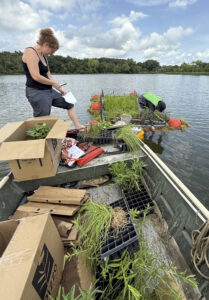
An innovative environmental project was initiated in Lake Decatur, Illinois, involving the installation of two man-made floating wetlands. This project represents a significant effort to address local environmental degradation while contributing to several United Nations Sustainable Development Goals (SDGs). The primary objectives are to enhance water quality, manage sedimentation, and restore aquatic habitats, directly aligning with global sustainability targets. The project’s durability and long-term effectiveness are currently under observation, particularly with the onset of winter conditions.
2.0 Project Context and Alignment with Sustainable Development Goals
The initiative is a response to the significant loss of natural wetlands in Illinois, a situation exacerbated by a 2023 Supreme Court decision that reduced federal protections under the Clean Water Act. This project serves as a model for restoring ecosystem functions in developed areas.
- SDG 6: Clean Water and Sanitation: The project directly targets the improvement of water quality in Lake Decatur, which has experienced high concentrations of nitrates from agricultural runoff. By absorbing these excess nutrients, the wetlands contribute to Target 6.3, which aims to improve water quality by reducing pollution.
- SDG 14: Life Below Water & SDG 15: Life on Land: The floating wetlands are designed to function as new ecosystems. They provide a habitat for local wildlife and help control sediment, thereby restoring aspects of the inland freshwater ecosystem. This supports Target 14.1 (reduce nutrient pollution) and Target 15.5 (halt the loss of biodiversity and habitat degradation).
- SDG 9: Industry, Innovation, and Infrastructure: The project is a collaboration between the Prairie Research Institute and the Grainger College of Engineering, showcasing an innovative, nature-based solution to environmental challenges. It represents an advancement in sustainable infrastructure and scientific research, aligning with Target 9.5.
- SDG 11: Sustainable Cities and Communities: By improving the health of a key water resource for the city of Decatur, the project contributes to the environmental sustainability of the urban community, in line with Target 11.6.
3.0 Project Design and Functional Mechanisms
The design of the floating wetlands was engineered to be structurally sound while maximizing positive environmental impact. The implementation involves a multi-faceted approach to ecosystem restoration.
3.1 Structural Composition
- The base is a steel frame raft designed for durability.
- This frame holds coir, a natural fiber made from coconut husks, which serves as a planting medium.
- Nine species of native plants were selected and planted in the coir. The selection of native species is crucial for supporting local biodiversity (SDG 15).
3.2 Environmental Functions
- Nutrient Absorption (SDG 6, SDG 14): As the plants grow, their roots extend into the water below the raft. These roots absorb excess nitrates and other nutrients, directly combating nutrient pollution and preventing harmful algal blooms.
- Sediment Management: The extensive root systems slow the flow of water, causing suspended sediment particles from nearby farmland to settle in concentrated areas. This process can act as a natural, low-cost alternative to dredging, which is an expensive process for maintaining lake depth.
- Habitat Creation (SDG 15): Shortly after installation, the wetlands began functioning as a habitat for various organisms, including snails, spiders, and insect larvae, demonstrating their immediate contribution to increasing local biodiversity.
4.0 Current Status, Challenges, and Future Outlook
4.1 Initial Observations and Challenges
The project has already demonstrated success in creating a viable habitat for wildlife. However, a significant challenge is the potential for invasive species, such as nonnative cattails, to colonize the rafts. Preventing the establishment of invasive species is critical to ensuring the project’s long-term success in promoting native biodiversity (SDG 15).
4.2 Future Monitoring and Optimization
The project has entered a critical monitoring phase. Key future activities include:
- Assessing Winter Survivability: The team will evaluate whether the native plants and the structure itself can withstand the freezing of Lake Decatur. The coir medium is expected to insulate the roots and facilitate regrowth in the spring.
- Optimizing Design: Based on performance data, researchers led by Associate Professor Rafael Tinoco will refine the design for future installations. This includes studying root structures in a lab setting to determine their effectiveness in nutrient exchange.
- Wildlife Monitoring: A camera will be installed to monitor wildlife interactions with the wetland, providing valuable data on its role as a habitat and food source.
The continuation of this project will provide crucial insights into the efficacy of man-made wetlands as a tool for achieving multiple Sustainable Development Goals in managed water bodies.
Analysis of Sustainable Development Goals in the Article
1. Which SDGs are addressed or connected to the issues highlighted in the article?
The article on floating wetlands in Lake Decatur addresses several Sustainable Development Goals (SDGs) by focusing on environmental restoration, water quality improvement, and biodiversity. The primary SDGs connected to the project are:
- SDG 6: Clean Water and Sanitation: This is a central theme, as the project’s main goal is to improve the water quality of Lake Decatur by addressing nutrient pollution.
- SDG 15: Life on Land: The project directly contributes to this goal by restoring wetland functions, creating habitats for wildlife, and addressing the loss of natural ecosystems.
- SDG 11: Sustainable Cities and Communities: By managing a vital local water resource (Lake Decatur) and finding innovative, potentially more sustainable alternatives to costly processes like dredging, the project supports the environmental sustainability of the Decatur community.
- SDG 9: Industry, Innovation, and Infrastructure: The development of the floating wetland itself, a collaboration between an ecology unit (Prairie Research Institute) and an engineering college (Grainger College of Engineering), represents an innovative and sustainable infrastructural solution to an environmental problem.
2. What specific targets under those SDGs can be identified based on the article’s content?
Based on the specific actions and goals described in the article, the following SDG targets are directly relevant:
-
SDG 6: Clean Water and Sanitation
- Target 6.3: By 2030, improve water quality by reducing pollution. The article explicitly states a primary goal is to “suck up the excess nitrates” from the lake. Nitrates are identified as a pollutant from fertilized soil that negatively affects water quality.
- Target 6.6: By 2020, protect and restore water-related ecosystems, including… wetlands… and lakes. The entire project is an effort to restore the functions of wetlands within a lake ecosystem, especially in a context where natural wetlands have lost federal protection and are being filled in. The article notes, “We can potentially create this habitat out in the middle of the water body that is doing some of the same functions that we would have on the shoreline wetlands.”
-
SDG 15: Life on Land
- Target 15.1: By 2020, ensure the conservation, restoration and sustainable use of terrestrial and inland freshwater ecosystems and their services, in particular… wetlands. This target is directly addressed by the project’s aim to restore wetland functions and create a man-made version to compensate for the “huge” loss of natural wetlands in Illinois.
- Target 15.5: Take urgent and significant action to reduce the degradation of natural habitats, halt the loss of biodiversity… The article highlights that the floating wetlands began “creating habitat” almost immediately, attracting snails, spiders, and various insects. This action directly counteracts habitat degradation.
- Target 15.8: By 2020, introduce measures to prevent the introduction and significantly reduce the impact of invasive alien species on land and water ecosystems. The project team acknowledges the risk of the wetlands becoming a home to invasive species, such as the “nonnative cattail,” and considers how to prevent this, noting that thriving native plants decrease the chances of unwanted species taking hold.
3. Are there any indicators mentioned or implied in the article that can be used to measure progress towards the identified targets?
Yes, the article mentions or implies several indicators that can be used to measure the project’s success and its contribution to the identified targets:
- Nitrate Concentration Levels: To measure progress towards Target 6.3, the key indicator is the concentration of nitrates in Lake Decatur’s water. The article states the goal is to “suck up the excess nitrates,” implying that water quality testing for nutrient levels will be used to gauge the wetlands’ effectiveness.
- Sediment Accumulation Rates: As an alternative to dredging, the wetlands are designed to trap sediment. An implied indicator is the measurement of sediment accumulation or lake depth in specific areas around the wetlands compared to the rest of the lake. The article mentions the goal is to “focus sedimentation into these traps.”
- Biodiversity and Habitat Use: For Target 15.5, the article provides direct indicators of success. It notes that “snails, spiders, water beetles, larvae of various insects” were found on the rafts shortly after installation. The plan to “put a camera on the raft to monitor wildlife behavior” is a direct method for collecting data on this indicator.
- Presence of Invasive Species: To monitor progress related to Target 15.8, a key indicator is the presence or absence of invasive species on the floating wetlands. The team’s concern about the “nonnative cattail” implies that monitoring for such species is part of the project.
- Survival and Growth of Native Plants: A fundamental indicator for the entire project’s viability (related to Targets 6.6 and 15.1) is the survival of the nine native plant species through the winter. The article states a key question was, “will the plants survive?” and notes that their ability to “come back next spring” will be a measure of success.
4. Summary Table of SDGs, Targets, and Indicators
| SDGs | Targets | Indicators |
|---|---|---|
| SDG 6: Clean Water and Sanitation | 6.3: Improve water quality by reducing pollution. | Concentration of nitrates in the lake water. |
| 6.6: Protect and restore water-related ecosystems, including wetlands and lakes. | Number and area of installed floating wetlands; Rate of sediment accumulation in targeted areas. | |
| SDG 15: Life on Land | 15.1: Ensure the conservation and restoration of inland freshwater ecosystems (wetlands). | Survival and growth rates of the native plants on the wetlands. |
| 15.5: Reduce the degradation of natural habitats and halt biodiversity loss. | Presence and diversity of wildlife (insects, snails, etc.) using the wetlands, monitored via observation and cameras. | |
| 15.8: Prevent the introduction and reduce the impact of invasive alien species. | Presence or absence of invasive species (e.g., nonnative cattail) on the floating wetlands. |
Source: ipmnewsroom.org
What is Your Reaction?
 Like
0
Like
0
 Dislike
0
Dislike
0
 Love
0
Love
0
 Funny
0
Funny
0
 Angry
0
Angry
0
 Sad
0
Sad
0
 Wow
0
Wow
0